
I’ve been thinking a lot about the Kingston coal ash disaster lately.
You might remember it — December 22, 2008. The containment pond at the Tennessee Valley Authority’s (TVA) Kingston Fossil Plant failed and dumped an unfathomable amount of toxic coal ash into the Clinch River in Kingston, Tennessee. We’re talking about a tidal wave of gray sludge — the byproduct of burning coal — filled with arsenic, lead, and even radioactive material.
The story hits close to home for me. Deeply personal, you might say. . .
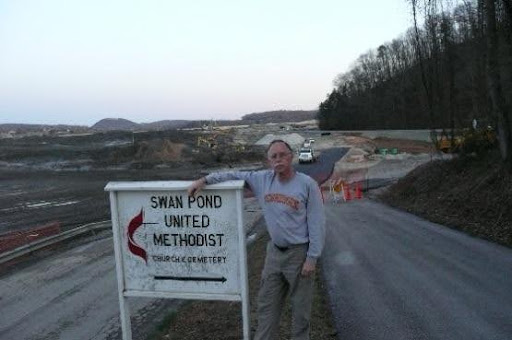
My father, Melvin Medema, helped build the first TVA dams back in the 1930s. Some of my family’s original land now lies beneath the water, buried under sandy silt, behind Norris Dam. I have cousins who’ve lived downstream from the Kingston plant since the 1940s. And I once owned riverfront property just a mile from where the spill happened.
So when I say this disaster feels personal, I mean it. It wasn’t just an environmental accident. It was a rupture in a long, complicated relationship between land, power, and the people who call this place home.
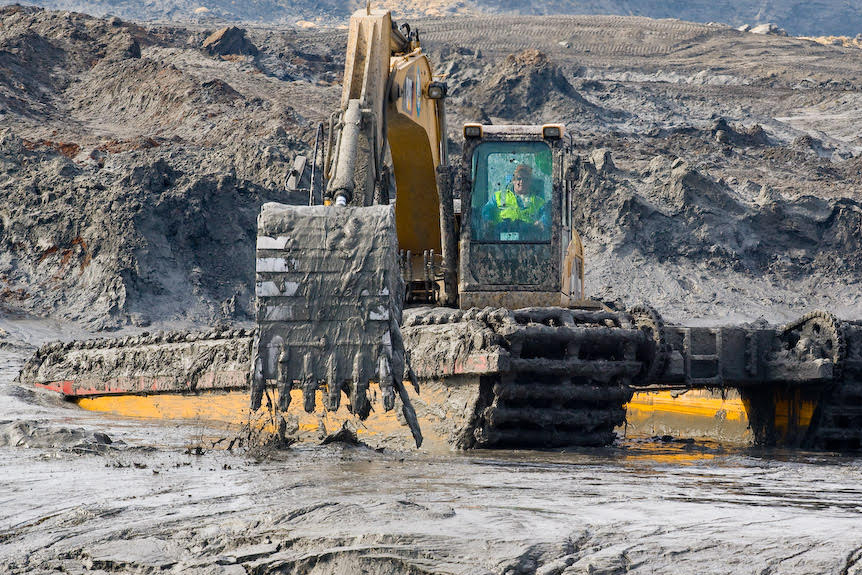
I recently read Valley So Low by Jared Sullivan, the lawyer who represented the cleanup workers in the litigation against the TVA. This book lays bare what happened after the spill. The cleanup dragged on for years. Workers were told the ash was basically harmless — like dirt. They were discouraged, sometimes even forbidden, from wearing protective hazmat gear. Meanwhile, day after day, they were breathing toxic dust.
And people paid for that.
At least 54 cleanup workers have died from exposure-related illnesses. More than 150 others have suffered serious health problems. Meanwhile, no executives went to jail. No one at the top was held to meaningful accountability.
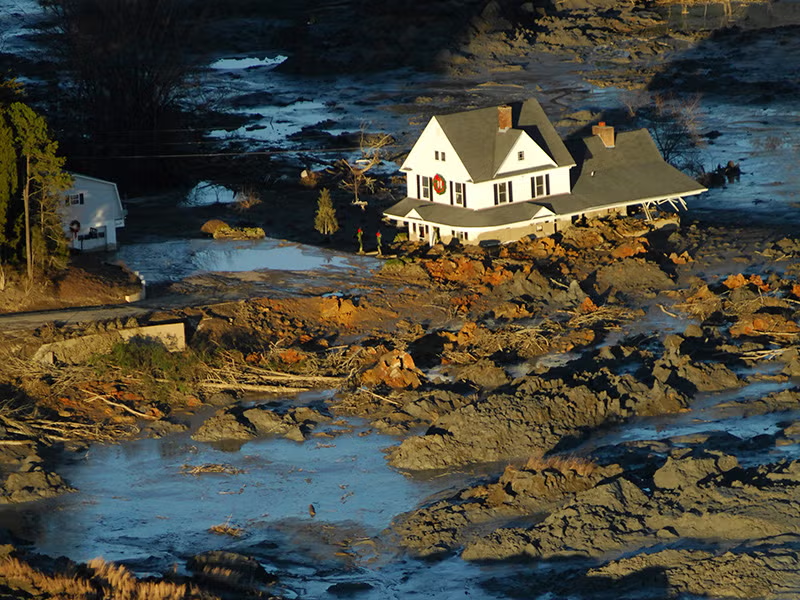
The scale still shocks me. About 1.1 billion gallons of coal ash spilled — that is more than 100 times the volume of the Exxon Valdez oil spill. Around 4 million tons of ash were hauled away in 41,000 rail cars and dumped in a landfill in a poor, predominantly Black community in Alabama. Cleanup took seven years and cost over a billion dollars.
Across the country, more than 700 coal ash ponds remain — many aging, many poorly regulated.
This isn’t ancient history. It’s a warning.
My friend, fellow Tennessean and bluegrass musician Daniel Kimbro, wrote a song called “Loyston” about how “progress” displaces people — farms, forests, entire towns. It’s a pattern that keeps repeating. It’s not just coal. It’s mining. Oil and gas. Fracking. Pipelines. Data centers. The same story over and over.
Profits first. People second.
I stepped back and began to see deeper problems. I’d trusted elected officials and regulatory agencies to protect the community from harm, but denial, greed, and negligence led to this mess. I fear that there will be more spills, oil pipeline ruptures, or industrial chemical spills.
Kingston was a preventable disaster — if its causes had been addressed. Regulations were weak. Coal ash wasn’t even classified as hazardous waste. The public was misled. Cleanup workers were told they were safe. Political money shaped policy. Gucci-shoed lobbyists framed environmental oversight as the “War on Coal.” Corporate contracts rewarded speed and cost cutting — not safety. Warning signs were ignored because “nothing bad happened before.” In the depths of the 2008 financial crisis, desperate men and women took dangerous jobs because they needed to feed their families.
And in the end? No real accountability. Not a single TVA exec went to prison.
Some folks in East Tennessee started calling TVA an environmental bully.
What troubles me most is that this disaster wasn’t merely a regulatory failure. It was something deeper — a moral failure.
As Christians, we confess that Creation belongs to God. The Gospel of John (1:1-3) begins by reminding us that all things came into being through God. If that’s true, then treating Creation as disposable is not simply bad policy. It is spiritual blindness. When we dominate and exploit the earth, we inevitably end up dominating and exploiting people too.
“Creation care” isn’t some fringe slogan. It’s about right relationship — with God, with neighbor, with the land itself.
Now, almost two decades later, this story feels urgent again.
Energy policy is shifting. Under President Trump’s push for “energy dominance,” coal plants — including Kingston — are no longer scheduled to be decommissioned. Plans for a green energy transition at the site have been shelved. He’s doubling down on what one TVA official called “beautiful, clean coal.”
After Kingston, I can’t hear that phrase without flinching.
Coal-related catastrophes will happen again. Hundreds of aging and poorly monitored coal ash ponds are still out there. And when disaster strikes, it will likely be the poor and communities of color who will bear the heaviest burden — just as they have before. Wealthier, White communities have the resources and political clout to block bad environmental practice, the presence of power plants, and their toxic holding ponds.
Why does this still matter, 17 years later?
Because memory matters.
Because justice matters.
Because people matter.
Because God’s Creation is once again battered.
And maybe because loving our neighbor sometimes starts by saying no to systems that treat both people and God’s Creation as expendable.
To flip the infamous words of coal industry champion Senator Mitch McConnell of Kentucky on their head, it is not a “War on Coal.” It is a war on human beings. The only solution that remains is to “Just Say No.”

14 Responses
Mordor.
Thanks for this compelling reflection. Our relationship with God’s creation is so one-sided, super unhealthy, and driven by greed. We so need counter-cultural examples of how to live better, and we need to learn from the wisdom of Indigenous people who by and large lived well in the land without destroying it.
This whole post was an eye opener of awareness to me but your statement: “Around 4 million tons of ash were hauled away in 41,000 rail cars and dumped in a landfill in a poor, predominantly Black community in Alabama.” caused my jaw to drop and anger churn in my gut. Thank you for yet another real life trauma that shows the effects of a flippant Sharpie signature on our environment etc etc etc.
AMEN!!! Now we need believers to stand up and DO something to protect people and this creation. Each one of us is responsible for the mess we are in.
The owners and corporate interests get the justice they can afford … the rest of us pay with our health and our lives.
Thanks for this note …
Though I now live in Pasadena, I began my ministry in 1970, The West Virginia Mountain Project, south of Charleston … I saw first hand the unbelievable devastation of mining, especially strip and auger mining … everything and everyone negatively affected. But profits over people remains America’s ethical Golden Calf.
Keep up the good work.
Every voice counts.
AMEN!!!
Thank you for this article. It makes me ill to think of how we are destroying this creation all for the greed of a few.
Far too long, we have remained silent against these injustices.
Thanks for reminding of us of this disaster and how it continues. You are standing next to the church sign – I wonder how the UMC responded to this disaster and the aftermath. It’s hard to speak against something when your parishioners livelihoods depend on it.
Thank you for sharing these insights. The same scenario has played out with uranium mining on Navajo Nation land in New Mexico and Arizona. Short-term corporate profits at the expense of long-term costs to the environment and people’s health.
Thank you. We have to keep fighting for proper regulations though it seems to be getting harder. I’d like to think we do better but there are too many incidents that say we don’t.
Thank you for telling the facts. Thank you for letting the public know what’s going on. Thank you because my husband was one of the 54 people that has passed due EPA
And TVA not be concerned about the workers
Betty, my heart goes out to you and I pray for you in your lingering grief. It mean the world to me to have these insights validated by someone who has been so personally affected.
Thank you Dave, I had completely forgotten about that story. The grievous paradigm that it illustrates is motivation for speaking out against so many converging injustices — thanks for the reminder. Also, I did not know this about your father –I had great admiration for both your father and your mother.
Thanks for the grim reminder of failed policies past Dave! And, today we’re exporting our environmental terror to Iran. As if the Iranian people haven’t endured enough inhumanity and injustices, the United States and Israel are ensuring they face an even more daunting future! The environmental, humanitarian and critical infrastructure destruction, being waged aganist them and their land, is staggering! Can it really be that close to 50 percent of us support this madness?
Just last month my protest sign called for standing with our immigrants and refugees. I guess on the 28th of this month, it’ll be against unnecessary and evil warfare! I can’t even imagine April and May. My only hope lies in my prayers, my voice and my vote! And all of yours’ also! Pax Vobiscum and thanks for another outstanding essay and commentary Dave Medema!
Thank you.