
One of the most difficult things military chaplains are called on to do is deliver death notifications when a service member dies.
Military regulations require that, whenever possible, a chaplain accompany the Casualty Assistance Officer (CACO) who makes the official notification. Sometimes families have already received word that their loved one has died. Often they have not.
Before a word is spoken, the sight alone often tells the family everything they fear.
What happens next is something no one present will ever forget.
The look on the face of a spouse or parent when they open the door and see a chaplain and a CACO standing on their porch in their service dress uniforms is unforgettable: shock, grief, disbelief, anger. Some collapse to the ground. Others slam the door shut, hoping that if they don’t let you in, the thing they fear most somehow won’t become real. Some faint. Others scream. All are devastated. Every life in that household is forever changed.
The Causality Assistance Officer’s role is to deliver the official death notification and explain what will happen in the coming days, including what support the military will provide. Even though they are usually well trained, the reaction of a grieving family member sometimes leaves the CACO unable to speak.
The chaplain’s role is to support the CACO and to provide whatever support they can to the family. This often includes helping them notify other family members, contacting their faith community if they have one, and helping them begin to process the worst thing they likely have ever experienced.
Because the military tries to make these notifications as quickly as possible, the CACO and chaplain have limited information to share. Sometimes it isn’t yet appropriate to relay what they do know. But spouses and parents will inevitably still ask two questions: why and how did it happen?
Interestingly, in my experience, the devastated family members usually address the “how did they die” question to the CACO, but they direct the “why did they die” question to the chaplain.
That “why” question usually includes some version of “How could God let this happen?” There is a desire to provide meaning to the tragedy, a hope that somehow this death serves a purpose. Parents, spouses, children want to know why they will never again see their son or daughter, husband or wife, mother or father.
I would never say this to a grieving family, but the harsh truth is that members of the military go where they are sent, do what they are told, and some – sometimes many — of them die in the process.
Our nation owes those service members and their families a clear, honest, understandable justification for the sacrifice they make. In the case of the recent military action in the Middle East, we have not yet heard one. The White House’s decision to proceed without seeking lawful congressional authorization for this action suggests that they were not sure they would have originally received it.
I’ve thought about this many times over the past week, knowing that there would be casualties due to the current conflict in the Middle East and knowing that chaplains like me would be tasked with trying to explain the unexplainable.
If you’ve followed the news over the past weeks, you have heard at least six different explanations for why American service members are being placed in harm’s way. At various times we have been told it was to protect peaceful Iranian protesters, to topple an authoritarian regime that sponsors terrorism, to promote democracy, to stop Iran from obtaining nuclear weapons or from developing missiles that could strike US territory, or to strike Iran before Israel did. I even heard one Senator declare that supporting Israel is the sacred duty of the US, and of all Christians.
The problem with all of these explanations is that none of them appear to have required abandoning diplomatic channels and trying to achieve desired ends peacefully. Plus, the one is really bad theology. Individually the justifications are flawed and collectively they are confusing and conflicting. War should always be a last resort, and, in this case, it clearly was not.
Critics of the war have offered their own explanations. Some suggest the real reason for this conflict was to protect oil supplies, or even to raise the price of oil. Or perhaps there might be an attempt to distract our national attention from the infamous Epstein case. Still others question why the US repeatedly supports authoritarian, militaristic governments rather than our traditional, democratic allies. Some have suggested that the answer might be found in following the money. Who stands to benefit financially from this war? Billions of dollars will be spent, and profits made, as a result of this war.
For me, this conflict feels personal.
I served in Bahrain for a year and in Iraq for a year. I’ve made death notifications to families whose loved ones died in Iraq or Afghanistan. I’ve been aboard many of the Navy ships in the theater of operations right now. I’ve traveled to most of the US bases now under threat of attack. I know how operational security and threat assessments work. I know people who live in most of those countries.
I know what it feels like to live under the threat of attack and what that does to a person’s body, mind, and spirit.
I pray that this conflict will end soon. I pray that instead of spending billions on bombs we will invest in what we and others have destroyed.
I mourn for all who have died or been injured. As I write, reports suggest about 1,000 people have already been killed, and that number could increase dramatically with a single strike.
And I pray for the chaplains who will stand beside a Casualty Assistance Officer, knock on a door, and then try to say something when a grieving parent or spouse asks the question that always comes:
Why did this happen?
I am grateful to be retired.
Because today I would not have an answer that would bring much comfort to the people standing in that doorway.

23 Responses
Thank you. Compelling.
Thank you for your service, Tom…then, and now
Thank you, Tom. Your personal experience along with your steady, clear-eyed wisdom are a gift.
Thank you Tom. I’m reading a book on WWII: Citizen Soldiers From Normandy to Nuremberg. Just this morning, in a chapter entitled “Winter War”, I found this quote by a Maj. Roy Creek of the 507th PIR, one of the heroes of D-Day. He met two aid men (one of them could have been my Dad) carrying a severely wounded paratrooper back to the aid station. Creek took his hand to give him encouragement. The trooper asked, “Major, did I do OK?” (That’s a heartbreaking question). “You did fine son,” but as they carried him away, Creek noticed that one of his legs was missing. “I dropped my first tear for him as they disappeared in the trees. Through the fifty years since, I still continue to fight the tears when I’ve thought of him and so many like him. Those are the true heroes of the war. I hope and pray that we never fight another one.”
Thank you for capturing so well the gut-wrenching experiencing of making a death notification. As a volunteer law enforcement chaplain, I have made a number of notifications over the years and I would be grateful if I never have to make another death notification. I would often leave the bereaved with a sense of ambivalence, grateful that I could, in some sense, be a caring presence in the midst of a horrible situation yet heartbroken and sometimes angry at the circumstances causing the death. I also appreciate your analysis that none of the justifications we have heard for the conflict in Iran appears to abandoning diplomacy.
We are praying that leaders around the world will be insightful, wise and value human life and dignity.
Thanks to both Tom and Jaci for their years of service.
Early in my career a wise person said that if the problem has a solution you just send in the right person but if the task is impossible, you send in a Chaplain. Those universally challenging “why” questions and the expectation to “explain the unexplainable” truly captures the dilemmas facing faith communities everywhere. Thanks for both insight and vulnerability.
I know those I do not trust: leaders in Iran, leaders in Israel, leaders in the U.S. That is not being unpatriotic or disloyal. That is discernment aka “shrewdness.” But I do trust an informed, objective assessment from Tom Walcott. Thank you!
When a beloved one dies out of the normal sequence of years spent living, the question of “why God, did you let this happen” can become even more heartbreaking if it has happened, not of an accident or medical emergency, but at the hand of another. Having experienced the medical kind of unexpected death, there has been a part of me that has always felt it would be so much harder if it was because of something someone else did to my loved one: senseless violence, as you have so succinctly pointed out, sending them into harm’s way without a strong justification for the action. Because of your service your words carry weight. Thank you.
Thank-you for your years of faithful and on-going service, for your honesty and wisdom, and for
your courage. Blessings to you and your family!
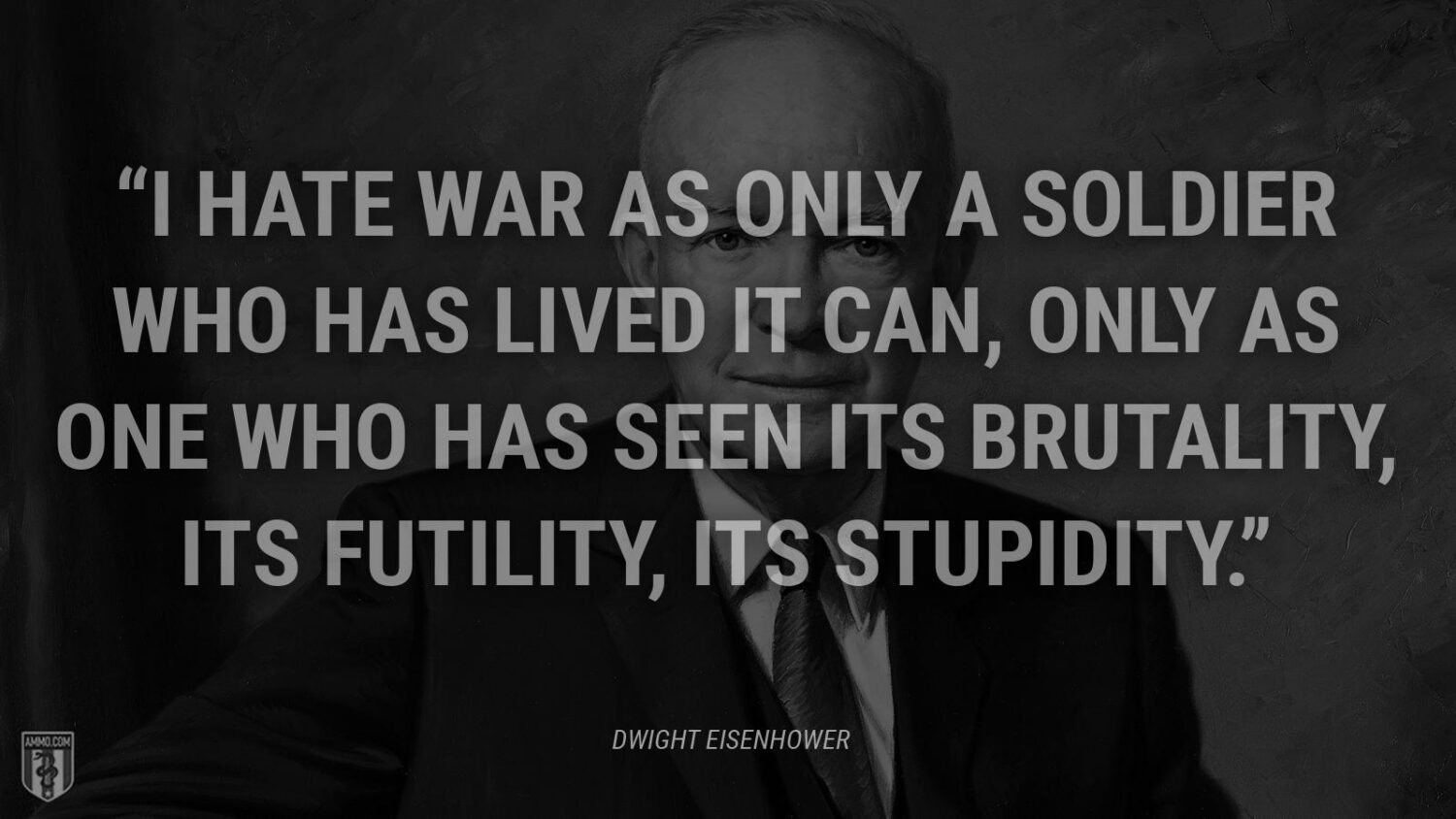
Thank you Tom. Your life experience and therefore believable wisdom make this heartbreak even more real and yet more difficult to understand. Thanks also for the Eisenhower quote.
Thanks for sharing this and thanks for serving. The question “Why?” is also asked by those on the other side, hundreds of times more than those on the American side. Including mothers and children. They are even more helpless and more victimized than American service members.
Amen! Amen! 🙏
Thank you for bringing not only the message, but also a Godly presence and healing balm to those in moments of their deepest pain and unanswerable questions. As the mother of a police officer, I realized this possibility the first time my son put on his uniform and went to work. And while we can never truly know the why of someone else’s actions, I do know the why of his motivation to protect and serve all people, especially the most vulnerable. That gives me the comfort and courage to pray for and bless him in his work.
This article from today’s NYT describes Pete Hegseth’s (d)evolution from emphasizing moral purpose to embracing vengeance and “lethality” in military engagement. The article also speculates about the impact of that change on those who are asked to fight, kill, and face death or injury with no clear moral framework. Chaplain Walcott expands that concern to include their families, and potentially our whole society. The threat of massive moral injury from this war is looming.
https://www.nytimes.com/2026/03/12/us/politics/hegseth-iran-war.html?unlocked_article_code=1.SlA.SFMR.ie9kqz-A_rnY&smid=url-share
Yes and amen, says this old Army helicopter jockey. Thank you.
Steve
Thanks for your service
Nothing to add, it is all already here, just so proud and yet so aware of all the pain from decades of service.
Thank you, Tom, for your words and your service. And to Jaci, too.
As a retired Air Force Chaplain, I concur with everything you wrote here. I’m not certain that, as a nation, we are prepared to answer the ‘why’ question, but many will ask for an answer to that question. Thank you for writing this article.
Thanks for your service
As your fellow CRC Navy Chaplain (retired!), I say AMEN. I too have made numerous CACO calls, deployed to Iraq and been to Bahrein (although not as long as you). I’ve also gone through the Straits of Hormuz on an aircraft carrier and remember how anxious my CO was during the transit. President Bush’s invasion of Iraq was controversial, but the difference is he had authorization from Congress and had made his case to the American people (WMD’s). Because of that, I could deploy with a clear conscience. Like you, I’m glad I’m. retired. It would be tough for me to deploy in support of this war of choice, I would still want to give our men and women in uniform the best pastoral care possible. I have to agree, “This war is personal for me.”
Great article, Tom. Thanks for your perspective.