
Tina and I recently spent some weeks in Shanghai visiting family and getting out of the West Michigan winter.
It was our third time in the city, and the place continues to astound. A metro area of some 30 million people; the world’s largest subway system, as clean as it is efficient; the world’s largest container port—the superlatives could go on. The skyline tells at once of an architect’s playground in the office towers along the river and of endless domino-rows of apartment buildings strung out across the city, uniform and gray, mile after mile.
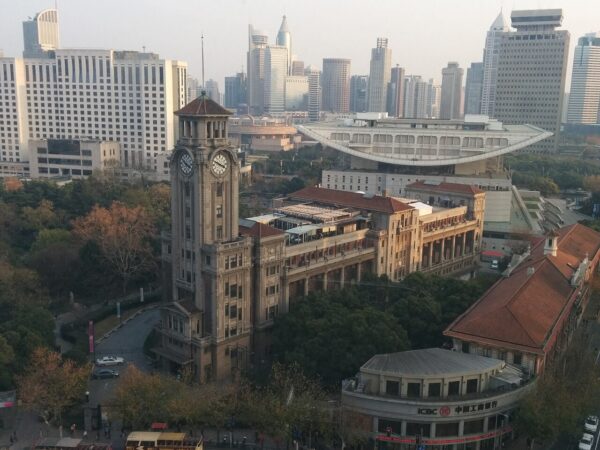
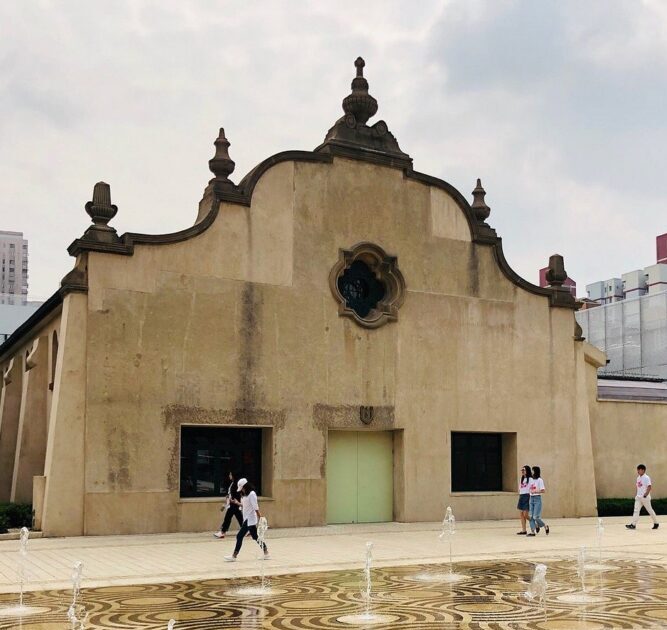
The historian in me likes to visit a city’s old historic center but in the case of Shanghai that’s difficult because it’s largely been razed and built over in China’s construction craze of the last forty years. The ten-story Shanghai Race Club tower still stands, though the horse-racing track it used to serve—for Westerners only!—has long been repurposed as the People’s Park. You can prowl around the old Columbia Circle, once the U.S. Navy’s country club with Spanish-style buildings and a still-extant outdoor swimming pool, all of it now featuring chic eateries and shopping.
On the Family Trail
I particularly like to stroll the Bund along the waterfront, with its monuments of the Anglo-American trading empire that peaked here in the 1930s. Not because I honor the empire but because the architecture is cool and because it’s one place I’m sure my Uncle Ed and Aunt Fran Van Baak visited upon their arrival here as Christian Reformed missionaries in August 1948.
They were part of a second wave, the first having arrived in the 1920s once the CRC synod had chosen China over West Africa as the location for its first overseas venture in “heathen missions.” (The Navaho reservation in New Mexico was the first stateside.)
The Van Baaks did not stay long, for the Communist People’s Liberation Army was already closing in on the city. Aunt Fran went into labor with their first child to the sound of PLA artillery and left the city with other wives and dependents in April 1949, a month before Shanghai’s “fall” or “liberation.”
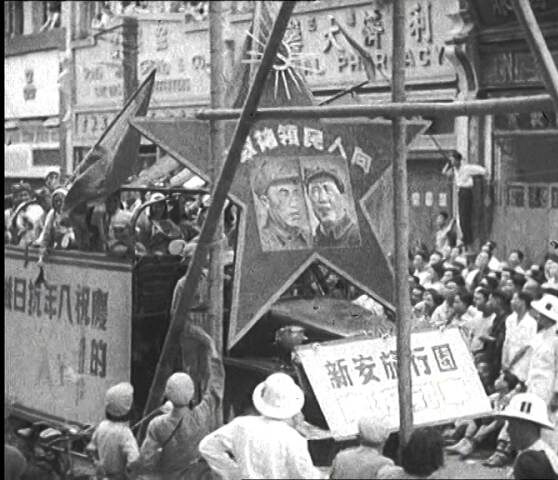
Uncle Ed and the other men had to leave in October after Mao Zedong instituted the People’s Republic. That was a month after the USSR detonated its first atomic bomb. (Reader: I entered the world halfway in between, borne on a Red tide. No wonder some students and a college president called me a Commie! More ominously still, I arrived on 9/11.)
Tracking the Pioneer
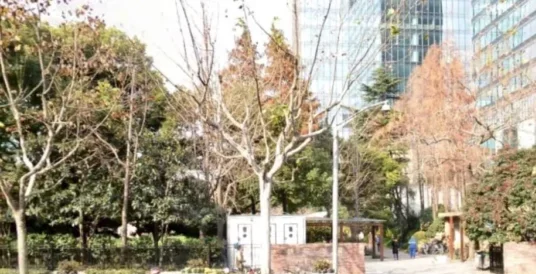
There was one particular site I wanted to visit in Shanghai and that was the old Bubbling Well cemetery where one of the CRC’s first three China hands, Dr. Lee S. Huizenga, was buried. Family lore has it that Ed and Fran and their colleagues made a pilgrimage there to honor their pioneer, who had died in a Japanese internment camp in July 1945, a month before the Pacific war ended. Alas for him and some 6800 other Westerners interred there (Bubbling Well too was mostly Whites only), the new regime turned the cemetery into Jing-an Park in 1954 with all tombs and graves torn out. Alas for me, Jing-an Park is currently closed for renovation.
It is said to be a restful spot for walking and sitting amid a busy high-end shopping area. It is also said that some of the families of the interred were notified before the cemetery was demolished so that they could remove their loved ones’ remains. There’s no report of that in the case of Lee Huizenga. I guess his monument is the dorm named after him on the Calvin University campus.
Making His Way
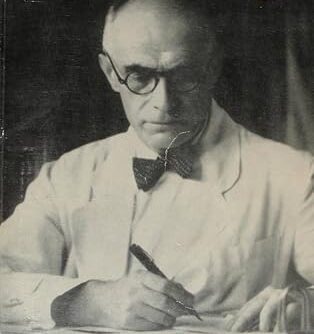
Huizenga Hall is adjoined to one named after Wilhelmina Kalsbeek, another China pioneer. Fitting, but also ironic. For the record of those early CRC missionaries is one of remarkable sacrifice and danger and endurance—and conflict. Huizenga in particular proved to be a tough guy to get along with. For one, he was super talented and hard driven, having learned many trades as an immigrant kid on the west side of Grand Rapids who had to help his financially strapped family, then pay his way through eight years (1901-09) of Calvin’s prep school, college, and seminary.
The same ethic continued in his early ministry in Englewood, New Jersey, as he daily commuted to Manhattan for medical school. Thus he arrived in China as a physician as well as evangelist. His colleagues wondered whether the first was getting in the way of the second, and they—as well as the denominational mission board back home—objected to his freelance budgeting and fundraising. He replied, pointedly, that they had neither the competence to understand running a hospital nor the vision to grasp how healing and soul-saving might work together.
Travel and Travail
Everyone was a bit relieved, therefore, when the Huizenga family (Matilda née Van Dyken and their four daughters) went on furlough in 1927. Over the next three years Lee earned his doctorate in public health from Yale in his specialty of Hansen’s Disease (“leprosy”) and did field work at the National Lepers Home in Carville, Louisiana. When they returned to Jukao (Rugao, 100 miles east of Nanjing, capital of the Republic), they found the hospital pillaged by warrior bands and had to live under the threat of their return.
The terminal threat turned out to be the invading Japanese army, however, so that after another command trip back to Grand Rapids in 1936 to make his case before the Board, the Huizengas relocated to Shanghai. There Lee lived and worked under Japanese occupation, then internment, for the rest of his life until he succumbed to cancer on July 14, 1945. He had rejected State Department orders and Mission Board pleas to return home, insisting that his work—which the Japanese authorities long permitted to continue—was his calling. He was honored by the U.S. government as a leading authority on leprosy and by the Chinese for his sacrificial work among them.
“A Stubborn Frisian”
Shanghai, Grand Rapids, New Haven—spots on Lee Huizenga’s trail coincide with some of my own, and I’m one of those historians who get really juiced by those kinds of connections. One more link is especially sweet. Lieuwe Sjoerds Huizenga was born in 1881 in Lioessens, a small Dutch village; more precisely, a Frisian village. As it happened, on one of our stays in the Netherlands, Tina and I visited one of her tantes there and had a delightful week biking around the charming countryside, hitting up bakeries, old windmills, and lively relatives.
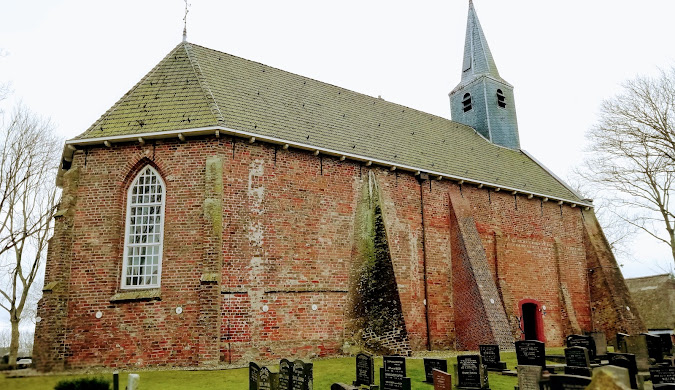
population around 350
Things would have been much less pleasant for Lee’s family, for in the 1880s rural Friesland was in the throes of a dreadful depression that was breeding revolutionary sentiments even among good Christian Reformed folk. That never eventuated but mass immigration did—of a thousand families like the Huizengas. Also like the Konings, from another Fries village. In their number was little Amerins who would grow up to be my grandmother.
Frisians are reputed to be stubborn, an attribute applied often enough to Lee Huizenga. “Dedicated,” he would reply; “committed” and, yes, loath to suffer fools. Grandma Bratt, the sweet “Moetie,” was of another character entirely, although having the strong inner piety that Huizenga revered in his own mother. Indeed, at the risk of raising some readers’ ire, I find that it’s Groningers who fit the stubborn profile. Frisians tend toward the wryly humorous and mystical, as Huizenga reported of his own home. And, yes, they’re forthright too. I ought to know; Tina’s from there.
History Made Personal
The past carries burdens and follies and horrors enough, as we can read in today’s news that will become tomorrow’s history. Amid this tide it can be a relief to trace the track of little people who go on to great if often unremarked things. And it can be comforting, as well as intriguing, to see markers of your own life along their path. So enough Persian Gulf for today. Let’s run the Lioessens-Shanghai route.

9 Responses
Love this. I’m curious about the CRC not grasping the missionary doctor thing. It has been RCA missions policy from the very beginning, with John Scudder in 1819. A more recent example was another Frisian, Donald Taeke Bosch, whose medical ministry was so important in Oman that, when the oil money started flowing, the Sultan entrusted him with developing the Omani national health system. Was the CRC resistance from something like “sphere sovereignty”?
No, I think it was a pietistic elevation of “spiritual” over “material.” You were out there to save souls, not tend to bodies.
What a delightful read, especially having grown up with the Van Baak children in Japan. Your comment about who is more stubborn, Frisians or Groningers, reminded me of a conversation in Kalamazoo Classis (RCA) when I just began pastoring. The discussion concerned merging two churches that had experienced challenging times. Finally, one of the delegates to the meeting commented, “This church is all Frisians and the other is all Groningers. They’ll never get along and it won’t work.” Case closed!
My wife and I visited Shanghai as part of our trip to China a number of years ago, a trip arranged by a travel agency in Ontario owned, of course, by the Communist Party of China. We saw the Bund at night, so there was a very impressive display of multi-coloured neon lights. We also rode the impressive subway system you mention.
What was most moving for us in Shanghai, however, was that we were able to attend a worship service. Presbyterian, if I remember correctly—a Christian worship service in the heart of Communist China! A Christian church that is the legacy, years later, of the multi-denominational missionaries to China.
Yes, Christianity in China today is really something. It’s said that there are more Christians in China today than members of the Party, one reason that President Xi is cracking down on things. I also heard that the largest structure in Confucius’s hometown is a church. Strict or loose policy re public worship seems to be at the discretion of local, not national, authorities. But I wonder if the faith has really thrived because, after 1949, it depended on indigenous work, not that of outside missionaries. Plant the seed and then get out of the way??
…little people who go on to great if often unremarked things…
This is our hope in these troubled times. Grace embodied in little people and sustaining us unawares; and of course historians who remark on this unremarked grace deep in the midsts of things.
Such fascinating connections. Following Mao, other denoms landed in Pyongyang and eventually South Korea. My in-laws (John & Julianna Steensma) established a rehab hospital in Seoul (’58-’66) and functioned as a serviceman’s home for CRC soldiers. At the time there was “no field” in Korea so CRC support was absent,Also the Steemsma’s had Church World Service connections which was highly suspicious to say the least.
I asked a Frisian friend at CTS what the difference was between Dutch and Frisian.
“The Friese are just like the Dutch, only more so.”
This article is very interesting, thank you for your research. Lee’s son and daughter still live in the Grand Rapids area. Also, Lee’s granddaughter, Shannon Lucid, is one of America’s first women Astronauts.