
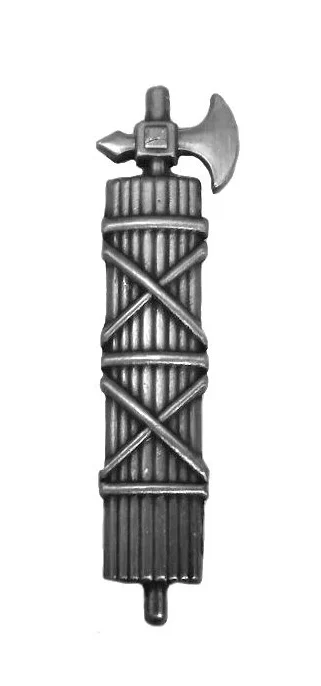
For obvious reasons, discussions of the key characteristics of fascism have been common of late. No doubt you have encountered them.
The lists are familiar: a drive for national and ethnic purity; a nostalgia for a mythic golden era; the discrediting of institutions like higher education, journalism, science, law, and the arts; devotion to a strong, charismatic leader; a glorification of violence. My list isn’t meant to be exhaustive.
The different lists are helpful, yet I’ve also sensed something was missing. Perhaps it is implied, floating between the bullet points, implied but unnamed. Fascism seems less like a coherent ideology or governing philosophy, and more like an energy, an ethos, a societal temperament.
A helpful image for me comes from a retreat I attended years ago with Walter and June Wink. I’m no expert on Walter Wink’s work, but the three days I spent with the Winks left me with a useful metaphor.
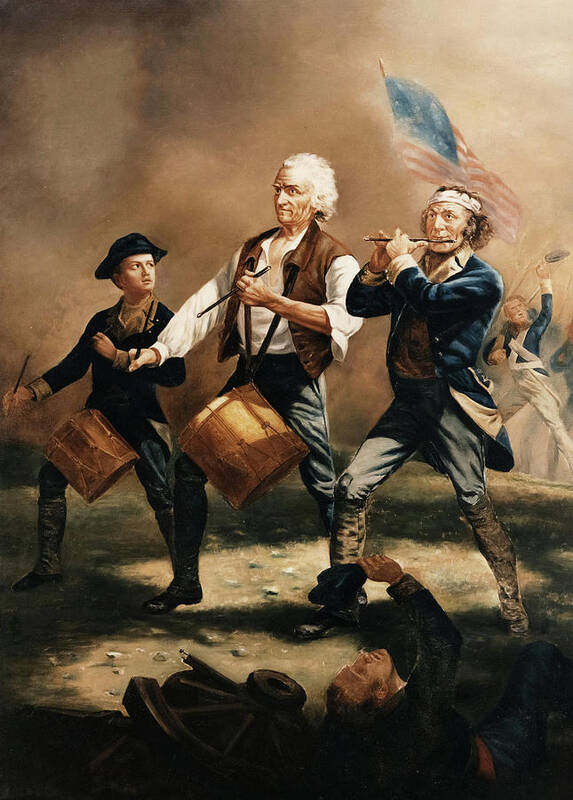
Walter spoke of “angelic” and “demonic” powers as ways of naming intangible cultural forces. He pointed, for example, to the “Prince of Persia” and the “Prince of Greece” in the book of Daniel as figures that personify entire cultures and systems of power. In Revelation, each of seven churches is symbolized by an angel. Closer to home, we understand the use of images like the “Spirit of ‘76” or the “Spirit of St. Louis.”

We want to ask “Are these ‘spirits,’ and ‘princes’ and ‘demons’ real?” The answer, of course, is — sort of, yes, and no, and maybe. They are real in the sense that we experience them as powerful forces, yet not reducible to literal beings. I note how often we still hear phrases like “battling their demons,” “running like they’re possessed,” or “haunted by their ghosts” in discussions of addictions, obsessions, and trauma.
Of course, talk like this can veer quickly into the bizarre. I can’t help but think of the odd overlap with some of the beliefs of the ultra-right-wing, neo-Pentecostal, New Apostolic Reformation, prevalent in MAGA world. I recall the claims of C. Peter Wagner, often considered the founder of the New Apostolic Reformation, after the 2011 Fukushima disaster in Japan. Wagner asserted the disaster was the result of the Emperor of Japan having sex with the demonic Sun Goddess. My imagination is too limited to comprehend what that means.
I’m not convinced it is necessary or helpful to try to nail everything down with precision, especially if the result pushes us toward B-grade movies and literal images of wings, horns, and halos.
I am, however, fairly convinced that Wink is on to something important. The language of “spirits” or “demons” may seem melodramatic, but it points to something real: a cultural ethos, an energy that animates actions and rhetoric.
This is what I think is missing in today’s discussions of fascism.
There is an energy at work in fascism.
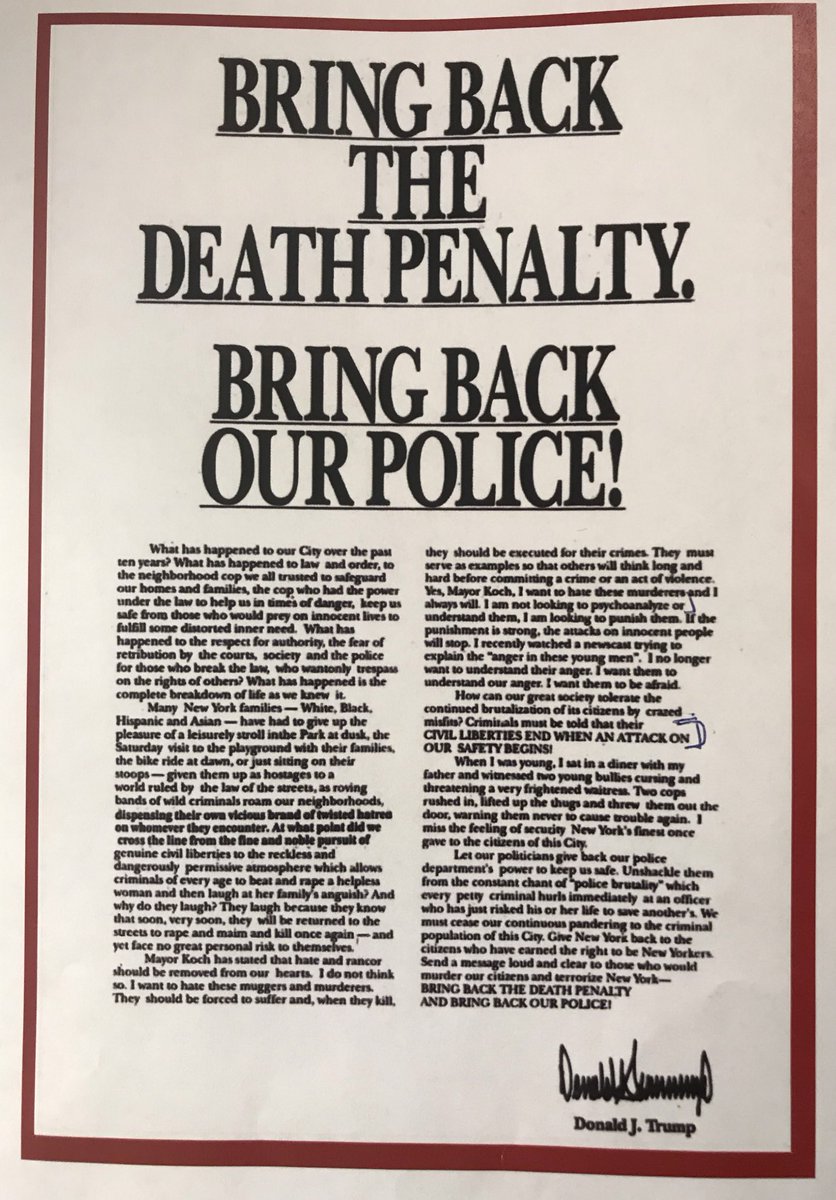
The word that floats through my mind for this energy is “wilding.” It entered public consciousness during the 1989 Central Park jogger case when five Black and Hispanic teenage boys were convicted — and then, later, exonerated — of random, brutal violence. You may recall that in the heat of the moment, Donald Trump took out full-page ads in four New York newspapers calling for the reinstatement of the death penalty, declaring his hatred for murderers and muggers, and that they should be made to suffer for their crimes.
As many have noted, for Trump, every accusation is a confession
MAGA world, and probably fascism in general, is a world of wilding. No real comprehensive vision or goal. Reckless. Chaotic. Impulsive. Destructive. Merciless.
Wilding is not about what fascists advocate, but how they feel and move through culture. There is a chip on the shoulder, contempt, a snarling resentment, especially toward those perceived as condescending elites, as well as those considered other, weak or societal parasites. Institutions that once excluded or corrected them are now targeted for humiliation and destruction. Reveling in tearing down. The thrill of vandalism.
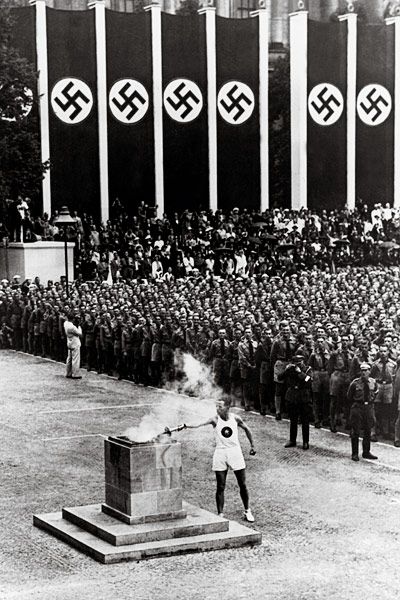
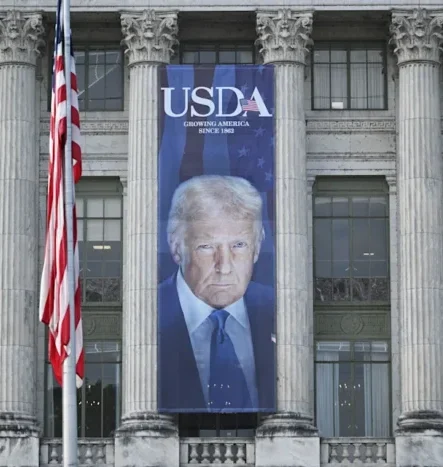
Size matters. Pageantry. Grandiosity. Think of Hitler’s mass rallies and the spectacle of the 1936 Berlin Olympics. Or recall 2017’s “largest audience to ever witness an inauguration” — according to alternative facts. An Oval Office cluttered with cheap, gold baubles. The enormous banners of Trump’s face that now hang from government buildings in Washington, DC. It calls to mind the booming voice and billowing smoke of the Wizard of Oz, until the small, anxious man behind the curtain is revealed.
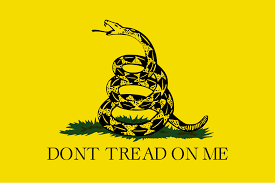
I sense this energy, this “demon,” when I see a Don’t Tread on Me flag, or a giant, rumbling pickup truck. I sense it in a toney, white linen country club and in symbols of the Crusaders redux. By no means am I saying that every member of a country club or driver of a big pickup is “demon-possessed.” Rather, these things share in and radiate the energy I’m trying to describe.
Once upon a time, telling young men to stop being “sophomoric” or immature appeared to work. The defiant adolescents either grew up or skulked off to the sleazy corners of society. But those who believed that explaining “sophomoric” yet one more time would work have been vanquished. When Hillary Clinton (in)famously called Trump supporters a “basket of deplorables,” her remark only fueled deeper resentment. Not surprisingly, the tsk-tsk of shaming seems to have backfired.
What was once relegated to men’s locker rooms and crude in-group jokes, came to occupy positions of influence and authority. What was once chastened is now celebrated. Unruliness is reframed as authenticity. Buffoonery as strength.
What to do? How to draw this blog to a close? A first instinct might be to quote Ephesians 6,
Our struggle is not against blood and flesh but against the rulers, against the authorities, against the cosmic powers of this present darkness, against the spiritual forces of evil in the heavenly places.
While I appreciate and “understand” this passage, I’m concerned that to go to it too quickly causes us to be pushed into those murky questions about cloven hooves and smoking sulfur, distracting us from an important conversation. Without some nuance and nimbleness, it becomes nothing but a mirror image of the neo-Pentecostal, NAR, MAGA rhetoric.
Yet the Ephesians passage does helpfully point toward something elusive that I’ve been trying to pin down. Fascism is not a simple list of characteristics or a coherent ideology. We are contending with more than policies and personalities, but an animating force. I’m okay if we call it a demon.
19 Responses
Absolutely. Thank you. Weston in Perelandra. The most comprehensive way to understand it all. A New Testament version of the Baal worship in Ellul’s The Politics of God and the Politics of Man.
Well said, Steve. You have articulated what I have been feeling.
Hiebert’s “flaw of the excluded middle” comes to mind. There is definitely something bigger going on that explains how political movements become so powerful and so evil and create so much harm and destruction in the world.
Perceptive, informative, and terrifying, and yet . . . The exemplar fascistic regimes (such as the one that murdered priests and pastors and protesters, and indigenous people by the thousands, here in Guatemala in the 1980’s, with the generous and unswerving support of the US government and of US evangelicals, grateful that God had sent his servant Rios Montt to deliver us from Satan’s minions the Communists) usually upheld a more or less consistent ideology, not one that lurches back and forth in incoherent tweets every day. And they lacked the machinery to manufacture reality at will (nukes in Iran, Trotskyites in every university, criminals sent to the border from Mexican jails, birds massacred by wind turbines) through social media. Dark days indeed.
I’m glad Jesus has the power to cast out demons like this one with the finger of God. I’m just praying for that day to come. The light has come and the dark cannot overcome it.
This is helpful. Perhaps helps me understand the irony of a recent visit to a relative’s church where the sermon’s (on Sampson) point was don’t take revenge, yet a large, old Chevy SUV in the parking lot displayed two 4×6 foot flags–one an American flag and one that said “God, Guns, and Trump.”
Thanks for the insight and clarity in this piece.
It makes me wonder how this same “fascism” is present on the CRCNA synod floor in that last number of years.
I am just finishing the first book in Walter Wink’s “Power Trilogy” – well worth a read today, IMO, and sheds a lot of light on current events. It is helping me understand them better from a spiritual POV, while also showing me how avoid the misguided and dangerous charismatic bent of the MAGA movement. Wink joins social justice and the gospel in a way that makes sense and is on the lookout for pitfalls on both sides (i.e., emphasizing one to the neglect of the other). (Note: Wink came to his perspective after an extended and very formative stay in Latin America, where he encountered and had to wrestle with evil of the sort that David Hoekema describes in his reply above.)
Christina, this is really helpful and interesting. As I noted, I’ve never read any of Wink’s books, but maybe that should change. I was taken by his insight and creativity when I attended the retreat years ago. Thanks!
Oh, that the Lord would walk in and cast the demons out of those who wield power at this moment. But then, what would friends think who believe that these demons are re-creating our nation so that the Lord’s will and words will reign surpeme? Thank you for naming these forces brutalizing our people and nation.
Excellent piece! Per usual, very helpful and so well-articulated. May it be so that the pendulum has reached its far right terminus, and will soon begin to turn back.
Last August I was addressing a group of church leaders in the Netherlands deeply concerned about the American church’s complicity in the rise of Trump and his fascist tendencies. I talked about the breakdown of the constitutional balance of power and the rise of the unitary presidency. Toward the end, I referenced Wink and the notion of a power aggregating over time and taking possession of people. I pondered whether large sections of the American church were not just willfully ignorant, which would imply some kind of rational choice, but invaded by an overwhelming power and needed some kind of exorcism. The converstion was awkward, and the pastors admitted that we in the Reformed tradtion are not comfortable with this kind of analysis and have largely disenchanted both the created and social orders.
Having had that experience and now reading Steve’s blog, I am wondering what the readers of the RJ think about all this. We get mighty nervous when people talk about spiritual powers and exorcisms.
I truly believe in spiritual powers and maybe exorcism. Yikes, that word in itself makes me uncomfortable. That being said, that discomfort can absolve us of our responsibility to not just wish and hope and pray for dramatic divine intervention, but remember we have been called by the Holy Spirit to bring hope and light to our the worlds we live in. To me that is standing for justice, love, and defense of the defenseless. It’s getting more difficult to do so because of the dangers it could bring upon us. Most Christians would just like to go somewhere and hide. I know I would when I listen to the news and wonder what my response should be. But as Christians, we must bravely stand firm against what is happening. We must speak out, maybe march, write letters, protest peacefully, give aid to those who need it, whatever we can to be light during this time of darkness.
I’m reluctant to say this because it sounds like it is in opposition to activism and resistance, or maybe just naively pious, but I am reminded of Jesus’s words after the disciples asked why they could not cast the demon out of the boy, “This kind can come out only through prayer.”
Thanks for this. I’m left wondering: Is “wilding, pageantry, and grandiosity” inherent in fascism? Can we define fascism in a way that seems more “normal” or less “demonic”? The term “fascism” has a very negative connotation in Western culture, but not necessarily everywhere. Some political leaders in India proudly owned their own “fascism” in the mid-20th century, presenting it as a reasonable political creed. Their admiration of Italian fascism continues to influence India today, specifically the world’s largest voluntary organization, the RSS, and the political party currently in power, the BJP. “Today, Hindutva organizations sometimes replicate methods of European fascists, particularly in targeting minorities.” (https://thefederal.com/category/news/italian-fascism-influence-hindu-nationalism-212257). This is not to deny a demonic element in fascism, but rather to generalize that there are demonic elements in many political organizations.
David, I know nothing of Indian fascism, although admiring Italian fascism seems to make it pretty awful sounding to me. Targeting minorities doesn’t exactly commend it either. Perhaps those first items I listed, and a few more describe Indians fascists? Merciless, reckless? You know better than me.
Thank you for naming the spirit, ethos of our present day while not trying to label it too precisely or identifying it with one person or one party. While this spirit seems obvious in the U.S. it is not limited to the U.S. Our Reformed tradition is too afraid of this kind of language. But we should at least be able to agree that what is happening before our eyes is evidence of the evil one. And it will take more than a change of personnel or policies to combat it.
A truly revolting sight was the multitude of abortion rights activists hysterically rejoicing on the graves of the unborn. I’m not against abortion in certain cases, but it is never something to be celebrated. I thought I was looking at the Dance of the Demons.
Fascism is an evil movement but so is its malevolent counterpart, Marxism, which has been festering in US colleges and universities for the past 40+ years. Both movements tolerate the intolerable. Both are strikingly similar, but for different reasons. By lamenting the demons of fascism and turning a blind eye to those of Marxism, we may be under the influence of the powers of darkness more than we realize.