
I love to check in on my beloved people’s dots in “Find My” (in moderation, of course! I don’t want to be stalkery). It brings me comfort to see them on a map – moving gently and steadily along a freeway or tucked safely into their houses on their cul-de-sacs. I watch their dots bounce about in their workplaces or hang out happily on the coasts of their vacation destinations. With a quick click I can tell if my oldest daughter is in class on campus or in her apartment; I can see how far my husband’s bus is from the stop where I pick him up after work.
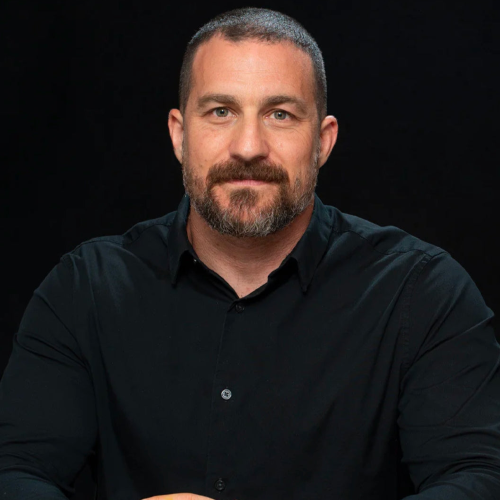
In a podcast episode from a few years ago, neuroscientist Andrew Huberman taught his listeners about the maps we all have – not on our phones, but in our brains – of the people, animals and things that are important to us. These maps are comprised of three elements: time, space, and emotional attachment. Your map of emotional closeness to a person is interwoven with where they are in space and time – how long it’s been since you last saw them, what you would have to do in order to see them again, and how long it would take you to do that.
Think about your people: your siblings, your kids, your partner, your parents, your best friends. You’ve got a map somewhere between your brain and your heart. If you absolutely had to find them or reach them, you could. You would. You can.
Unless they’re dead. In which case, you can’t.
And if they’ve recently died, their dot-less-ness on your map feels inconceivable. A part of you knows that they have died, but another part of you – the part that is attached to them in love and with a whole trove of episodic memories – cannot comprehend that their location cannot be found.
Huberman, who in this episode is talking about the science and process of healing from grief, says
when somebody or an animal or thing is taken from us… our entire memory bank and our ability to predict where and when they will be, and therefore when we can feed our attachment to them again, that whole map is obliterated. Except the attachment itself has not been disrupted… We keep yearning for [them]. We keep seeking them and looking for them.
He goes on to talk about trace cells in the hippocampus that fire when something we expect to be there is not there. These neurons reveal the presence of the absence of the person, the animal, or the thing that is not where our brain still expects them to be.
Huberman gives us the science behind the yearning we hear in C.S. Lewis’s words about his late wife in A Grief Observed: “I look up at the night sky. Is anything more certain than that in all those vast times and spaces, if I were allowed to search them, I should nowhere find her face, her voice, her touch? She died. She is dead. Is the word so difficult to learn?”
It is difficult, dear Clive. It is.
I remember the evening of my first husband’s death, over 25 years ago. It was the 11th of December. Layton had been in a car accident three days prior. My family and friends and I had set up camp in one of the waiting rooms outside of the ICU, taking trips back and forth to his bedside. That evening, we knew his brain waves were nearly gone, and we were waiting. My dad and I walked laps around the unit, needing to expend our horrified and nervous energy.
How could this be happening? I cried. And where is he? Where is his mind? And where is he going?
My dad brought up Jesus’ words to the thief on the cross and we began to recite them as a kind of mantra as we walked: “Today you will be with me in paradise. Today you will be with me in paradise. Today you will be with me in paradise. Today you will be with me in paradise. Today you will be with me in paradise.”
Layton was pronounced dead just before midnight.
Eleven days after he died, I wrote in my journal about the things I said to Layton the day of his death and the thoughts I had about where he was afterward:
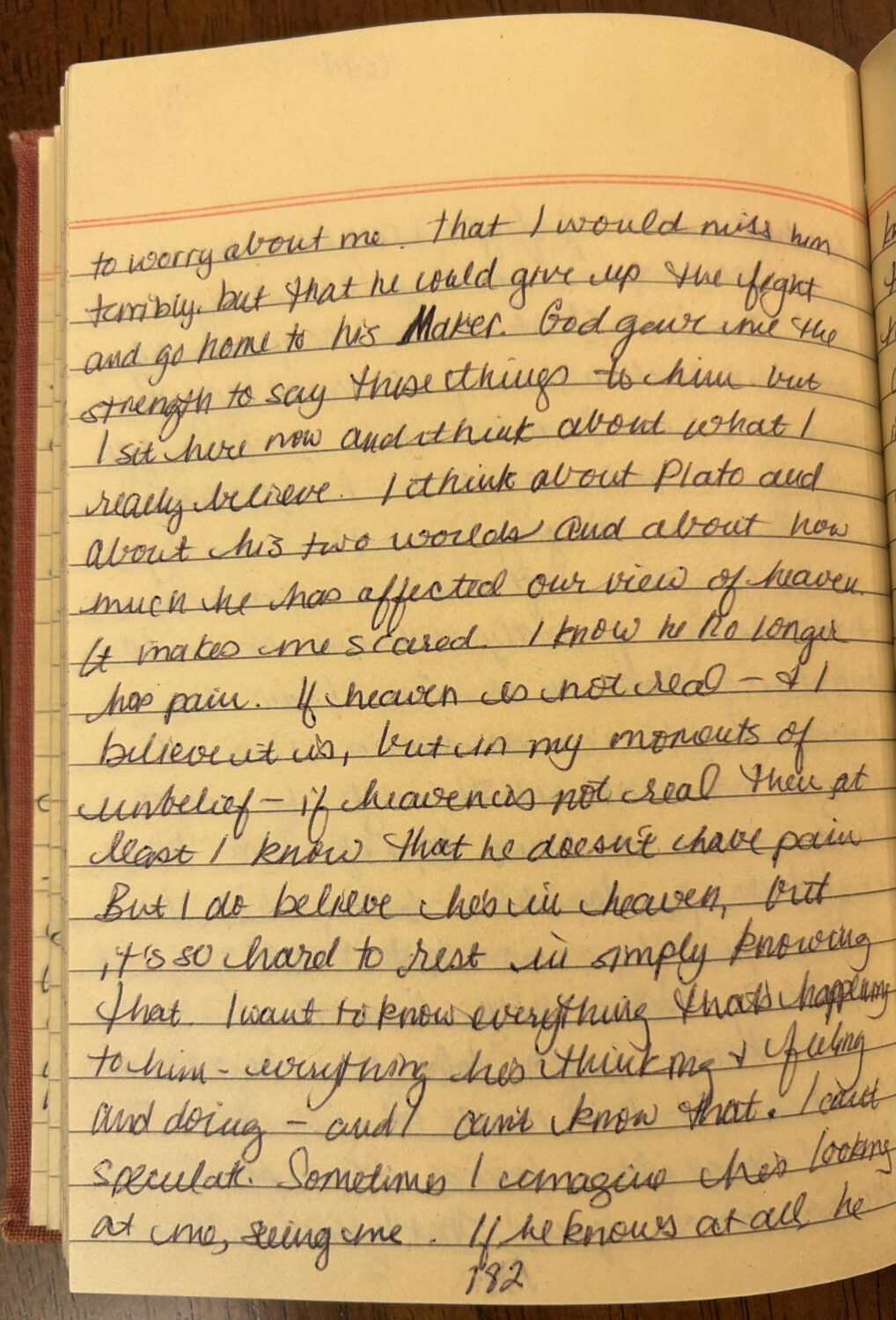
[I told him] that he didn’t have to worry about me, that I would miss him terribly, but that he could give up the fight and go home to his Maker. God gave me the strength to say these things to him, but I sit here now and think about what I really believe. I think about Plato and about his two worlds and about how much he has affected our view of heaven. It makes me scared. I know he no longer has pain. If heaven is not real—and I believe it is, but in my moments of unbelief – if heaven is not real then at least I know that he doesn’t have pain. But I do believe he’s in heaven. But it’s so hard to rest in simply knowing that. I want to know everything that’s happening to him – everything he’s thinking and feeling and doing – and I can’t know that. I can’t speculate. Sometimes I imagine he’s looking at me, seeing me. If he knows at all, he knows more than anyone on earth… I’ll think more about that later.
And think I did. As a first-year seminary student, I would not typically have been allowed to take a 400-level course in personal eschatology, but I felt desperate to know what the Bible and systematic theologians said about where Layton was. The professor let me in.
My studying, my journaling, my walking and talking – Huberman would say that these were my ways of doing the work of grief. To grieve well, you must unbraid your sense of attachment to the person from their locations in the usual spaces and times in which you found them before. In other words, you can and should nurture and steward the emotional attachment (which remains after death) while gently allowing your heart (in time) to arrive at a place of acceptance that they are no longer in this place and time with you in the way that they were before.
According to Huberman, you need a new map – a map that can hold your beloveds in a different dimension or a different way. “The process of moving through grief can’t simply be that we hold onto the attachment [while] discarding … any understanding of where they are in space and time.” Rather, he says, “it is … essential, no matter what you believe, that you have some firm representation of where that person, animal, or thing is so that you can plug it into this map, this three-dimensional map of space, time, and attachment.”
Maybe this language is too scientific, or too… conjectural. But I do think that in our grief we become cartographers, eventually settling into holding our dead beloveds some-where or some-when or some-how (even if we need another dimension to do so). We locate them – however mysteriously – on a map… whether we believe they have simply become food for worms or that they are resting in Jesus’ arms somewhere beyond the known universe.
Henry Scott Holland was an Oxford theologian in the early 20th century. He shares his perspective on the where-i-ness of the deceased by writing from the viewpoint of someone who has died: “I have only slipped away into the next room… Everything remains exactly as it was. I am I, and you are you, and the old life that we lived so fondly together is untouched, unchanged. Whatever we were to each other, that we are still.” (So, the emotional attachment remains intact.) He goes on: “I am but waiting for you, for an interval, somewhere very near, just around the corner. All is well.”
Before their death, poet Andrea Gibson wrote Love Letter from the After Life to their partner, expressing even more strongly their trust in the close locate-ability of the dead:
My love, I was so wrong. Dying is the opposite of leaving. When I left my body, I did not go away. That portal of light was not a portal to elsewhere, but a portal to here. I am more here than I ever was before. I am more with you than I ever could have imagined. So close you look past me when wondering where I am…
I found a peace about Layton’s whereabouts in a dream I had not long after he died. This dream felt more like a vision. There was a thickness to it compared to the gauziness of my usual dreams – a sense that this dream did not come from inside me, but from outside me.
In my dream, Layton called me on the phone, his voice close in my ear. He said two things: “Thank you” and “It’s so beautiful.”
For me, that was enough. His when was a time of completion and gratitude. His where was a place of beauty.
Just like 23-year-old Heidi, “I sit here now and think about what I really believe.” What I believe about life and love after death may be different now than it was then. And yet, I still rest and trust that those I love who have died are not lost, but found…
…are not nowhere, but somewhere…
With me and with God.
Present.
Mapped.
Beloved.
You can read my first Cartography of Loss blog post here.
8 Responses
Oh Heidi, this is so painfully real and hopeful. My mom, a Christian, died angry with my dad after a terrible divorce 25 years earlier. A short time after her death I heard her voice say my name “Joy” as it sounded when I was young. I knew she was free.
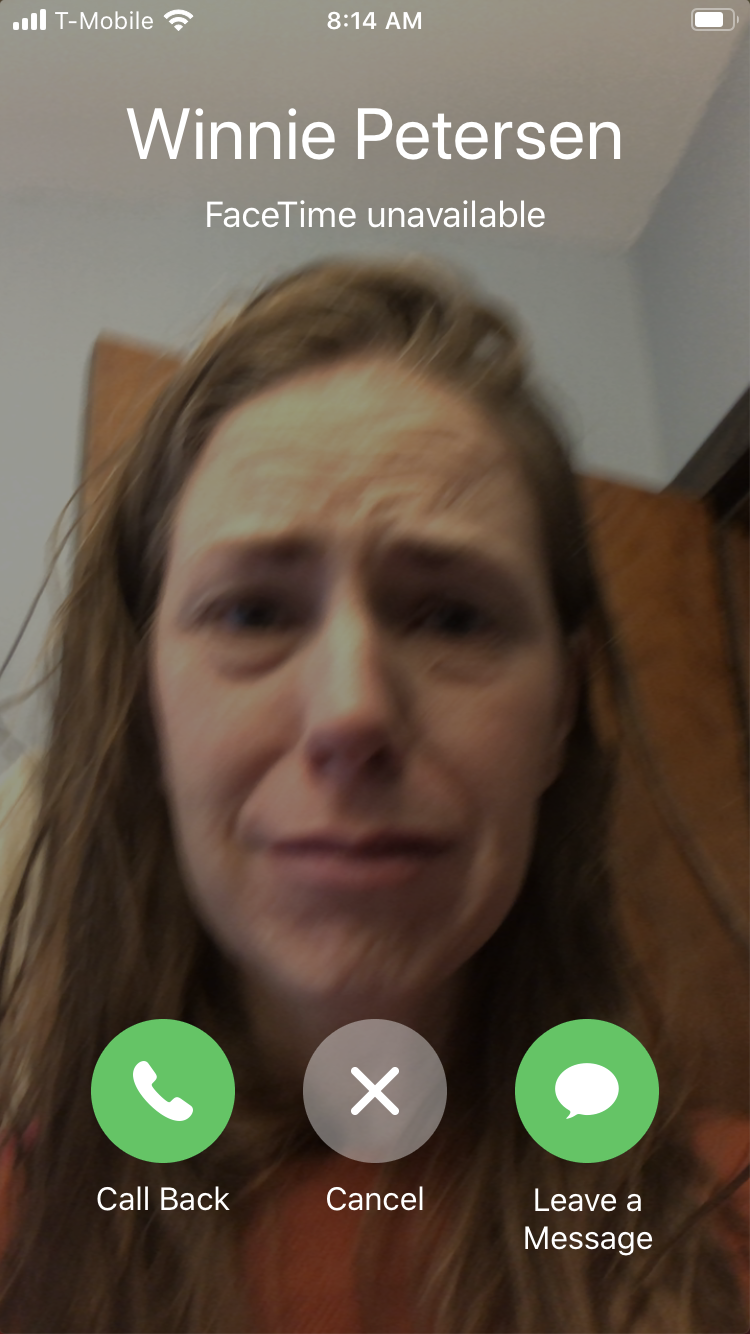
Fast forward to your post for me today:That screen shot “Facetime unavailable” of your face—so real. The quote from Huberman: “ Except the attachment itself has not been disrupted… We keep yearning for [them]. We keep seeking them and looking for them.”
-my hand reaching across an empty bed; turning to an empty chair to share a new thought; the missing sound of his laughter. My second husband died 6 months ago. Your words “His when was a time of completion and gratitude. His where was a place of beauty.” combined with my mom’s “Joy” are comforting on this latest journey. Thank you so much for sharing your story and your wisdom.
What a profound read this morning. Thank you.
Thank you, Heidi. Your words ministered profoundly to this lifelong griever this morning. Thank you for helping me frame my grief with a new mental model: map-making.
Thank you, Heidi, for this cartography. As a life-long map-lover, it was especially meaningful. The week before my Mom died (a year ago yesterday), my sister-in-law was asking who she wanted to hug first when she got to heaven: her husband? her youngest son? her parents? As she was starting to slip away, Mom simply said, “I’m hugging Jesus first.” That comment brought great comfort. We knew where she was.
Thank you for this. I lost my younger brother a little over two years ago to colon cancer. But I still think of him as somehow present and somehow not. This is really helpful.
Thankyou Heidi, Your thoughts and descriptions of eternal life were inspirational.
I did not know that your mother was Winnie Peterson. I knew Winnie fairly well, as her brother , Wally Maas, was a friend and roommate of mine at Dordt College,,,,, a few years ago (**)
Oh. Dear Heidi. Yes. Yes. Not nowhere but somewhere. Present.
As we approach the three year mark of our granddaughters death and face being at her high school graduation where all of her friends and classmates want a chair, cap, and gown for her, your beautiful words have brought tears, but also the certainty of “are not nowhere, but somewhere…With me and with God. Present. Mapped. Beloved”. Your words express so much of what we have gone through and will continue to go through for the rest of the lives God gives us. Thank you for your honest reflections.