
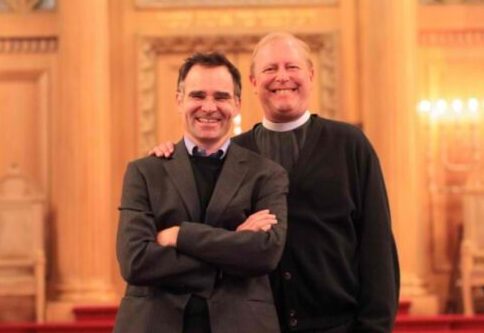
Twelve years ago, in Brooklyn, on Good Friday morning, my phone rang. It was my bestie, Rabbi Andy Bachman. He said, “I just want to say—it was all a big mistake!” 😄😄 LOL.
He was right.
The Lord Jesus had said, “Father, forgive them, for they know not what they do.” And St. Paul wrote to the Corinthians, “None of the rulers of this age understood, for if they had, they would not have crucified the Lord of glory.”
Does this let them off the hook? When do the mistakes of ignorance become culpable? When you were supposed to know? When you were responsible to know? When your ignorance has victims? Certainly when your ignorance is cultivated. And certainly when your ignorance is vicious. I am thinking about the White House here.
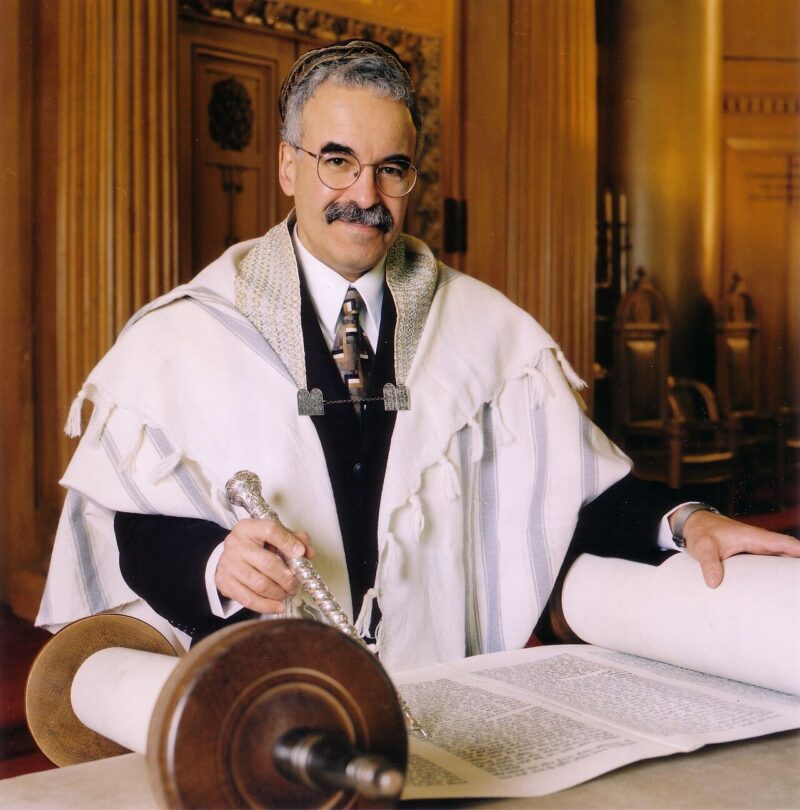
Were the killers of Jesus vicious? Twenty-two years ago Rabbi Jerry Weider (Andy’s predecessor) called me to ask if I had seen Mel Gibson’s movie The Passion of the Christ. I told him that I did not intend to. But he convinced me that as religious leaders we should see it. So we went together, me in my collar and he in his kippah.
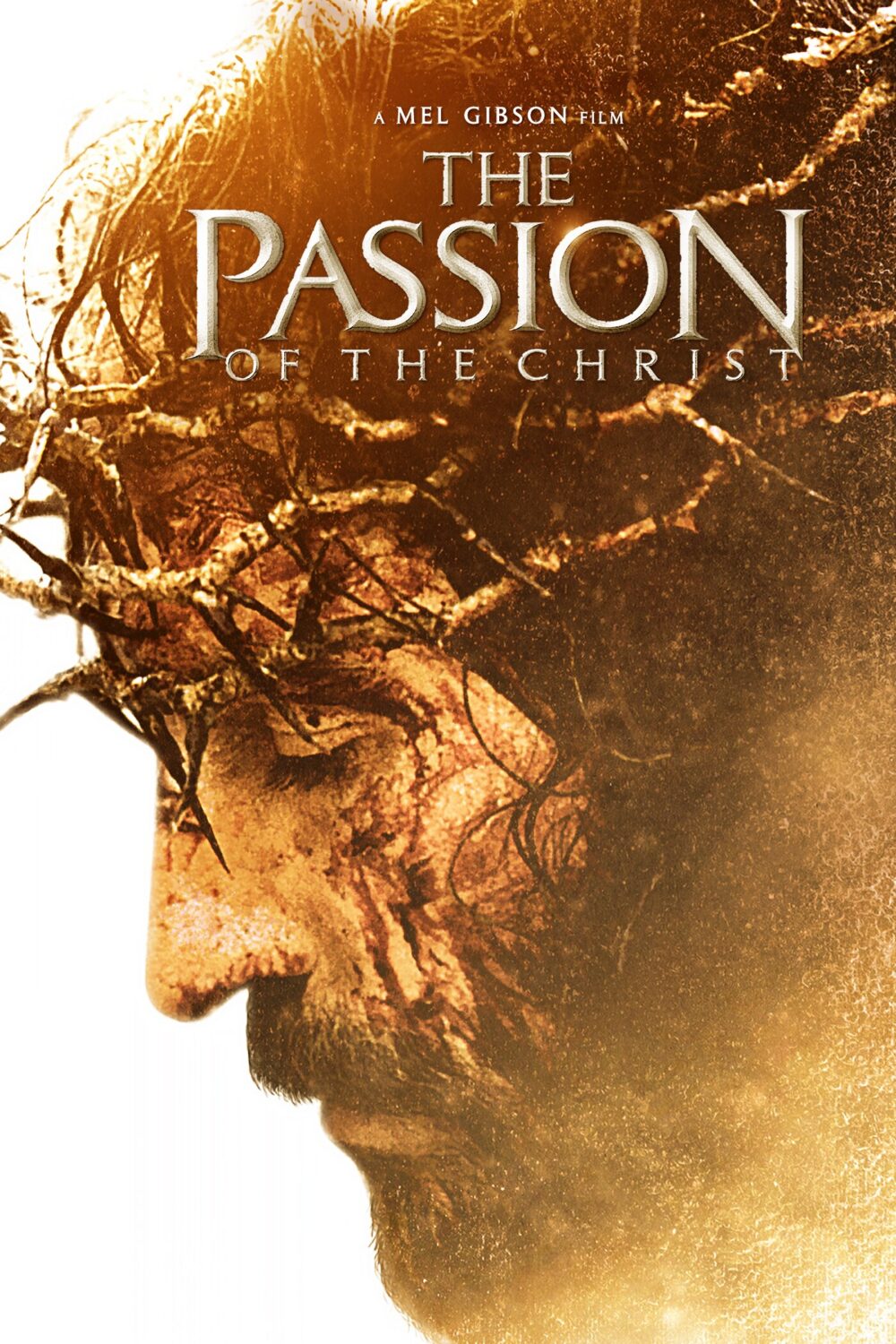
I hated the movie. It was horribly fixated on the Jews abusing Jesus and the Romans torturing him. Worse, sitting next to Jerry, I kept noticing the aggressive antisemitism in the movie’s ugly depiction of the chief priests and scribes. At the very moment of Our Lord’s death, the camera jumped to the nasty Jewish officials. Christ-killers! I was ashamed, and apologized to my friend. He took it better than I did. I guess he was used to unacknowledged antisemitism.
The movie was based on The Dolorous Passion, a devotional practice fixed on the singularly painful suffering of Jesus. No doubt Our Lord suffered profoundly. No doubt very many people have suffered far worse. But the movie’s exploitation of the torture demonized everyone involved and was implying that this killing was no mistake.
The truth is that the Judean leaders and Roman officers who connived in Our Lord’s death were not especially vicious and no worse than anyone else. They were just doing their jobs in the casually brutal situation of a military occupation. The Romans did what Romans always did with unruly populations and petty kings. The Judean leaders did what they thought best — the Romans being Romans. Things were rough and tough. There was no Bill of Rights. How else to preserve the peace? Nobody was especially malicious. Maybe just banal.
The tragedy in the Passion of Our Lord is that this evil came from ordinary people doing ordinary things—and being tragically mistaken. And so we ordinary people repent of our sins and shortcomings, which include mistakes. Our mistakes have consequences too.
I guess the only one who was making no mistake was Our Lord. He had decided for his crucifixion, he had determined it. It was his design, his creative demonstration. His crucifixion was his last and greatest miracle, his ultimate sign and wonder. He was simultaneously its victim and its artisan.
Of course we rightly speak of Our Lord’s humble submission, and his agonized prayer to his Father to take the cup from him. But it is simultaneously true that the Lord Jesus was the great creative mind of the New Testament. Over a couple of decades, full of the Holy Spirit, Jesus had to map out his mission and his plan by weaving together the Scriptures, his knowledge of the Judeans and the Romans, and what he knew (or, until his baptism, suspected) about himself. He imagined a great work that would both expose the misery of humanity and reveal the hidden heart of God. His death was his masterpiece. He didn’t manipulate anyone into killing him, but he could certainly expect them to do it.
When Our Lord first mentioned it to his disciples, Simon Peter rejected it as suicidal. But is a mother suicidal when she risks her own life to rescue her child, say from a speeding car? Of course there was no way that Simon Peter could imagine that Jesus’s death could have any saving utility. Only the Lord Jesus himself could see it, because it was solely his idea.
But wasn’t this whole plan decreed before the foundation of the world? We Calvinists are not wrong to expand on St. Paul in this, and we can believe that God foresaw the crucifixion beforehand. However, in doing so, we risk regarding the Lord Jesus as just playing out a script, as if the Father had already written the screenplay, and the Son just had to act it out. It’s better to think of Our Lord while in his flesh as fully sovereign, and that his crucifixion was not only his free choice but also his idea. What he chose within history is, outside of time, the choice of the One God in eternity. As the old maxim says, Opera trinitatis ad extra indivisa sunt, the external works of the Trinity are undivided.
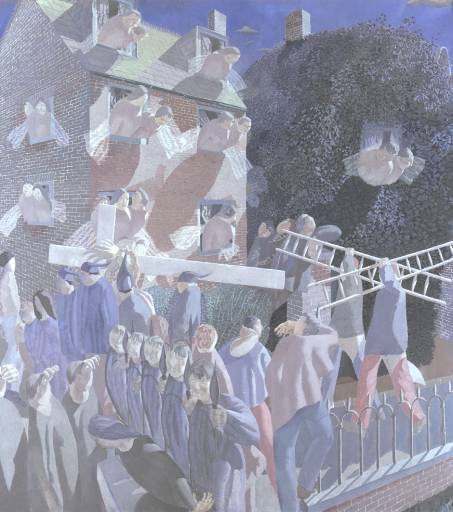
Sir Stanley Spencer, 1920
It is our unfortunate habit to make our atonement theories come first, and that Jesus died to make them work. Familiar examples are Heidelberg Q&A 40 (Why did Christ have to suffer death? Because God’s justice and truth require it: nothing else could pay for our sins except the death of the Son of God) and C.S. Lewis’s “deeper magic” in Narnia. But it’s the other way around. We only know that Our Lord “had to die” because he did die. His cross comes first, and all our atonement theories are humble and halting attempts to account for what he did. The cross is a trustworthy sign but always a wonder—graciously meaningful but yet beyond our full comprehension.
There are necessary antinomies here, and I love exploring the Trinitarian and Chalcedonian issues involved, including the Hypostatic Union and the Extra-Calvinisticum. These doctrines are challenging and glorious.
We take up the cross best, however, in worship, repentance, and non-violent witness against the rulers—yet again, who right now are especially vicious in their determined ignorance.

31 Responses
Thank you!!!
Daniel, thank you. Your opening questions about the impacts of ignorance crystallize for me whave have often been futile ponderings about loved ones who voted out of their ignorance for viciousness and oppression. “Father, forgive them…” And I will try to do the same…
Thank you Dan.
So good on so many levels and themes.
I just read last night – for the first time -NT Wright’s decision to refer to Jews as Judeans – the same way you thoughtfully do. I so appreciate that. (Intro, “God’s Homcoming”)
Your opening brought to mind the story of the rabbi and Christian who warmly converse. “You say the messiah is Jesus and we say messiah is yet to come. I beg you, when messiah comes, don’t ask him if he’s been here before!”
“. . . {In} worship, repentance, and non-violent witness. . . “
Thank you, Daniel.
With respect, Dan, I don’t believe I agree with you that Jesus’s death was his greatest miracle. Wouldn’t we have to claim that for his resurrection?
Good point, Hugh, but strictly speaking, that was his Father’s miracle. In the apostolic testimony which begins with St. Peter’s preaching on Pentecost, it was God the Father that raised him from the dead. Also, if we follow the Gospel of John, with its structure as a Book of Signs, in which each miracle (a “sign and wonder”) was a sign, Our Lord’s crucifixion was his ultimate Sign.
Hugh,
I won’t speak for Dan here, but I’ve always thought Jesus was dead, like really dead. The great miracle of resurrection belongs to God. Of course, see above, “The external works of the Trinity are undivided,” but I think as God raises Jesus from the dead, it is a work of God, in concert with the will of God’s Son, Jesus, who again, is dead.
It is worth noting that when Scripture speaks of the resurrection, 99% of time, it is in the passive voice. In other words, it is something that is done to the subject, Jesus, not by the subject, i.e. “He was raised from the dead.”
As a note, I wrote the above before Dan’s comment was posted, but mine didn’t post until after … don’t I look like the dope … sorry
An absolutely innocent mistake.
As it happens, I wrote about this on these pages, in April of 2020: “But it is not overstating if I report my firm belief that when Our Lord was murdered on the cross, he truly died, in body and soul, and he was so dead that there was no power in him to raise himself up again—he had to be raised by the Holy Spirit.”
The particular blog post was “How Dead Was Our Lord?” on April 11, 2020.
https://reformedjournal.com/2020/04/11/how-dead-was-our-lord/
Jesus was certainly dead. His death provided restoration to life as it accomplished the penalty of sin “You shall die”.
Death was defeated ; it no longer had authority over Adam’s descendants. Jesus arose because death could no longer keep him dead.. The Father and the Holy Spirit raised the Son because the plan of redemption was finished.
Minor point, but as one who taught Scripture for many years I always struggled when people talk about Jesus and God meaning two distinct Beings. “God’s miracle, not Jesus’” Jesus is God, when we speak of God that includes Jesus. We teach about the Trinity but often speak in ways that forget our God is one being in three persons. In this thread I appreciate the thought that the resurrection miracle was from the Father.
Amen. Again I say amen to this: the creative freedom of Jesus vs. the way he is too often portrayed, as a kind of supernatural auto-bot simply acting out what has already been determined: no risk, no real choices. just cruising down a predetermined path.
Reminds me of a passage from one of the books from my life-altering canon, in this case a marvelous book about the Holy Spirit by the Anglican bishop, John V. Taylor: the GoBetween God. This is it:
“What most confused (Jesus’) critics was that he conformed to no pattern. . . . How were they to tie him down to a particular breach of the law when his real fault seemed to be a general independence of all the ordinary pressures and claims which both bind and buttress the individual in society? . . . He steadily disobeyed the demands of what we regard as self-interest and self-preservation. He seems to pass elusive and free as the ruach wind through all our interlocking structures of duty and obligation. His whole manner of life and even the manner of his dying, was a challenge to necessity.”
Thanks for this reflection. The cross comes first, our theories came after it. Also liked your last line, “We take up the cross best, however, in worship, repentance, and non-violent witness against the rulers—yet again, who right now are especially vicious in their determined ignorance.” The times are dark and we must work before the dawn.
What would happen to the power and control fixation in our Calvinism if we conceded that Jesus could remain fully God and, at the same time, be fallible? Could even be fully bereft of power over Death, and be totally at the mercy of other human hands?
Daniel, being fallible and making mistakes is an existence condition that never evades a human, even a completely righteous one. Likely not even a resurrected human like Jesus. It is not sinful for creaturely humans to make mistakes or to fail. This is such a burden on people who have been taught this.
When we view our own fallibility as an unacceptable condition for a creature, that’s when we languish in an impossible desire to be like God, eating the off-limits fruit of deity-impersonation. That is when we cannot rest until we destroy the blasphemous and infuriating existence of a sibling who is able/Abel to settle, at ease with their mortality and fallibility, under the “I take great pleasure in your human existence, my beloved child” benediction they receive from God.
I believe that atonement theories are helpful in that they look at the cross from the perspective of different metaphorical worlds. The judicial world gives us insights into the cross, the combat world gives us other insights, the world of family provides still other insights, etc. We only get ourselves into strange territory when we get stuck on metaphorical perspective.
I’m in agreement with Jessica here that mistakes are not sins. I don’t have any problem with Jesus mis-measuring a piece of wood or accidentally calling one disciple by another disciple’s name. It’s an intolerable burden if being finite is sinful. I made my own mistake earlier today when I accidentally put my response to Daniel article as if it were a response to Jessica. 🙂
Yes, I agree that they need not be sins, as I was open to in my paragraph of questions. Two points: we can still confess them, as shortcomings, not sins. But sometimes they are sins, when they are the mistakes on the vines of intentional ignorance.
“But it’s the other way around. We only know that Our Lord “had to die” because he did die. His cross comes first, and all our atonement theories are humble and halting attempts to account for what he did. The cross is a trustworthy sign but always a wonder—graciously meaningful but yet beyond our full comprehension.”
Thank you for this clarification.
The Stanley Spencer painting of Christ Carrying the Cross (reproduced above) is set, like many of his religious paintings, in his beloved Suffolk village of Cookham, with the villagers playing their roles as perpetrators, mourners, and oblivious extras. Even more remarkably, in his late painting of the Crucifixion (1958), Christ’s cross is pictured from behind, the figure of Jesus blending into the background of Cookham High Street with its red-capped British laborers pounding in the nails. http://totallyhistory.com/wp-content/uploads/2012/12/the-crucifixion-1958-by-spencer-la.jpg
For Spencer, the Passion was not about someone else’s evil intents and acts, but rather about all of us, guilty, loved, forgiven, and reconciled.
Another one of my favourites by him is “The Resurrection, Cookham.”
This year, for some reason, my mind is being drawn to the same question, albeit from different perspectives: What if the authorities had decided, for whatever reason, that Jesus of Nazareth wasn’t worth killing? From this perspective, what if they had “outfoxed” Jesus and just let him go? Aside from wondering how Jesus might have responded to their non-response (plan b? Amp up the pressure? Next year Jerusalem again?) there are obvious theological questions. I am not of course the first to wonder this, and I realize that angels may be whittling crutches for me just for asking. Thank you, in any case, for injecting the genius of Jesus into the picture, beyond mechanical theories.
This is an excellent question. This question reveals the depths of the paradox regarding Jesus’ intention to be crucified and the human agency that crucified him. I’ve thought about this and concluded that, eventually, the Romans would have crucified Jesus anyway, out of fear in regard to the thousands of people who were following him and proclaiming his Davidic kingship. Or not? God knows.
I read recently someone saying, what seemed, angrily, “the crucifixion was unnecessary”. I’m not sure what belief system he was speaking from but as a Christian (I have very little theological knowledge) but it seems it could have been unnecessary but we sinners made it necessary.
A new-to-me thought you brought up was that the fully human Jesus was dead after the crucifixion with no power in the resurrection. Wasn’t he still also the fully Divine Jesus of the Trinity? A concept which my favorite verse, “I believe, help my unbelief” brings to mind.
Thank you for giving me new perspectives to ponder.
The mystery of how he was still fully God while totally humanly dead remains a mystery to us. If we follow the Athanasian Creed, we find a long list of impenetrable antinomia, “contradictions,” in terms of our logic. To believe that the externality (immortality) of Jesus’ divine nature was somehow shared with his human nature is to violate the Athanasian Creed.
I appreciate the many comments above, but a question in my mind persists: the pre-crucifixion suffering of Jesus in the Garden when he pleaded with the Father to let the cup pass from him, but “your will be done.” Doesn’t that sound like he meant to be faithful to the Father’s plan?
Yes, exactly. He was doing the planning for his Father, as what his Father would have done, what he knew his Father wanted.
Thank you for this, Daniel.
Thank you for this, my friend. Any good recommendations on thinking about the extra calvinisticum? I’ve read some Torrance and some Jenson, mostly enough to remain confused (though I’m mostly with Torrance). References welcome!
Well, Craig I’m guessing you already know more about it than I do. I’m recalling Heiko Oberman’s essay “The Extra- Dimension in Calvin’s Thought,” which was compelling, but I forget where that was published.
Oberman’s essay, while quite impressive, is too complicated and multilingual for most readers; I would highly recommend E. David Willis’ book Calvin’s Catholic Christology. Still the best study 60 years on.