
For our book club this year, my best friend and I needed a break. We’re both history, politics, and religion nerds and tend to gravitate toward books on those topics. But after reading a few books with heavy, timely topics, we were emotionally and mentally drained.
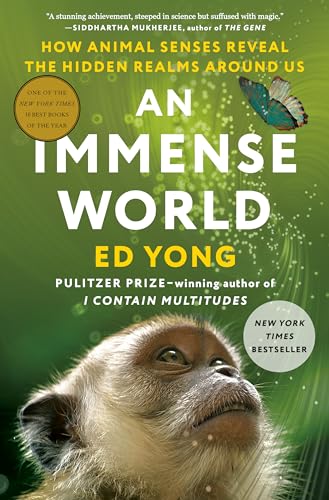
Enter Ed Yong’s An Immense World: How Animal Senses Reveal the Hidden Realms Around Us. We’re a few years late to this book, which was first published in 2022, but what a perfect change of pace, a gentle respite from current events.
For those who haven’t yet read it, An Immense World explores how animals sense and experience the world. It’s all the senses you expect — touch, taste, sight, smell, hearing — as well as ones you might not — echolocation, surface vibrations, electromagnetic fields, and more.
Yong takes us into the world of dogs, elephants, birds, bats, spiders, all sorts of animals in all sorts of environments across the globe. Some of the animal senses he explains are almost hard to comprehend (what do you mean little beetles can sense a wildfire from over 80 miles away?). And Yong argues that we need to see beyond our own human senses and experience to try to imagine the unique ways animals experience the world.
The book made me ask some big questions. What is it like to exist in a world beyond what our human senses can perceive? How do our own senses vary from human to human? What can we learn from animals and the different ways they sense and experience the world? And perhaps most importantly, what does this information on the unique ways animals sense the world mean for how we take care of our environment and each other?
If you haven’t read anything by Ed Yong, you need to know that he is a fantastic writer and paints a vivid picture of each unique animal sense and the world it creates. He also tells a compelling and frequently entertaining story of the humans who study them. This may be the first book I’ve read where I repeatedly laughed reading the footnotes.
My main sign of a good book is that I can’t stop thinking and talking about it while reading it and long after I’ve finished, and An Immense World was exactly that kind of book. That sense of wonder and noticing the small details of the world around us has stayed with me even though I finished the book over a month ago.
On a recent family trip to Colorado, it came up again. We spent the second half of our spring break trip at hot springs in the San Luis Valley. While the valley itself is magnificent, my sense of wonder was really piqued when we realized a few little snakes were sharing one of the pools with us. Previously our new snake friends might have scared me but now I couldn’t help but wonder how they were experiencing our presence: what they saw and felt from our presence, how they felt about sharing the pool with us. Later that afternoon I discovered one of the people there with us had also read An Immense World and was wondering about the exact same things during our snake encounter.
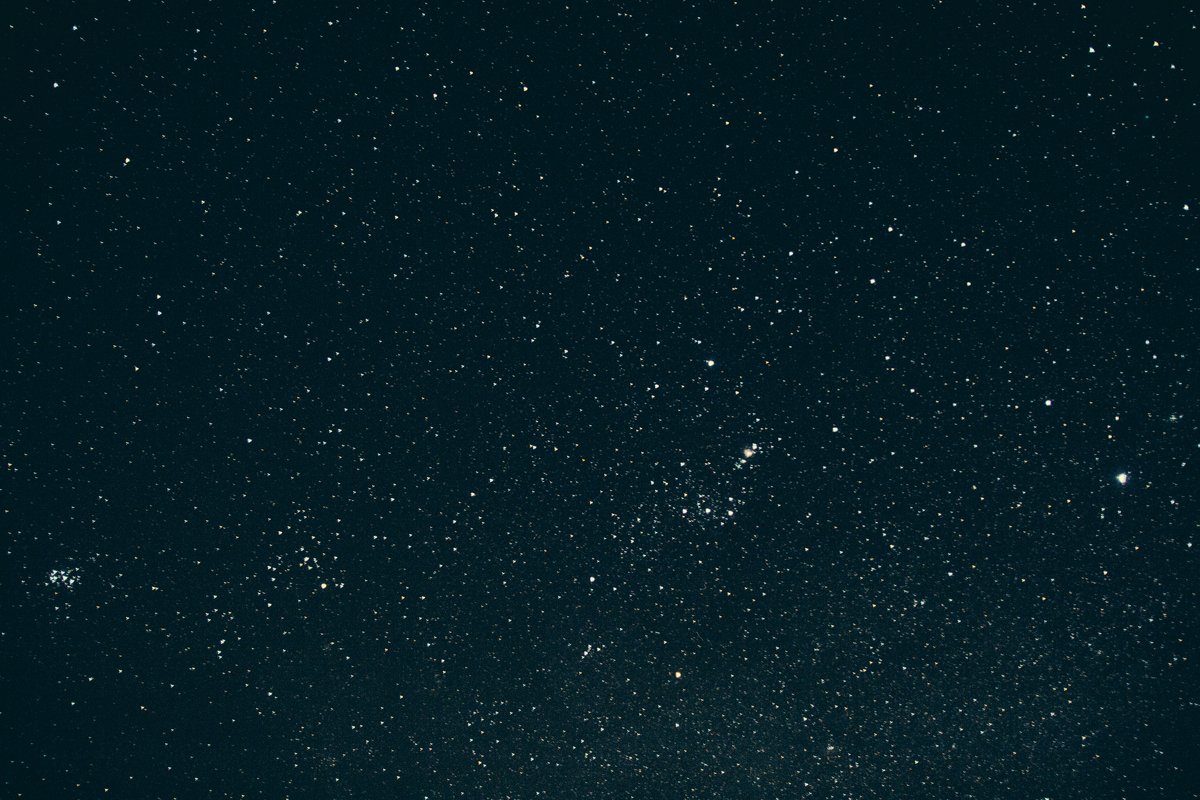
During our visit, we were also lucky enough to have clear skies and access to several telescopes and amateur astronomers on hand to help us use them. While we looked through the telescopes at everything from Venus and Jupiter to various stars and constellations, my favorite moment was when they trained one of the telescopes on a part of the sky that just looked like a blank space to the naked eye. Through the telescope, though, we could see hundreds of stars. Talk about an immense world, an immense universe, and a true sense of wonder at how our human experience is just one tiny part of this world.
Reading An Immense World was a respite in ways I couldn’t initially imagine. Yes, it was a nice break from reading about more serious topics, but I had also forgotten that being in the world and feeling that sense of wonder is another great way to find respite and renewal from the stress of life and our current moment.
Moreover, sharing that sense of wonder with other people – with my best friend, with my family, with strangers – has been a sustaining force I didn’t know I needed this year.

3 Responses
It is a fabulous, magnificent book. And it so completely relativizes our pretense to our scientific, objective knowledge of the world.
I’m gonna get the book ASAP. Thanks for reminding me of it. Maybe by summer I can learn exactly what our cottage squirrels are seeing and plotting.
I’m curious whether this book would resonate with a 12-year old?