
1976 was a year of firsts for my wife, Lynne, and me.
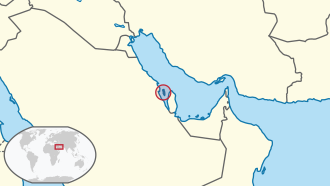
We graduated from college in May. In August we boarded our first airplane, one of four that took us from Sioux City, Iowa to Manama, Bahrain, via stops in Switzerland and Greece. It also marked our first time out of the United States.
And that first – traveling to Bahrain for a two-year volunteer mission gig as English teachers — led to other firsts: our first time in a really hot place (Bahrain is sometimes cited as the unhealthiest climate in the world with its combination of extreme heat and high humidity), our first time worshiping in an international church (a highlight of our stay), our first time as teachers, and our first time meeting and mingling with Muslims.
Until then, Muslims and their religion, Islam, had been mostly theoretical for us. Truth be told, we knew pretty much nothing about either, even though we tried to counter our ignorance with some hasty last-minute reading.
The first we were most unprepared for, however, is what we saw within a few months after our arrival in Bahrain.
From the flat roof of a missionary doctor’s home we saw men (and it was only men) marching through the street below. They were beating their chests, whipping their backs with razor tipped chains or cutting their foreheads with swords while chanting words that were indistinguishable to us at the time.
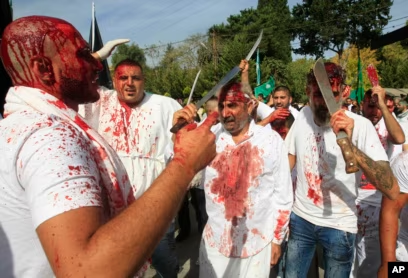
The doctor told us that the mission hospital would be especially busy during this time. Every year, he said, one or two participants in this procession would inevitably die, particularly those who got too eager cutting their foreheads with the swords.
It took time to understand what this was about. It still boggles my mind when I think about it. Yet over the years I have come to understand and have a certain level of respect for the spiritual passion it represents.
It is that passion that plays an important role in the current debacle in Iran brought on by the Israeli/US invasion — a role almost always overlooked or misunderstood.
What we were witnessing on that eye-opening day is a unique Shi’a Muslim ritual called Ashura. Ashura is the Arabic word for tenth, as it happens on the tenth day of the Muslim month of Muharram. It displays this community’s depth of devotion to Hussain, their beloved seventh-century martyr. Shi’ism is the faith of a majority of Bahraini citizens. It is also the state religion of Iran.
The Shi’a trace their roots to a dispute after the death of the prophet Muhammad in 632 CE. A minority group believed leadership of the Muslim community (caliph) should go to Ali, Muhammad’s cousin and son-in-law, still only a teen at the time. Although a majority disagreed, Ali was finally appointed. He wasn’t in power long before he was assassinated by a disgruntled follower with a poisoned knife after Friday prayers. Ali’s son, Hussain, succeeded him, but he was soon killed in battle and beheaded by a rival force.
Hussain’s death became a defining moment for those who would come to be known as Shi’a Muslims, establishing martyrdom as a profound theme in the religious identity of those who supported Ali.
Driven underground by the martyrdom of Hussain, the Ali faction, the Shi’a, began to develop a unique understanding of Islam. While agreeing with much of Islam’s core teachings, they claimed a second level of interpretive knowledge that Muhammad had passed on to Ali and no one else. He, in turn, passed this secret knowledge on to Hussain, who did the same to his successors, continuing through succeeding generations.
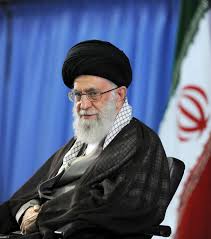
The title “Imam” was given to the one in Ali’s line who inherited this esoteric knowledge. Many Shi’a believe the final imam disappeared, but that he continues now in an invisible state of “occultation” (hiddenness) until one day when he will return. Until then, he passes on his secret knowledge to chosen leaders in the Shi’a community. This included Ayatollah Ali Khamenei, the former supreme leader of Iran, recently killed, along with several family members, in the first-wave of US bombing in February.
Few news sources have probed the role of this unique Shi’a perspective, especially the theme that martyrdom plays in shaping Iran’s response to the war. The centrality of martyrdom, as well as themes of sacrifice, suffering, and resistance, are rooted in centuries of Shi’a religious tradition. It inevitably shapes Iran’s cultural and political responses to this war.
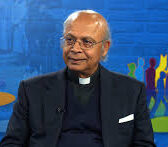
The Rev. Dr. Michael Nazir ‘Ali, a Pakistani-born, British, former-Anglican-bishop-turned-Catholic-priest, has been one of my leading lights in understanding Christian/Muslim relations over the years. Writing recently in the London-based Daily Telegraph, Nazir explained how this Shi’a spirituality of martyrdom — what I call the Shi’a X factor — plays out in current conflict.
What the West, and its allies, need to understand is that the rhetoric coming from Tehran is influenced by this martyr complex. It is not merely bluff or defiance but is deeply rooted in Shia psychology, understood in the light of contemporary circumstances.
If the regime were to fall, either as a result of aerial warfare or because of “boots on the ground”, the Islamist revolutionaries have a ready-made force for indefinite resistance to whatever takes the place of the present regime and to its allies.
This Shi’a X factor may sound like bravado or insolence, but is actually a deep spiritual value with great cultural importance.
So much US policy in the Middle East has been shaped by an ignorance or misreading of political and religious dynamics unique to that region. This has led the US into the kind of quagmires that define the current reality. In some cases it has to do with blind support for Israel, but in others it is a misreading of the role Islam plays in shaping those societies. Misunderstanding or ignoring the cultural significance of martyrdom, along with suffering and resistance, in Shi’a societies is the latest example.
The United States and Israel have opened the proverbial Pandora’s Box with this invasion. A better understanding and appreciation for the unique nature of Shi’ism and its deep imprint on Iranian society, might give us time to still close it.

14 Responses
Thank you for this, Abuna.
Thanks for this, John. It reminds us of the fine line between religion cultish orthodoxy. Religious zeal, without some humility and reflection, is so destructive, whether Muslim, Jewish, or Christian. If one’s God/Allah is angry, violent, and partial to martyrs or “orthodox” purists, it is a small step to tyranny. When I was growing up, we were taught to fear atheists and evolutionists. It turns out they are pretty tame without an angry god.
I would say that the impulse is different from your assumptions. The Shi’a became a persecuted minority. The ritual is their recognition that Hussain stood up to the oppressors, a hero to the persecuted minority. They are honoring his memory by public displays of grief. It is in their eyes the same impulse that is shown in America honoring the memory of Martin Luther King. He stood up for the oppressed.
Thank you so much, John. I have lots to learn.
John, thanks for your 50 years of teaching ministry and helping us understand the complexities of Islam and life.
Thanks for this valuable perspective, John. Given his inability to imagine a non-transactional worldview, Trump is flummoxed by Iran’s refusal to cry uncle. But they’re not even playing the same game. They have 1400 years of experience in winning through defeat and martyrdom. Trump flipping over the game board and stomping around the room like a toddler isn’t going to change that.
W didn’t know the difference between Sunni and Shi’a before invading Iraq and Trump knows nothing at all. So another violence-dealing quagmire it is…..
Our country ignores the truths that you describe at its peril.
Thanks for this, John. Very helpful in understanding the roots of the Shi’a expression of Islam.
Thank you for this very helpful description of Islam in Iran.
Thank you, John. A concise, engaging explanation and window into a world of which we know so little. Thank you!
Thank you for this helpful piece, John.
I sure appreciate your insight. Years ago I taught World Religions in a Catholic school and I had a Sunni and Shia Muslems in the same class. We just learned to listen to listen to their varied opinions and beliefs.
Thank you John. Enlightening, informative, and helpful in processing the Iranian responses to the conflict.