
“Was blind, but now I see.” If only it were that simple.
If only we went through life experiencing blindness (the problem), and then having our eyes opened to see things clearly (the solution). But that’s not how life works. Life often appears more blurry than we hope for. We long for certainty and clarity. But what if blurry is where we are supposed to be?
Most New Testament scholars propose that Mark was the first gospel composed, and that Matthew and Luke utilized Mark in their respective compositions. I should note that I have some significant issues with this, but that is a discussion for another time. One of the reasons that Mark is thought to have been written first is that it contains difficult material that later gospel writers chose to avoid. One of those passages is Jesus healing the blind man in Mark 8:22-26.
Jesus encounters a blind man in Bethsaida. The man begs Jesus to heal him. Breaking from his normal miraculous methods, Jesus puts saliva in eyes, lays his hands on him, and asks him if he can see anything. The answer is supposed to be a resounding “YES!”

Would we expect anything less than 20/20 from Jesus? But that’s not how it worked. The man responds that he can see people, but they look like trees walking. Uh oh. That’s not how it was supposed to go. Seemingly unsatisfied with his performance, Jesus touches the main again, looks at him intently, and restores his vision. It’s likely that other gospel writers exclude this story because Jesus appears to make a mistake. What does it say about a God who is unable to heal on the first try?
Mark’s Jesus makes no mistake. This story is a personification of the disciples’ understanding of Jesus. The disciples, who are portrayed the most negatively in Mark, slowly begin to see Jesus for who he is. They see the powerful miracle worker, teacher, and maybe even the messiah. However, who Jesus fully is has not yet come into focus.
I wonder how clearly I see Jesus?
He looks clear to me at times, yet I’m guessing I have only a blurred vision of who he really is. This passage from Mark helps me consider two aspects of my faith walk. It cautions me to be careful. I’m probably never as right as I think I am. The disciples were the closest friends of Jesus. They traveled with him, watched him heal, listened to him teach, and debated with him. They did everything with him, and they still only caught a glimpse of him. So who am I that I would think that I’m the one who sees him clearly? As much as I study, follow, and love Jesus, I see but a blurred vision of him. “Be careful,” I think to myself, about how I write about him, preach about him, talk about him. Be careful about my theological certainties, my judgments, and my posture. I’m not suggesting I shouldn’t have convictions, that I shouldn’t stand up for truth, or that I slip into the world of “cheap grace.” But I must be careful. I must hold my beliefs humbly, for I likely don’t see Jesus nearly as clearly as I think I do.
Rather than being a problem, seeing the blurred Jesus invites us on a journey. Jesus is still blurry, but hopefully I see him a little more clearly than I did ten years ago. I like to think of it as a sanctifying pilgrimage. I get to journey with Christ who continues to open my eyes as we walk. Do I have it all figured out? No, and that’s ok. I haven’t arrived. I’m still walking.
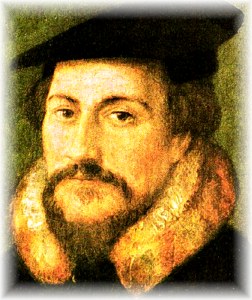
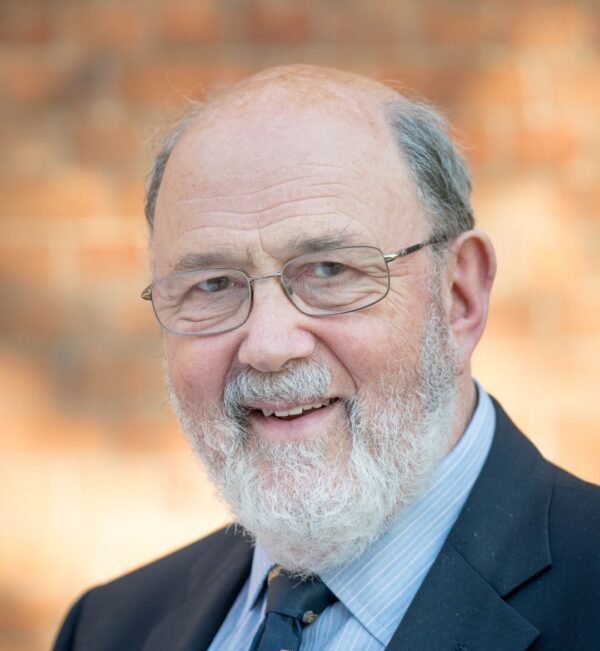

Seeing the blurred Jesus also reminds me that I need community. For it’s only when we see together that we see Jesus most clearly. From Augustine and Calvin to N.T. Wright and Rachel Held Evans, my eyesight has been refined by hundreds of siblings and kindred of the faith. I see Jesus best when I am listening for the Spirit in my companions rather than fighting with them or demeaning their theologies. Of course there are times when we must push against what we see as sin or injustice, but can we do so firmly yet humbly? Can we hold firm while still valuing and learning from those with whom we disagree?
There is a reason that Jesus chose disciples with such a wide variety of political and theological backgrounds. Jesus’ ragtag group in today’s world would have included evangelicals, liberals, Turning Point, and Red Letter Christians. To all of them, to all of us he says “Come, follow me.”
Two thousand years later, our vision is still coming into focus.

9 Responses
Thanks for this. Good self-examination; it’s the reality of our preferred sharp certainties.
And by the way, thanks for the comment on Mark. The prevailing arguments for Marcan priority show such lack of wonder and imagination.
Thank you. “I’m probably never as right as I think I am.” Yes to that humility. If we all had more of it, maybe we would actually get along as Christian brothers and sisters and the world would truly know us by our love.
I so needed these reminders today. Thank you!
What a wonderful set of thoughts and words, Chad. Thank you.
Thanks Chad. That’s one of my favorite miracle stories. Johnny Cash set that story to music when I was at the Christian youth gathering Explo 72. I’ve sung it at churches over the years; so did my Dad b
Thanks, Chad! I continually believe I’ve figured out Jesus and the message of the Gospel, only to be challenged by new information and perspective. At those times, I remind myself that I see “dimly now.” The title of Peter Enns’ book, “The Sin of Certainty,” speaks to me when I think I’ve got something figured out.
Thanks for sharing your wisdom and wondering, as always, Pastor Chad.
Thanks, Chad. And the comments remind me of “the sin of certainty” that was embedded in too many sermons of my early (but later too) church experience. Isn’t faith more a “seeing through a glass darkly” than “face to face”?
I agree. Thanks Chad. Yes, that “sin of certainty,” the beam Jesus warned about.