
“…crimes committed with extraordinary boldness are more likely to succeed than others.”
The Brothers Karamazov
Christians should resist the temptation to turn every alarming politician into an end-times diagram. That kind of talk usually substitutes excitement for judgment. It is also bad hermeneutics.

The New Testament does not hand us a simple checklist by which we can point to a modern figure and say, with prophetic swagger, “there he is!” The term antichrist comes from the letters of John where the author says not only that antichrist is coming, but that “many antichrists” have already come. (1 John 2:18)
This means Christians do not need to claim that Donald Trump is the Antichrist in order to say something morally serious about his politics. The more responsible argument is not that Trump fulfills biblical prophecy in some tidy one-to-one way, but that his political method trains people to admire and accept the kind of power Scripture warns about.

The beast in Revelation is not merely evil. It is dazzling and commands wonder. “The whole earth marveled, and followed the beast” (Revelation 13:3). The beast does not win by careful reasoning, but by spectacle, force, and deceitful, blasphemous speech. (Revelation 13:60). That is why Trump remains theologically legible even to people who rightly reject prophecy-mongering. His power has depended not simply on policy, but on making transgression feel exhilarating. He violates norms in a way that many supporters do not experience as disqualifying, but as proof that he is strong, real, and unafraid.
This is where research becomes clarifying. Scholars have argued that the “lying demagogue” can appear authentic when followers believe the system itself is corrupt or illegitimate. In that setting, shamelessness reads not as dishonor but as candor. More recently, a study in the Proceedings of the National Academy of Science found that Trump’s norm-violating rhetoric did not make supporters reject democracy in the abstract, but it did reduce support for democratic principles like participatory inclusiveness and political equality. A public does not have to stop saying the word “democracy” in order to lose the habits that make democracy possible. It only has to become less bothered by domination, less patient with limits, and less committed to the equal standing of others.
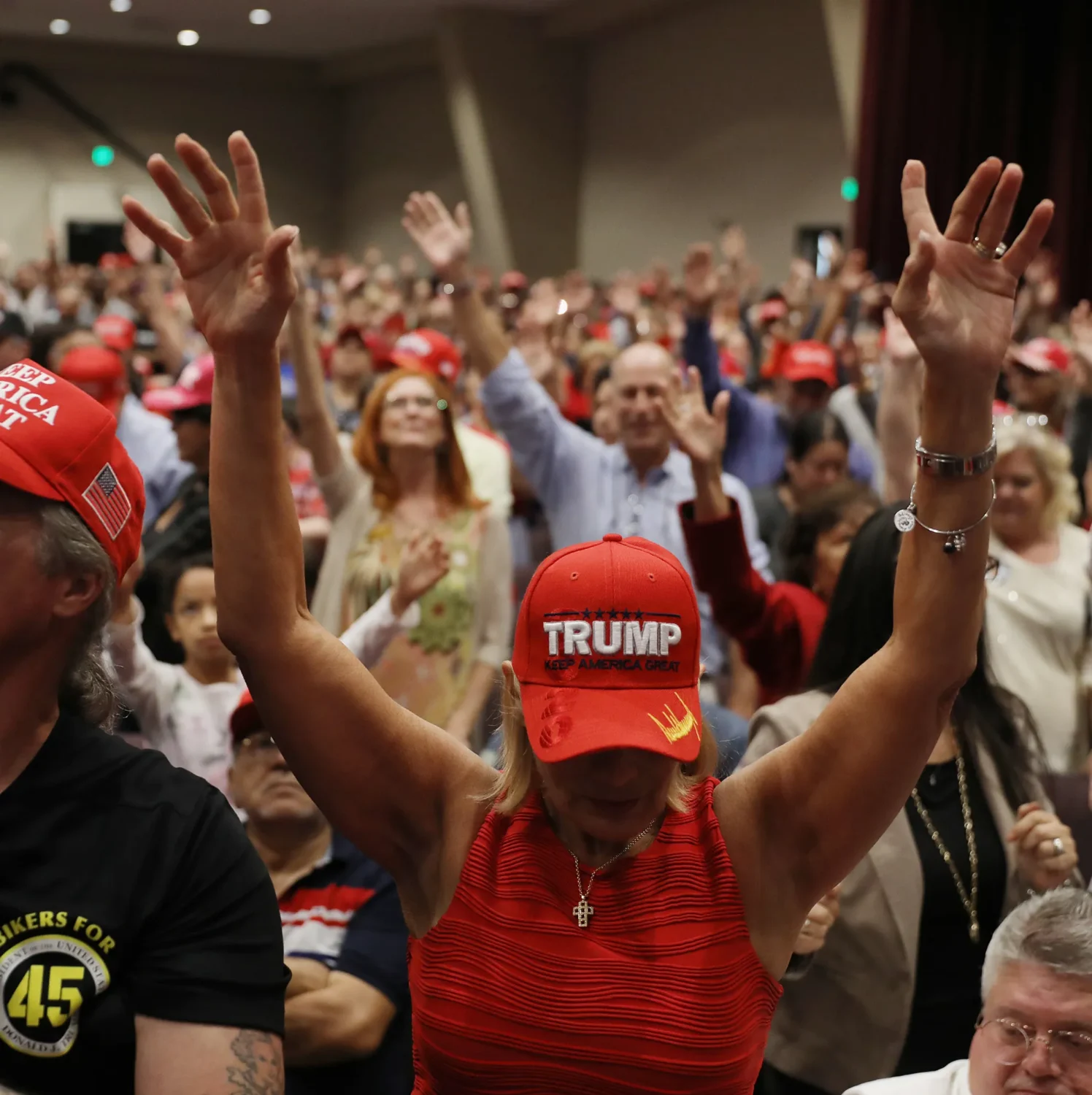
Trump’s method works in that register. He does not merely fight enemies. He redefines public life around enemy logic. Opposition becomes treachery. Accountability becomes persecution. Constraint becomes proof that dark forces are trying to destroy the chosen leader. One spiritually dangerous aspect of this style is the way it immunizes the self against confrontation. Every rebuke can be recoded as conspiracy. Every limit can be treated as sabotage. Nothing ever has to be received as a truthful judgment if everything can be renamed an attack.
That pattern has not remained rhetorical. Within the first 100 days of Trump’s second term, he moved with unusual speed and ferocity against perceived foes, using executive power to punish critics, strip security protections, pursue investigations, and purge officials associated with oversight or institutional independence. Retaliation is not a side effect. It is part of the governing style.
Revelation’s beastly politics is not simply “bad government.” It is power that seeks admiration, loyalty, and submission in ways that crowd out truth. It is power that conditions people to ask not whether something is just, but whether it is strong. Not whether it is true, but whether it wins.
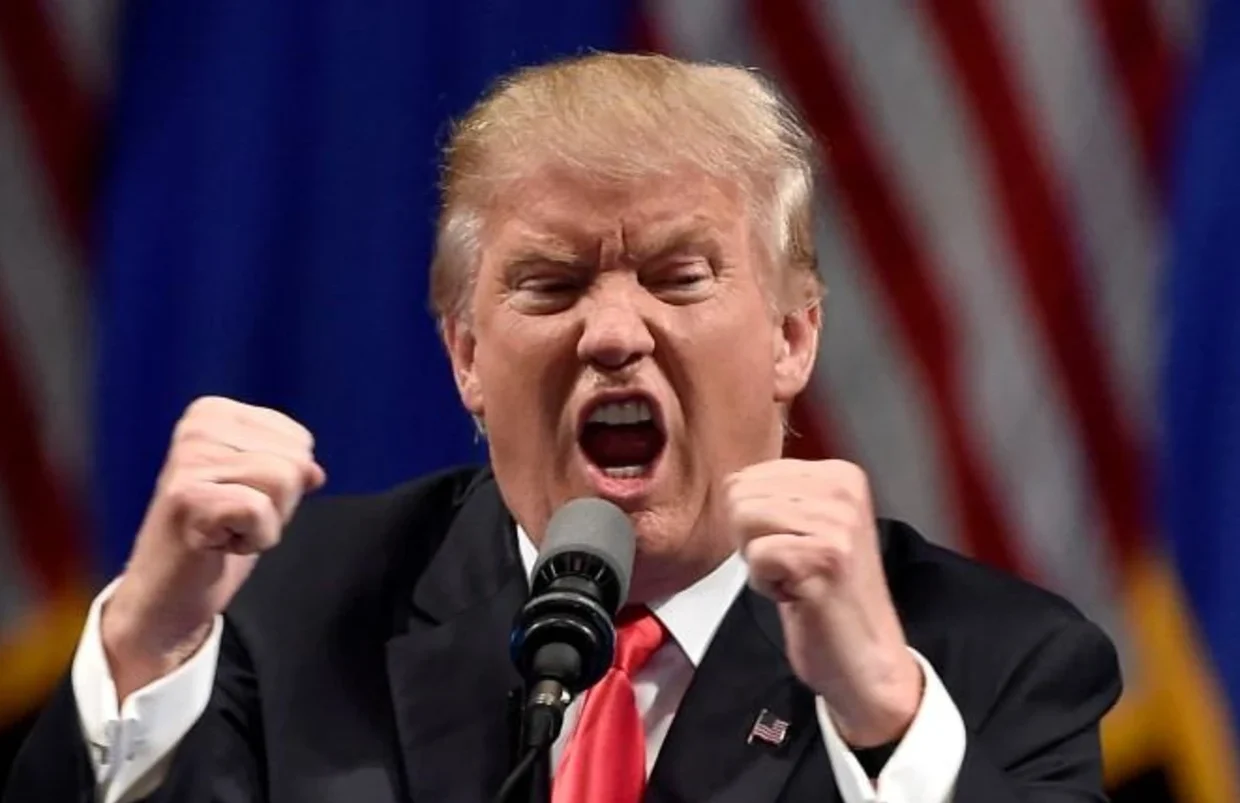
Trump’s pressure campaign against law firms is more than a legal controversy. It is a moral lesson. In 2025, he issued executive orders targeting firms tied to political opponents or disfavored causes. The orders suspended security clearances, limited access to federal buildings, and threatened government contracts. Reuters reported (April 15, 2025) that nine firms ultimately pledged a combined $940 million in pro bono work to causes approved by the administration, while the White House order against Perkins Coie explicitly directed agencies to limit the firm’s access to federal buildings. (Reuters, April 11, 2025) The point is not that this is literally the mark of the beast. It teaches institutions how to survive under personalized power. Bend. Settle. Comply. Do not stand too stiffly in the truth if the cost of doing so becomes too high.
That is how a public is formed for darker things.
The biblical warning is not only about a final villain. It is also about a recurring pattern of counterfeit glory. The “man of lawlessness” engages in self-exaltation, grandiose displays and hates the truth in all of his deceitful talk (2 Thessalonians 2:3-11). John describes antichrists as liars, deceivers, the spirit of which is already in the world (1 John 2:22, 4:2-3; 2 John 1:7).
Antichrist is not a puzzle for timeline enthusiasts. It is a spiritual and political style. It appears wherever self-exalting power, deception, spectacle, and coerced allegiance begin to feel normal, admirable, or necessary.
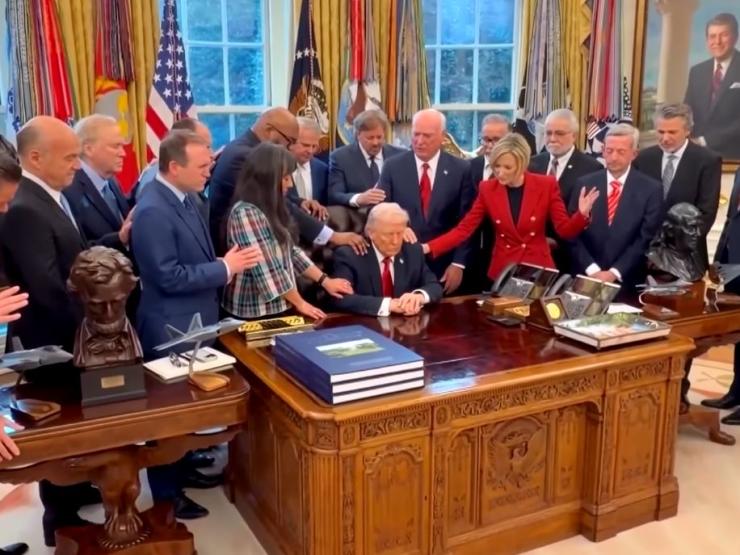
Trump’s genius, if one must call it that, lies in making pretension feel like strength. He presents shamelessness as authenticity, retaliation as justice, domination as leadership, and grievance as moral clarity. He does not only demand loyalty. He tutors people in the desire to give it. He lowers resistance to forms of power that should alarm a healthy republic and a healthy church alike.
That is why the line, “Trump is the Antichrist,” is less useful than the harder one. The dramatic line lets people dismiss the whole concern as fanaticism. The harder line asks what sort of soul our politics is producing, what habits of admiration it rewards, what forms of truthfulness it erodes, and what kinds of rulers it makes imaginable.
Trump may not be the Antichrist. But he has been, for millions of people, a rehearsal in how to love a beastly politics without yet calling it by that name. The danger is not fulfilled prophecy, but moral formation: Trump may not be the Antichrist, but he has helped train a public to welcome one.

22 Responses
By this, a very good mechanic. Very helpful clarifications.
There are so many true observations here. I cannot begin to count or quote them. I am totally in agreement that calling him the anti-Christ is counter-productive. It only serves to increase his popularity among cult-followers, including evangelicals. His progressive audacity and vanity, though, have also dulled the senses of public conscience, reducing both discernment and resistance. The blunders are cartoonish, but also effective (NOT genius) in dismantling both democratic norms and the credibility of Christianity itself. It is not partisan to call out Trump and his minions. It is partisan to ignore him. And we thought we had trouble with the Nones before!
Matt,
I agree with RZ: so many true observations here–too many to count or quote. Thank you for writing this powerful indictment. I hope it is shared far and wide.
Excellent articulation of the destructive power Trump has been given, predominantly by white Evangelical Christians.
Thank you, Matt for this clarifying perspective on the broader danger we face.
jvo
In my local little suburban neighborhood there are three “Little Library” boxes, strategically stationed along my usual morning-walk route. One matches the roofline and siding of the house it sits in front of, so I assume a private citizen supplier; the other two are in public park areas, and appear to be regularly stashed by the public library, probably the intern’s job. Several months ago–was it after our Venezuela adventure?–I noticed dispersed among all three boxes the complete set of the Left Behind series. So—tossed out in disgust? Sharing a descriptive analysis? Proselytizing with a prescriptive analogy? Dunno, but when I checked on their status several days later, all were gone, snatched away, like a thief in the night, leaving behind the usual variety of children’s books and mystery series. . .
Is DT _The AntiChrist? If following the classic end-
times scenario, he would be premature (see The Chart illustrating the article). Is he, along with other political figures and nations and policies, anti-Christ in their ethos and practices? Open for interpretation.
I’ll be looking for that book.
Thank you for naming what is happening regularly in one form or another. What continues to astonish me is the acceptance and, appalling, the defense of his actions from people I worship with. Brute force, cruelty, bold lies, and the recently added 22 foot tall gold-leaf statue of himself at the Doral Miami gold resort. It continuely strains credibility, but doesn’t seem to shake supporters who seek a “Christian” nation.
An astute analysis. And a terrifying one. A measure of Trump’s success: in Trump 1 a brazen new act of cruelty or political vengeance (canceling a flawed but effective Iran agreement, separating immigrant families, firing any high level appointees whose sycophancy had limits) was in the news and on our minds for a week or more. In Trump 2 each new breach of law or decency (eviscerating health research, cutting off foreign aid, shutting down nearly complete wind farms, canceling refugee status for our Afghan allies, bombing a girls’ school, murdering peaceful protesters) seems to disappear from view in a day or less. We have all grown weary, our consciences dulled — and each unbelievable development is eclipsed by new and worse events.
I just with that more “mechanics” would think things through like you’ve done. Thanks for your accurate portrayal. Success in your further studies!
Fantastic observations! At this late date, there’s not much new to say about this president, but you managed to illuminate some aspects up till now neglected.
That said, I think the stress needs to be on the causality running the other way: Not what Trump is doing to the nation, but what he reveals about who it is. You don’t get to be president of the United States unless tens of millions of its citizens–about half the voting population–want you to be. Call him a symptom, call him a mirror, call him symbol for an age, he shows us ourselves.
I’m from the Northeast, and Trump was already a fixture in our pantheon in the 1980s, lumped in with the National Enquirer and professional wrestling as among those obviously ridiculous but relatively harmless things that a free society simply had to tolerate until they hopefully went away at some point.
That of all the possible contenders, the citizens of the wealthiest, most powerful, and best-educated society in the word would say “Yeah, we want this guy!” tells us a whole lot of things about that nation that honestly we’d rather not acknowedge, but have clearly been festering for decades.
“Wake up,” the Bible tells us, “and strengthen the things that remain.” Good advice.
I have to take issue with “best educated “ I believe the thought that articles like this one are needed shows we are not best educated. That so many evangelicals get the “news” from places like Fox and Newsmax proves they are gullible, not educated.
“I love the poorly educated!” Trump.
Well done. Thank you.
Excellent. Incisive analysis!
Maybe the church needs to repent from grooming Christians to be Republicans and diehard Confederates who enable the likes of Donald Trump in the name of Jesus? Maybe it’s time for the church stop manipulating the gospel of Jesus Christ when using end times threats to scare the hell out of people?
Thank you so much. I have been looking for an article like yours for such a long time. It answered all my questions. Thank you again!
Well written Thank You !
Trump is the endtimes Antichrist, along with Jared Kushner. The biblical antichrist prophecies are found in both Old and New Testament, but you need more than just knowing those. You need revelation from the Holy Spirit, and you do not yet have it. Ask God who the Antichrist is. If you are sincere in your efforts with no agenda, I’m sure He will begin to reveal what so many of us already know.
I’m curious Mr Harrison to what political party you belong?
Your article encapsulated my thoughts and feelings in a way that I have been unable to express. I have been devastated that people I love, people I worship with, and people I work with have all worshipped at the feet of Donald Trump. So many believe that he was sent by God to save us and that he is the best President we have ever had. I just don’t get it. Even after the cursing posts on Easter, comparing himself to Christ on Palm Sunday, posting a meme of himself as Jesus and having his “suffering” compared to that of Christ, they still say things like “oh that’s just him” “you know how he is” “he’s a good man at heart” “he loves America” I do believe that he was sent by God, but not as a savior. God sent him to test us and so many are failing the test.
Good reading and thought provoking. I propose that the consultant/advisor to Trump is in the WH with him, selling him on what we have seen thus far and he is buying it up because he can. I really don’t think that Trump has the wherewithal to do what he has unless someone has suggested to him, or guided him in such matters. Still, it doesn’t lessen the importance of all the things we’ve seen from him at this point, or what will be coming from him while he is in the most powerful political office in the world. A friend of mine…a MAGA fan…told me that she was thankful that Harris didn’t become president because, in her words, the “end times” would be here much sooner. Think about that.
666 is the mark of the beast, the third Antichrist!!!