
On our visit to Guatemala over Holy Week, I was surprised to find a little book by Henri Nouwen tucked onto the shelf of our weekend getaway’s bungalow.
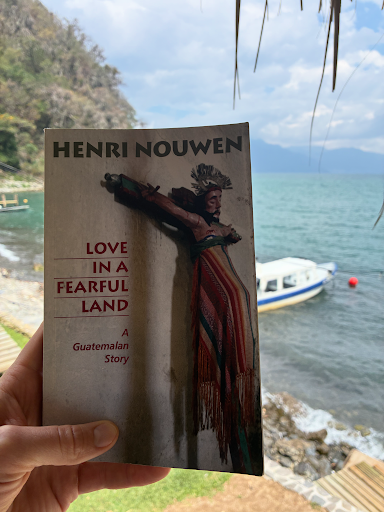
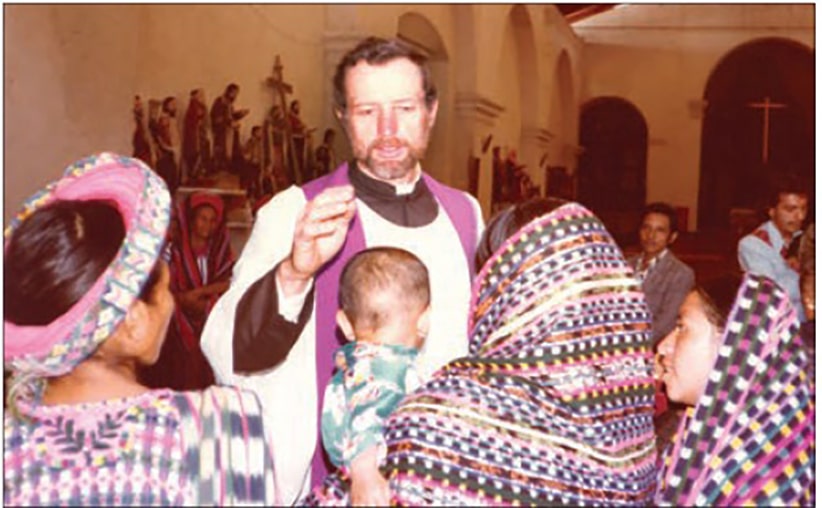
In this book, Nouwen tells the story of Father Stan Rother, an Oklahoma-born Catholic priest killed during the Guatemalan civil war. He was the first U.S.-born martyr in this conflict.
Father Stan was the pastor of a Tz’utujil Mayan community in Santiago Atitlán, across the stunning volcanic lake from where I was sitting. When the Guatemalan government began its purge of indigenous culture, it became clear that Father Stan was at risk. He saw fellow priests and members of his own community threatened, abused, and abducted.
But Father Stan chose to return to Santiago Atitlán and stay among his people. Not because he felt guilt over U.S. involvement in the conflict, or hoped to change the prevailing political regime.
It wasn’t a finely tuned concept of justice that rooted him in that parish. He simply loved the people he served.
In the book, Nouwen emphasized that Father Stan never positioned himself as a hero, never saw himself as fighting for anything but the wellbeing of the community he served—he simply loved his people, and that love became political.
Like Christ, he loved his people, and he loved them to the end (John 13:1).
I have come to believe that this kind of love is what motivates the purest justice work.
Father Stan’s incarnational love likely motivated Henri Nouwen’s decision—four years after publishing this story—to step down from his prestigious teaching role and join L’Arche Daybreak communities, spending his days loving and learning from those with disabilities.
Like Father Stan, we are all presented with opportunities to work for justice. But our hearts are not always aligned with love like his.
While listening to a recent group of well-meaning white leaders speak against ICE—I wondered if their calls for justice were more rooted in their own guilt and shame, and less rooted in a deep understanding and love for their immigrant neighbors.
After their presentation, one Latino pastor stood up. In less than two minutes, he gave the most compelling call to action I had heard all day. He had worked with the business owners who were being deported, run food pantries that relied on the trust of immigrants. For decades, he had known and loved the people he was fighting for.
I wonder, sometimes, if we forget this: if in our abstract commitments to justice, we jump from one cause to another, without learning to love and appreciate the people at the heart of it all.
That’s where I love my friend Benita’s approach to justice. Earlier in our time in Guatemala, we heard her share about her composting program, which she had returned to her hometown to begin.
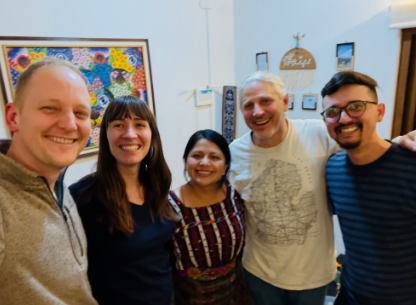
She noticed that the community wasn’t excited about composting—an essential way to care for the land in a country that does not have a functional waste management system.
She said, “I realized I was asking people to care about the land, when actually over the past decades—they had been, through war and waste and new technologies, separated from the land.
“If I was going to ask them to care for the land, I first had to help them love it once again.”
When community support for her composting project grew skeptical, she started an organic café to reconnect the people with the land: “They might never come out to see this beautiful rotting compost, but they will enjoy coffee grown from its riches. So let’s start there.”
Beyond this, she leads students through the process of cultivating crops in the composted land, raising chickens, and—for the brave, working with the compost worms directly.
As I look at my own country, which seems to be falling apart in new ways each week, I think about Benita, and Father Stan. I want my justice work to be grounded not in fear or bitterness, but genuine love for the people and the places I fight for.
That will sustain and focus us in our struggles for justice: fight for what you love. Invite others to see what you see.
When people don’t listen to our shouting for justice, I wonder if it is because they hear only our shame and our guilt, but don’t see our love for the thing we are fighting for.
Benita sought to invite people into the work of restoration with a cup of coffee because she understood that people can’t defend, protect, or restore something they don’t love or understand.

Love did win: we saw the beauty of the Mayan heritage that outlasted the violence of the Guatemalan civil war: Mayan women wearing their multi-colored huipils—once forbidden dress—through the streets of Benita’s city, the beautiful weavings and the fruits of carefully tended trees laid out in the markets— the beautiful hope our friends have for land.
In the barrage of injustices that can so quickly lead to bitterness and burnout, may our work be led by love.

4 Responses
I appreciate this post so much. It reminds me of Bonhoeffer’s call in Life Together to love the church more than we love our own wish-dream for the church. People have an innate sense when we love our dream, often quite abstract, more than we love them. Thank you, Nathan.
This is so good, Nathan.
Sometimes I wonder I’m doing enough justice work around immigration issues, but the grassroots group I’m part of, Hope for Neighbors, embodies the love you’re talking about. Thank you!
Thank you, Nathan, for the all-important reminder – love for the other always comes first and last.
So simple, so direct, so straightforward. Your writing expresses your theme.