
May is Mental Health Awareness month.
I hope we can make mental health conversations so common that we don’t need a month to remind us of who we are. Imagine if awareness of heart, mind, body, and soul became so integral to our understanding of self, so woven into the fabric of our being, that discussions of mental health became the air we breathe.
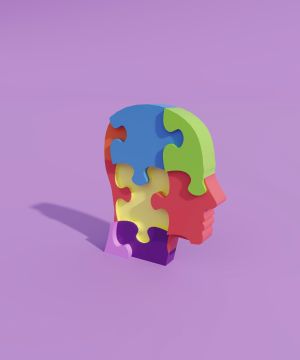
I have journaled, made notes, read, listened to podcasts, talked with my therapist, gone to CoDA (Codependents Anonymous) meetings, and thought endlessly about how to write effortlessly about our family’s journey with mental health. I have not found how to do it. I am in it, living it, working it out in real time with the lives of those I love. So, I will just start here, in the thick of it.
Our oldest son, Sam, has his own story to tell, and I have his permission to share a bit of it here. Four years ago, at age twenty-two, Sam chose to go to a wilderness treatment program. (“Choice” is an interesting thing to contemplate when life overwhelms.) He chose this when college life became too much to bear; when all his best efforts failed him; when he could no longer cope with the weight of depression, anxiety, and suicidal thoughts; when going to the wilderness felt more life-giving than living with us. As a result, we all had to face our limits, our lack of control, and ultimately ourselves.
Many sources have popularized the idea that “You’re only as happy as your least happy child.” I struggle with the weight of that. Are our kids responsible for our happiness?
Sam spent 11 weeks outside. A tarp for a tent. Bucket showers once a week. Hike strikes. Mosquito netting. Sunburnt hands. Stomach bugs. Bow fires. Journals. Four-point checks – head, heart, body, soul. Therapy sessions. Rituals. Community. Shared stories.
I don’t think resilience quite covers what Sam discovered in himself. While there was an element of survival in the wilderness, it also became a safe place to just be, without the constant noise and expectations of others, a place where one’s nervous system is co-regulated by earth, air, wind, trees, and the natural rhythms of the “more than human” world. (Thanks, Debra Rienstra for this language.)
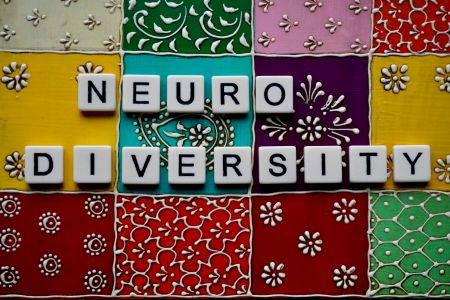
As he emerged from the wilderness, he became our guide, our soothsayer, our teacher. Sam uses various words to describe what makes navigating the world more interesting and challenging for him: on the spectrum, Enneagram 5, neuro-spicy, ADHD, hyper mobile, Ehlers-Danlos syndrome.
I remember seeing Sam for the first time after those 11 weeks and sensing his steady rootedness. He came out with more curiosity and compassion for himself and for others. Following his time in the wilderness, he entered a transitional living community where he continued to grow and heal. His healing led him to working as a mentor with other young men on similar paths.
We raise our children like they belong to us. But Sam belonged to Sam all along. If you love someone who struggles with mental health, it is easy to see them as a problem to be fixed. But the real problem was our need for Sam to be ______ (happy, successful, independent…) in order for us to be okay. Hello, codependency.
Codependency is “looking for outside solutions (controlling/changing/ fixing others) for an inside problem (a lack of inner-peace & serenity).”– Brad Reedy
Sometimes in order to manage or regulate our nervous systems, we choose maladaptive coping strategies. We all have ways of dealing with dysregulation. While some try to regulate through drug or alcohol use; others use caffeine, or sugar, or shopping, or isolation, or gaming, or pornography, or disordered eating, or cutting, or gambling. We all have coping mechanisms. If you see me leave CVS with a roll of Necco wafers or black licorice, you can be sure I am working through something. Sometimes our coping mechanisms become addictions. James Hollis calls addiction a“reflexive anxiety management system.”
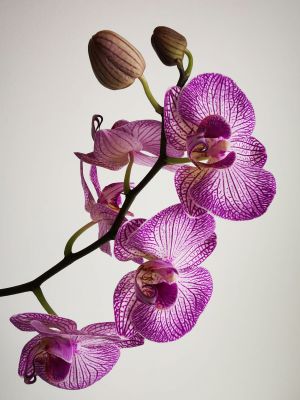
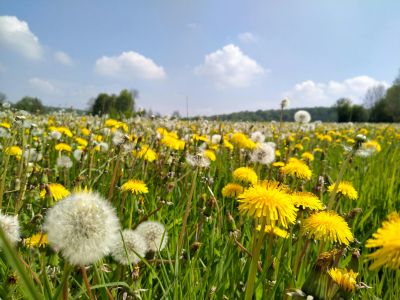
For some of us, regulation is more intuitive and we adapt easily. For others, those with higher levels of sensitivity and less filtration, nervous systems get overwhelmed more quickly. I appreciate how Thomas Royce explains this concept in his book, The Orchid and the Dandelion. He writes, “About 1 in 5 people have nervous systems that react more intensely to stress, change and connection.” He calls these people “orchids,” while others show up more as “dandelions,” with a more resilient nervous system capable of weathering a variety of environments.
While the person who struggles most openly can quickly become the identified patient, they are typically the warning signal for a family system, or a societal system, that needs attention. They become the beacon that highlights the system’s dysfunction. Inside the system, it is hard to admit our way of loving can hurt others, especially for those of us who thought being good was the goal. I had heard “wounded people wound people,” I just didn’t think it applied to me. I have daily reminders of my work to do,as I trip over the debris of my own unresolved fears and insatiable desire to “help.”
“Help is the sunny side of control.” – Anne Lamott
I have discovered it is worth the risk of sharing openly about what we are learning. When I talk about our family’s journey, others soften, their shoulders drop, they lean in, and they often share a piece of their own story.
One of the gifts of sharing the journey with others is an awareness of how language, and ultimately understanding, can grow. Sometimes language acts as a placeholder for an undiscovered way of being. Sometimes words fall short. Here are a few words and phrases I am reworking:
Normal. I noticed my friend using the word typical instead of normal when she talked about her daughter with Down Syndrome. Her use of language was a beautiful invitation to shift my use of language.
Failure to launch. We live in an economic, social, and societal reality that is shifting, when more young adults are living at home longer, or returning home to save money, or just choosing to be more connected to their family. The only failure seems to be one of language and lack of imagination.
Empty Nest. Many parents do not experience an empty nest. Parents of children with intellectual and physical disabilities, or parents of other high-care needs kids, can experience isolation as others celebrate being empty nesters. How can we both celebrate transitions and be mindful of the reality of others?
All of this is a part of mental health awareness, which I equate to waking up to self. With it comes letting go of pre-scripted expectations and a focus on outcomes. We discover we have own work to do. While that work is helping each of us and our families to become more whole, it also transforms perspectives on work and life and what it means to be human. And aren’t these the things that make life interesting?
The other day, as Sam and I drove away from our favorite coffee spot, we turned up the volume to Noah Kahan’s song Growing Sideways and belted out the lyrics. We don’t know what lies on the road ahead, but moments like this remind us of what it means to be human. That’s enough.
10 Responses
“Sam belonged to Sam all along.” I needed that today. Thank you.
Glad this connected with you, Lee. Thank you for sharing.
Thank you Kerin! Your vulnerability, your courage, your insight, your self awareness, your leadership. Your children have a good mother!
Thanks for the kind words, RZ.
Very helpful writing. Thanks, Kerin. And thanks to Sam for allowing some of his story to be told.
Will pass along to Sam – thanks Phil!
I love your writing. Always feels so honest, sometimes raw and insightful.
This was particularly meaningful. Is there any family that does not have a struggle?
Thank you Jeanne. Yes, suffering is universal – may it lead us to more compassion and connection.
Kerin,
Somehow I missed being able to hear your beautiful, soft-spoken reading of this piece about Sam!
Love you, Sam, and the rest of our family forever!
Oma
Thank you for sharing such a personal and honest perspective. The discussion around codependency, emotional healing, and the importance of understanding mental health within families was especially powerful. I found Couple Care ( https://www.couple-care.com/) while looking for relationship and counseling resources, and articles like this reinforce how valuable professional support can be during challenging life transitions.