
Across the road from my apartment is a city block worth of dirt. A long-standing dispute between city developers and the rail company that owns a neighboring yard and tracks has left this 5.4-acre block, known as Jamesville, derelict for nearly ten years. When we moved in a year ago, a chain link fence surrounded the vacated townhouses, their doors removed, graffiti splayed across their crumbling facades.
Then, last September, bulldozers appeared on site and began meticulously demolishing the empty townhouses. For months I was distracted from my work, watching from my home office as building after building came down. In winter those same bulldozers filled each foundation with dirt. A ruling from the provincial government in favor of the city means the construction of new properties can finally go ahead at some hopefully not-so-distant date. But for now, this city block is a dirt pile that would make Leslie Knope’s heart quiver.
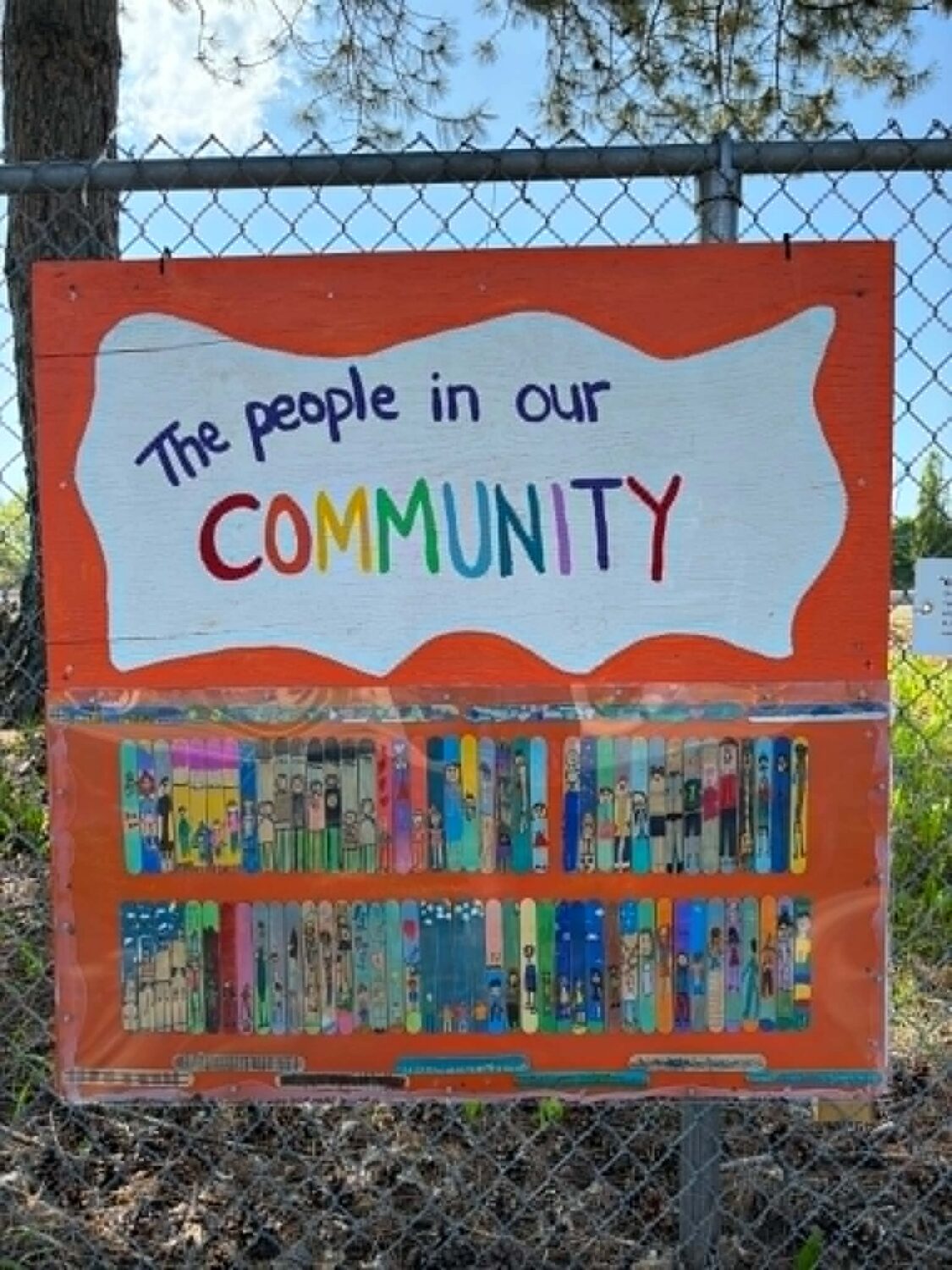
It was with delight, then, that earlier this spring, as I walked around this block of dust, I discovered that part of the chain link fence had been transformed from an ugly barrier to a gallery wall. Back in October, local artists began partnering with classes in the two elementary schools in our North End neighbourhood to create artwork celebrating the neighbourhood’s identity. The result is the Jamesville Community Art Project, a city block’s worth of art that tells the story of this community and its residents, as seen through the eyes of children.
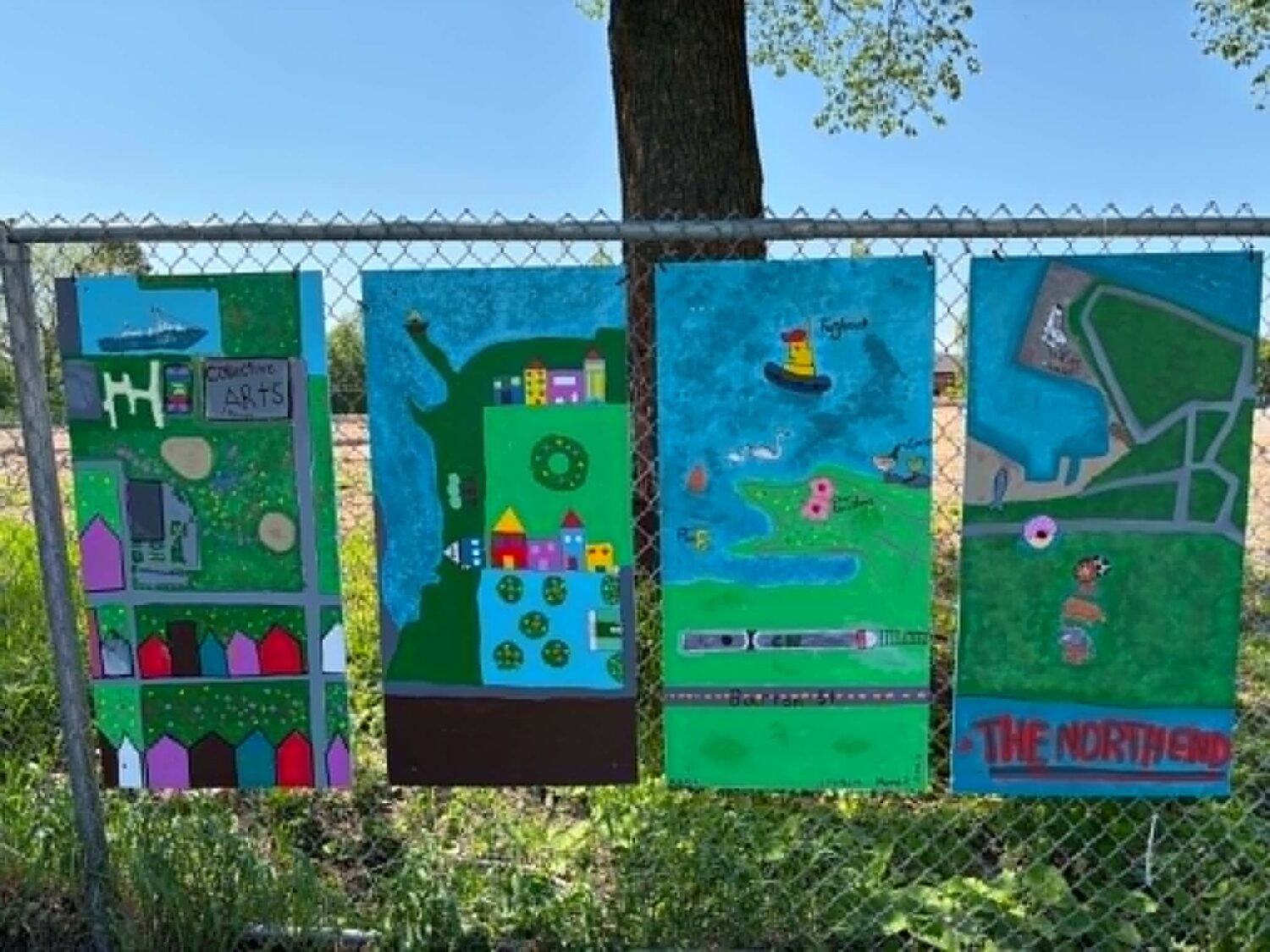
That story includes the ice rink down by William’s Café, and the Haida, a battleship turned museum docked alongside Pier 8. It includes the geese who, according to one painting, “own these streets.” There was Grandad’s Donuts (dangerously close to my apartment) and Thomas the Tugboat who spends a few weeks each summer in the Hamilton Harbour. That story also includes the people who live here: Lina, Ethan, Mom, Grandpa. The story is told with colour and whimsy and creativity. It’s beautiful. This project has turned something ugly and frustrating into an opportunity to share something beautiful with each other.
Last week I attended a conference at the Institute for Christian Studies and Knox College: “Courageous Faith in a Time of Fear.” In one session, led by Elle Pyke of the New Leaf Network and The Good Table, we talked about the change curve. I’m used to the Kübler-Ross change curve, which marks our emotional response to change, from denial to depression to integration. Elle showed us the U-Theory change curve from the Presencing Institute. In this curve, communities gather around a shared intent, observe the system as a whole and let go of what needs to be released, then spend time “presencing,” which the Institute describes as “connecting to the source of inspiration, motivation and will.” This leads to “co-creation” and finally to “evolving”, or integrating the new into the system.
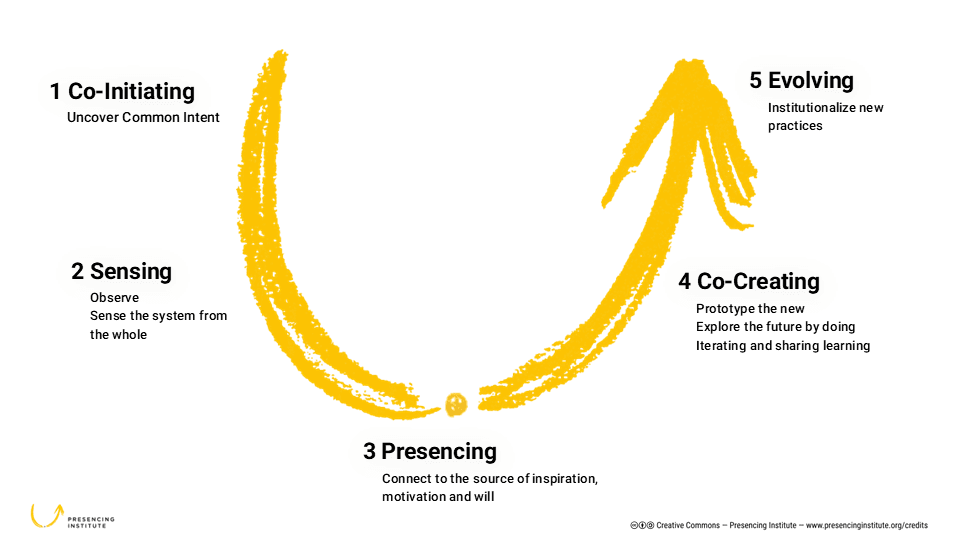
Both change curves have something in common: they curve. There’s a descent, a letting-go, whether forced or voluntary. Something has to die in order for something new to emerge. That death can be painful. Transition – all transition – brings with it some amount of grief. And often there’s a period of uncertainty, a liminal space, where the ground lies barren and fallow before new growth appears.
As I sat looking at this change curve, I was struck by the notion that you could map the earthly life of Jesus onto it. From the “letting go” of the incarnation, to the lowliness of the cross, to the glory of the ascension. And if the cross is at the bottom of that curve…that means the resurrection is too.
I think we sometimes believe resurrection to be at the top of the change curve. We feel like the resurrection life is something we have to make our way towards, only to be realized when life feels more stable and beautiful. But resurrection sits side by side with the cross. Resurrection is not the destination but the reality that meets us in our lowest moments and reminds us that change is possible…that new life is, in fact, guaranteed.
Resurrection looks like an art project hung on a chain-link fence surrounding an empty lot. The transformation has not yet happened. There is still uncertainty about what the future will look like. But there is now a reminder that the barren land is not the end of the story. There are signposts of a community marked, not by buildings, but by shared donuts and bike rides and avoiding angry geese. There is beauty and colour and joy. If “grace makes beauty out of ugly things,” then at the Jamesville Development, there is grace indeed.

4 Responses
Good stuff. Have you given any thought of relating this to Saul Alinsky’s analysis and methods?
Thank you, Laura. I’m imagining this in terms of the congregation I belong to. We’ve gone through a lot of changes and loss of staff, both clergy and secretaries who have a lot of historic memory. The loss hasn’t been acknowledged and healthfully moved through. I appreciate having your visual to help describe what could be a healthy journey.
This speaks gentle but strong words into our world of church and political upheaval. Even small changes can create grief but knowing that “resurrection sits side by side with the cross. Resurrection is not the destination but the reality that meets us in our lowest moments and reminds us that change is possible…that new life is, in fact, guaranteed” gives strength regardless of the size of the grief. Thank you.
I’m wondering if Pastor Laura had any passages from the Bible in mind that would reinforce this insight into the resurrection.