
The air in my classroom was electric. I had kept my news a secret, waiting until just the right moment to announce we were getting a new student. As soon as I said the words, the questions erupted.
“Is it a boy or a girl?”
“Do they speak my language?”
“What is their favorite color?”
“Is their skin like mine?”
Soon, the desk was covered with notes and pictures for the expected newcomer. He would be met with hugs from classmates, eager to be fast friends. My students reacted to this unexpected arrival with curiosity and openness. Their mindset was one of close connection, of immediate welcome.
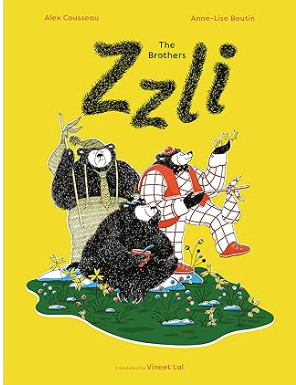
In The Brothers Zzli, an illuminating children’s book by Alex Cousseau, a similar situation is put into story form through the arrival of three bear brothers from parts unknown. Their characters are established by accentuating their strangeness, their unfamiliar behaviors, their “otherness.” Yet the main character, a woman living alone in the forest, has an instant “yes” when asked to give them a home. She has the same mindset of curiosity and openness as my students. She is ready to connect with these strangers before she even meets them–and soon observes for herself: “Your house is better like this.” The addition of the strangers, though challenging at times, has made everything somehow much more interesting.
As you might guess, not everyone feels the same way about the arrival of the bears. The neighbors are immediately fearful, angry, and very suspicious. The author makes clear that the neighbors sense their homes and way of life will disappear. They fear that now there will just be bears everywhere. Consequently, the neighbors don’t hesitate to isolate and harass the woman, called “Welcome,” and her housemates, ultimately resulting in disaster. Finally, the bears are driven off right along with the woman who gave them refuge.
The contrast between Welcome and her neighbors is stark. Welcome drops all boundaries around the sacred space of her home, while her neighbors create impenetrable barriers and include her in their condemnation of the strangers. The author leaves readers in disbelief at the terrible behavior of those who sought to drive off the bears, yet gives hope that the Brothers Zzli and their friend Welcome might find a new and accepting home elsewhere.
This story illustrates what loving your neighbor looks like and the meaning of the word “welcome.” The character of Welcome does more than proclaim that the bears can live with her, while keeping a safe distance and establishing some reasonable criteria. She does not demand that they change their ways; instead, she opens her home to them and makes them family. The neighbors find that intolerable and believe that the Brothers Zzli cannot be part of their community, nor can anyone who accepts them.
Today, the story’s premise plays out all around us as we react to the people we meet. It sometimes takes a child’s perspective to show us a plain truth: How do we look upon people who enter our spaces? Do we point out differences immediately or look to connect and welcome? Which of these characters reflects our own attitudes and actions?
The Brothers Zzli is a wonderful addition to any library and would be an excellent springboard for discussion about how we react when we meet those very different from ourselves. It will become an important part of my classroom collection, and I look forward to hearing my students’ reactions, who will, no doubt, have a lot of advice on how not to be afraid of people different from themselves. After all, those are the shoes many of my students and their families walk in every day.
Cousseau’s engaging challenge to adult readers is simply this: when confronted by strangers seeking welcome, we must become more like schoolchildren eager to meet a new classmate and, like Welcome herself, open our hearts to these new folk. Only then can we hope to become the people and place where those cast out may finally find refuge and home, all the while drawing us all closer into community and, of course, closer to the heart of God.

6 Responses
This is so you. You are blessing to your community and ours.
Love this. Thank you,Kathy.
Wonderful! A lesson taught by a kindhearted book.
Thank you, Kathy. Think I’ll put this one in my “books at Oma’s house” collection.
Thanks, Kathy! I so appreciate you sharing insights from your classroom, and this book.
Kathy,
Not only the book, but also your classroom show what kind of world God intended for us. Thank you for this fine review and for being such a wise and welcoming teacher.