
It’s playoff season again in professional sports of basketball and hockey, and championship season across a plethora of college and high school sports.

At our house last weekend, the Iowa state high school track and field meet played in the background most of Saturday. And on Sunday we attended the NCAA women’s lacrosse finals. (Go Cats!) Felix Rosenqvist won the 110th Indianapolis 500, and Tom Kopke defended his Gloucestershire cheese rolling champion for the third year in a row.
In sports, us against them is what we expect; we cheer for our team, mourn their losses, and disparage our opponents.
These days, however, what is expected on the sports page is now part of virtually every front page. Seems we’re also in the thick of both primary and gerrymander season in the blood sport called politics, winners and losers named by every vote, whether from citizens or lawmakers. Oil futures were down Monday morning—a win for consumers, the headlines announced. Check your stock portfolio yet today—are you winning? There was even a story this week in the “Grey Lady” about the “winning” ketchup.

All of that to say, like it or not, we live in an increasingly win/lose-dominated culture. Maybe we always have, but in these social-media dominated times, star athletes and successful entrepreneurs and internet influencers are the ones who most often capture our imagination and attention. Hot takes cut through the information overload, grabbing attention not simply with decisiveness but divisiveness. We celebrate winners and give a dismissive and sometimes not-so-gentle backhands to those labeled as “losers.” That leadership blog I regularly read: don’t be a loser, it told me last week. Our current president likes that same word and uses it a lot, though I (try to) pay much less attention to that.
Across generations, I see increasing pressure to win at something, sometime, somewhere. There seems little room for anyone who fails, whether in sports, at the office, in the classroom or at home; little tolerance for “lessons learned.” Even in church, it’s bucks and butts we count, and whether that count is increasing (winning) or decreasing (losing). Faithfulness? Too murky. Can’t measure it.
What I wonder if, as a culture, we neglect to count, is the cost of winning—one that begins to show up over time, and in ways increasingly apparent: in our relationships and communities, in trust and authenticity. If you’re in Watertown, Wisconsin, you know that acutely. Or Ottawa County, Michigan. Okay, almost anywhere these days. That’s because the human system is living and everything is connected. Winning — my winning — means someone else is losing, and creates a society where some people matter far more than others.
I don’t tell you this because I have some high-minded lesson I hope to impart to you. We’ve all heard enough life-platitudes over our lifetimes about how it’s not whether you win or lose, but how you play the game, and mostly, it seems, if we have any kind of choice, we don’t believe a word of it. We’ll take the win for us and for our people.
Even in church.
- Love your enemies. No thanks. I can barely love my neighbors.
- Bless those who curse you. I’ll pass. They can have their blessing when they stop their cursing.
- Do to others as you would have them do to you. How about doing to others as they have done to me?
Every single day, I understand, I embrace, that my faith, our calling to live the gospel, compels us to stand up against the wrongs that need to be righted, and to do so by speaking of grace, mercy, humanity, and justice. I heard it again Sunday: our moral standing as the church in the world comes through the clarity of the voice given us by the Spirit at Pentecost and a compelling vision to use it, in defending and supporting all God’s children in all their challenges and opportunities. You don’t let evil slide unchallenged.
But in an age in which our common life is increasing treated as a zero-sum game, do we risk prioritizing winning the argument over pursuing the common good? Is it possible to stand for what is right and true, but in ways that model the inviolable dignity of every human life? To stay grounded in our hope of what could be — and what we want to see our world be — and not be overwhelmed by the waves of issues and policy
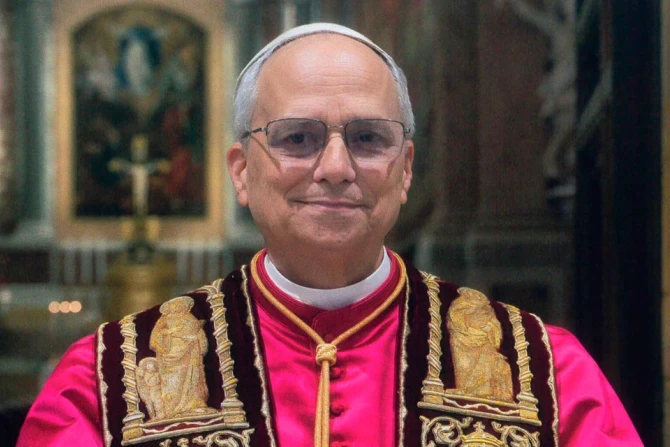
Or, said better than I ever could by Pope Leo in his encyclical released Monday:
…recognizing that, precisely from the plurality of voices and visions which, even though they sometimes remind us of the confusion caused by the diversity of spoken languages, a bright possibility emerges. Indeed, this is the possibility of building together, of transforming diversity into a resource and of making listening and dialogue the common ground upon which to cultivate justice and fraternity. Within this shared task, Christians discover their unique role of guiding actions toward God so that, in his light, pluralism does not dissipate into disorder, but instead, it becomes the space in which humanity rediscovers its solid foundations and its final end.
That’s the challenge we all face in this deeply divided world.

5 Responses
Very insightful. The community of Babel all over again. If there is a ray of hope here, and we must believe there is, our last two popes, in particular, have followed the path of Christ and have resisted the lure of power. The church’s next Reformation may come out of Rome.
Amen!
Thank you!
Jeff,
Thank you for this. I think your article points to something deeper underneath this turn, which is an abandonment of a spirit of abundance and turning to a spirit of scarcity. Whatever we may think of America, and I have my issues, most of our Presidents embraced a spirit of abundance. Give us your huddled masses, and they will thrive in America to the betterment of everyone. They create something new, and jobs are made, communities grow, everyone benefits as the pie of economy, culture, community is enriched and grows. We have moved to a spirit of scarcity. Keep your refugees/immigrants. We don’t want them. They steal jobs, take government aid, and hurt everyone, including the “cats and dogs.” This way of thinking demands we all agree that the pie is what it is and it never grows, and if it grows at all, it will only be enough for “us” not “them.” While there is definitely a limited pie in some aspects of life, there is only one championship team in every league each season, every part of life that truly matters has an exponential quality to it. Love and love grows. Welcome and welcome grows. Be grateful and gratitude grows … I think one issue is people don’t trust that to be true, and imagine that if we apply the championship metaphor to everything, we’re better off. Stephen Miller articulated his philosophy, “Power and dominion win. To say otherwise is myopic.” I say otherwise, and so does Christ, at least otherwise to Miller’s vision of power. The world order from the end of WWII to around 2015 says otherwise. Cooperation among nations, admittedly imperfect, has led to more peace and a faster growing economy than at any other time in the world, and the leader of that vision of cooperation, i.e. vision of abundance, has benefited more than any other country. It’s not just the economy. Health has grown around the world-less starvation, more education, better responses of generosity to unexpected tragedy. America is among the most generous nations in the world and world history, at least we were. I’m not sure now. You cannot reach those heights of love, grace, and generosity without a vision of abundance. An attempt to DOGE the entire government is a vision of scarcity, though I think a rigorous evaluation of government effectiveness and waste is a healthy goal for any system. We should start with the American military. It hasn’t passed an audit in more years that any of us would like to know. I could go on.
One other thing to consider in your metaphor. It is true that only one championship is awarded each season, but every champion is connected and working in cooperation with every team in its league. It other words, the ultimate goal of winning the most pieces of the pie is awarded to the last team standing, and they are declared the “winner,” but if it is done to the detriment of every other team continuous (“power and dominion”), the league will fold eventually. They must grow together and build the pie together or they will all lose together. We see lots of examples of this throughout sports history, i.e. USFL, ABA, etc. Embrace a spirit of abundance in a league where we’re all in it together in cooperation for the betterment of every team or you will fold. If the goal of this cooperation is sacrificed on the altar of a win at all cost vision of scarcity, you will say goodbye to that league soon enough, and everyone loses.
Thanks for the thoughts, Jeff. There is a lot to ponder in what you’ve offered.
I don’t know how many of my RJ friends / readers will see this; if you’ve read this post already, you likely will not come back. But in light of what I wrote, and in fear that my measured words may have simply wasted the time it took for you to read them, please consider this a brief addendum. In addition to those things in my brief bio, I chair the board of the Al Amana Centre in Muscat, Oman. There, we promote and teach interfaith work, peacemaking, and reconciliation; I believe deeply in what we do, and with Omanis as important and faithful partners and incredibly wonderful people. Today, President Trump told his Cabinet, and the State Department then posted it in a video, that Oman needed to “behave or we’ll have to blow them up.” I can barely breathe right now. That it finally took this, yet one this more egregious comment to grab my attention in ways other comments and actions haven’t, leaves me more than a bit ashamed. I don’t regret what I wrote, and I stand by it. But if, as Rodney Haveman graciously offered, there were things to ponder from it, one of those things, at least for me, has to be the all-too-comfortable privilege out of which I wrote and was willing to live–until it got personal with me. Today, I am challenged to re-think my own words and actions. I don’t know what the answer is; how we faithfully answer the challenges we all face in this polarized world. But I know this: Mr. President, the violence and threats of violence need to stop.