
When my oldest son was in kindergarten, I found myself chatting with another parent whose daughter was about the same age. We were watching the kids run around the backyard when he told me something that has stayed with me for years. He said that his young daughter had rarely received a compliment that wasn’t about her appearance: “She’s cute, she’s pretty, someone likes her dress.”
The things that were never said — never asked — mattered just as much.
As I raised three boys, I noticed they received comments about their abilities, their intelligence, their bravery, or their willingness to try something new. Only occasionally did someone remark on their appearance — perhaps my middle son’s blonde curls, or, as they grew, their height. But for this little girl, the same age as my son, the message was already arriving, delivered cheerfully by well-meaning adults: what matters most about you is what you look like.
I haven’t been given the chance to raise girls, but I think hard about raising my three sons — about the patterns of talk they hear, experience, and mimic. About what they notice. What is said to them, and what isn’t.
In this spring season of graduations and new beginnings, no shortage of attempted wisdom is shared with young people. Questions are asked. Plans are made. And beneath all of it, expectations are communicated. Sometimes in what is said, and just as often in what is not.

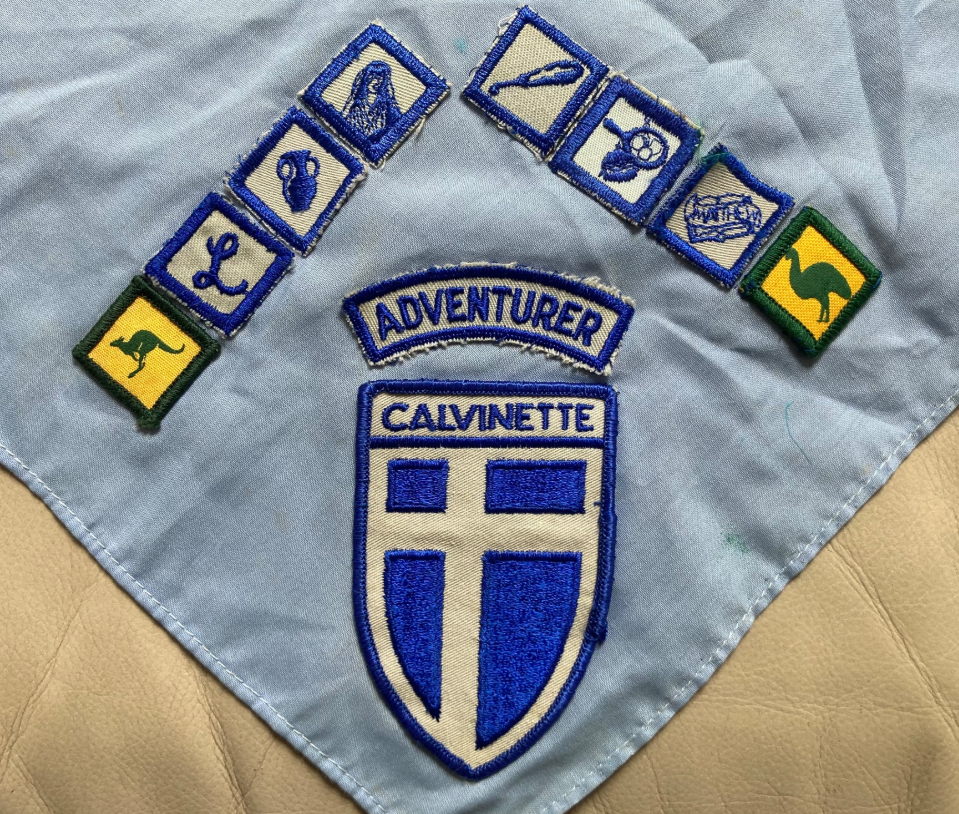
I think back on quiet expectations handed to me as a young person, as well as the people — mostly women — who shaped my early faith: the Sunday School teacher who encouraged me to study more deeply, the Calvinette (the Christian Reformed Church’s answer to Girl Scouts) leader who allowed me to question. That same leader may have gently scolded me when, in pursuit of a time management badge, I submitted a log of my week that included watching a Miss America pageant — something she asked me to promise I’d never, ever do again. I was drawn to her passion, her nudging to question, her refusal to let small things pass without examination. I felt seen by her persistence regarding who and what deserved my attention.
I think about my first experiences as a young woman stepping into church leadership. My first invitation to join a church committee, just out of college, began with a joke — the kind meant to land lightly and disappear quickly — that maybe I, the young woman in the room, could bring the cookies next time. There was also the assumption that I’d be the one to take the notes.
Church spaces, especially, are full of small talk. Those flitting comments made before and after services. It’s often in narthexes and the backs of sanctuaries, during coffee hour or community meals, that our children have their first real conversations with adults outside their families.
For a child, these moments are something like a rehearsal. They are learning how to answer questions from adults, how to hold eye contact, how to endure that long stretch of time when the grown-ups stand around talking, and they must stand around, eavesdropping or enduring. What do they hear? And when the conversation finally turns to them, what questions are they asked? What kind of compliments will they accept? What will they be taught about their place in the world?
Our sense of ourselves — our sense of who God made us to be, and where we belong — is built not through singular events but through the accumulation of small moments. The women who shaped my faith and my understanding of where I belong within it did so not through grand gestures, but through years of small ones.
The children in our congregations are paying attention to more than we realize. They are learning, from us, what is worth saying — and by extension, what is worth being.
How are we showing them what matters to us? What matters to God?
I know no better way to honor the power of words than with a poem from my dear mentor and teacher, Jack Ridl. Jack introduces his “Love Poem” on his website with these words: “What can seem inconsequential can actually be what very often keeps us connected, seamless in our humanity. This love poem, I hope, reaches beyond the singular situation and suggests that whatever creates a common care is anything but trivial.”
I am grateful for all the ways Jack teaches us that our words are never small.
Love Poem
“[He] makes the smallest talk I’ve ever heard.”
–John Woods
The smaller the talk the better.
I want to sit with you and have us
Solemnly delight in dust; and one violet;
And our fourth night out;
And buttonholes. I want us
To spend hours counting dog hairs,
And looking up who hit .240
in each of the last ten years.
I want to talk about the weather;
And detergents; and carburetors;
And debate which pie our mothers made
The best. I want us to shrivel
Into nuthatches, realize the metaphysics
Of crossword puzzles, wait for the next
Sports season, and turn into sleep
Holding each other’s favorite flower,
Day, color, record, playing card.
When we wake, I want us to begin again
Never saying anything more lovely than garage door.
Graduation photo by Joshua Hoehne on Unsplash
10 Responses
Thanks for these thoughts on the importance of children and adults chatting at church and the space to empower kids to grow in life
Your thoughts have been so enlightening. Although I’ve been more mindful with how the language of beautiful and cute shouldn’t define my granddaughters, much of my language surrounding my grandsons has focused on their 6’3″ and 6’4″ height. They are so much more than tall young men; I will be more mindful to let that go and focus on the “smallest talk” with and about them. Thank you.
Food for thought on how we speak about children. Very guilty in my complements on looks, what people are wearing, earrings, etc.
Dana,
This is such an important point and, as is usual with your posts, so well made. Thank you again.
As soon as I saw your title, I thought of Jack’s poem and was glad to see it at the end. Leave it to Jack to see a extraordinary love poem in that small line: “He makes the smallest talk I’ve ever heard.”
(You think Jeff Munroe could tell us who batted .240 each of the last ten years?)
Thank you, Dana.
Our churches provide a perfect venue for 15 second exchanges with visitors who may rate their entire experience on those brief encounters. Understanding their importance puts members in a weighty role to care for the “sojourner within our gates.”
Yes. This. Thank you!
Thank you as a woman in various positions, big and small, and thank you as a mama of daughters.
Years ago in my first congregation–a congregation that was overall open to women in church leadership though at the time that option was not yet available in the CRC–in a sermon I told a story about a pastor and then at one point I casually referred to the pastor as “she.” I cannot tell you how many people jumped in surprise in their pews as though a small current of electricity had been passed through the wood! Little words get noticed. Thanks for this, Dana.
Scott
No doubt. Use a feminine pronoun for God from time to time, as I have, and you will see that jolt, likely with a higher voltage.
Thanks, Dana. Your important truths got my mind going in many directions. (1) When I was a young man, someone told me that great souls talk about great ideas, while small souls talk about people. This warning against gossip is good as far as that’s concerned, but it overlooks the fact that people—especially small people—are far more fascinating than great ideas. (2) I’ve often heard people disparage the fact that after church, people make small talk in the fellowship hall. How could they have been in the presence of God together and heard the Word, and now talk trivia? But your essay reminds us that more good things are going on in that small talk than we might think. (3) I wonder what kind of small talk Jesus engaged in. Surely, not every sentence was Sermon-on-the-Mount worthy. (4) My own life has been profoundly shaped by off-handed comments made to me, which the speaker probably doesn’t even remember saying. But I do. I recall walking into a Christian coffeehouse as a teenager and the director said, “When I see you, I think of joy.” That has remained my most cultivated aspect of the fruit of the Spirit ever since.
I loved every word of this. And the comments were such great bits of small talk! Love love love.