
What would Abraham Kuyper say about dynamic pricing and $30,000 tickets?

The men’s World Cup is upon us, beginning this Thursday. If you’ve got someone in your life who will be yapping about it incessantly for the next six weeks, or if you’d simply like to be prepared, we humbly offer this guide. We’ll attempt to bring an informally Reformed perspective.
I haven’t paid attention since the Qatar World Cup four years ago. What’s new this time?
There are 48 teams competing, sixteen more than ever before. Purists might bemoan the lower standard for entry, but it gives smaller countries like Haiti, Cape Verde, and Curacao (pop. 158,000) a chance to dream.
The tournament is also spread across three nations—the United States, Mexico, and Canada—instead of the usual one.
If you’ve heard anything about the tournament, it’s probably the historic, eye-watering ticket prices. The U.S. opener vs. Paraguay in Los Angeles this Friday will currently set you back at least $1,027, with thousands of tickets still unsold. Seats at the July 19 final in New Jersey currently run from $8,900 to more than $30,000. FIFA, world soccer’s governing body, promised affordable tickets, but seems to have a different definition of affordable than most of us.
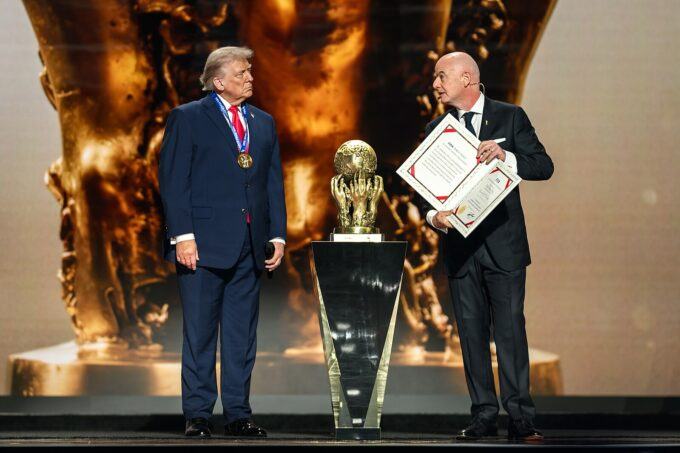
In fact, there’s something of a sheen (a stench?) of corruption around FIFA, whose president, Gianni Infantino, recently awarded a new FIFA Peace Prize to his pal President Trump.
Why does FIFA have a peace prize? And why was it given to the man who launched aggressions against Iran, Cuba, Venezuela, countless unnamed fishermen, etc.?
Only FIFA leaders know. Surely not because the U.S. commander in chief is easily manipulated with flattery and empty symbols. Next question.
Why are there no matches in [Chicago, Detroit, another big city]?
With three countries sharing hosting duties, there are only so many games to go around. By most reports, cities that opted out are having no regrets. The emerging consensus is that host cities are getting financially hosed by FIFA, with costly facility requirements, sponsorship restrictions, and lower-than-expected booms in tourism.
Enough politics. Who’s favored to win?
I’m partial to England, who has a slew of young, likeable players, several of them fresh off a Premier League championship with London club Arsenal. (Elite footballers play for both club and national teams, with overlapping calendars, raising questions about how much wear and tear their bodies can take.) England hasn’t won the World Cup since 1966, so it might be due.
France or Spain are also solid bets. Brazil and Portugal too.
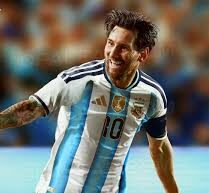
At the age of 38, Lionel Messi likely can’t carry Argentina to a repeat championship. Then again, he keeps proving doubters wrong, and the team is stacked with talented players beyond him.
The Netherlands is considered the most accomplished team to have never won the tournament, and are looking as well-stocked as ever, so this might be their year.
Are there any dark horse candidates?
Ecuador finished second in a tough South American qualifying tournament. Norway has two of Europe’s top attackers in Erling Haaland and Martin Odegaard. Mexico might be the strongest of the three host countries. Your guess is as good as mine!
How’s the U.S. team looking?
Iffy. The cohort that was considered a golden generation isn’t as young as it used to be, and hasn’t accomplished much in the past four years, individually or collectively. Can onetime Captain America Christian Pulisic regain his form? Can a star emerge from a set of strikers-by-committee? Can highly paid Argentinian coach Mauricio Pochettino get more out of the lads than previous coaches from the clubby, insular world of the U.S. soccer? We’ll have at least three games to find out.
Is this year that soccer finally becomes a mainstream American sport?
According to my kids, their peers, and the number of colorful jerseys around town, we’re long past that point.
Speaking of jerseys, who’s got the best ones?
With 48 teams sporting home, away, and sometimes a third kit option, there are plenty to choose from.
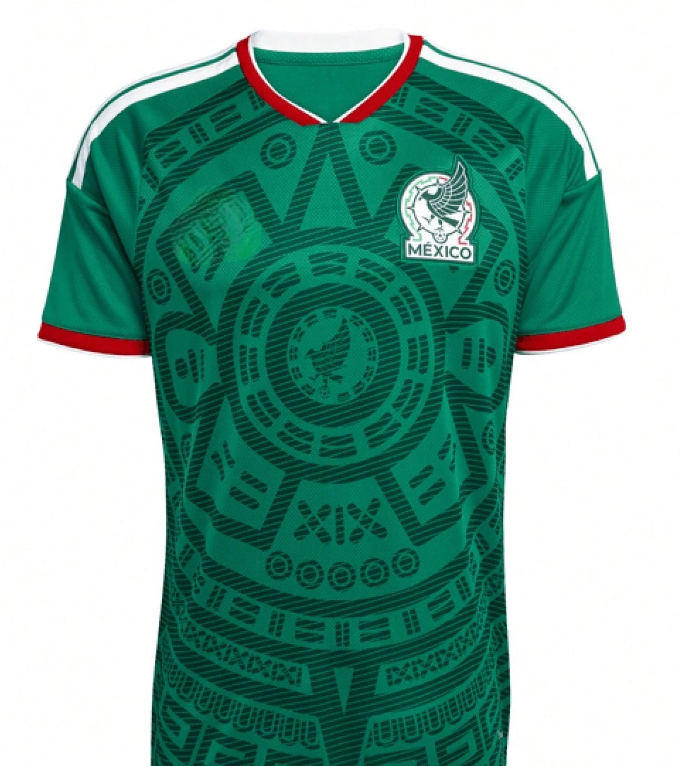
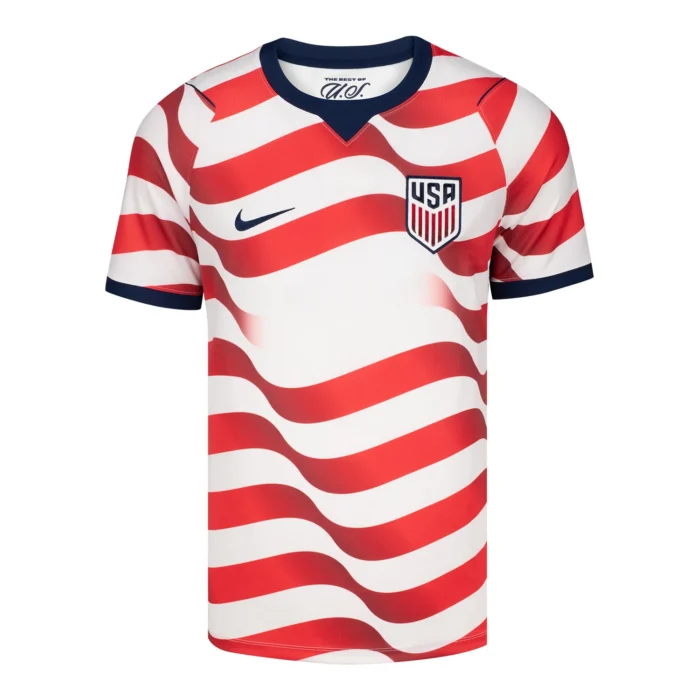
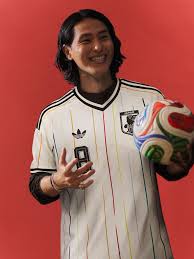
Mexico’s Aztec-inspired pattern is getting plenty of buzz from the online content machines. Same with Japan’s deconstructed rainbow, and Spain’s retro minimalism for the discerning fan. The U.S. has snazzy waving stripes and embossed navy stars. I’m fond of Curacao’s home and away kits. Here, take a look at one of the many online jersey rankings. They’re fun.
Snappy uniforms aside, there’s just not enough scoring. How do you get excited about a 0-0 tie?
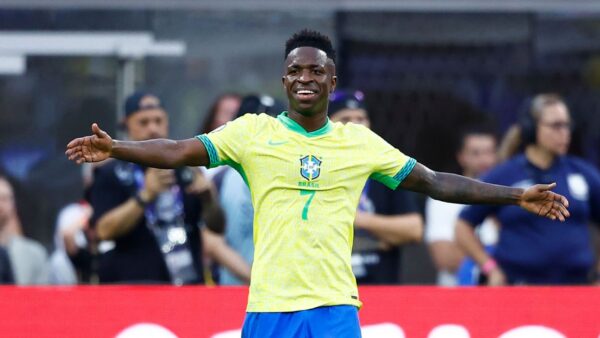
It’s all about having eyes to see: The tiniest flick of a heel that can unlock a stalemate and send a stadium erupting. The subtle tactical battles even in low-scoring games. The weight of so many fans upon the shoulders of these talented youngsters. The explosive speed of Brazil’s Vinícius Júnior. The liquid exuberance of Spain’s 18-year-old Lamine Yamal. The Genius of Lionel Messi Just Walking Around. (That four-year-old New Yorker article, by the way, is a great example of the joys of deeper attention. What might look like laziness in Messi walking as the game races by him is actually something different: The star building a real-time map of the game’s ebbs and flows, effectively disappearing for stretches only to reengage for a moment of brilliance.)
Yes, 0-0 ties are disappointing. But there are far fewer commercial breaks than in football, basketball, or baseball.
You promised a Reformed perspective. What would Abraham Kuyper say about dynamic ticket pricing or $30,000 seats?
I confess I don’t know much Kuyper beyond the famous quote about “every square inch” of creation being God-breathed and holy. I suppose that means those luxury box seats are no more or less sacred than a folding chair at a neighborhood watch party, or a stool at your local pub, or inviting someone over to watch a match.
Instead, how about a thought from Godric, Frederick Buechner’s brokenhearted mystic with feet of clay? “Nothing human’s not a broth of false and true,” says Buechner’s fictional saint. That seems as good a lens as any for viewing the World Cup: corruption and beauty, greed and generosity, all simmered together into an inseparable broth.
We like books around here. Are there any great ones about the world’s most popular sport?
I’m so glad you asked. My favorite is Soccer in Sun and Shadow by Uruguayan Eduardo Galeano. Best known for his left-leaning journalism, Galeano wrote this delightfully poetic ode about his lifelong love for the beautiful game. Even in 1995, he lamented the shift in global football from spontaneous flamboyant artistry to brute capitalist efficiency, both on and off the pitch.
I’ll give him the last word:
Playing a staid and standardized football, is that really playing? According to those who understand the root meanings of words, ‘to play’ is to joke, and ‘health’ is when the body is as free as can be. The controlled effectiveness of mechanical repetition, enemy of health, is making football sick.
To win without magic, without surprise or beauty, isn’t that worse than losing? In 1994, during the Spanish championship, Real Madrid were defeated by Sporting Gijón. But the men of Real Madrid played with enthusiasm, a word that originally meant ‘having the gods within.’ The coach, Jorge Valdano, beamed at the players in the dressing room: ‘When you play like that,’ he told them, ‘it’s okay to lose.’

6 Responses
Oranje!
🧡
Thanks, Jonathan. I’m a former–very former!–soccer player. I was a member of Calvin College’s varsity soccer team from 1961-1964, which did not play MIAA teams then, but took on athletic giants such as Notre Dame, Michigan State, the University of Illinois, and Purdue. (We not only held our own, we were co-champions with Michigan State one year. Our goalie, Casey TerHaar, was an all-American! My last year I was honoured to be named Honorable Mention All-Midwest.)
As a Canadian immigrant from the Netherlands, I have divided World Cup loyalties this year. If Canada is eliminated, the Netherlands will be my team. As for your statement that Mexico might be the strongest of the three host countries, let me point out that the last two games Canada and Mexico played each other ended in ties. So, as you say, your guess is as good as mine. :>)
Appreciate this primer! I’ve been paying zero attention lately to a game I used to watch incessantly. Less motivations now that I’m no longer a soccer mom. But I’ll probably catch a few games for the World Cup.
Hey, Jonathan:
As a former HS JV football coach (“this is a football: it is pointy on both ends, and it doesn’t dribble”) I am still mystified by soccer, but have come to some understanding of the game via my son-in-law (who played goalie in HS–though he would have made a great tight end for me) and through Ted Lasso😎
I absolutely appreciate your comments on politics and economics and their mostly negative impact on the intrinsic beauty and glory of human endeavor in sports (feeling God’s pleasure a la Chariots of Fire); as a hs coach of four sports over 30 years I appreciate your last paragraph’s reference: “when you play like that, it’s ok to lose”— often my post game speech to my teams.
The Dutch always bring such an exciting attacking style to these tournaments—it’s hard not to get caught up in the energy when Oranje takes the pitch. I’ve found that tracking their midfield transitions is key to understanding where their matches will be decided, especially in knockout stages when the pace really intensifies. One thing that’s helped my analysis is paying attention to set piece routines, since the Dutch tend to be pretty creative there.