
Once upon a time the church and its clerical powers treated doubt as a dreadful malady. Doubt was something like hemorrhoids; if you had them, you didn’t go about showing them.
As is the fashion in church circles, what was once a personal problem has now ascended to a position of prominence. Church-goers are familiar with this phenomenon. Ours, after all, is the age of disclosure. What was once locked in the closet now lies fully exposed on the patio, sunbathing and sipping on a smoothie.
We have always been aware of waves of doubt rolling through ecclesiastical bodies. Is doubt something to be accepted, then, as an uncomfortable part of the human condition? Or, is it a malady beyond our control that slips its pernicious virus into the unsuspecting believer’s mind, canceling her spiritual vitality like Covid-19? In the following, I would like to investigate several postulations that just might provide some starting steps toward a contemporary understanding of doubt. We can start toward that goal by agreeing on several foundational points.

The first of these understandings is that doubt varies by degree. That in itself contributes to much of the misunderstanding of doubt. For some people doubt is a niggling thing, like a wart on your finger or a callus on your toe. This kind of doubt may be quite easily remedied or forgotten. For example, “I doubt whether my grandson’s twenty-five-year-old car will make it to California.” Pretty good evidence supports this doubt, so we ship the car on the back of a truck. We might call doubt of this sort, like a nettlesome buzzing in the brain, “colloquial doubt,” common as it is to most of humanity.
At a second level, we speak of doubt as a more serious sort, where it intrudes upon the ease and comfort of daily living. This level introduces a classic component of doubt; that is, it produces a fog of ambiguity and uncertainty. We crave certainty; we need to be assured that the important elements of our life—a spouse, an employer, bodily health, government bodies–can be depended upon to act in expected ways. Doubt about any of these guardians of dependability can make life very uneasy.
At the third stage, we find doubt that is not simply uncomfortable or threatening of our stability and happiness but rather is fairly crippling of our life. This third level of doubt plunges oneself and the world about one in nagging uncertainty. It is also the kind of doubt that afflicts some believers, where one might be beset by so many uncertainties and questions that they feel crippled spiritually.
To be clear: I am not condoning or condemning any of these stages of doubt. I am simply trying to understand doubt and human belief. If we can achieve that, I do believe that we can formulate some remedies to doubt.
**
At different times in this essay, I will be referring to doubt as an intellectual activity. In no way do I mean this as a capacity related to intelligence, a term we routinely use to refer to one’s place on some I.Q. scale. Although some people are by nature more inquisitive than others, and while some people amass substantially more knowledge than others, my use of the term intellectual simply refers to an activity of the mind. At no time do we suggest that doubt is a symptom of a diminished intellect. Nor, to be fair, is it in any way a symptom of an above average intelligence. Spiritual doubt, our subject, can assail people of all walks of life and all degrees of intelligence.
It is also the case that at times doubt can certainly serve a good purpose. Akin to the “flight or fight” sense for survival, doubt hesitates before potentially dangerous and threatening situations. It makes the brain pause and inquire: Is this true? Is this the best situation for me? Some easily preyed upon people need someone with a higher doubt quotient to protect them. Doubt isn’t necessarily a bad or dangerous thing.
Nor is it bad to ask questions. We do so when confronted either with material that we don’t fully understand or material that we believe to be patently false. We ask questions to learn and clarify. We ask questions to avoid danger. Questioning may be distinguished from doubt generally, though. Questioning seeks to clarify and add knowledge. Doubt finds that clarity and knowledge highly suspicious and perhaps untrue.

Intellectual questioning of propositions is one sort of doubt. Another kind is calling into question the experiences of others. The classic example occurs with our biblical friend, the apostle Thomas, also called Didymus (Take your pick of the Greek or Aramaic names; they both mean “twin.”). Thomas doubted that others had seen the risen Christ. When Jesus appeared and invited Thomas to stick a finger in the nail prints or a hand in the sword wound, he offered physical, tangible proof to his risen body. Presumably Thomas then believed. But not all spiritual issues or questions are as easily satisfied.
Persistent, or what we might call prevailing, doubt has become a settled condition. And it isn’t necessarily because of the “really tough issues” like the incarnation or resurrection of Jesus. Doubt has grown more familiar and domesticated in recent decades. Consequently, some of the erstwhile theological and philosophical methods of dealing with doubt, by establishing counter-proofs or showing concrete evidence, no longer hold.
As we examine the nature of doubt in this present age, the first stipulation we have to make is that doubt is not just an intellectual matter but it is also an emotional issue. Once doubt was responded to by means of doctrines, sermons, creeds, and catechisms. It was an ecclesiastical matter; not a personal one. But the modern doubter is quite certain that it is personal and often emotional. Doubt frequently stirs moods of anger, rebellion, disappointment, sadness, and the like. Why? Because the individual’s spiritual beliefs do not precisely conform to any larger, ecclesiastical body. One then feels separate, lonely, and a misfit. The natural next step is to find others who identify with your doubts and beliefs. Doubters want to find fellow doubters for a kinship of uncertainty. If doubt can be, and very often is, emotionally unsettling, then many doubters tend to separate from the church where these doubts were promulgated.
As we observe that doubt is often a matter of personal beliefs that bear emotional consequences, we also introduce the second inquiry about doubt: the relationship between doubt and belief or disbelief. This is an essential step because the person who doubts is often construed by others as a disbeliever. I have found that this is not necessarily true at all; indeed, the doubting person may very well be, and quite often is, a believer in the fundamental tenets of the Bible. To put it another way, any believer may nonetheless have doubts. Doubt and belief are not incompatible terms then; in fact, they often dwell simultaneously in the same person.
We need, then, to separate doubt from belief or disbelief, although we recognize that doubt can lead to a rejection of Christian tenets or that a person can be a believer and still be troubled by doubt. Furthermore, we recognize that at certain times Christianity itself has to accommodate its tenets to unfolding truths about the physical world. One such example would be our varied understanding of the creation of the world and earth history. While some Christian schools, for example, adhere to a curriculum that advocates 24-hour, six-day creationism, others are examining a different time span, incorporating the latest developments in archeology. Many of them settle on what I call a “long-creationism” theory—the belief that the Trinity was involved in every step of creation through a period of millions of what we understand as years. Here, then, we see that belief accommodates factual evidence.
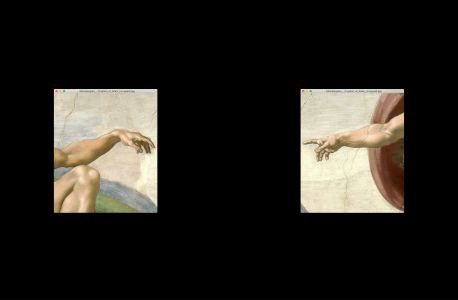
Doubt is intellectual discomfort with a given proposition with concomitant emotional effects. The propositions vary: Aaron Judge will hit 80 home runs this season; The Hebrew word for day—yom—means a 24-hour day; Jesus rose from the dead; I will rise from death. The propositions all have areas for doubt. Eighty home runs would be a prodigious feat—the MLB record is 73. The word for day in Hebrew in Genesis is signaled by the terms “morning” and “evening,” hence a 24-hour day. But even with a morning and evening the day could have been six million years. As a friend once told me, “I wasn’t there.” No, but God was, and we have to ask why we want to throw human limits on a divine miracle. Either you accept the miracle or you doubt it or you deny it. Similarly, the resurrection is God’s miracle. What I have to do with it is accept it. Or, I may doubt it and reject it.
This third point about doubt may seem a bit belabored. It is complex, melding together several important terms. Doubt seems to be the contrary of two spiritual terms. The first is “acceptance,” the willingness to believe in Christian tenets without fully understanding them, and even with some hesitations or doubts about them. The emotional effect of doing this is the achievement of inner peace, the recognition that I can live with some ambiguity in my life. The second contrary term is “certainty”: declaring, professing, and holding certain things to be true, and asserting that I will live by them. Both acceptance and certainty are intellectual positionings that assuage the emotional distress of doubt.
We see three qualities, then, that help define doubt as it circulates in this age. First, doubt is understood as both an intellectual and emotional issue. Second, doubt is separate from, but may influence, both belief and disbelief. One may disbelieve, for example, as a choice of the will, as a consequence of birth and upbringing, or as simple disregard. Third, the most appropriate counterpart to doubt appears to be certainty. There are, after all, plenty of people who are dead certain about their beliefs and are never assailed by doubt. We turn then to doubt and its place in today’s ecclesiastical bodies.
It is human nature to ask questions. God created humanity with this magnificent capacity called curiosity. Some of our greatest achievements arrive through the great “what if?” Puzzles unravel and become plain; chemicals combine and by so doing destroy cancer; we wonder what the backside of the moon looks like, so we fly there. Curiosity is one of God’s greatest gifts and should rightfully be protected and encouraged. Truly, one’s capacity to wonder or ask questions may be so stunted in any number of ways that curiosity withers and shrinks. Maybe it is the fault of our highly technological educational systems; maybe the fault of homes where no books exist and no book cover is ever turned. The reasons are endless. Yet, as Gerard Manley Hopkins wrote in his magnificent poem “God’s Grandeur”: “There lives the dearest freshness deep down things.” For all of our modern flattening of the human spirit, I believe that curiosity also lives deep down in things and stirs insights of the holy.
Doubt is born of that same capacity that begat Verdi’s Four Seasons, Eliot’s Four Quartets, and Norman Rockwell’s Four Freedoms. Doubt too wonders “what if” and searches for answers. At least honest doubt does. Some doubters seem satisfied to sit in a group, sip their mocha lattes, and grumble about how bad life is. For them, doubt is a dead end–its own reason for being. This essay is not directed toward them. Honest—that is, an earnest seeking of answers, then studiously and prayerfully considering the worth of those answers—doubt, I argue, originates from that same human capacity as curiosity and wonder. As such, doubt is not to be considered intrinsically pernicious, as less curious persons are often wont to do. This belief has important implications for how one treats doubters, our final step of consideration.
Although the Bible nowhere condones doubt and in fact speaks disapprovingly of the activity of doubt, it adopts a different tenor regarding the doubter herself. Jude strikes the biblical note in verse 22: “Be merciful to those who doubt.” This is an interesting twist. The natural inclination for those who do not have doubts is to disparage those who do. Something is defective in the doubter’s faith, goes the general attitude today; surely, their whole belief system is in peril. But then we read, “Be merciful to those who doubt.” That has several implications.
The first is understanding the dynamics of doubt itself. Because doubt emerges from the human quality of curiosity and questioning, it is very hard to tell oneself simply not to doubt. It’s like telling someone caught in a paroxysm of coughing simply to stop coughing. Some parts of our human nature simply do not turn on and off with a flick of a switch.
Moreover, we should understand that there are proven means to assuage doubt that any serious Christian may pursue. These means include the classical fellowships—Bible reading and prayer to engage in fellowship with God, keeping a prayer journal, and joining a church fellowship. Actions such as these find their biblical warrant in James 1, and James’ admonition that if one feels lacking in spiritual wisdom, he or she should ask God for it and God will give it. Yet, we also understand that people afflicted with doubt cannot always help it; they cannot stop the hornet’s nest in the brain from buzzing with accusations and questions.

We consider, then, the insidious nature of doubt, that it can’t simply be flicked off. Moreover, we also see that there are biblically warranted ways of dealing with personal doubt. The third implication meriting attention is the fact that these people who doubt are our brothers and sisters in Jesus. If I seem to emphasize this too much or too often, it is because I find it quite simply one of the most urgent issues in the church today. For some odd reason we want to separate ourselves from doubters. They don’t fit. They make us uncomfortable. But nonetheless they are our family, and we bear responsibility to them.
That leads me to my final point, for if we are to treat doubters in the ecclesiastical body with mercy and compassion, we are also to treat them with understanding instead of discrimination. This is a point of some anxiety in people and serious tension in the church. My position is that while a believer who scorns or discriminates against a doubting fellow believer is biblically in error, so too is the doubting believer who simply turns her back on ecclesiastical fellowship. Either act defies the ideal of Christian unity.
Not many Christians escape moments of doubt in their earthly lives, for the simple reason that earth is fallen and bewildering. To live on this earth can bring great joy, but also moments of deep and grueling sadness. We tend, then, to make large conjectures, even stretch for universal truths, which have the bitter consequence of leaving some people out of the church community. If we shy away from people with doubts, we consequently isolate them and probably exacerbate their doubts about the church. We need to respect this individuality.
These observations do not for a moment deny the absolutes and truths we hold as a body of Christ. By the same token, I can find no biblical grounds for believing Christianity is some lock-step religion in which everyone must march to the same beat. Indeed, the glory of Christianity is that it gives each person his or her true, unique self. We are told several times in the Bible that Jesus knew us before we were born and that he has a future and a hope for each of us. When we give our whole selves to Jesus, we receive in turn the true self that has been appointed for us through all eternity.

6 Responses
I thought this was very, very good. Some quick thoughts.
One virtue of the Canons of Dordt is that they recognize the reality of doubt in true believers.
The NT text itself does not say “doubt” for Thomas, but treats him as an example of what you describe as holding simultaneously both belief and unbelief.
I am certain that Verdi did not compose the Four Seasons, but I doubt that you really meant so.
If I had any success as an evangelist in Brooklyn, it was partly in honoring the doubts of our inquirers. In other words, absolutely being with you in what you write. Thank you very much.
Thanks, Dan. I have no doubt the composer is Vivaldi. John
This is an incredibly honest and beautiful reflection. You did a masterful job of validating doubt not as a failure of faith, but as a deeply human part of the spiritual journey. I love how you balanced the heavy, vulnerable side of questioning with a tone that feels genuinely comforting and accessible. It’s a powerful reminder that wrestling with hard questions can actually lead to a deeper, more resilient relationship with God. Thank you for sharing such thoughtful work!
“the Bible nowhere condones doubt and in fact speaks disapprovingly of the activity of doubt”
OK, yes, there’s no “Thou shalt doubt!” commandment, but isn’t there a lot of implicitly approved doubting in the Bible? Isn’t Abraham’s argument with God premised on his doubt that the plan for Sodom is a just one? Isn’t there doubt all over the Psalms (one of the reasons we love them—their honesty)? Paul doubts Peter’s good faith (jn Galatians) when the latter withdraws from the gentiles. And of course there’s Jesus in the garden (who certainly seems to be doubting the necessity of what he’s about to endure), and then his cry from the cross. The terrifying paradox of God doubting the faithfulness and justice of God is, it seems to me, at the core of the Christian faith, and as Chesterton noted, what sets it apart from all other religions.
And as far as our everyday horizontal experiences, isn’t the entire Biblical anthropology (and ecclesiology too) a giant warrant for doubting teachers and authorities, outside the church and in? Humans aren’t just finite, they’re fallen, with all that that entails. And beyond that foundation, even saints can sin. It’s impossible to navigate the world or the church without exercising a lot of doubt–or what’s called being wise as serpents
My experience has been that whenever an individual in authority or a community is intent on suppressing or even stigmatizing doubt, it’s because they’re all too aware of their own weaknesses (of thought and/or practice) and are trying to scare people away from noticing them. That’s not the Bible’s attitude. It’s how cults operate.
Thanks, John. I don’t know you, but I always appreciated your book on the fruit of the Spirit, The Way of Christian Living. As far as doubt goes, I have always found it helpful to focus on the relational aspect of doubt. Doubt can be an internal dialogue about what one thinks about certain propositions (which we might then express to someone else in words). I either doubt the proposition, believe the proposition, or be double-minded about whether it is or is not true. But if we think of doubt in relational terms, then doubt is mostly about what happens between us and others (including God). With an idea, I can either doubt it or believe it. But with a person, I can either doubt them or trust them. Sometimes we trust them fully, or we trust them not at all, or in many cases, we trust them on some matters and not others. If the issue is large and important involving intentional deception, our lack of trust hurts our relationship with them (as happens when a spouse lies about why they came home late). If the issue is minor with false statements based on misinformation, our lack of trust about that issue makes no difference in our relationship. For instance, I trusted my Dad with my life, but some of his explanations of word origins seemed fanciful to me. He wasn’t trying to deceive me, he was just misinformed. It never hurt our relationship, and only put a smile on my face.
Things get a little more interesting when it comes to doubts about God. Some experiences may cause us to question whether God is actually trustworthy, and so we have doubts. We don’t just doubt statements about God; we doubt God. When that happens God understands and will accompany us in those times. Unfortunately, some in that situation will quit trusting God, but others come to realize that it wasn’t really God or his Word that had failed them, but a faulty understanding of God and his Word that they had picked up from someone else (perhaps a friend, a well-intentioned teacher or an “expert”). And then we have to figure out: did that deceive us about God on purpose? did they simply misinform us (perhaps because they had been deceived)? or did I misunderstand what they said to me? When someone stops trusting God or trusting those who told them about God, what’s usually needed are not better arguments to prove God is trustworthy, but for that person to experience trust-building experiences with others.
Thankyou John and each one of the responders. The thoughts expressed were very interesting and caused me to ponder and think through my views and occasional doubt, or question.
Blessings to you all