
Rhubarb plants in my area require very little maintenance. On the first warm days of spring, the curled, wrinkled leaves push through the soil. The emerging stalks possess the perfect balance of strength and flexibility, which makes them strong enough to withstand the high winds of western Nebraska springtime.
All summer long, the plant sends out more stalks, especially if you harvest from the plant from time to time. In the winter, the visible part of the plant dies back and forms a protective mulch over the rhubarb crown and roots below the surface.
The annoying part about growing rhubarb? Only a few weeks after the plant begins to grow in the spring, it expends a tremendous amount of energy trying to form a flower and go to seed. The flower bud pushes up from the center of the plant on a hollow stalk, and seemingly overnight the bud opens to reveal a gangly, wispy flower. Seasoned rhubarb growers know to pull the flower stalk out as soon as it is visible. Removing the flowers encourages the plant to focus its energy on producing more edible stalks, rather than on producing seeds.
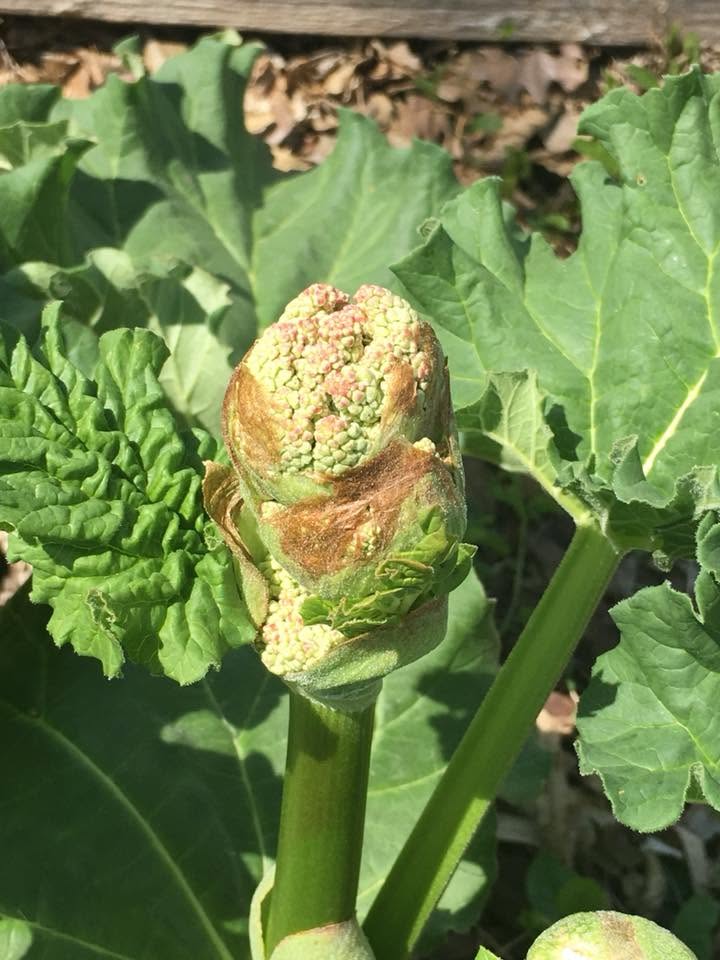
The problem? Rhubarb really, really wants to form seeds. This growing season, I’ve pulled out at least five flower stalks, and the plant keeps trying to produce more. A beautiful object lesson in persistence.
A few years ago, both out of weariness from pulling so many flower stalks and curiosity to see what the seeds looked like, I decided to leave a flower stalk on my plant at the end of the growing season. Over the next couple of weeks, the flower opened and seeds that looked like rolled oats dangled on silky threads. The seeds began to dry and they turned a deep reddish-brown color–a striking contrast to the deep green rhubarb leaves.
A couple of years passed, and my husband had been weeding around our backyard trampoline. He came into the house and said, “April, this is going to sound weird, but I am pretty sure we have a rhubarb plant growing under our trampoline.”
“Are you sure?” I asked. “It’s more likely a dock plant. It looks very similar to rhubarb, but it grows like a weed around here.”
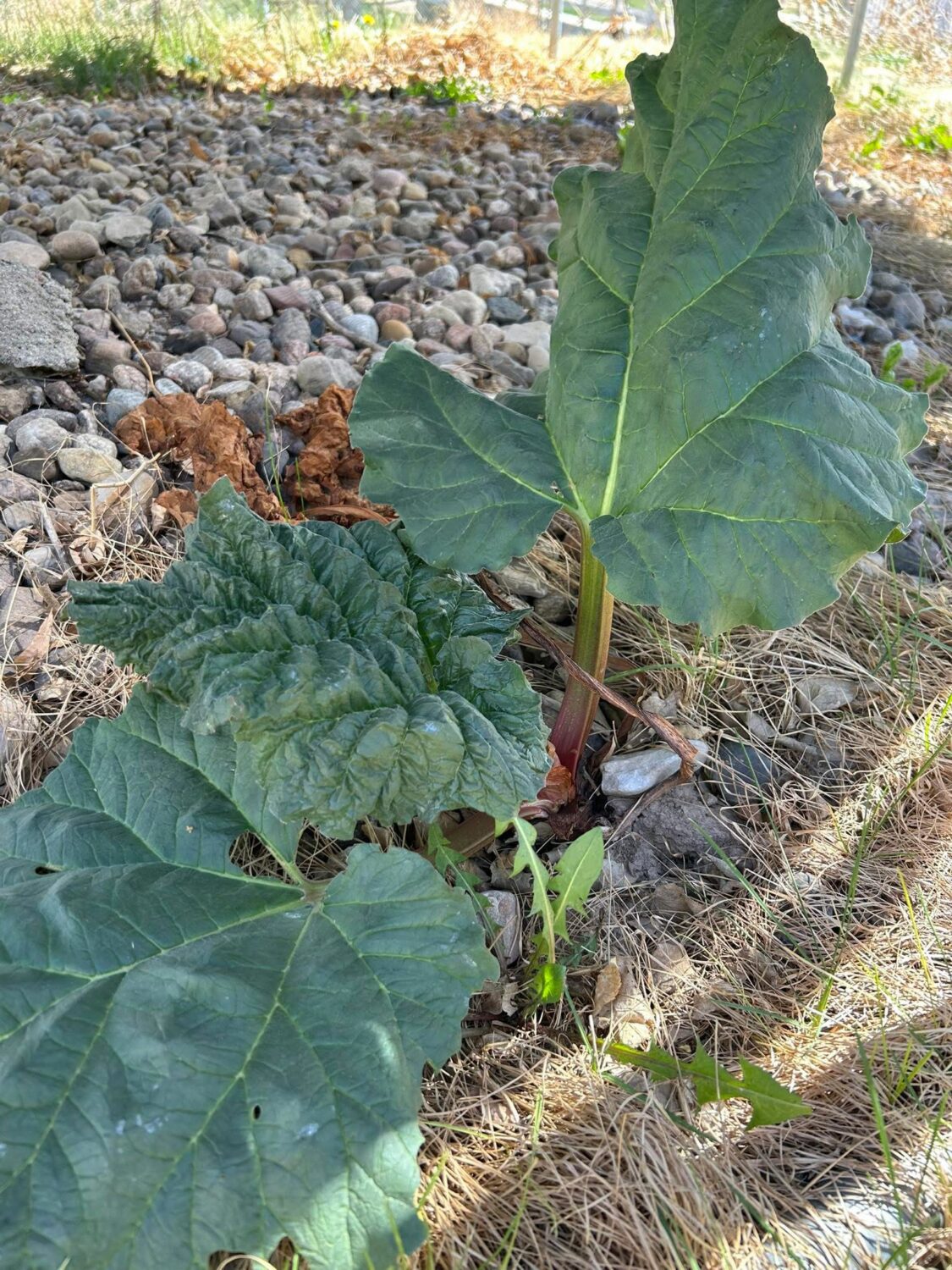
I went outside to investigate, and sure enough, the unmistakable shape of a new rhubarb leaf was emerging from a red crown at the surface of the soil under our trampoline. I took one of the stalks that looked like it was beginning to wilt, I snapped it off, and inhaled. The sweet, sour bite of rhubarb greeted my nostrils. How on earth did we end up with rhubarb under our trampoline?
And then I remembered my rhubarb-seed observation from a couple of years before. Was it possible that the wind had snatched one of those dry seeds and deposited it more than fifteen feet away? Was it possible that every time I mowed the lawn around the trampoline, I somehow spared this new rhubarb plant?
I thought through everything that had to happen in just the right way for this surprise plant to grow in this unlikely place. When I allowed my rhubarb plant to blossom and form seeds, I didn’t think about the possibility of new growth. In my curiosity, I had forgotten that seeds are what make new plants possible. I hadn’t planted the seeds. I hadn’t watered them, or weeded around them, and still, they grew.
I have wasted a lot of energy in my life worrying about outcomes. I thought if I did all the right things as a parent, preached the best sermons as a pastor, followed all the right rules and strategies in my life, that everything would turn out the way I hoped they would. Lives would be changed. People would thrive. My life would look the way I thought it should.
What I have discovered instead is that the outcomes of many of these things are beyond my control. All I can do is find the courage to blossom, to reach beyond myself, and scatter seeds as faithfully as I can. And, as Paul writes in 1 Corinthians 3, God gives the growth.
Where might God be kindling curiosity in our hearts? Where in our lives might the Spirit be whispering in our ears, “I wonder what would happen if you let yourself blossom here?” I am reminded of the beautiful Communion hymn, “Seed, Scattered and Sown.”
Seed, scattered and sown,
wheat, gathered and grown,
bread, broken and shared as one,
the Living bread of God.
Vine, fruit of the land, wine,
work of our hands, one cup that is
shared by all; the Living Cup,
the Living Bread of God.
May we release our desire to control the outcome of our actions, for who knows? A rogue seed of faithfulness might just take root in an unexpectedly beautiful way. May the Holy Spirit nudge us to be curious, to be courageous, and to grow seeds that fly far and wide.
Header photo by Judy Beth Morris on Unsplash

3 Responses
“Though I do not believe that a plant will spring up where no seed has been, I have great faith in a seed. Convince me that you have a seed there, and I am prepared to expect wonders.” Henry David Thoreau
Thanks, this reminded me of the the parable of the growing seed in Mark 4: 27-28a: “Night and day, while he is asleep or awake, the seed sprouts and grows, but he does not understand how it happens. The earth produces the crops on its own.” We just enjoyed a strawberry rhubarb pie from plants that we found when we got here in 2004!
This was lovely and heartfelt. It spoke to me today. Thanks for this post.