
Origin stories have always fascinated me. Whether it is the story of how a married couple met, the history of a college mascot, or how my CVS pharmacist came to be named “Wondrous,” the origin of things most often reveals intriguing stories.
Such stories are typically a blended brew of God’s providence and human initiative. In looking back on origin stories, it’s not always easy to distinguish between the two with clarity, pinpointing the traces of “God’s fatherly hand” or the imprint of human action.
One origin story stands out for its revelatory impact.
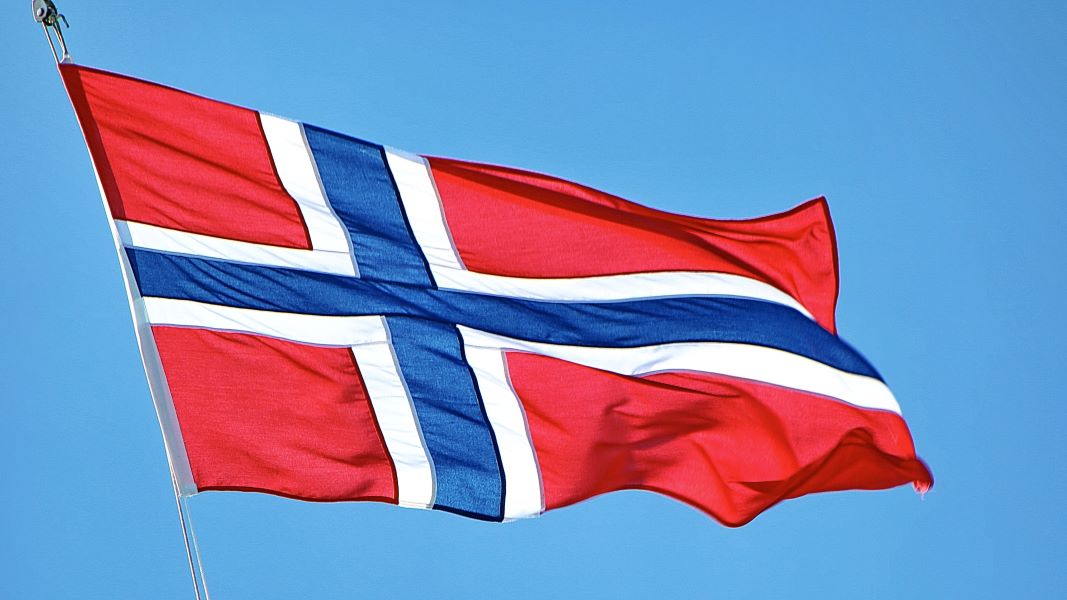
My wife and I were vacationing in Norway, the home of my paternal family, in the mid-1980s. We happened to be there while a distant relative was getting married in Oslo, and we were invited to the post ceremony celebration at the home of the bride’s parents.
We settled around the coffee table to enjoy slices of the wedding cake, and the bride sat next to us. She opened a large book which contained the family genealogy. With a sly giggle and clear delight, she pointed to my grandfather’s name—Christ—and his place on the extensive family tree. I kept looking for a link to anything resembling a Viking marauder, without success.
Once the visit was over and we waited on the front stoop for a relative to drive us back to our hotel my wife looked at me with a smile and said, “Didn’t you realize what that smirking bride was trying to tell you? She kept pointing to the line going to your grandfather and the dotted line instead of a straight line.”
“No, I didn’t notice. I was looking for a Viking connection.”
“Well, duh!” She was shaking her head. “She was emphasizing that your grandfather was a bastard, an illegitimate birth! No father listed.”
Well, that shook things up. I’d never heard anything about my grandfather’s origin story, other than when he came to Ellis Island and the immigration officer told him he should probably change his name from Christ Flak—Flak, near Trondheim, the region of his birth—to something else, lest he become ridiculed (for taking a lot of flak) in his new home in America. So, he chose Larsen, for which I am indeed grateful.
When we came back from vacation I told my father, the oldest of eight children of Christ and Marie, what we had learned in Norway. He was stunned. He had never heard this story. Neither had any of his siblings when he asked them.
So he went straight to the source: my grandfather, who was then a widower. As he sat in his well-worn easy chair in his living room, he told my father that it was true. Then and there, nearing the end of his life as it turned out, he spilled more. In an earlier blog, I also wrote about my grandfather toward the end of his life and some small details are repeated here
Christ left Norway for South Dakota as a young man. He left because of a traumatic experience that he had kept hidden from the family. He had never known his father. It was enough to be told by his mother as a child that his father left town one day and never returned.
As a teenager performing his daily chore of picking up a pail of milk from the local tavern, a routine and typically uneventful task, a grizzled old man called him over to the bar. The fisherman pointed to the town drunk slumped at the bar and told Christ that this was his father. His mother then confirmed this.
Christ believed that the promise of the American Dakotas was a chance to start on the path to America’s streets of gold, a way to escape the intense shame he now felt, and to start fresh, which he did as soon as he was able. He worked long enough in South Dakota to realize there were few streets at all and none of them were golden. He also found out that he was not meant to be a farmer. So he moved to Chicago for work, and married Marie, who worked as a maid along the Gold Coast on the north side. They knew each other as schoolchildren, skiing together to their one-room schoolhouse.
Gramps walked with a limp as long as I had known him. After moving to Chicago to join countless Scandinavians in the construction trades, he was injured in a roofing accident. He fell from the roof to the street, and discovered it also was not paved with gold.
But there was also a less visible yet powerful limp. The limp of shame was deeply embedded in him ever since the encounter with his father. It was finally diminished as he attended a Missouri Synod Lutheran church and heard the good news about what to do with shame as a new creation in Christ.
I’m certain that 1980s bride in Oslo never knew any of the details of this origin story, truly a redemption story, for my grandfather.
Nor did she, or my father, or any of his siblings know about yet another story of origin. It was told by my grandfather to my father as they sat together. There in Gramps’ living room he reached to his wedding picture on the table alongside his chair. Christ and Marie on their wedding day in a sepia-toned formal photo.
“Do you see this son? Look closely. You’re there in the picture too.”
And so it was that my father learned, late in his own life, of this most revealing story of origin. It was as if a stage curtain had been raised on a missing chapter of life.
My father looked at his father, then the picture, and then back at his father. Their laughter filled the room and was followed by a warm embrace. Unashamedly. In God’s providence.
Header photo by Steinar Engeland on Unsplash

5 Responses
What a great story, Dave. Having a murky origin story on my Dad’s side, it was great to be reminded that, by grace, the questionable origin details of a good family story don’t matter as much as the results. Thank you!
Oh, Dave, this brought back so many memories of Grampa Larsen! I pictured him in his easy chair, heard his obnoxious laugh (which was passed down to me) and smelled the snuff he put in his cheek.
You are such a gifted writer. This was a great reminder of God’s grace. Thank you for sharing this glimpse.
A wonderful story, Dave. And aren’t you fortunate in the wise choice your grandfather made about a new name. 🙂
Dave, I really enjoyed your book Green Street in Black and White and I recommended it to several other readers. Thank you for it.
Thank you for this beautiful story. I learned from Family Search that my paternal 8th great-grandfather was born out of wedlock in a small town in the Netherlands. Despite the shame and ostracism that he experienced, from that line came many CRC pastors. My dear dad was one of them. Grace prevailed.