
Cedar house is at the edge of the faculty cabin cluster. It’s a fish camp vibe, knotty pine interior and cast-off furniture sourced from garage sales and end-of-the-driveway consignments. It’s my home for five weeks of teaching at the Au Sable Institute. Its tight bedrooms (2) are at the back, tucked into the trees. The tiny windows are shielded from the night sky, from the neighbor’s lights. Dark as the inside of a cow.
I normally sleep soundly here, answering the sweet fatigue of meaningful work and time in the field with my students. This week though, I tossed and tangled myself in the sheets, fretting as I do over a single lecture.
Au Sable schedules “integration days” where the various classes meet together for instruction in important topics that cut across the various discipline-specific classes offered under the banner of “creation care” – the favored code-switched term of art that would mean “environmental conservation” elsewhere.
My lecture is a crash course in the climate crisis, the grand daddy of all integration topics. I bare my anxious soul for them and I show a little of my throttled anger. I talk science and I show my sources. I talk policy and I show my sources and I point them to activists and scientists who share their faith.
What I say is hard to hear – these beautiful young people. It’s hard to have to say it again. I then tell them about my faith in students, about urgency and agency and emergent leadership – and I challenge them for their’s.
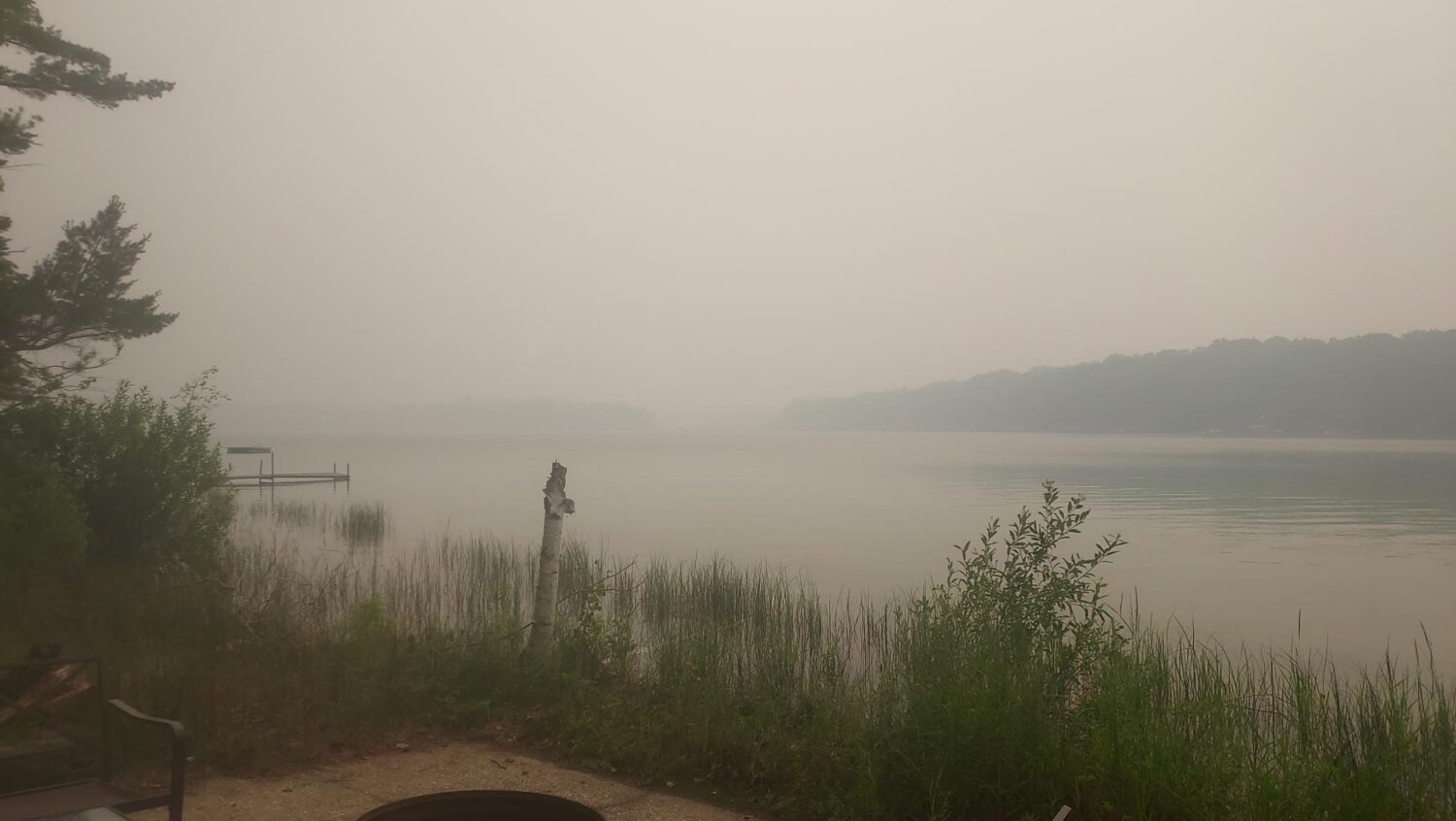
This year’s session began with a climate crisis lesson tapping at our window. Boreal wildfire smoke kept us indoors and our throats burned, here where field work is a selling point. Stupidity followed, directed at our Canadian neighbors (also instructive).
On my off days, I work as hard as I can to keep up with my Wisconsin — Madison stuff. Poor planning on my part, I am in a perfect storm of writing/reading/editing obligations, an academic book that we’re behind on, dissertation chapters coming at me with short deadlines for feedback, science manuscripts to usher though, the needful attention to departmental email. On my off days, attention collapses to words on a page and the terse imperatives of staid and stilted science language seasoned with the instinct to add just enough rhythm to avoid the whole thing collapsing into silliness.
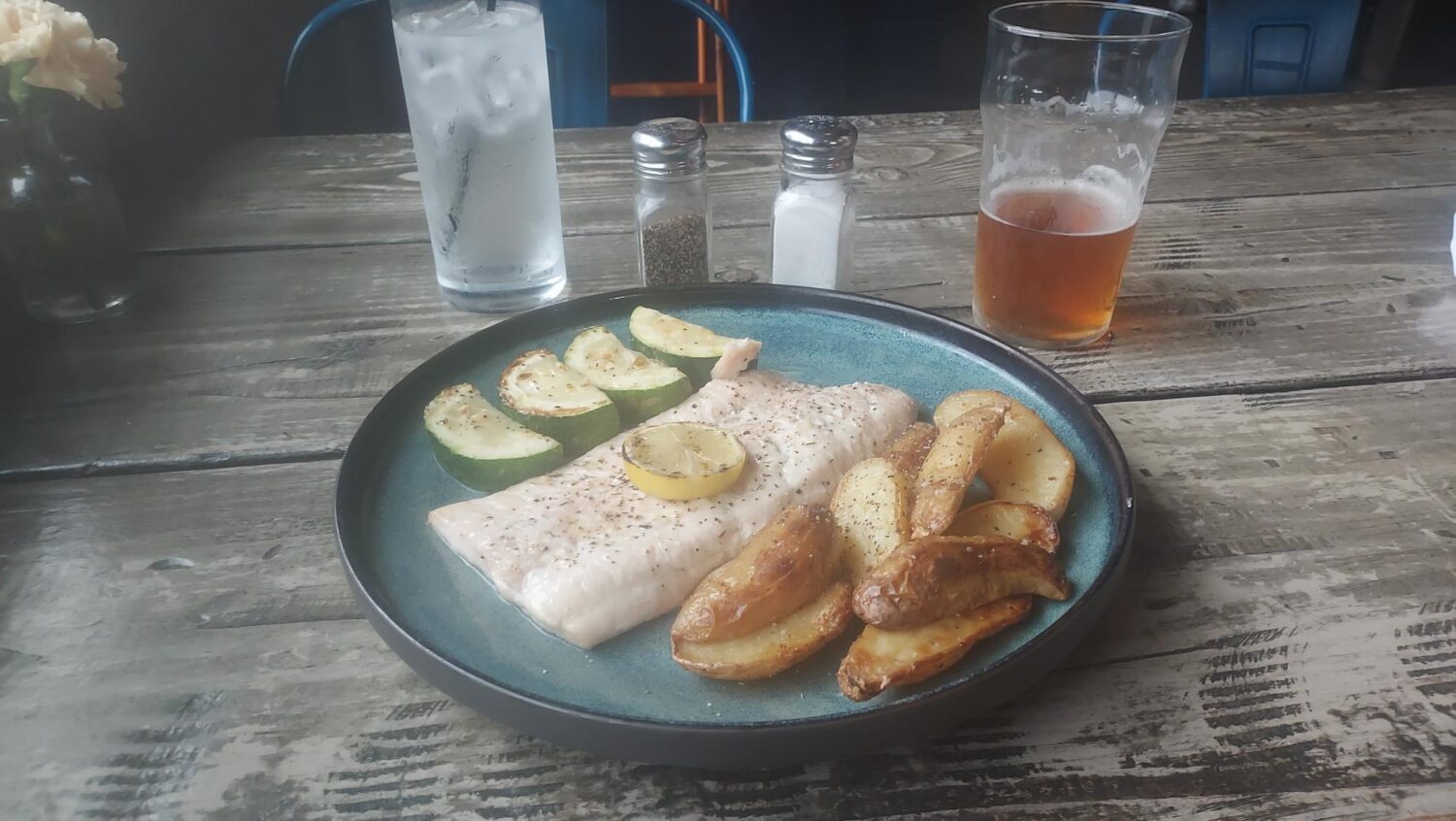
I’ll retreat for a few hours when the weekend arrives and I can use convention to reclaim my time. I’ll poke around the little Big Lake (always capitalize) port town marinas dreaming of wind in the rigging and the sound of a hull parting the chop at a stately five knots. I’ll search for the perfect plate of whitefish and a cold beer.
I woke last week with the lucid sense that words were dissolving from pages into the finest black microscopic bits otherwise electrostatically affixed to bleached paper and the electronic versions atomized into dimensionless pixel dust only to combine and swirl around me — moving like my own vapor-breath in the sunlight of a raw November morning. I am charmed. An atmosphere of dissociation but emergent with familiar movement like smoke. I stood satisfied in the tumbling word residue with no cares or even a thought for what might be lost unintelligible.
You’re still sleeping, I thought. Check the clock.
No don’t.
Stay here in the precious middle space for a bit – If you can.
In the cool morning, I turn the fans off and stillness absorbs me even as the forest is absorbing my little cabin. The rising sun raises the barest ripple on the water and leaves outside the screen are as motionless as a photograph. My chickadee neighbor alights by for a brief greeting and from the shady interior there’s a catbird and then farther off, a hermit thrush. From the lake direction the familiar warble and wing-beats of our loon. And just now a little brown warbler (no idea of her species).
I have a 40-year association with the Au Sable Institute, having come here first as an undergrad back in the ‘80s. The association enables me to walk my students through the shady trails and tell them about forest-time seasoned with an emerging personal experience of it. You learn first as abstraction and if you are lucky, you color in the outlines with intimacy, but it accumulates slowly in ecology.
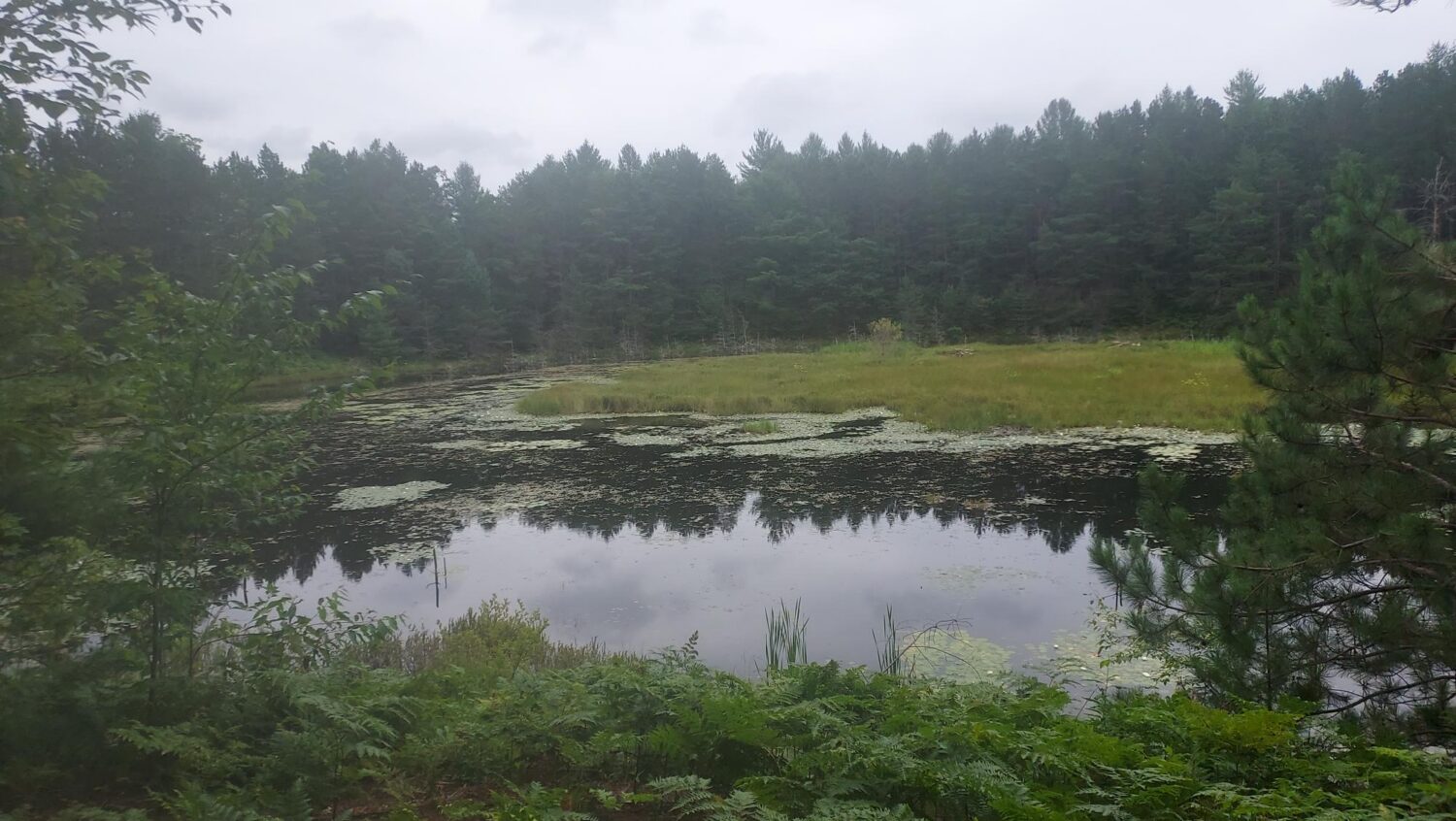
Our beaver pond had actual beavers in it 40 years ago and we watched otters playing on the bank one evening. Then the water table dropped and isolated it and it spent 25 years turning itself into a bog with droughty pines colonizing the new sandy margins. In recent years, the water table has risen as high as anyone can remember and the beaver pond is a pond again – albeit one with a bog-plant island and the corpses of drowned pines. I can still show them 40-year-old indicators of beaver activity, but they’re subtle, and more so each year.
In the interior uplands, the popples are senescent and blowing over and stumps from the cutover are melting away. The Northern Hardwoods’ own middle space. Maples are racing for the canopy gaps and the beeches are all dying from a disease associated with an invasive scale insect. Whatever the oldgowth endpoint was in my undergrad text, its now headed for something different, less diverse, more burdened by heat and storms.
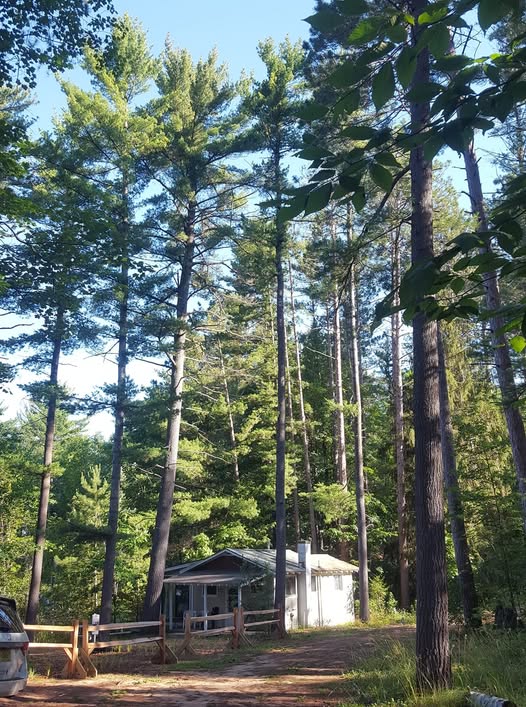
My little cabin at the far end of the cluster is being consumed as the understory minions, and then saplings, and then young trees march steadily towards the open areas. Moss grows on the old shingles.
Part of me would stand aside and welcome them. Nature needs a win. Given forest time, the enormous old white pine leaning over my bedroom will die and blow over and crush the tiny cabin. The mosses and fungi will reclaim and consume anything organic and will cover and disguise everything else. Freeze-thaw cycles will slowly tear apart the cracks where moisture hides. In forest time, the cabin will sink into the forest floor and all will become uniformly darker and wet.
Part of me would give it all back. We’ve been the rude guest at the dinner table for too long, taking more than our share and dominating the conversation with self-important bluster. Time to push the chair back, show a little humility and listen, and help our hosts begin cleaning up the mess.
There’s a bit of comfort in the relentless resilience of life, in its dynamism in forest time. The refuge of stillness in human time. The endpoint is cool and green and shady.

5 Responses
The image of the rude, blustering guest at the table will stay with me a long time… and the fog of words.
Evocative writing and messaging. Grateful you found time to write for us amid other pressures
As I’m enjoying and learning from your writing today, my granddaughter is on a walk with you at Au Sable, learning the lessons we are all slowly learning—and she is loving it. So grateful for your work and intense care for the natural world. I, too, am encouraged by the future generation of caring young people.
I. is a great student. Full of enthusiasm and fearless about new experiences. I am enjoying getting to know her.
So thoroughly appreciated this. We took a CALL class at AuSable. It brought back special memories.