
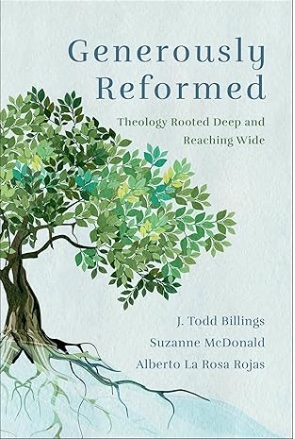
Excerpt from Chapter 1: A Reformed Theology Primer: Misconceptions and Realities from Generously Reformed
What is Reformed theology? It seems like a simple question. As we’ve just noted, all human discourse about God is messy, an incomplete testimony from mere mortals. We are absurdly limited in comparison to God’s eternal way of knowing and being. Both our knowledge and our will are tainted, and we are inclined to hide from a God who does not appear according to our wishes. These factors alone suggest that Reformed theology, like Lutheran theology or Catholic theology, will be messy and complicated, at least at particular points.
Dear readers, fasten your seat belts. Additional factors, distinctive to the Reformed tradition, make discussions of Reformed theology complex and multilayered. To begin with, particular confessions and catechisms are the central, shared authorities—under Scripture—that identify Christian communities as Reformed. But there is no uniformity in the sources or the content among these Reformed standards. Stated differently, the central identifying sources for the content of Reformed theology vary in different regions and different parts of the Reformed tradition. While the Reformed tradition values the discipline of theology, no single theologian defines what it means to be Reformed. That is established by assemblies in particular regions, with unique histories and cultures. In most regions, as the Reformed faith spread, the church adopted two types of theological documents that its pastors embraced as shared authorities, under the prime authority of Scripture: catechisms (teaching tools) and confessions (supplemental statements of faith including expositions of key scriptural sources for the doctrines).
The Reformed Church in Hungary, founded in 1567, is still active today with around 3.5 million members in the church worldwide. In addition to its catechism, its single confession is the Second Helvetic Confession (1536), written in Switzerland by Heinrich Bullinger in the second generation of the Reformation. A generation later, Guido De Bres, a pastor in a persecuted underground church in what would become the Netherlands, wrote the Belgic Confession (1561), which became the main statement of faith for the Dutch Reformed Church. In the same generation, John Knox and five other Scottish reformers wrote the Scots Confession (1560). There is significant theological shared ground among the confessions written by Bullinger, De Bres, and Knox and his colleagues. But there are differences as well, and these are quite intentional. Each wrote with the specific challenges and needs of their context in mind.
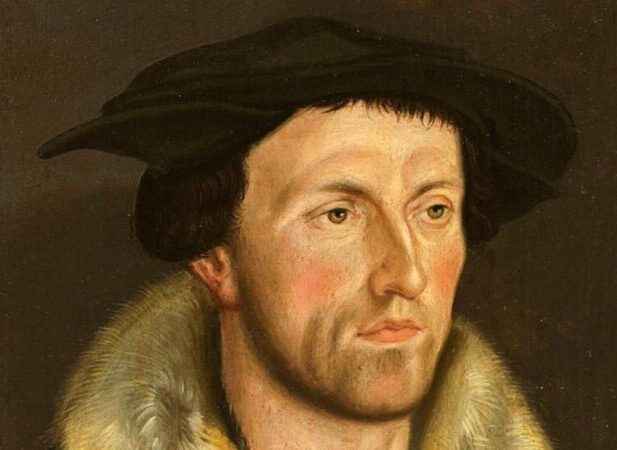
1504-1575
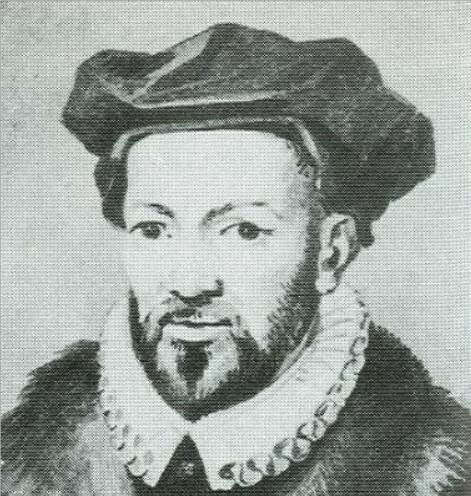
1522-1567
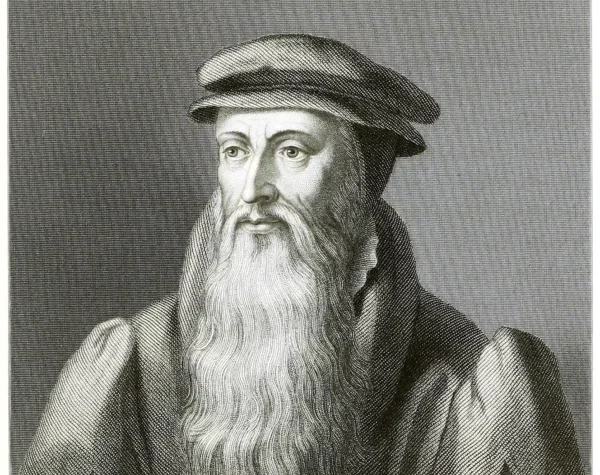
c. 1514 – 1572
What were the underlying factors leading to these different Reformed confessional traditions? Sociologically, Reformed theology was often birthed in the pain of exile, among religious refugees. As one historian notes, “The Reformation stands out as the first period in European and possibly global history when religious refugees became a mass phenomenon.” This reality was central for the development and growth of the Reformed movement. Although Reformed Christians sought to cooperate with governing authorities who would give them clemency, leading Reformed theologians such as John Calvin, John Knox, Peter Martyr Vermigli, and Theodore Beza all lived away from their home regions and cultures for decades. A common destination for these refugees was Geneva, Switzerland. Geneva became the destination for thousands of displaced people with physical and spiritual needs that stretched the capacity of the city. Among the displaced were pastors. This led to a reorganization of the diaconate to provide for physical needs and the founding of the Genevan Academy in 1559 by Calvin. For generations, the Genevan Academy was a launching pad for training pastors and other reformers who were then sent to do ministry elsewhere. Whether in Switzerland, Germany, Scotland, or even Brazil, the Genevan Academy became a theological and missional catalyst for the Reformation.
In addition to the sociological reason for this multiformity was a theological one: The Reformed held to a theology of the Spirit and the church that did not insist on uniformity to have unity. It was enough for these sister churches to have similar confessions, for there was a range of differences in culture and custom that could be fitting in different places. These differences could reflect the Spirit’s work in distinct contexts and ultimately fit within the Reformed sense that they belong to the church catholic, the universal church, in all times and all places. Later chapters in this book will examine this point further—that Reformed Christians embraced the Reformed faith as a way to be catholic Christians, even though their movement had been rejected by the Roman Catholic Church…
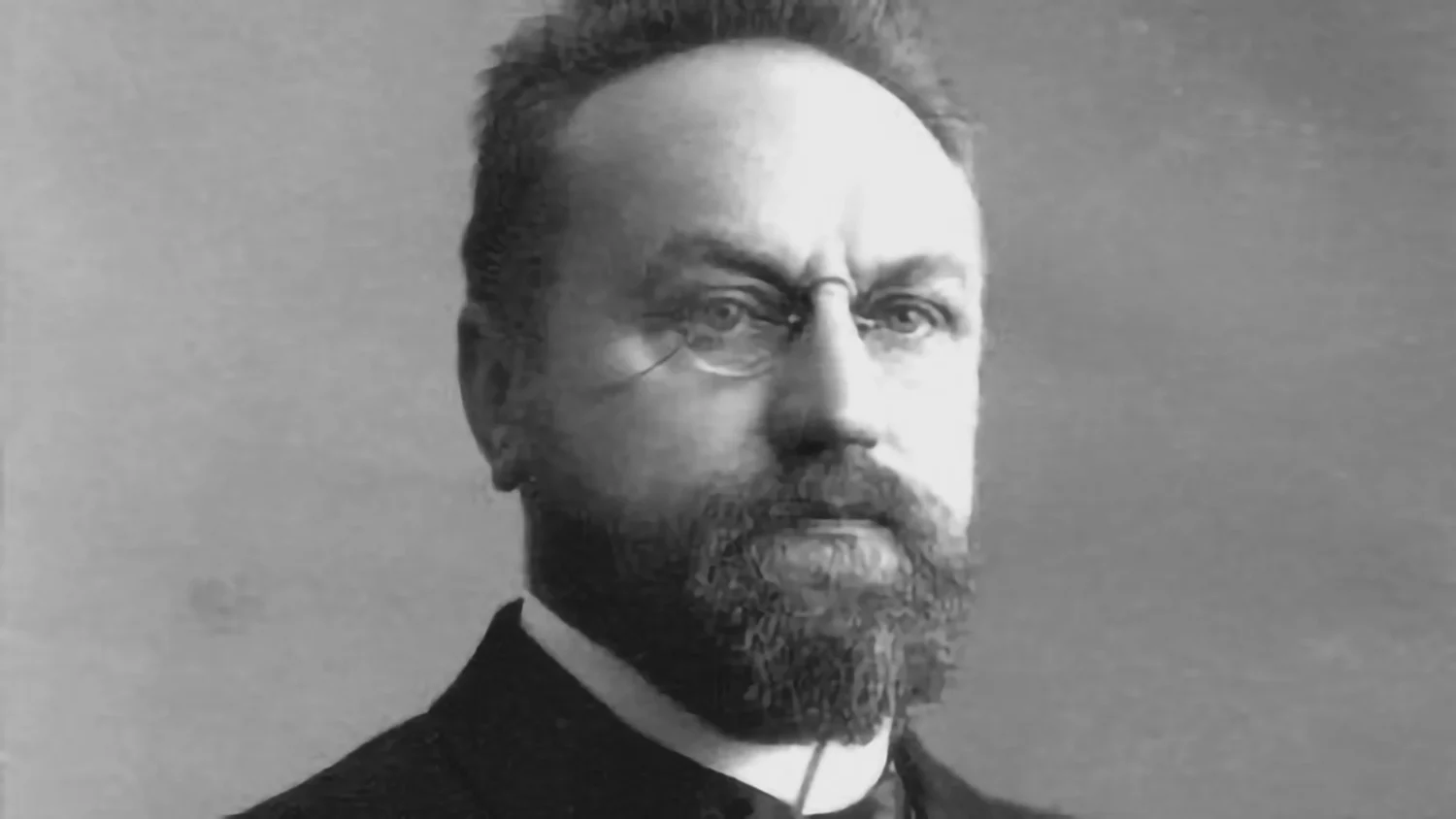
1854-1921
The Reformed tradition locates itself as belonging to the catholic faith, but with a different way of inhabiting this shared faith. It not only sought to reject the “innovations” of the church of Rome but also developed a variety of regional confessions of faith and catechisms that expressed this unity in a variety of forms. Dutch theologian Herman Bavinck (1854–1921) put it this way: “That church is most catholic that most clearly expresses in its confession and applies in its practice this international and cosmopolitan character of the Christian religion. The Reformed had an eye for it when in various countries and churches they confessed the truth in an indigenous, free, and independent manner.”
Although he wrote over a century ago, Bavinck’s phrasing here is significant for Reformed Christian communities around the world today: The Reformed goal is to confess the faith “in an indigenous, free, and independent manner.” By indigenous, Bavinck means something more like local or contextual than Native American or Aboriginal, as we sometimes understand the term today. Indigenization is how the diverse-yet-unified catholicity and universality of the church is expressed, rather than in a top-down approach or a uniform collection of Protestant confessional statements.
While the Reformed indigenizing principle will be explored further in later chapters, it should be clear already that having a variety of differing Reformed confessions and catechisms gives a certain messiness to the definition of Reformed theology. It can be messy and also profoundly generative. Reformed churches around the world—from South Africa to Cuba—have continued to generate confessional documents that clarify the gospel’s witness in their own times and places.
Content taken from Generously Reformed by J. Todd Billings, Suzanne McDonald and Alberto La Rosa Rojas, ©2026. Used by permission of Baker Academic, a division of Baker Publishing Group.

4 Responses
This is so illuminating and helpful. Will buy the book!
Two things strike me & I’m grateful to hear :”While the Reformed tradition values the discipline of theology, no single theologian defines what it means to be Reformed…..
The Reformed held to a theology of the Spirit and the church that did not insist on uniformity to have unity.”
Thank you for this. In spite of the confusion and chisms within the church, I’m often tempted to just give up on the mess. For now, I will hold to Spirit and be comfortable with my nonconformity.
Thanks for this excerpt. Question, regarding the opening statement: “…all human discourse about God is messy, an incomplete testimony from mere mortals.” Is this true? Are we mere mortals? Or are we immortal?
A related question: What will the professional theologians do on the New Earth? And can we anticipate that in how we do theology today?
Great question, David. As an author, I usually don’t enter in on discussions of excerpts, but I appreciate the questions, which are ones the book does take up in that chapter.
The chapter draws upon a distinction that goes back to Junius in the 16th century that all of our theology now is “pilgrim theology,” as mortal pilgrims. It is theology on the path of discipleship, imperfect but sufficient for the purpose of bringing us into a saving communion with God; but we do not yet know God “face to face,” as Paul says. At the beatific vision in the new creation, we will move from what Junius calls “pilgrim theology” to “vision theology.” “For now we see only a reflection, as in a mirror, but then we will see face to face. Now I know only in part; then I will know fully, even as I have been fully known” (1 Cor. 13:12).
The paragraph before this “Reformed Journal” excerpt is copied below, and it gives more context about what we mean by the “messy” and “incomplete testimony from mere mortals.” It’s definitely not saying that scripture’s teaching is just the product of human speculation. But rather, it is God’s word to us, accommodated to our very limited creaturely, mortal capacities:
We note that as we “set the stage for a generous Reformed theology, we seek to do so from a posture of humility and hope. From a Reformed perspective, theology is not primarily a human effort to make claims about God; rather, it is an attentive act of receiving, of hearing, and of testifying to the Lord of creation, covenant, and redemption. It is a humble rejoicing in revelation that we could not have invented ourselves. Even as we testify to the goodness, power, and mercy of the Lord, we can join the psalmist in admitting that our knowledge of the Lord is not like his knowledge of us:
“Such knowledge is too wonderful for me; it is so high that I cannot attain it” (Ps. 139:6).
Good questions!