
“Many people have no real sense or experience of community.” – Kelly Hayes and Mariame Kaba
One of my favorite moments in the worship service each week comes toward the end, when we gather around the communion table and pass the bread and juice to each other, speaking words of blessing. As I wait for the elements to come to me, I like to look at the faces around the circle. Some of these faces carry burdens and sorrows I know well. Others, I only recognize because we have shared, over the years, this weekly practice of showing up, coming together, singing, praying, receiving. We all have history together, whether happily intertwined or just benevolently proximate. I marvel more and more as the years go by how richly I’ve been blessed by good church communities.
Is long-haul community a gift churches (and other faith groups) can offer in these chaotic, fractured days? I am wondering about that. I know, I know. People are leaving churches: 28% of Americans identify as “unaffiliated,” not part of any faith community. We can all name reasons for this; many of us have lived those reasons.
I’ve found it interesting, however, that people in activist spaces keep talking about the need for community in a time of upheaval, fear, and threat to a livable planet. Is it possible that we in the church have a gift we are taking for granted? Or perhaps squandering, when it is most needed? The context for my wondering comes from some recent listening and reading among climate activists.
For instance, in a recent episode of the Planet Critical podcast, host Rachel Donald interviews environmental social scientist Michael Maniates about “the myth of individual responsibility.” Maniates wants to make the case for joining together in our work for the common good—he’s talking here about action to mitigate climate disruption—rather than imagining that we solve things through individual consumer choices.

Maniates and Donald lament that when it comes to civic cooperation, however, our skills have atrophied; we have “trained incapacities.” We have lost our skills for working together because we have lost so many of the civic organizations where people used to channel their public spirit and learn to work together for the common good. Some readers might hear echoes of Robert D. Putnam’s 2000 book Bowling Alone in such observations.
As I listened to the conversation, I wondered why neither Maniates nor Donald ever mentioned faith communities. Faith communities, after all, do still exist. And they are exactly the kind of organizations designed to help people channel their desire to work together toward the common good. Our work in faith communities arises from our commitment to love and serve God and to love and serve our neighbors, of course. But still. We do often remain little training grounds for doing good.
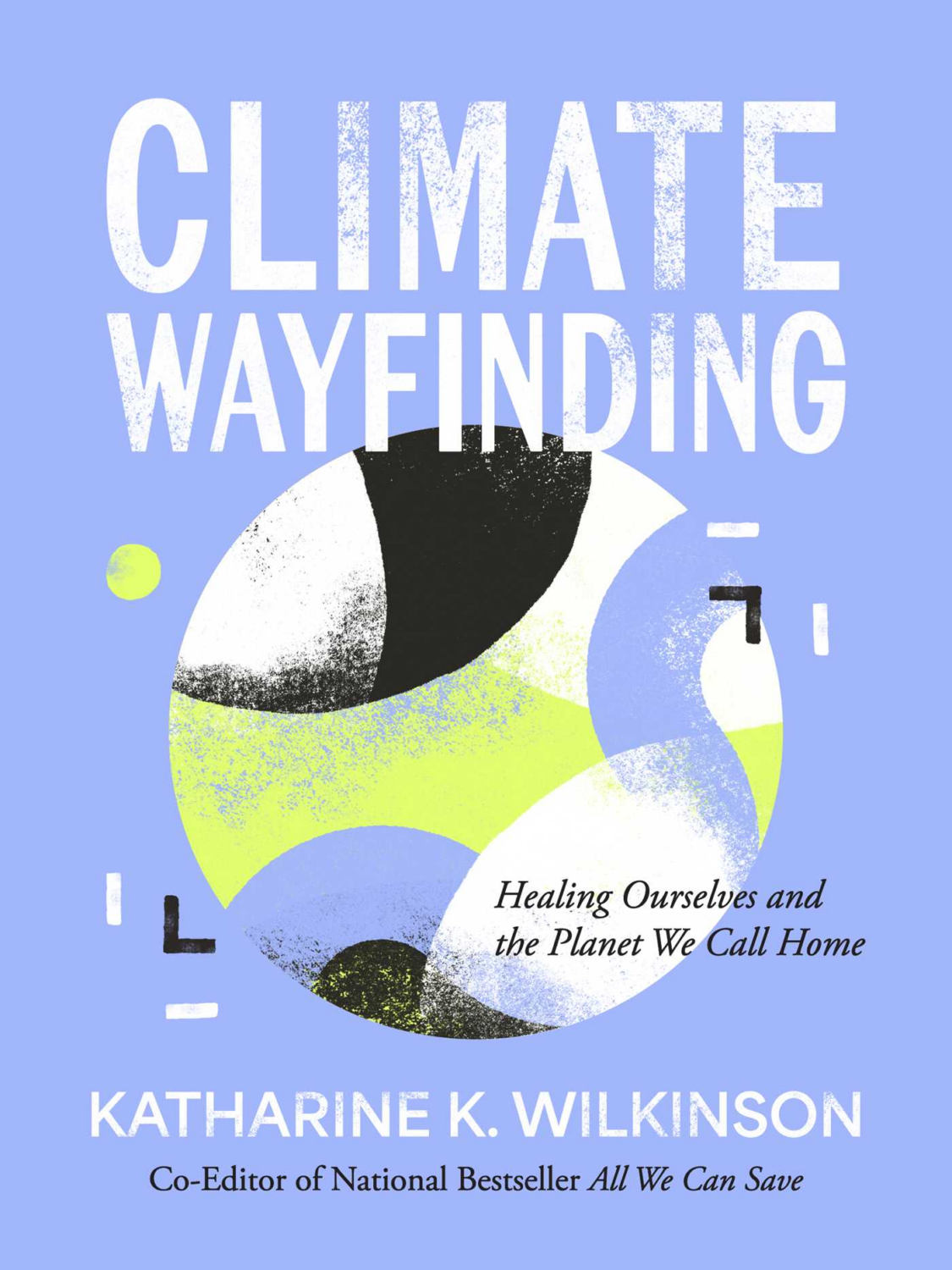
Another example. I’m reading a completely secular book called Climate Wayfinding, by distinguished climate writer Katharine Wilkinson. Wilkinson has a degree in religion from Sewanee and a DPhil from Oxford in geography and environment. The book is meant to guide people in finding their own agency toward climate action, but of course, finding that agency requires finding community. Wilkinson writes about going to a Parker Palmer retreat and experiencing a kind of epiphany on this point:
“During the retreat, I learned about Parker’s concept of a community of congruence, comprised of like-minded, like-hearted people—those who feel aligned and kindred, beyond blood relations.”
She does not, however, mention Parker Palmer’s Quakerism or talk about religious groups elsewhere in the book—at least that I’ve read so far.
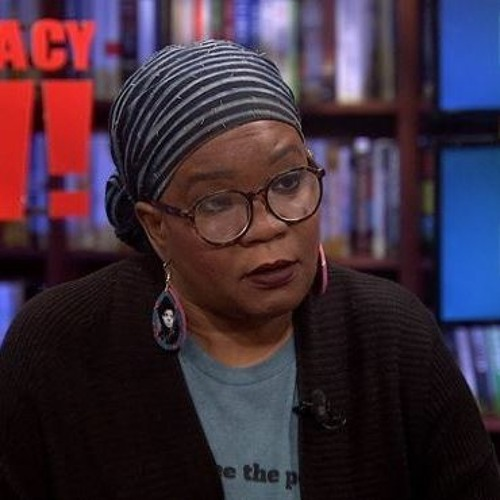
Perhaps the most remarkable example of community-longing I’ve encountered comes from a 2023 book by Kelly Hayes and Mariame Kaba, Let This Radicalize You: Organizing and the Revolution of Reciprocal Care. Hayes and Kaba are well-known, highly experienced organizers, based in Chicago. They are the kind of folks who prompt anti-woke people to turn green and faint. The book is a fascinating look at what so-called radicalism looks like from the inside. I found it challenging to my own rationalized apathy and occasionally quite inspiring.
Anyway, in chapter 1, the authors propose the need for “anchors” to keep activists going when they face obstacles and discouragement:
“Anchors can take numerous shapes: a story, a community space, a sense of followship, a memorial—anything that helps ground people in a shared sense of history, compassion, and purpose.”

Such anchoring spaces are essential, they write, to jar us out of our isolationism and help us survive together. They require vision, a story, shared values, meeting together. But you can’t create these anchoring spaces if people are only showing up randomly when they feel like it. Community requires commitment. The way they describe cultivating this commitment sounds an awful lot like … a church service:
“That is why commitments and affirmations should play important roles in the development of spaces and practices that anchor people. We must be concrete in our commitments to one another, to humanity, and to the Earth, and we must reaffirm those commitments regularly. // This can look like saying or singing our commitments in unison, creating artistic representations of those commitments, or asking people to join us in making public pledges. … We can also participate in symbolic acts that affirm our commitments.”
I appreciated the emphasis throughout the book on mutual care as essential to community. In activist spaces (as in churches, unfortunately), people can be so keen on battling the enemy or asserting their own holiness that they forget about caring for each other—or for anyone else in the world. It’s all about winning the fight and controlling the troops. This only leads to burnout and hypocrisy, the authors write. Instead, mutual care, according to these activists, is an essential way to live into the world we’re trying to build even as we’re trying to build it:
“What becomes increasingly possible in spaces where people experience belonging, imagine new ways of living, and practice those kinder, more just beliefs in relation to each other, is the cultivation of hope. Because if we can experience other people as co-strugglers—not as competitors or fearful enemies—we can act on the values of the world we want to build. We can experience moments of justice, peace, and liberation and in so doing realize that these concepts are not fantasies but realities that can be constructed.”
Doesn’t that sound a lot like practicing the fruits of the Spirit even as we work for justice, witnessing to God’s love and redemptive purposes? Here’s more:
“Organizers must help people reimagine the world, commit to rehearsing for and building that world, and develop creative ways to remain grounded in an increasingly chaotic and fractious environment, together.”
Without God, however, it’s hard to hold a community together over the long haul, even if you do share a big, forever commitment like racial justice. Apparently, some people have actually attempted to create “secular churches,” a little “movement” that Faith Hill wrote about for The Atlantic in 2019. I had to laugh when I read about how quickly these “churches” discovered that focusing their efforts on speakers and musicians and overall staging an appealing “show” every week turns out to be exhausting.
Hill interviews some other folks who suggest that you really do need sacrality or the transcendent as a glue for creating enduring community. Hill writes, “The irony is that to get away from religion, [these secular churches] may need to re-create it.” Well yes. And people try to do that in lots of ways. Think about the holy pilgrimages on football Saturdays at Michigan stadium.
I would love to say that the solution to healthy community is simply to focus that community on Christ. People! That thirst you have for community! That’s a longing for God, as revealed in Christ!
I believe that. But I can’t promise that when God is why you come together, then the flakiness, the fractiousness, the power-games, the conflicts, the exhaustion, even the abuses—it all just floats away. We all know that’s simply not true.
Nevertheless, I wonder. Despite how set-upon and wounded churches feel right now, do we hold and steward a gift we have not fully valued or treasured, perhaps a gift we have squandered just when it’s needed most? Long-haul, intergenerational community, mutual aid, a way to channel our desire to do good, and vision of hope grounded in relationship with the divine—this is all becoming rarer, and thus more valuable.
Any time we talk about community, I know, it’s tempting to idealize it. Activists, I’ve learned, do it just as much as church people. Honestly, part of me fears the risks of community: the risk of conflict, disappointment, betrayal, endings, even simply of being known. I need my introvert time! But I also need, like all of us, belonging. I need to know that over the years, I belong to people who will hold onto me amid the storms, however literal or figurative. I need a place where I can offer my gifts and help hold others, too. I need a place to keep meeting God, where others are seeking that encounter too.
That balance of holding tightly and still freely is not an easy balance to get right. On that point, I like this statement from adrienne maree brown: “There is an art to flocking: staying separate enough not to crowd each other, aligned enough to maintain a shared direction, and cohesive enough to always move toward each other.”
I would add: and to move always, together, toward God.
If we can cherish this gift of community well in our congregations, could we perhaps offer it better to those who are longing for it?
Image credit: Andrea Lightfoot on Unsplash

8 Responses
Thanks, Deb, for this beautiful reminder of the value and importance of community. It’s a gift of grace, and also a discipline we can practice and hone. And it’s a calling. You call us to it- to the challenge of strengthening it in healthy ways, and opening it up in gracious ways to those who need it desperately. Thanks again for your writing!
Well said, Karl!
In my experience with organizing through Together West Michigan it takes committed faith communities,with Christ’s call to love mercy and live justly, to persevere in living out that call.
Thanks Deb
Thought-provoking. Thanks.
Nearly 30 years ago we visited LaGrave Church for the first time. On the way I said to my husband, “I will visit LaGrave but I will never join.” Well, we have been members for nearly 30 years and it is the only church where I finally experienced the concept of church family. We no longer agree on some theological issues but the “family” keeps us there, for now.
‘Being the church’ has never been easy if you are deeply inbedded in a worshipping community, but that is exactly why Jesus established it. Part of our witness is our ability “to move always, together, toward God”. Our fellowship of the saints, flawed and often divided, still comes together each week to seek forgiveness and to be reminded that God is among us and in each of us, even those we disagree with. It levels and uplifts, keeping us all in communion. If we can’t do that, we have lost part of our witness to the world.
Thanks Debra. Anglican priest Maggie Helwig speaks of church as “chosen family.” People who come together voluntarily, drawn by loyalty to a God of love and justice. People who know and love each other, despite imperfections. People who stay through the hard times, carrying each other’s pain. It reminds me of Tolkien’s Fellowship of the Ring–a diverse group of elves, dwarves, men, wizards and hobbits who stick together and destroy the Dark Lord. Thanks for the encouragement.
Thank you for your comments, friends. Yes, “chosen family.” I have often wondered about the “flow” in and out of congregations. I know that in various stages of life I have been the sojourner in other congregations for a time, and I have been grateful for those long-timers who anchored those congregations. Also, sometimes people do just move on from one congregation to another, for whatever reason. At those points, I suppose, we lean on the whole communion of saints as our chosen family. (Also, the idea of the church as a bunch of dwarves, elves, men, wizards, and hobbits is pretty fun! One hopes our job is not to carry some terrifying dark object through orc-land to Mt. Doom!)
Thanks, Debra: Your paragraph 6 about needing communities to get together to work for the common good is exactly what Hebrews 10:24-25 is about: “And let us consider how to stir up one another to love and good works, not neglecting to meet together, as is the habit of some, but encouraging one another, and all the more as you see the Day drawing near.” Often pastors focus on the “don’t neglect to meet” part of those verses in order to improve attendance numbers, but the real focal point is “stirring up each other to love and good works.”