
I grew up in a white enclave in Grand Rapids, where my childhood lens was that the only group who mattered was the Dutch Christian Reformed cocoon. My parents looked with distrust at our Catholic neighbors who, they were convinced, voted for John F. Kennedy because he would appoint the Pope to be Secretary of State. I went swimming most every summer day at Garfield Park, although my parents were wary of the growing number of Black kids who played there. I also grew up knowing that our white neighborhood was under threat of being integrated, since realtors were warning that Blacks would soon cross the red line of Burton street and live in our neighborhood. Underlying all of this was the assumption that if you were not Christian Reformed and didn’t send your kids to Christian schools, you were an outsider.
GR’s City Commission was under the strong influence of white, Christian Reformed males. Legacy names include Boelens, Decker, Rienstra, Sevensma, Sonneveldt, Soodsma, Vandenberg, and Worst. Although my parents grudgingly admitted that “Westside” commissioners were likely to be Polish and Catholic, it was assumed that “if you’re not Dutch, you’re not much.” We held the cards.
A vivid sign of my white privilege occurred during the riots that afflicted Grand Rapids in 1967. I felt scared but protected in the presence of armed neighbors. When my parents joined the white flight to the suburbs, they fled for their perceived safety and the desire to avoid the threat voiced by realtors of property values declining.
“White privilege,” a term coined in its modern form by Peggy McIntosh in 1988, describes an “invisible knapsack” of social, economic, and cultural advantages relative to non-white people in the same society. White privilege was in the oxygen I breathed. It was Assumed, unquestioned, and unearned. When it came time to look for work as a young adult, having the advantages of ethnic and religious privilege, I was afforded social and professional acceptance and entrée without merit. I did not have to prove anything. My background implied I had a strong work ethic and moral compass.
Southern Privilege
I am bicultural, Northern by birth and Southern by DNA (East Tennessee). My Southern heritage equipped me with its own privileges. I am a descendent of slave owners, and my family’s inherited generational wealth was acquired through the unpaid labor of black bodies.
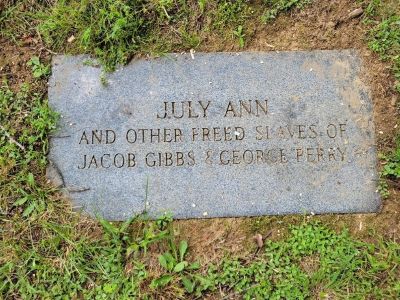
As a young child, I saw Ku Klux Klan crosses burning alongside the Tennessee River. I knew that lynchings were happening, and also knew white people were not being lynched. My friends and I had a running joke about “colored” water fountains: we wanted clear water, not colored water. As I became an adult and traveled from Michigan to Tennessee, I did not fear violence—as my Black nannies did—if I rented a motel room.
As I came of age, I was very concerned about injustice on many levels, not the least of which was racial. I became a white liberal, pretty much blind to my privilege.
Warnings of White Privilege for White Liberals
Both Martin Luther King, Jr., and Nelson Mandela had strong words to say about white liberals and moderates.
In his 1963 “Letter from Birmingham Jail,” King expressed deep disappointment with white moderates’ refusal to use their privilege for the cause of justice, describing them as a greater stumbling block to racial equality than the Ku Klux Klan. He argued that their preference for “order” over “justice” and the resulting inaction hindered progress more than overt opposition. White moderates preferred a “negative peace” (absence of tension) to a “positive peace” (presence of justice).
Nelson Mandela criticized the silence and hesitation of white liberals and moderates, which allowed white supremacy and economic inequality to flourish. He declared that anyone—regardless of color—who helped perpetuate white supremacy was an “enemy of the people.”
King and Mandela both understood that white liberals often prefer safe activism, which offers the illusion of actually making a difference while soothing liberal consciences and remaining socially acceptable.
White liberals swallow their tongues and only ask “safe questions” that don’t catalyze dissonance and discomfort for them or their social circles. For example, imagine asking questions that examine the morality of how (Christian) billionaires have earned their wealth and yet fail to provide a living wage to their employees.
White liberals practice “safe tithing” to charities that care for the collateral damage of unjust systems while not addressing root causes of the damage. This is co-dependent tithing, and it enables injustice to persist. Imagine giving money and volunteering for groups that expose and confront ICE when it disappears persons based on their accent or skin color and demand that our leaders ban this terror.
White liberals participate in “safe groups” such as book clubs that study familiar, white authors and safe topics. Imagine the scandal of reading literature by women of color who aggressively diagnose our economic inequality, racial caste system, and toxic masculinity.
White liberals practice “safe activism” by writing our elected representatives. Imagine putting your body on the line and risking arrest in public protests on behalf of the marginalized. And heaven forbid that you risk your friendships when your actions become known by your safety-preferring social circles.
In sum, white liberals cling to their safe identity and status and thereby stay above the fray.
My Movement to Shed Comfort, Status, and Moderation
As I became aware of my numerous advantages (wealth, influence, relationships and connections), I learned that privilege is a neutral force to be used in service to those on the margins or misused to others’ harm.
As I have sought to be an ally for those on the margins, I have learned that I must earn entrée. It is natural that marginalized peoples are deeply suspicious of majority culture. I have learned I cannot presume to know what they need from me. I can only serve where directed, constantly aware that white savior-ism is a phenomenon of privilege and patriarchy.
Along the way, I have sought to understand who controlled regional philanthropy, I have “followed the money” and realized that charitable giving can be a tool used by the majority culture to control and domesticate assertive minority leadership, ensuring that what they are doing is “safe” and not too challenging to the status quo. It is a documented phenomenon in West Michigan that nonprofits founded and led by people of color do not receive the same levels of funding as nonprofits founded and led by whites. This has affected my charitable giving criteria and my commitment to invest in minority-led organizations who are causing what the late Congressman John Lewis called “good trouble.”
I’ve come to realize that no one is better equipped to report on events in Indian Country than Native Americans. The indelible imprint of news coverage provided by white-led organizations provides a not-so-subtle lens on what “news” consumers receive. As an antidote to the unconscious biases of white privilege, I subscribe to news sources that are owned by people of color, such as Native News Online. It offers an indigenous lens on news from Indian Country, or Turtle Island, as Indigenous peoples call North America. I also read such cutting-edge authors as Ibram X. Kendi and Resmaa Menakem to understand how racism traumatizes Blacks and whites alike.
I am far from perfect and don’t have everything figured out. But these are actions I take to try and not see the world through a privileged lens of white liberalism.
Implications
As I grow older, I am less interested in appearances and more concerned with whether I’m actually telling the truth and acting impactfully.
It is easy to confuse awareness with transformation, easy to speak the language of justice while avoiding risk and protecting the comforts privilege gives me. I’ve done it for years in subtle ways. I still catch myself doing it.
The truth is that moderation has often been my hiding place. Respectability. Professionalism. Being perceived as balanced, thoughtful, reasonable.
I have softened convictions so people would stay comfortable around me. I have edited myself in real time to avoid tension. I have swallowed words that might disturb relationships, churches, institutions, and social circles I benefited from belonging to. And over time, I’ve realized something unsettling: when I choose comfort over truth, something in me slowly goes numb. My soul starts to acclimate to injustice.
That numbness is what frightens me most about white privilege and white liberalism. It’s not overt cruelty, but an endless ability to delay urgency. To intellectualize suffering instead of confronting it. To host discussions and book clubs about justice while remaining safely insulated from the consequences borne by others.
Meanwhile, people on the margins do not get to retreat from reality when it becomes exhausting like. I do. That’s part of my privilege.
Immigrants do not get to take a break from fear. Black parents do not get to pause their anxiety when their children leave the house, fearing what could go wrong if arrested for Driving While Black. Poor families do not get to opt out of systems designed to keep them struggling. Communities targeted by ICE do not experience injustice as an abstract theological discussion. They must hide, living every single day inside the consequences while many of us merely observe them.
And too often, white liberal spaces become places where moral concern is expressed just enough to soothe the conscience without threatening the structure itself. We prefer charity over disruption. Statements over sacrifice. Diversity panels over redistribution. Safe activism over costly solidarity.
We admire prophets long after they are dead while distrusting anyone who sounds remotely prophetic while they’re alive. Prophets are inconvenient people. They disrupt dinner parties. They embarrass institutions. They refuse to worship civility when civility is being used to protect injustice.
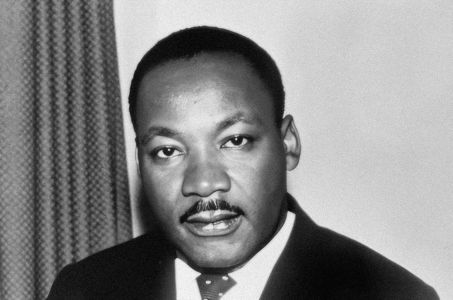
Dr. King understood this when he warned about the white moderate who preferred “order” over justice. That warning still lands with uncomfortable force because we’ve been conditioned to believe the highest moral good is maintaining social harmony rather than confronting systems that crush human beings.
We quote Jesus saying “blessed are the peacemakers,” while ignoring the fact that peace without upending the merchants’ tables is simply managed oppression. We praise the humility of Jesus while fiercely defending our own status, wealth, reputations, and proximity to power.
Jesus did not cling to privilege. Paul counted status as loss. The prophets continually moved toward the suffering, not away from it. As the old saying has it, the gospel both comforts the afflicted and afflicts the comfortable.
And yet so much of white Christianity in America has been organized around insulation: protecting property,
protecting institutions, protecting donor comfort, protecting access, protecting “good order.” The result is a lukewarm faith that mistakes politeness for discipleship. We do well to remember the words of Revelation 3:16: “Because you are lukewarm—neither hot nor cold—I am about to spit you out of my mouth.”
Neutrality is not innocent. Comfort has consequences. Moderation is not always wisdom. Sometimes it is fear dressed in respectable clothing. And I say that not as someone standing outside this system pointing fingers, but as someone who was formed by it, rewarded by it, protected by it, and who still feels its seduction every day. This is personal.
I know how tempting it is to preserve acceptability rather than risk becoming difficult. I know how seductive it is to remain admired in white spaces rather than be fully honest in them. I’ve decided to pursue courage over comfort, truth over status, and solidarity over acceptance. This is the way of Jesus, the way of the cross.
Following the way of the cross will eventually put us at odds with systems organized around domination, control, exclusion, inequity, and accumulation. It always has.
I don’t want to reach the end of my life having been admired for being measured, careful, and safe. I want to have lived truthfully enough that those on the margins knew they were not abandoned. Even if my honesty costs me invitations, strains relationships, and makes respectable people uncomfortable. Maybe especially then.
The prophets were never called to keep everybody comfortable.
They were called to wake people up. And only when we subject our privilege to the cry for justice, can we do the same.
May God help us.

21 Responses
Ouch! And thank you.
This is outstanding, Dave. Yes, may God help us. It’s our only hope.
Thank you, Dave. May we white folks write & stand alongside other white folks as well as brothers & sisters of color …in this historical moment’s march for liberty & justice for all, taking up our particular white parts – as you have done in this clarion article for/in the Fierce Urgency of Now (to quote King’s phrase).
“White liberals practice “safe tithing” to charities that care for the collateral damage of unjust systems while not addressing root causes of the damage.” What would these particular charities be so I can avoid them. This would be helpful.
Jim, these charities are those that help individuals who lack basic life essentials (health care, housing, food) but do not advocate for structural change. Let me be clear: we need to help victims of unjust systems, but that alone is wholly insufficient. Pay attention to the missions and services of non-profits you might support to discern who is “safe” or not!
This is the best writing and explanation of White Privilege that I have read. Thank you. I am sharing.
Dr. King and Malcolm X criticized white liberals, not simply the moderate ones. They criticized them for being fake… like the other of this quite silly article. Another white guy talking to other whites about those bad other whites in an attempt to signal to the whites that you’re one of the good ones. It accomplishes nothing accept helping a bunch of you feel better about yourselves.
Actually, Moises, the prophetic voice in this article does accomplish something–something good, in fact–by making us white liberals feel bad about ourselves. That’s what hard truth does, and why we all need to hear it and face it from time to time.
My friend Harold’s comment above says it best about Dave Medema’s post: “Ouch! And thank you!”
Ah yes, reverse virtue signaling! The new Woke.
Moises,
Thank you for the feedback, although it feels harsh. White folk should not depend upon people of color to point out their privilege and racism. It is the duty of white people talking to white people about the need to do more and be more, to be allies. That was my intent, to call out and challenge those who are like me. I just wonder whether you expect whites to sit back in their privilege, do nothing, and fulfill your expectations?
“I want to have lived truthfully enough that those on the margins knew they were not abandoned. Even if my honesty costs me invitations, strains relationships, and makes respectable people uncomfortable. Maybe especially then.” Thank you for writing this! May we have ears to hear…
When I was a child in East Tennessee, a Black doctor moved into the neighborhood where we lived. And then a cross was burned on his lawn. Among those involved in this terrible act were a Sunday School teacher and a Boy Scout leader. I’ve never forgotten, and I never will.
I would love to hear your thoughts when people in our white safe dutch reformed community say they care about the poor but think that it should only be helped by non-governmental organizations. Im not trying to discredit that point of view but wonder if that is even possible as a systemic treatment for poverty and racism and injustice.
Sheryl,
It is a wholly inadequate and insufficient response to pretend that nonprofits can address the vast, systemic issues of poverty. A church could face bankruptcy if it paid the cost of medical care for a spinal cord injury person such as myself, whose costs for care has cost an estimated $1,000,000. Only State and Federal government has the capacity to provide the resources to address such needs.
Thanks, Dave. I really liked your line, “We quote Jesus saying ‘blessed are the peacemakers,’ while ignoring the fact that peace without upending the merchants’ tables is simply managed oppression.” As a peaceable, privileged white guy myself, I could read your words and feel better about myself, as Mr. Pacheco noted, because unlike other, at least I see what’s wrong with society and my role in it. Or I could read your words and feel worse about myself because I’m not doing enough for my hurting neighbors. Then again, I could read your words and excuse myself because what good does it do to feel better or worse about myself anyway, and then la-de-da carry on as usual because it’s impossible to do enough. That’s no good either. All I can do is listen for the voice of Jesus today (as I hear it in your article and elsewhere) and follow it, whether that be tackling big issues or little ones, whether God calls me to be a prophet or “to aspire to live quietly, and to mind your own affairs, and to work with your hands” (1 Thessalonians 4:11). Thanks for the role God is calling you to do today.
Let me suggest “Lynden” – a documentary about racism in the white Christian community of Lynden as a supplement to Medema’s excellent and painfully honest essay. Check YouTube for its availability.
My husband and I have watched that documentary. Sickening. We went to Lynden Christian Schools with a lot of people in that film. God help us all.
Thank you for your thoughtful essay. Slapped me upside my head. And yes, “ouch”! My upbringing in the Lynden,WA enclave in the 1960’s did so much harm. I remember my parents warning me that I would be seeing a black person at the business next door & to stay out of his way. Life was lived in fear of those who were different from my skin color or economic class. I’m always seeking ways to be a part of justice for all-not just thoughts & prayers. You have spurred me on to seek new ways. Again. Thank you.
Thank you for your clear prophetic voice. May it prick our consciences, help us to see how our privilege affects every aspect of our lives from the food we eat, the education we get, the work we choose to do, the people we choose to associate with, our image of the God we worship.
I too grew up in a tight, Dutch Christian Reformed community. Some of our neighbors were also Roman Catholic and remain amongst my best friends to this day. At least one parent voted for John F. Kennedy while four years later they laughed about cancelling each other’s vote: Johnson versus Goldwater. I swam every day at Franklin Park (now Martin Luther King Park). And yes, we were very aware of the changing racial dynamics. But apparently here’s where my experience differs from yours. Yes, we had white privilege, but many were also the victims of very specific racial hatred. My father was hospitalized. My brother was hospitalized. My best friend was hospitalized. Another was murdered; all the victims of black-on-white assaultive crimes. During the 1967 riots we could hear the gunshots from our house. We kept a shot gun by our back door. Almost all the white families in my neighborhood had a member that was victimized at one time or another. I could easily go on. Of course they moved. On one Halloween night all the large, picture windows in our house were smashed out with rocks thrown by a roving mob of black youth. That’s when my dad said that’s enough and finally, in October of 1972, we were one of the last white hold outs that moved.
I say all of this not to downplay white racism; it is a sad reality, but to take special exception to the too often misunderstood dynamics of “white flight”. I say it because there was far more to it than racist attitudes by privileged white folks living in their Christian Reformed bubble. There were lived experiences, very unpleasant ones. I say it because I see too much handwringing on this forum by “white liberals” without the admission that we are all, black/white/brown/red or whatever, “living on the broken side of eternity” (I credit this phrase to one of my esteemed Christian Reformed pastors).
So please, when speaking to this topic, speak all of the truth, not just some of it.
Thank you so much for writing this. It is comforting to me to find a piece like this today.
I’m an immigrant, originally from Brazil, who teaches at Calvin University, in GR. During these last 3 years, the reality of “living with fear” has been constant. There is no break from that – it feels like a tightrope; any mistake you make starts a catastrophe. (And I’ve already passed through many of these catastrophes – surprise bills, surprise notifications asking you to leave, and the sort).
Now, it is interesting how it took me to become an immigrant to start perceiving these issues of privilege. Because, in Brazil, I’m simply white and privileged, a descendant of Italians. You never think about how hard and cruel it is to struggle so much to even have your documents in order, figure out bureaucracies, save money in the process (which is sooo hard, considering how many unexpected situations we get, with no rights, no tax exemptions, and absurd healthcare costs), and still be pressured to perform just as well (or sometimes even better) than all your peers. You notice how things that are so easy for some are so hard for others. So it is kind of eye-opening…
And, saying for myself, and what I saw in these three years, Reformed circles have been scandalously blind to all of this. And you then start listening to the Black church voices, Latino/a church voices – both of which have been helping me so much to process all of this – and start to be labeled as victimizing/woke/communist and the sort. Advice that I should be grateful, not complain, be “neutral”, and “act biblically”/”according to the Christian worldview”.