
“The first week of August hangs at the very top of summer, the top of the live-long year, like the highest seat of a Ferris wheel when it pauses in its turning.”
-Natalie Babbitt, Tuck Everlasting
Maybe I’ve stolen, or co-opted, the image from Tuck Everlasting, but when I visualize the shape of a year, I see a Ferris wheel with June, July, and August at the tippy top. I’m a summer girl—and every August I find myself wanting to pause time, to stop the ride, to swing peacefully and enjoy the view from the peak of these warm, slower months.
Warm days, blooming flowers, later sunsets, a slower work schedule, family vacations, fresh vegetables, pool and beach days.
But my Ferris wheel metaphor also means I tend to get a little melancholy when we begin the descent, when the humid days of August wind down, and we begin the tilt toward fall, the inevitable drop to winter’s coldest days, before eventually making—or enduring—the slow climb back up toward spring, returning to the glorious months of summer.
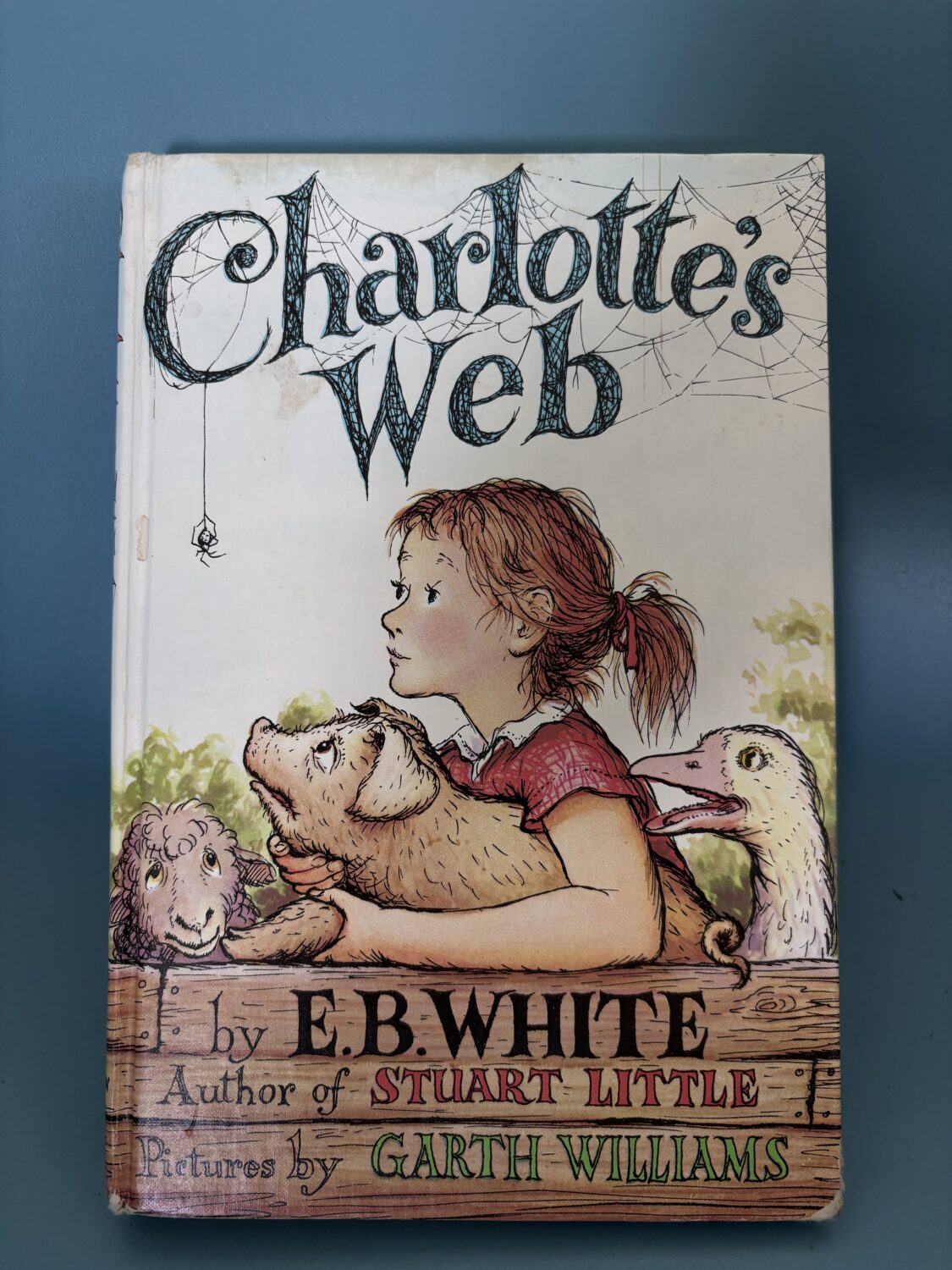
To steal lines from another children’s classic (one I believe you should re-read, if you haven’t since childhood), Charlotte’s Web, E. B. White captures it like this:
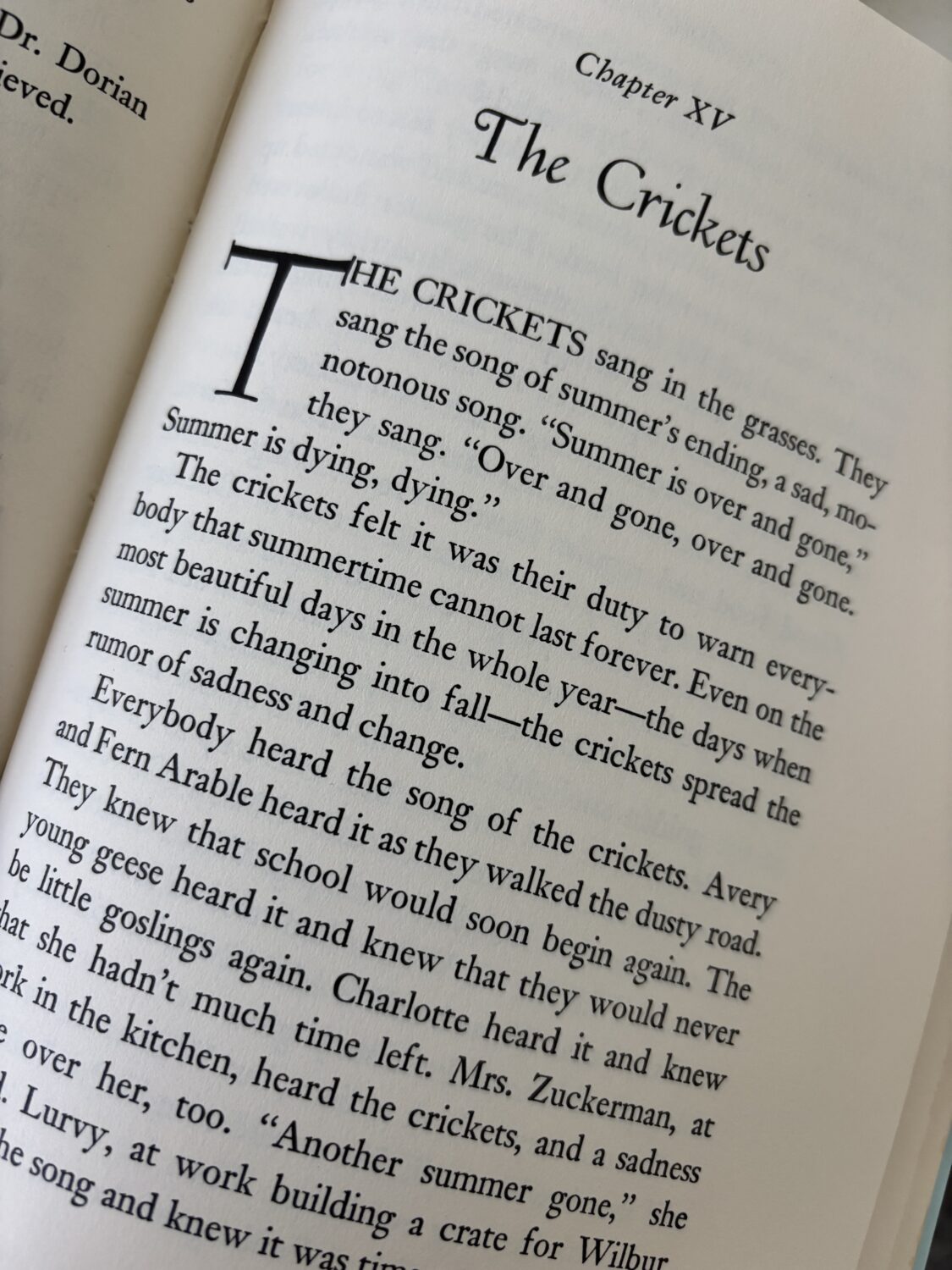
The crickets sang in the grasses. They sang the song of summer’s ending, a sad monotonous song. “Summer is over and gone, over and gone, over and gone. Summer is dying, dying…“
The crickets felt it was their duty to warn everybody that summertime cannot last forever. Even on the most beautiful days in the whole year – the days when summer is changing into autumn — the crickets spread the rumour of sadness and change.
Don’t get me wrong, I’m not anti-fall, or even anti-seasons. I’m a daughter of apple growers and an educator. We need the fall; we trust its eventual and necessary return. But fall means back to work, back to school, back to routines and schedules. It’s not all bad—it can be very good. But back, back, back also means change, change, change. And like the crickets, I usually echo a bit of that sadness, or perhaps the tenderness, that comes with change.
My new year really begins in the fall, not January 1, and because of that, in the transition I find myself doing a bit of reviewing, of taking stock. In this season, I’m packing up my oldest for his move back to college, scheduling high school senior pictures for my middle, and sending my baby —who hasn’t liked being called a baby since he actually was one — off to high school.
I’ve never been particularly good at transitions, if by good one means that I find it easy, or can make the turn without noticing, without needing a moment to glance back and take a deep, gathering breath. I’d rather take the long way, a few detours, as I process the passage of time. At the end of a trip, the beginning of the school year, or the end of the summer, I find myself flipping through old pictures and bringing up memories. Yearning to be reminded of other seasons gone— the summers when the kids were little, when my days included naps and blankies, scraped knees from sandlot baseball, and sandy cheeks collapsed and nestled against the side of their car seats.
I found myself contemplating this week—because sometimes when it’s your turn to write a Reformed Journal blog, you find yourself wondering whether it will be spiritual or religious enough—about the biblical-ness of my season transition anxiety. My sadness started to feel a bit petty, especially in light of friends and neighbors I know walking through much harder seasons of sickness, pain, and loss.
Who am I to mourn a Ferris wheel coming down, a beach chair folded up for the year, when someone down the street is mourning a diagnosis, a marriage, a parent? And yet. Scripture doesn’t seem to rank its griefs. Ecclesiastes doesn’t qualify whether a season is big or important or challenging enough to warrant its turning—there continues to be a time to plant, a time to uproot, to weep, to laugh. The acknowledgment of the ways time keeps marching on requires both a holding on and a letting go.
Maybe the biblical-ness isn’t in the size of the ache but in the noticing of it at all, in allowing ourselves to love the world enough to feel a bit bruised and aged by it.
Because it’s in these moments of tender transition that I find myself a bit more attentive, tender to those and the world and people around me. If there are thin places on earth where the physical world and the spiritual realm narrow, perhaps our transitions are thin places in our calendar. In that tiny turn on the Ferris wheel, right at the top, when we look up and around before the drop we are aware, awake, and attentive.
Aware of loss and of the inevitability of time, but also attentive to God’s grace and goodness at every turn. Trusting that though we don’t know what’s ahead, we will be held.
At the beginning of the summer, I was the storyteller for our preschool and kindergarteners at church. It’s the one time each month I get to experience what it would have been like to teach younger kids, and I found myself trying to define trust for these little ones. We talked about the bright, green leaves on the trees, and the miracle of their return. We discussed how good, after a season of bare branches and dark days, it was to see those green buds pop open.
And we talked how trust is a little like that—how in winter’s darkest days, we believe and wait and know deep inside us that that the spring will come again. We can’t see anything happening, and it takes longer than we often wish, but the hope holds us.
And now, I remind myself, in letting go of this season, that the leaves will fall. Winter will come. We don’t know what the future holds, but we also trust that spring, and eventually summer, will return.
Returning to Charlotte’s Web, my very favorite lines are near the end of the book, as Charlotte is saying goodbye to Wilbur. They are words of assurance as she is dying, as the county fair is ending, and summer is coming to a close. I think they echo Ecclesiastes in both their acknowledgement of the pain and possibility in the passing of time:
Winter will pass, the days will lengthen, the ice will melt in the pasture pond. The song sparrow will return and sing, the frogs will awake, the warm wind will blow again. All these sights and sounds and smells will be yours to enjoy, Wilbur—this lovely world, these precious days…
The crickets are still singing their monotonous song this week — summer is (almost) over and gone, over and gone— and I will listen for them. Not rushing toward September, not talking myself out of the melancholy. Just sitting at the top of the wheel a little longer than I probably need to, taking in the view before the turn.
Header photo by Daniel Roe on Unsplash
Clock photo by noor Younis on Unsplash
Trees photo by Yoksel 🌿 Zok on Unsplash

17 Responses
Oh, Dana. Literal tears. Gorgeous writing. I mean, you got me in my bittersweet spot of melancholy and musings about time. Thank you.
Thank you so much for taking us with you.
This is so poignant and lovely. Thank you.
Thank you very much. Amazing, beautifully written, and filled with so much heart. A wonderful start to my morning.
Your beautiful writing explains the way I feel. Thanks so much.
Three weeks ago at the Scriptoria writing workshop I gave a plenary talk titled “The Magical Spring of Metaphor” on the uses of metaphor and gave examples from fiction, nonfiction, and poetry. I wish I’d had your wonderful Ferris wheel metaphor to use as an example. So beautifully evocative. Thank you, Dana.
How how how do you do it? How do you gather the courage to musically offer us your loving, honest heart?
Dana, thanks for this lovely and loving reflection. Thanks, too, for reminding us of Charlotte’s Web–I remember rereading it during COVID, and your piece today reminds me now why I did so.
You also reminded me of another children’t book I cherish, Time of Wonder, by Robert McClosky, where, as they close up the cottage at the end of the summer and return home, he writes, “A little bit sad about the place you are leaving, a little bit glad about the place you are going.”
You and White and McCloskey sure know how to describe that ache of transition.
You’re reading my mind, and soul….
As if you could get even better as an author…but you have hit another transcendent level.
After receiving pictures of 3 of our grandkids on the first day of school this year, looking older but ready for a new adventure, you beautiful piece was a the perfect accompaniment for those pictures. Thank you!
Oh, Dana! Thank you for this lovely and evocative piece. There are so many markers we tie to the seasons, none the least of which is the effect on our family relationships and friendships as children change grades, schools, locations, peer groups, and maybe even leave home. No wonder we associate so much melancholy with autumn! Yet, as you say, the autumn season predicts new seasons to come. Every change opens the door to new possibilities. Thank you for this beautiful piece.
Dana, think you. Once again your message resonates with your insights shared and time’s passing grasped.
From one West Michigander to another, you get it about seasonal change that it hits at the core of us. It’s a fact of life here where the seasons are markedly different.
Thank you for such expressive and insightful writing. So personal and present.
Add me to your throng of admiring and appreciative readers, Dana!
Your fall-anticipating writing reminded me of one of my favorite Shakespeare sonnets – Sonnet 73:
“That time of year thou mayst in me behold….”
So lovely, Dana.
Wow, Dana. There it is; a love letter to summer if ever there was one. Beautiful.