
Right before the COVID-19 pandemic, I wrote a cookbook. It was released during the third week of lockdown, when my children were already weary of online school and spending entire days in pajamas. Writing that cookbook—and the one that followed—helped me make sense of a world that suddenly felt untethered. As a stay-at-home mother of three, creating recipes gave shape to days that otherwise blurred together. It stirred my creativity, leading me back to writing poetry and opening me once again to the wonder that still exists, even in difficult seasons.
I don’t pretend to understand the complexities of Iran’s history, its politics, or the profound heartbreak of imprisonment and forced separation from family. But I do understand the comfort of kneading bread when everything around you feels uncertain. I know the peace that settles over a kitchen as sugar melts into caramelized cookie edges. I understand the quiet solace of cooking your way through a crisis.
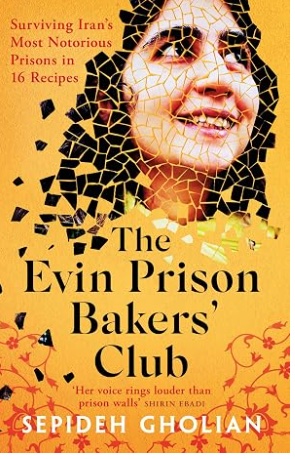
Crisis is the backdrop of Evin Prison Bakers Club by Sepideh Gholian, a memoir and cookbook unlike any I’ve read. By the final page, I felt as though I knew Sepideh—not because I could fully grasp her suffering, but because she so generously shares the hope she managed to keep alive, or at least afloat, inside Evin Prison. Baking became her sanity, her purpose, and, in many ways, the shared language of survival among the women imprisoned beside her.
Sepideh has spent much of the last six and a half years behind bars, with only a brief period of freedom in 2023. The cookbook she wrote inside prison was smuggled out by journalist Maziar Bahari, who himself survived imprisonment in Iran. The details of how the manuscript escaped remain largely unknown, reminding us of the extraordinary risks people take to preserve stories and art. Each chapter is dedicated to one of Sepideh’s fellow prisoners, pairing a recipe with her story. Together, they form a heartbreaking testimony to the brutality endured by women incarcerated in Evin Prison.
The book often slips into something almost dreamlike. At times, Sepideh describes shadow figures etched into the prison’s concrete walls or recounts stories of women whose memories linger like ghosts. Then, without warning, a pie recipe appears beside a story about rap music or walking laps around the prison yard for exercise. The result is intentionally disorienting, a blending of memory, grief, hunger, humor, and hope. It’s exactly the sort of beautiful, mystical writing that I find unforgettable.
In The New York Times, Masih Alinejad wrote, “Diplomats often reach for a favorite phrase when civilians are being gunned down in the streets: ‘We are monitoring the situation.’ ‘We are concerned.’ ‘We condemn.’…[We] observe, express sorrow, [and] move on.”
It can often feel as though headlines repeat themselves: promises of peace, renewed negotiations, another escalation, another round of waiting. Meanwhile, ordinary people continue living in fear. Reading Evin Prison Bakers Club reminded me that behind every headline are individual lives—women with names, families, favorite recipes, friendships, and dreams.
As Reformed Journal editor Jeff Munroe prayed over our congregation:
“Lord, we woke yesterday to learn of war, death, and destruction in our world. We want peace. We want the violence to end and the innocent to be protected. We pray for those around the world, especially in the Middle East, living in fear. We know that the government of Iran has oppressed its citizens for a long time. We want justice in Iran and hope for its people… We pray that compassion, empathy, peace, and love may break out in every corner of the world… How long, Lord? How long before you set everything right?”
Baking cannot end a war. It cannot erase imprisonment or sexual violence. It cannot undo grief or heal the wounds of the Middle East. But this book insists that small acts shared in community can keep people alive—not only physically, but spiritually. In kitchens assembled from scraps, with borrowed ingredients and improvised tools, hope survives.
To review this book honestly, I decided I had to bake from it. I’m happy to report that the recipes work beautifully. The measurements are reliable, the instructions are clear, and the flavors are extraordinary. The saffron shortbread alone is worth making; its fragrance fills the kitchen with warmth long before the first bite.
So don’t just take my word for it. Buy the book. Bake the batter. Pray for peace. Pray for prisoners. And as you measure flour, cream butter, and steep saffron, remember the women whose stories remind us that even in humanity’s darkest places, beauty can still rise from an oven.

7 Responses
“… beauty can still rise from an oven” — Thank you!
This is powerfully expressed and beautifully written. Thank you so much.
Thanks for the great book recommendation!
Overwhelming and eloquently written, Kate. ❤️🙏❤️
Thanks for this beautiful review of what sounds like a beautiful book. A book that “insists that small acts shared in community can keep people alive” is the kind of book we need in our world right now. Adding the book to my TBR list!
Thank you for this review, Kate. It’s beautifully written and the context surrounding it is moving. Your line about how the saffron shortbread “fills the kitchen with warmth long before the first bite” will stay with me.
This part. Amen. “Baking cannot end a war. It cannot erase imprisonment or sexual violence. It cannot undo grief or heal the wounds of the Middle East. But this book insists that small acts shared in community can keep people alive—not only physically, but spiritually. In kitchens assembled from scraps, with borrowed ingredients and improvised tools, hope survives.”
Beautifully written and crafted Kate. Thank you for the review.