
If the justice system summoned me to testify at a trial because I had witnessed a fatal car accident, I would take an oath to tell the truth, the whole truth, and nothing but the truth. As such, I would confess what I know for certain, admit what I did not know, and give appropriate responses for the information that I was less sure about.
However, if I testified with a know-it-all attitude, claiming to know with absolute certainty all kinds of small details, it might impress some jurors, but I’m guessing more than a few would be skeptical. They would be wary of testimony from someone who was so sure of himself.
On the other hand, if I testified in a very tentative way, littering my comments with phrases like, “I’m not really sure about that” and “it seems to me that maybe,” the jurors might appreciate my humility, but also realize that I don’t know enough to help them make a decision. If I’m not sure what I saw, why should they listen to me?
Of course, even I did feel sure of what I saw, I could still be wrong. I might have to figure that out later. But in the meantime, all I can do is testify what I know and what I do not know at this moment.
This raises the issue of certainty for the people of God. I can tell from my daily reading of the Reformed Journal that a number of writers are not fond of the idea. They have run into too many believers who were certain in a cocksure kind of way—belligerent in their defense of their “absolute truths,” unable to listen to other perspectives or to consider the possibility that they might be wrong.
They would agree with Christian Wiman (a highly-regarded poet and a Christian) who said in a recent interview in the New York Times, “I think the biggest problem with certainty is that there is no such thing. Uncertainty is just what we’ve got to deal with.” He goes on to lament, “You can see in the culture right now the kind of certitude that is hardened in American religion. It’s so rigid. And I think in some way, a life of faith entails a life of great flexibility and humility.”
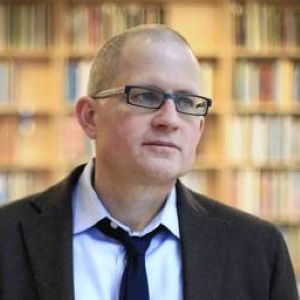
I understand what Wiman is getting at, but I noticed that his interviewer only asked about certitude, while Wiman himself used certainty and certitude as synonyms. That’s a linguistic option, but I find it more helpful to distinguish between them. I’m not suggesting that any one of us can have divine certainty, completely grasping the fullness of truth without ever missing the mark. But I believe we can have human certainty, in which we express what we know, as well as what we don’t know and all the probabilities in between—even allowing for the possibility that someday we’ll realize we were wrong. If there’s not even any possibility for human certainty, then we’re left with utter uncertainty. And that, if we were consistent with it, would make us too paralyzed to speak or act at all.
I believe that Wiman spoke with human certainty about many things. He may not have used the phrase, “I am certain that…,” and he may have appropriately added humble phrases like “I think” or “maybe.” But he was not afraid to speak truth. Even the negative things he said about certainty were spoken assuredly, and not tentatively. And I was glad he did. I wanted to know what he knows, not what he thinks maybe or might possibly be true for a few other people who think like he does.
Of course, even what I call human certainty can have its problems. Jared Kaltwasser’s RJ blog “Just Asking Questions: The Limits of ChurchGPT,” wisely pointed out the problem of doctors who jump too quickly to a diagnosis without taking the time to really ascertain what’s going on. As he noted, “a crucial part of being a good physician is being able to ‘preserve uncertainty.’ While first impressions might be right much of the time, the discipline of differential diagnosis ensures doctors don’t latch onto the wrong answer simply because it’s the most straightforward.” We don’t want to rush to judgment or rush to diagnosis. A premature certainty is wrong-headed and hopefully will be chastened by other experiences.
However, if certainty can have problems, utter uncertainty poses its own set of problems. If I have a health problem and my doctor only offers an endless series of tests, without ever reaching a diagnosis or offering a course for treatment, I will look for another doctor. Earlier I spoke of how we wouldn’t trust a completely tentative witness. Likewise, we would not trust a doctor who is stuck in uncertainty either.
As you can tell, I generally welcome the concept and the language of certainty. I appreciate how Luke says that he wrote his gospel so that we “may have certainty [asphaleia] concerning the things you have been taught” (Luke 1:4). I gravitate toward thinking of our hope in Jesus as “a sure [asphalēs] and steadfast anchor of the soul” (Hebrews 6:19). The Greek terms translated as “certainty and “sure” are related to the noun asphaltos, a kind of pitch that keeps a brick wall from falling. (By the way, if you are leery of “certainty” you will appreciate the fact that this word is also used to describe jail cells that were “securely” locked until God intervened (Acts 5:23). Obviously, not all things that are made certain by human beings actually are. But God’s certainties do last.)

Even if we don’t agree on whether a human kind of certainty is possible or appropriate for human beings, I think we can all agree that certitude is a dead-end street. Certitude is certainty with a bad ‘tude. It’s all the negative things some of you may associate with certainty. So let’s briefly explore the contrast between certitude and what I call the certainty of faith, hope, and love.
The certainty of faith, instead of ideological certitude. Ideological certitude is that which has lost its connection with living faith in the living God. It finds certainty in slogans and statements, positions and propositions. God, however, calls us to a certainty that grows out of a vital relationship of faith. For example, we don’t just trust propositions that God will save, we trust God to save. As we place our trust in God, and experience God’s reliability and faithfulness, we then learn the certainty of faith. We do not arrive at certainty by means of logic; rather, certainty comes to us in the person of Jesus Christ.
I’m not talking pitting propositional truth against personal truth. They need to work in tandem. Because Christians have certainty in God by faith, we can also have certainty in propositions that arise out of this relationship of faith. Perhaps we could call them relational propositions. Our certain trust in God cannot help but lead us to see the certainty of relational propositions like God is alive; God hears; God forgives; and God speaks. In spite of our various biblical interpretations, and the uncertainty those seem to create, Christians can be united in the certainty that God speaks the scriptures to us.
According to P. T. Forsyth, the goal of the Christian is not to be certain of being certain, but of being certain of Someone beyond our certainty. Certainty is not found in our minds, but in the God we trust.
The certainty of hope, instead of fortress certitude. Some object to certainty because it appears to stunt people’s faith. Because of their certainty, they see no need to change, grow, or learn anything new. Why should they set out on a quest of knowledge when they have already arrived? Why should they consider a new idea when they are already safe in the shelter of truth? This is a fortress kind of certitude in which everything is explained and in order. Fortress certitude assumes that our thoughts should be just as immutable as the truth.

Certainty does not cut us off from growth and change. Certainty is not only something we have by faith, it’s also something we move toward in hope. Although we are absolutely certain of truth in Jesus Christ, we do not attach the same absolute certainty to our present understanding of him. Paul already knew Jesus Christ, but he did not consider himself to have arrived in complete knowledge and certainty. He pressed on “to know Christ and the power of his resurrection and the fellowship of sharing in his sufferings” (Philippians 3:10).
Although there is absolute truth in Jesus, no Christian can claim to know him absolutely. The certainty we have in the Lord is always there, but it undergoes change and growth. Hope energizes us as we move from present certainty to the fuller certainty of the future. Just as a spouse can have certain knowledge of their partner, but continue to grow in their understanding of that partner, so we can have certain knowledge of God, but continue grow in our understanding of God.
Before Jesus came, the disciples were certain the prophets spoke the truth about the Messiah. But when they heard the Father testify about Jesus on the Mount of Transfiguration, they changed in their understanding of the Messiah. This new truth, however, did not undermine their former certainty, but expanded it. According to 2 Peter 1:19: “We have the word of the prophets made more certain,” and our certainty will increase even more “until the day dawns and the morning star rises in your hearts.”
The certainty of hope freely admits that it doesn’t know all the answers at present. But it does have some answers from God. It may see through a glass darkly, but it still sees. The certainty of hope also has room for questioning and wrestling with God. We question God, as Job did, because we are certain God has the answers. We wrestle with God, as Jacob did, because we are certain that God has the blessing. It is not doubt, but certainty that makes us press on through our trials to a fuller knowledge of God.
If we think all truth is unknown, we will be stuck in a bog of uncertainty. Or if we think we have already arrived at all truth, we will be stuck in a fortress of certitude. But if we live by the certainty of hope, we will grow and flourish in the garden of God.
The certainty of love, instead of arrogant certitude. Many people today object to certainty because it sounds so arrogant. How can anyone but the proud think they know what’s true? How can anyone but the conceited claim to have answers?
Many of those brimming with certitude are guilty as charged. They pompously talk down to their opponents. Like Elihu, they claim, “Be assured that my words are not false; one perfect in knowledge is with you” (Job 36:4). They are unable to admit that they could be wrong, or that their knowledge is incomplete. Even worse, if they are in positions of power, they might to use their power to pressure, silence, censor, imprison, banish or even kill their foes. The arrogant quickly become intolerant. Because of theological certitude, Saul of Tarsus tried to destroy the church. Because of theological certitude, Christians have conducted inquisitions, waged holy wars, and killed heretics. No wonder John Locke believed that the only way to create a tolerant society was by demonstrating that no one can have certainty about matters of faith.
But certainty does not always have to lead to arrogant and intolerant certitude. Love has the power to bring certainty to its knees in humility and service. We are not called to be certain so that our side wins denominational debates and culture wars. We are not called to be certain so that we can assert our right to be right. God calls us to be certain for the sake of others, especially for the sake of a lost world. “For the love of Christ urges us on, because we are convinced that one has died for all; therefore all have died” (2 Corinthians 5:14).

The world needs us to be certain, not with the certainty of arrogance and intolerance, but the certainty of love. The world does not need moralistic lecturers pointing their fingers. Rather, the world needs confident witnesses who will speak the truth clearly and fearlessly. The world does not need high-handed control freaks trying to dominate discussions. Rather, the world needs poised servants who know what needs to be said and done (as well as left unsaid and undone). The world does not need self-appointed authorities. Rather, the world needs gentle, tactful, God-assured ambassadors for Christ.
Love does not eliminate certainty from these roles. As noted earlier, who would believe an uncertain witness? Who wants to be helped by restaurant waiters who don’t know what they are doing? Who would trust a vacillating diplomat? The world needs and wants Christians who live in the certainty of love.
Every Christian should know what it means to be turned from the false certitude of being right in our own eyes to the true certainty of being right in the gracious eyes of the Father. We know the heart’s power of self-deception. We know that Jesus was crucified by people like us, who were sure they were helping God’s cause. We know that when Jesus prayed, “Father, forgive them, they know not what they do,” he was forgiving cocksure people like us. Because we are so sure of these gospel truths, we dare not be certain in an arrogant, intolerant way. We need the certainty of love, for without love, there is no true certainty, but only self-assertion.
We don’t have all the answers in Christ, but we have enough truth from him to be able to testify with assurance, confidence, conviction, and even certainty. We reject an ideological certitude that lures us away from our relationship with God, a fortress certitude that hinders us from growing in our walk with the Lord, and an arrogant certitude that causes us to disobey God’s call to love. But we need not reject certainty. Rather we know and follow and love God in the certainty of faith, hope, and love.

10 Responses
What thoughtful, helpful treatment of this subject! As you mentioned, one of the big problems lies in interpretation of scripture leading to certitude. I think it behooves us all to consider what the scriptures are for in the first place. As I see it, they are not ours to use as proof texts, but as a library to help us know enough about God to love God and neighbor with joy and faithfulness. Thank you for your excellent contribution.
This is good, thank you. I could assign this to preaching elders. It reminds me of Newbiggins clai, that in the great courtroom of world history and opinion, Christians are the witnesses, not the judge and jury.
Thanks, Daniel. I like Newbigin, but I had not heard this before. I like it. Although we will be called on to judge the nations in the last days (1 Cor 6:2)—whatever that means—it’s important that in the present time we stick to being witnesses. I prefer that anyway. I remember long ago being pressed on to be the umpire for an informal softball game—I didn’t enjoy that at all.
Thank you for giving me the certainty that God’s love reaches wide and that, as you have so wisely stated, “Every Christian should know what it means to be turned from the false certitude of being right in our own eyes to the true certainty of being right in the gracious eyes of the Father.” This seems to me to be the core of trying to live out our faith.
Thank you pastor, well said. I often challenged students asking what beliefs they held with certainty and were non-negotiable, versus what beliefs they would be willing to change if they could be convinced to do so. Jobs friends came with proof texts and strongly held beliefs, God said they needed to repent. I am certain there are some things I am certain about and others, well, I should not be so certain.
O David, this is a really good essay.
I love this especially:
Although there is absolute truth in Jesus, no Christian can claim to know him absolutely. The certainty we have in the Lord is always there, but it undergoes change and growth.
Growth and change. Avoiding “ideological certitude” which is not the same as being certain of the love God has for us and that we are to love others as God loves us. Thank you.
Thank you, Pastor David! I appreciate that your certainty rests in God!!
Thank you! You’ve reminded me that now I can be certain that I’m seeing through a glass darkly and know only in part, but also have hope and trust that someday I will see face to face and know fully even as I am known. That, I think, is faith.
As a counter: is “certainty” the right category? The term carries with it a sort of self-awareness, an awareness of how I think or am thinking. So with it the question becomes, ‘am I thinking right?’ As such it seems to be in an intellectual sphere, where the biblical and theological reality is for something more grounded, more “based” ( a better translation to my reading of the 2 Peter text). The difficulty with “certainty” is that it remains on our side, but surely that’s not enough. I do not need a mental concept so much as a lived concept, something deeper, holistic, a “confidence” not in myself but what God has done in raising Jesus from the dead.
Hi William. Thanks for your response. I was in seminary with a student who had your name, so I’m wondering if you are him. I’m not “certain.” Your opening question is a good one. Most words carry connotational baggage, and some carry a lot, and some even have polarizing baggage. I think certainty has become one of those words. As you can tell, I tend to be positive about certainty, but I’m ok with others who avoid it because they’ve had a different experience with it. My article was for offering skeptics a possibly more positive side to it (and for telling the certitude crowd to back off). But is certainty the right category? I know what you mean by asking the question. Just creating categories like certain or uncertain doesn’t mean they’s appropriate. As you wisely say, certainty can have an “I” problem, in which we’re mostly thinking about whether “I” am right. I would agree with you that that would be a step in the wrong direction, easily leading to the kind of “certitude” that I disparage. But I’m thinking that certainty can also apply in a God-word direction: God’s love is certain; Jesus’ resurrection is certain. God is certain about those matters. But even if I focus on God here instead of on whether I’m right, the matter of where “I” fits in remains. “God’s love is certain,” but when I live into that truth, then the awareness that “I am certain that God’s love is certain” is still in the background. Maybe my certainty of God’s love is not so certain, but I would think God wants me to experience that deeper, holistic truth grounded in him. I appreciate your calling attention to this aspect of it. In the long run, it doesn’t matter to me (or even God) if people use the word “certain” to describe their faith. But I do hope that people experience the reality of it.