
A couple of turns ago here I recounted a little pilgrimage I made in Shanghai, connecting the dots of personal and public history and reflecting a bit about how memories are made.
Here’s another one.
Quest #1
My first quest was to find the gravesite of the Rev. Dr. Lee Huizenga, one of the Christian Reformed Church’s pioneer missionaries to China after World War I. He died under Japanese occupation in 1945 and was buried in the local Bubbling Well Cemetery, mostly reserved for white people.
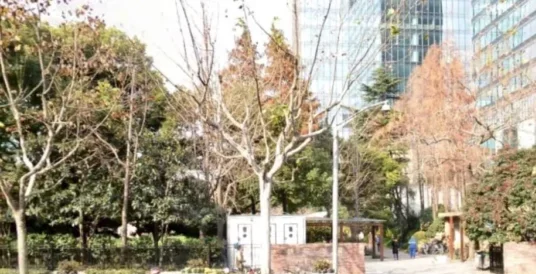
It turns out that in 1954 the new Communist regime took over the cemetery for a park. The remains of the interred were all relocated; where Huizenga’s went is not known. The new park was said to have a few traces of the old cemetery, and I hoped to go see them, but then the entire area was temporarily inaccessible owing to a major renovation underway.
The quest was personal, first, because Huizenga was born in a Frisian village where one of my wife’s tantes had hosted us on our tour of the Netherlands; and second, because my uncle and aunt, Ed and Fran Van Baak, were part of the second batch of missionaries the CRC dispatched to China, after World War II. The family has a photo of Ed and one of his colleagues paying homage at Huizenga’s gravestone.
World Religions on a Ship
The second quest went better, partly because the objective was much larger, and perhaps also because it evolved almost by accident.
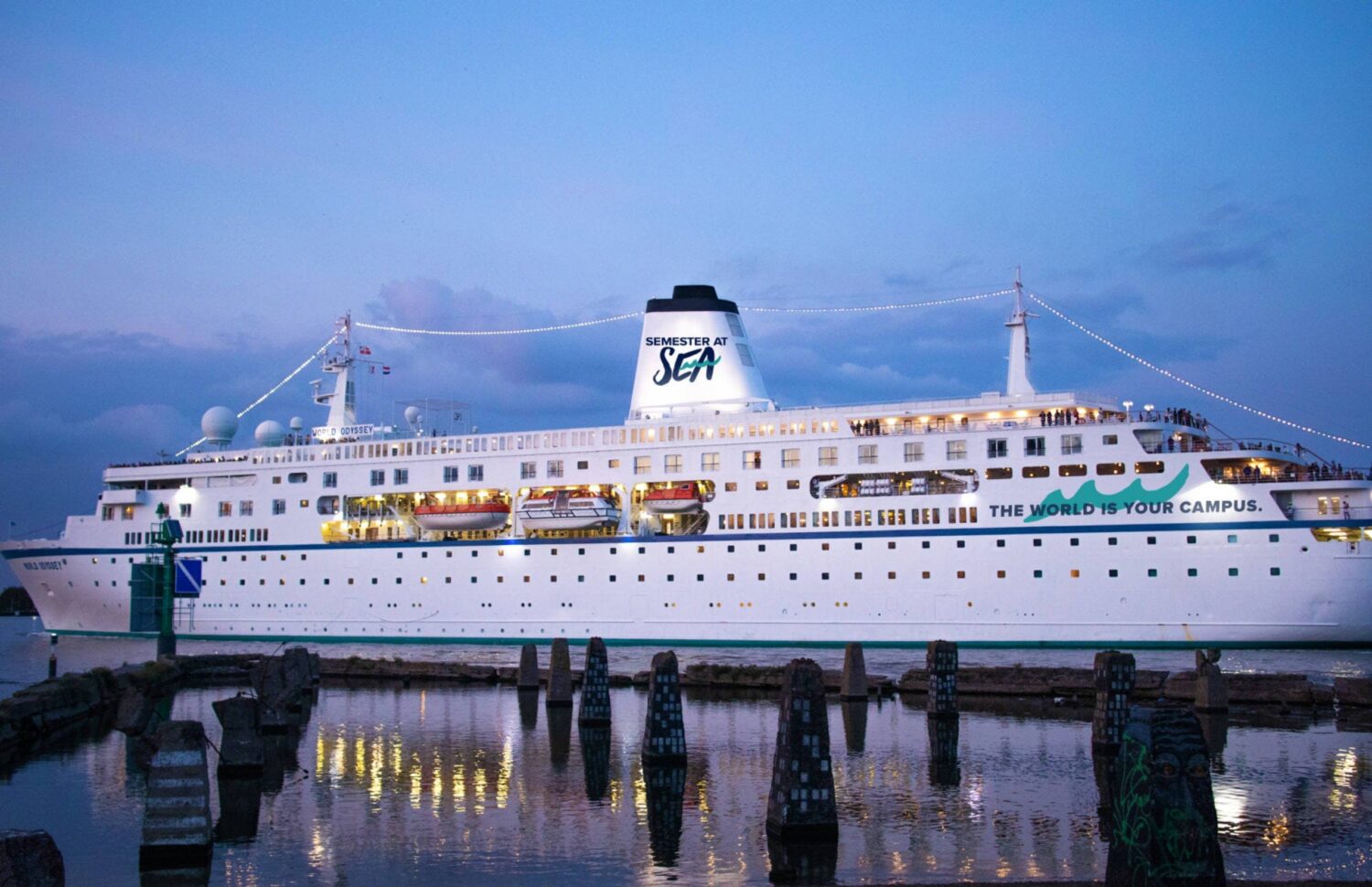
I was assigned to teach world religions on one of the tours of the Semester at Sea. (NOT a cruise but a voyage of exploration and discovery! So students are regularly admonished, and so too snarky observers perhaps including yourself, dear reader….) The fun challenge of designing such a course is to calibrate its specific pieces to the successive ports of call. (The ship, NOT a boat, proceeds for five or so days at sea when all the teaching goes on, followed by four or so days in port when folks do their own thing.)
For me, things worked out best in my upper-level course on Comparative Religious Biography. We embarked from Bremerhaven in September 2017, and it being the 500th anniversary of the birth of the Protestant Reformation and Germany being his native land, we first examined Martin Luther.
Next we circled into the Mediterranean where it was fitting to read and reflect on the memoir of Fatima Mernissi, a pioneering Muslim feminist who had been reared in a harem in Fez, Morocco. Thus, we engaged with two figures who pushed against their religious upbringings—he with rage, she with affection. Plus I could tick the coverage boxes for Christianity and Islam.
Shadows of Vietnam
Over the following weeks we passed back through the straits of Gibraltar and sailed down along the west coast of Africa to Cape Town, then across the Indian Ocean to Cochin, at the southern tip of India. This invited study of Desmond Tutu and Mohandas Gandhi as legendary figures who led crucial political movements in their countries out of deep religious conviction. Check Christianity again. Add Hinduism.
Then, onto to Yangon in Myanmar and Ho Chi Minh City, Vietnam—the only place in the world I did not want to go upon graduating from college in 1971. Nicely, I was now leading university students to do just that a couple generations later. As it turned out, they knew next to nothing about the Vietnam War and had never heard of Agent Orange, as our visit to the War Remnants Museum made clear.
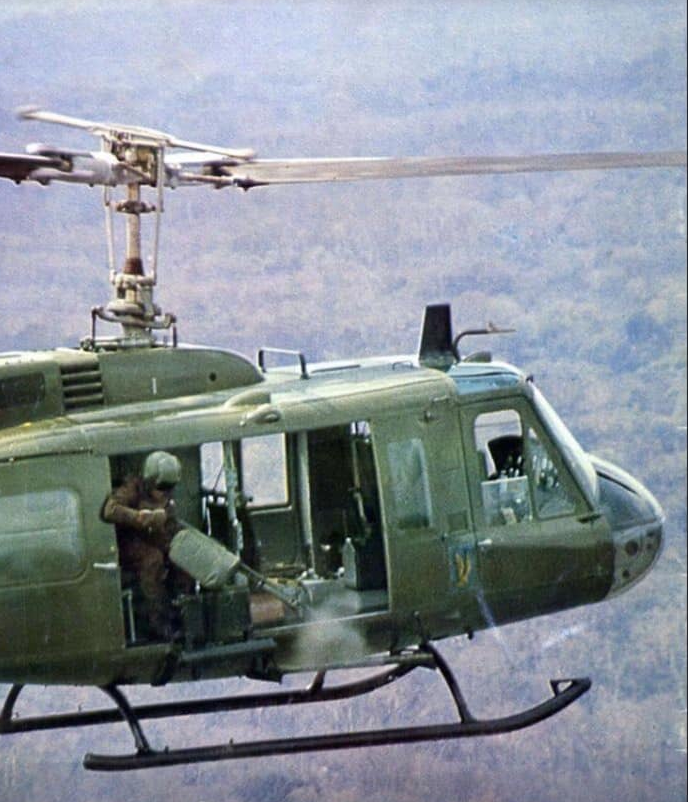
These two sites checked the Buddhism box, Vietnam most poignantly. We read the memoir of Claude Ashin Thomas, a small-town Rust Belt boy who had moved in six short months from the high school graduation stage to firing the door gun on a Huey helicopter in Vietnam. The experience consumed his soul, and he eventually found it back only by the ministrations—nicely enough—of Vietnamese Buddhists. He finally came to a vocation as an itinerant Zen monk making pilgrimages of peace.
A Ghetto of Refuge
So far, so good, but one box remained unticked: Judaism. How to work that in, now that we would be some 5,000 miles from Jerusalem?
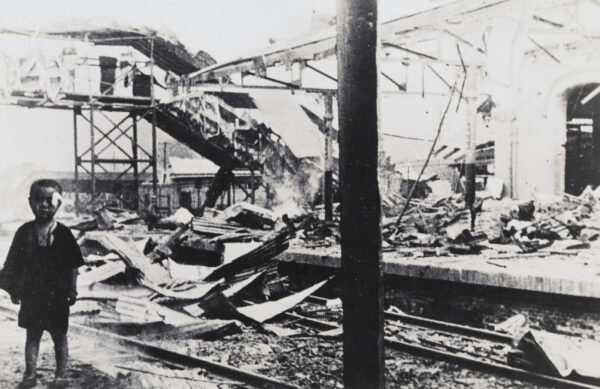
Then I stumbled upon the remarkable story of how Shanghai proved to be a place of refuge for Jews fleeing the Nazi terror in central Europe. A most unlikely harbor, it would seem. The city had just suffered through a three-month battle in 1937 that involved a million troops, claimed at least 300,000 casualties, left much of the city destroyed, and left the Japanese in charge. It essentially opened World War II.
The Japanese occupation, however, did not extend to the old Anglo-American concession which allowed in immigrants without any formal papers. That is, it was one of very few places in the world to which Jews could flee without a passport. Some 20,000 of them did so after the Kristallnacht pogrom of November 1938 in greater Germany (which by now included Austria). Another 1,000 escaped from Poland and Lithuania across Russia.
The city they arrived in, the fifth largest in the world and once the “pearl of the Orient,” was a long, long way from paradise: much of its trade vanished, food and lodging short, jobs and money scarce, death and disease rampant, and arbitrary arrest by the occupying authorities a constant threat.
The refugees were shoehorned into a one-square-mile zone that was already impoverished and grossly overcrowded. Things got worse after Pearl Harbor when the Japanese did move in and forced all the Jews in the city to relocate to this ghetto. They totaled some 23,000 souls on top of the 100,000 Chinese already living there.
Memory for Survival
How to survive in such a situation? Some international Jewish relief agencies provided aid; so did some well-established Jewish figures in town. But by mostly communal self-help, using resources piled up from centuries of adapting to yet another new environment and from centuries of shared tradition.
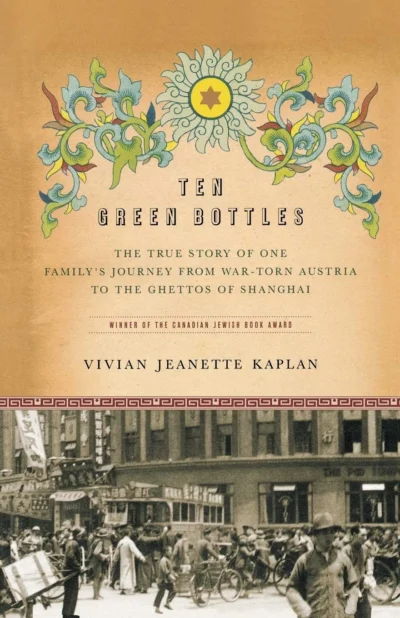
Helpfully for the purposes of my course, biblical themes spiral through the memoir (there are many to choose from) I had the class read about this episode: Ten Green Bottles by Vivian Jeanette Kaplan. Memories of an Edenic childhood in pre-Nazi Vienna, eclipsed by the rise and then the rule of monsters. The refusal to surrender dignity; a crucial intervention by a righteous Gentile. Riding another ark over foreign seas to a place stranger than Babylon. Life in exile, in the shadow of death. The rituals of Passover and Yom Kippur. And especially the mandate to remember, repeated endlessly in the Hebrew Bible and now reiterated regularly in the mean streets of Shanghai. There is great strength and solace in remembering, but also pain—the faces of people lost, outrages demanding vengeance.
The Stones Speak
As it happened, my students and I wound up at a quiet, noble monument to this history at the former Ohel Moishe Synagogue, now the Shanghai Jewish Refugees Museum. Originally erected by Russian Jews ninety-nine years ago, the building retains the synagogue structure. The Torah ark and cover still stand in front, though of course the scrolls have been removed, and the bema seems ready to welcome the day’s reader.
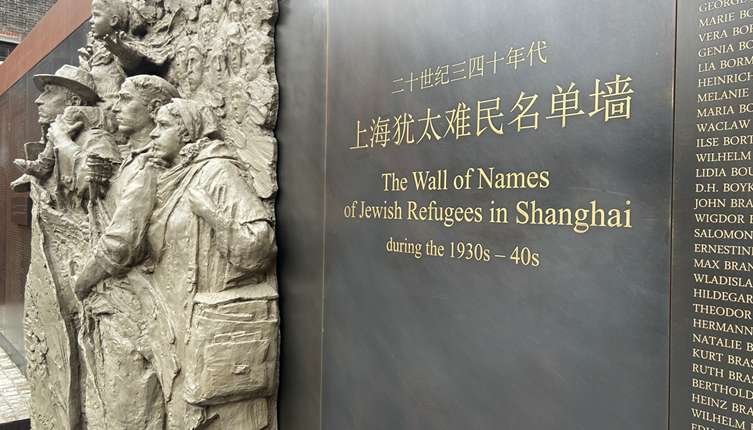
Around the balcony (once reserved for female worshippers, this having been an Orthodox congregation) and in two additional exhibition halls are careful displays of life in the ghetto. The students recognized many of these items from their reading but were struck most deeply by the copper wall winding around the courtyard on which are engraved nearly 14,000 names of refugees who found harbor here. Some of them they had just read about on the ship.
History comes alive with artifacts, especially when these are individual names.
Treasure from the Ruins
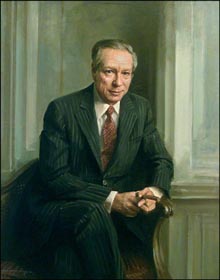
Secretary of the Treasury, 1977-79
I happened to pick up a guide to the area, where some of the buildings of the time still stand. I walked around and found one of them to have been the residence of a Blumenthal family, who had fled Germany in 1939 and lived at this particular address until 1947. A son in the house was Werner Michael who passed ages 13 to 21 there.
He found his way to the States, graduated from Berkeley and Princeton, undertook a successful business career, and wound up serving as secretary of the treasury under Jimmy Carter.
Shanghai welcomed refugees back then and so did the United States. What losses do we incur, for others and ourselves, when we turn them away today?

9 Responses
This is fascinating, Jim. Thanks for informing us about the hospitality and refuge extended to Jewish refugees by the Chinese of Shanghai.
Has Dr. Huizenga’s grave ever been located?
Not that I know of, Steve. But perhaps this will prompt a clarification.
Thank you Jim. I would have loved to attend that class.
What a journey. Thank you for telling of it!
What a rich experience for your students – and for you, their much appreciated leader!
Sounds like a wonderful class. I love how you weave these threads together.
Blumenthal in China as a teen…Amazing!
Thank you for the reminder that hospitality and refuge to the hurting are still important today, in any country!
Thanks for this wonderful affirmation that crossing borders, whether to live or to visit, can greatly bless the world. Ed and Fran would have loved to read this essay.
Always love the Bratt essays. I took students to Vietnam four times. It is a gripping and eye-opening trip. The closest that my students from 5-10 years ago came was maybe a grandpa who served, but even that was rare. It was so good for them (and me) to visit places from Cu Chi to Ha Giang. Even though I was too young (born in 1965) it was the world event that defined my childhood because (as Springsteen says), “you grew up with war on TV every night.”