
Few people want to be called “politicians” these days.
Even those who have devoted much of their lives to the pursuit of power through electoral campaigns tend to be reluctant to embrace that label. They typically characterize themselves as “public servants,” and they often play up the fact that they have training or skills that qualify them to earn their livings in other ways.
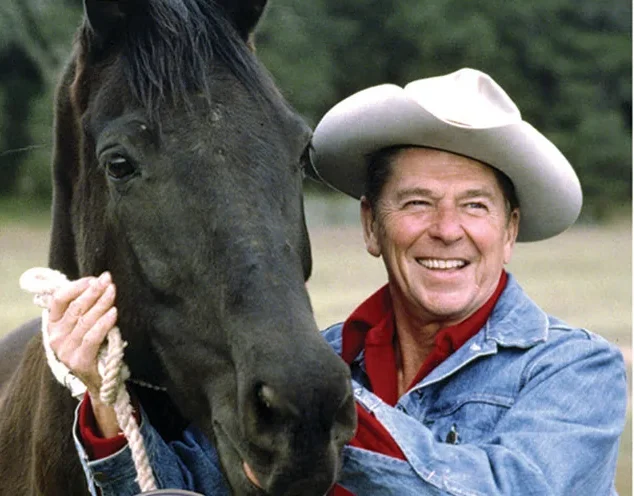
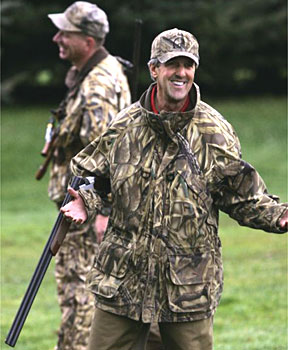

Some even go so far, in fact, as to insist they are not really politicians after all, and if they lack experience in public life, they even cite that as a reason why the voters should favor them over more experienced opponents.
This is not a new phenomenon. Ever since the advent of modern mass politics there have always been some citizens who have been suspicious of their elected leaders. But in our time this seems to be more the case than usual. The suspicion is more widespread, and the terms in which it is expressed are more strident. Why?
The reasons are numerous, and they cannot be reduced only to such objective factors as the difficulty our governments have had in recent years in satisfying even the more reasonable expectations of citizens.

Something else is at work. I submit that it is a mood that has been actively cultivated for some time now by forces that have an interest in discrediting the people and the institutions) that are responsible for many of the policies that are taken for granted as desirable throughout the industrialized world.
This is not to say that the behavior of elected officials plays no role in this. There has been enough evidence of corruption and incompetence in their behavior in recent times to give a generalized attack on the whole profession some credibility. Still, the claims made by the authors of such attacks are usually wildly exaggerated. Few of them will bear much scrutiny.
The problem with these claims is not simply that they exaggerate the extent of the misbehavior that actually occurs in our public life. It is also that they give the impression that there is something uniquely corrupting about politics which does not pertain in other domains — which is nonsense. Even more worrisome, the claims in question also imply that public office does not require any special attributes or skills and that experience counts for little or nothing that is positive — which is even sillier.
It is time to push back against this way of thinking, and not just because of the threat it poses to the effective functioning of our civic institutions. For those of us who are members of churches that are Protestant in the Reformed way there is this other reason to do so as well: the current stigmatization of politics as a vocation runs counter to some of the most fundamental features of our tradition’s view of the character of public life.
Reformed Christians have always understood that civic life is a domain where human sinfulness can manifest itself, to be sure, but they have never regarded politics as particularly (much less uniquely) that way. And they have rather consistently combined that emphasis with an equally strong appreciation of the promise of politics.
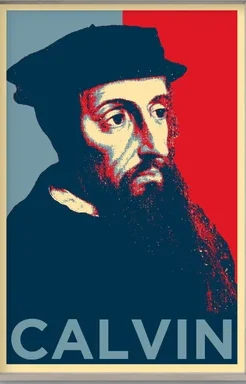
At the time of the Reformation there was, in fact, a serious theological debate among Protestants about this matter. Martin Luther, for example, declared that the reason why civil government was instituted by God was to protect human beings from the worst effects of human sinfulness (crime, war, etc.). Luther also said that there would be no need for civil government–or public officials–if the Fall had not occurred.
John Calvin, in contrast, taught that civil government had been instituted for positive as well as negative purposes, and that when it was functioning well, it performed tasks that were essential to human well-being. He even went so far as to say that the positive contributions governments made were almost as essential as “bread and water.” Politics was not at all a “polluted thing” from which Christians should keep their distance. Quite the contrary. In the famous last chapter of the Institutes of the Christian Religion, Calvin went so far as to characterize the work done by civic officials as a “sacred and noble calling.”
This claim had several important implications. One was that it was appropriate to treat public life as a form of service–Calvin even called it a “ministry.” Another was that people who had the suitable and God-given talents should regard public life as a suitable outlet for the investment of their skills, time, and energy. Still another was that those who sought and won public office should conduct themselves in a manner that was consistent with that understanding of their role. In other words, it should be clear from everything they said and did that they were people of integrity. And still another implication was that citizens, in their turn, should treat their elected leaders with appropriate respect, unless they had very good reasons to doubt their intentions.
I put the matter that way because Reformed thought is also a source of some of the most influential arguments for political rebellion ever made. Those arguments clearly presuppose that at times people may find themselves having to contend with leaders who are unworthy of any such respect. Especially in the 16th and 17th centuries even Reformed sermons were filled with talk of tyrants, accompanied by calls to resistance, if necessary by force. Yet even in that context, Reformed thinking always was informed by a sense that the pathologies of public life could and should be corrected by the diligent work of God-fearing men (and in those days it was always males) of integrity.
In today’s hypercritical environment, sentiments of this sort may seem quaint, but I find it difficult to imagine how the disorders that are now so evident in our public life can be rectified in any other way than by a return to that way of thinking.

3 Responses
I really appreciate the thoughtfulness of some of the local politicians I’ve corresponded with over the years. It’s not an easy job to do well but I see some individuals who work hard at it and do good for our community.
Thank you Bruce,
This was well articulated, thoughtful, and equally measured for every side of all the aisles in our politics today.
This feels like something that should be shared wide and far among our Reformed churches
Excellent article. Thank you. We need to be grateful for the good people that we do have in our political arenas, and we need to encourage more of them to join their ranks.