
There are names we know.
Emmett Till. Fred Hampton. Trayvon Martin. Sandra Bland. Breonna Taylor. Ahmaud Arbery. George Floyd. Tyre Nichols.
Then there are names known primarily by their families.
Their names did not become national movements. Their photographs were not carried through streets across the country. Their deaths did not generate documentaries, federal investigations, or sustained public outrage. Their names may have appeared briefly in a local newspaper, a funeral program, a church announcement, or a social media post asking for prayers.
Then the public moved on.
The family did not.
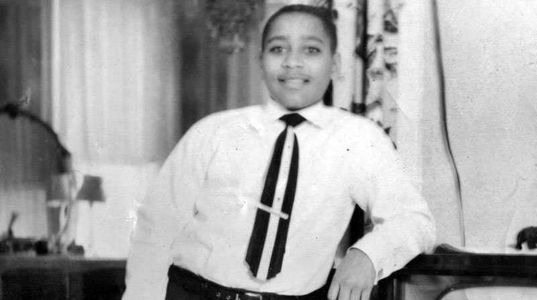
When a child is lost under violent, strange, disputed, or unexplained circumstances, the family does not receive the luxury of uncomplicated grief. They grieve while asking questions. They bury their child while attempting to reconstruct their final hours. They listen to rumors while waiting for official reports. They defend their humanity while other people debate their character. They must determine which institutions are seeking the truth, which are protecting themselves, and which are simply waiting for public attention to disappear.
The church usually knows how to respond to the first days of such a loss.
We pray.
We send condolences.
We deliver food.
We attend the funeral.
We may publish a statement expressing sorrow and calling for peace.
All of this matters. None of it should be dismissed. Prayer is not empty when it carries a devastated family into the presence of God. Condolences are not meaningless when they communicate that a family is not abandoned. Funerals, meals, flowers, financial gifts, and pastoral visits are genuine acts of Christian care.
But they are not enough.
The question facing the church is not whether we will pray. The question is what our prayers will require us to do.
The Loss Is Greater Than One Life
When a young Black man dies, we lose more than an individual.
We lose a son and perhaps a future father. We lose the teacher who may never enter a classroom, the pastor who may never preach, the organizer who may never lead, and the artist who may never create. We lose the elder whose wisdom will never reach maturity. We lose relationships that would have shaped children, congregations, neighborhoods, and institutions.
We lose a story before it reaches its conclusion.
This is part of what racialized violence has taken from Black communities across American history. It has not taken only lives. It has taken unrealized futures.
The historical record often describes the manner of death: beaten, shot, lynched, restrained, chased, suffocated, disappeared, or found under unexplained circumstances. Yet the record rarely calculates the generations of contribution that were also lost.
We know what happened to Emmett Till. We cannot know what he might have become.
We know how Fred Hampton died. We cannot measure the organizing, leadership, and community development that might have emerged from another forty or fifty years of his life.
We can identify the day a life ended. We cannot identify everything that ended with it.
This is why remembering only the death is insufficient. A faithful historical record must also preserve the life. It must document who the person was, what he loved, whom he served, what he hoped to become, and what his community lost when his future was taken.
The person must not be reduced to “the victim,” “the young man,” or “the incident.”
Say his name.
Spell it correctly.
Preserve the photograph selected by his family rather than the image chosen to support somebody else’s narrative.
Tell us how he lived before telling us how he died.
Black Communities Have Been Forced to Keep the Record
Black history in the United States is filled with deaths that authorities ignored, distorted, minimized, or justified. It includes racial terror, police violence, medical neglect, community violence, disappearances, wrongful accusations, institutional silence, and cases that remain unresolved.
Black communities therefore became keepers of records that official institutions did not consider important enough to preserve.
Names were written in family Bibles. Births and deaths were recorded in church documents. Stories were carried through sermons, spirituals, testimony, photographs, funeral programs, newspaper clippings, oral histories, protest signs, and the memories of elders.
The Black church did more than preach salvation. It also kept evidence.
It preserved the humanity of people whom the dominant culture treated as disposable. It created sacred memory when public memory failed. It offered an alternative testimony when official accounts were incomplete or untrustworthy.
Mamie Till-Mobley understood the power of this testimony.
After the murder of her fourteen-year-old son, Emmett Till, she refused to allow his death to be hidden. Her decision to permit the world to see what racial hatred had done transformed private grief into public witness. She made the nation confront a reality many preferred not to see.
Her witness teaches the church a hard lesson:
What is not documented can be denied.
What is not preserved can be forgotten.
What is not taught can be repeated.
The church must therefore treat historical preservation as part of its ministry of truth.
The Church Also Has a Record of Forgetting
It would be easy to describe institutional forgetting as somebody else’s sin. The church, however, must examine its own practices.
Sometimes we prayed but did not preserve the story.
Sometimes we conducted the funeral but did not document the injustice.
Sometimes we comforted the family during the first week but did not accompany them through the investigation.
Sometimes we preached against violence while having no plan for what to do when violence entered our own congregation or community.
Sometimes we released statements but built no structures.
Sometimes we issued condolences and never asked what happened next.
The flowers died. The meal train ended. Public attention faded. The family remained.
Prayer without preparation can leave families unsupported. Condolences without follow-up can become ceremonial. Public statements without sustained action can become a form of institutional self-protection: evidence that the church said something, even when it did very little.
The church cannot keep responding to repeated tragedy as though each occurrence were historically unprecedented.
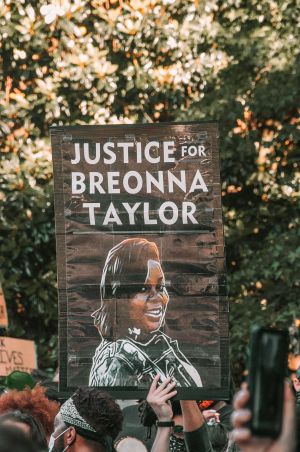
At some point, failure to prepare becomes a choice.
A congregation located in a community affected by violence, racial profiling, domestic abuse, immigration enforcement, poverty, or institutional neglect should not be surprised when a family needs more than a funeral. It should already have relationships, resources, protocols, and trained people prepared to respond.
Remembering Is a Biblical Discipline
This work is not simply political activism added to the church’s spiritual mission. Remembering is a biblical discipline.
Scripture repeatedly commands the people of God to remember.
Israel remembers slavery, deliverance, wilderness, covenant, rebellion, exile, judgment, and restoration. The biblical record does not remove painful history to make faith more comfortable. It preserves both divine faithfulness and human failure so that later generations may live differently.
The stones taken from the Jordan were not decorative. They were witnesses. When children asked what the stones meant, the community was responsible for telling the story.
The Passover meal preserved the memory of oppression and liberation through embodied communal practice.
The prophets refused national amnesia. They named exploitation, violence, corrupt leadership, dishonest worship, and the mistreatment of vulnerable people. They challenged communities that wanted religious ceremony without justice.
At the Lord’s Table, the church hears again, “Do this in remembrance of me.” Christian remembrance is not passive nostalgia. To remember Christ is to be formed again by his life, death, resurrection, and reign.
Faithful remembrance changes the people who remember.
That is the standard the church must bring to its records of communal loss. We do not preserve these histories so that communities remain imprisoned by pain. We preserve them so that truth can shape our future conduct.
The question is not only, “What happened?”
The deeper question is, “What must change because we remember what happened?”
A Revelation 7:9 Church Must Tell the Whole Story
Revelation 7:9 gives the church a vision of a great multitude from every nation, tribe, people, and language standing before the throne and before the Lamb.
We often invoke this text when discussing diversity. It offers a magnificent picture of the people of God in their distinction and unity. Yet a Revelation 7:9 church cannot be built merely by assembling people of different backgrounds in one room.
Visual diversity is not the same as truthful communion.
Every people must be permitted to bring its whole history before the Lamb. That includes music, food, language, celebration, and cultural beauty. It must also include wounds, losses, unanswered questions, resistance, survival, and testimony.
The church often welcomes cultural expressions that are pleasant to consume while resisting histories that challenge institutional innocence.
We enjoy diversity when it performs.
We become uncomfortable when it remembers.
But reconciliation without historical truth is sentimental. Unity purchased through silence is not Christian unity. It is domination disguised as peace.
The Belhar Confession declares that God is, in a special way, the God of the destitute, the poor, and the wronged and that the church must stand where God stands.
Those words cannot remain language we recite at synods, assemblies, or commemorative services. They must become congregational practice.
When a family is wronged, where does the church stand?
When official explanations are incomplete, does the church help the family ask responsible questions?
When public attention disappears, does the church remain?
When the cost of legal assistance, counseling, transportation, burial, lost work, and long-term care overwhelms a family, does the church have anything more to offer than another prayer?
If God stands with the wronged, the church cannot stand at a ceremonial distance.
Every Community Must Build Its Record
This conversation begins with Black history because the record of racialized loss makes the urgency undeniable. It must not end there.
Women should document those lost to domestic violence, sexual violence, medical mistreatment, workplace exploitation, trafficking, institutional neglect, and systems that refused to believe them.
Indigenous communities should preserve histories of displacement, boarding schools, environmental destruction, missing and murdered people, broken treaties, and institutional erasure.
Latino communities should record losses connected to immigration enforcement, detention, border policy, dangerous labor, racial profiling, and family separation.
Asian American and Pacific Islander communities should preserve histories of exclusion, internment, displacement, exploitation, and hate violence that too often remain outside the dominant American story.
People with disabilities should document lives lost through neglect, abuse, inaccessible systems, institutionalization, forced dependency, and decisions made without their voices.
LGBTQ+ communities should preserve the names of those lost to hate crimes, family rejection, homelessness, religious condemnation, suicide, and medical neglect.
Women of color must be especially centered because their stories are frequently buried beneath both racism and sexism.
This is not a proposal to divide the church into competing archives of suffering. Competition over who has suffered most would corrupt the project.
The purpose is to gather truthful histories into a shared ecclesial record.
Every community should be able to testify: This is what happened to us. These are the people we lost. This is how we survived. This is where the church stood with us. This is where the church abandoned us. This is what faithfulness now requires.
What Congregations Can Do
A historical record must lead to a ministry plan.
Every congregation should begin by asking whom it has lost and how those stories have been preserved. Church leaders should gather names, photographs, funeral programs, public records, news reports, pastoral statements, family testimony, and oral histories—with the knowledge and permission of the families involved.
Congregations should document not only deaths caused by public violence but also losses connected to domestic abuse, addiction, homelessness, incarceration, medical inequity, suicide, immigration, and other forms of community trauma.
The church should then examine its response.
Who contacted the family?
Who coordinated pastoral care?
Who verified information before the church spoke publicly?
Who helped the family obtain legal, financial, medical, or mental-health support?
Who followed the case after the funeral?
Who contacted the family thirty days later? Six months later? One year later?
What did the church learn?
What changed?
Congregations should establish crisis-response teams before the next crisis occurs. These teams should not behave as amateur investigators, spread rumors, or announce conclusions unsupported by evidence. They should include disciplined people who understand pastoral care, trauma, public communication, community organizing, legal referrals, and records preservation.
Churches should also establish funds for families facing traumatic loss. Grief is expensive. Burial expenses, lost wages, transportation, counseling, childcare, and legal costs can devastate families already struggling to survive.
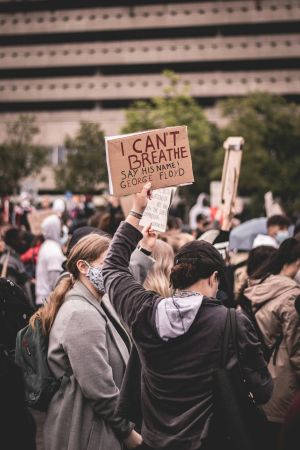
Finally, congregations must teach these histories. Not only during Black History Month. Not only after another death becomes national news.
Teach them in adult education, youth ministry, worship, leadership development, theological formation, and denominational gatherings.
Do not teach only how people died.
Teach how they lived.
Beyond Condolences
The church will continue to pray because prayer is where we bring grief, anger, confusion, and hope before God.
The church will continue to offer condolences because compassion requires us to acknowledge suffering and draw near to those who mourn.
But neither prayer nor condolences should be used to close the conversation.
They should open it.
Prayer should lead us toward presence.
Presence should lead us toward listening.
Listening should lead us toward truth.
Truth should lead us toward faithful action.
The question is not only what the church said after tragedy occurred.
What did the church preserve?
Whom did the church support?
What truth did the church pursue?
What institutional habits did the church confront?
What changed because the church became involved?
What has the church put in place before the next family needs us?
We cannot recover every life that has been taken.
But we can refuse to lose the history.
We can refuse to lose the lessons carried by those lives.
We can refuse to allow public forgetting to become ecclesial practice.
We can gather the names.
We can preserve the photographs.
We can record the testimony.
We can accompany the families.
We can teach the history.
We can create the structures.
We can make a plan.
Prayer must remain our beginning.
But prayer cannot be the end of our responsibility.
5 Responses
One example: the Old First Reformed Church of Brooklyn has huge stained-glass windows from the 1890’s, with the name of the donating family in each window. The congregation has investigated the histories of those old Brooklyn families to discover the names of the enslaved people who generated their wealth, and now prominently displays the names of the enslaved people under each window.
Thanks for this, Dr Davis. Elements of this can be reflected onto other ungodly situations, such as sexual abuse in the church. We need to do more than pray, which means we need to be able to talk about it and understand the experiences of those whose lives were changed by the dehumanizing violence.
Powerful. Convicting. Thank You!!
May your comments and suggestions be on every church and committee agenda!
Thank you!
Thank you for your contribution. It has a lot of information we all need to know. I lived in New Jersey during my early years and there is an old Reformed Church there on the way to the Garden State Plaza that has large chain links and I always thought were for horses. I learned a few years later that they were for tying up slaves. I agree there was slavery even in “free states” like New Jersey.