
The Lion King has been on my mind lately. I recently spent a week with our grandsons, and it’s our older grandson’s favorite movie. In bits and snatches, I’ve re-discovered a movie that was newly out on video when our daughter, our grandson’s mother, was born in 1995.
It was never my favorite movie, not by a long shot. It was too dark, too graphic, too tragic. (The story was inspired by Shakespeare’s Hamlet, which certainly wasn’t written for kids.) Watching The Lion King now with Ollie, I remember how much I hated the scene where Mufasa is killed and his son Simba believes it is his fault.
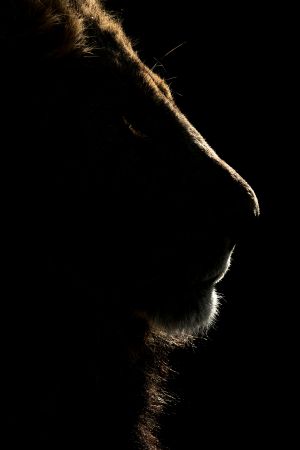
But the movie’s opening scenes are glorious and majestic. As the sun rises on the African savanna, a rhinoceros lifts its horn, a herd of antelope turn, and meerkats pop up, all heeding the call to pay homage. Elephants are on the move and seagulls call overhead. The entire animal kingdom gathers to celebrate Simba’s birth, rejoicing at the birth of a new king and celebrating the circle of life. It’s a beautiful scene, full of triumph and full of joy.
The promise of that hopeful opening dissolves in tragedy. Simba watches his father die violently in a stampede and then lives with the lie whispered in his ear by his Uncle Scar, who skulks up and hisses, “What have you done? If it weren’t for you, he’d still be alive. What will your mother think?”
Accusations. Condemnation. Lies.
Simba, in his grief, believes his uncle, not only believing he killed his father, but also believing that when his mother finds out what happened, she will turn her back on him.
In fact, Simba’s uncle planned and executed his brother’s death. Simba misses out on being raised by his father, and then, by running away, misses out on his mother’s influence as well. If there had been even a pinhole of light, the hyenas’ parting threat to Simba as he fled destroyed the light by saying, “If you ever come back, we’ll kill you!”
The story that opened with such promise and glory becomes dark; any redeeming rays of light to reveal a way forward are also snuffed out. I get lost in the darkness. The murder of Mufasa is a terrible tragedy, but an even larger tragedy comes as Simba believes an ugly lie.
In the next scene, Simba is asleep, close to death, exhausted and hopeless; buzzards are circling, waiting. The comic relief of a warthog and meerkat bowling for buzzards and inadvertently saving Simba’s life is the movie’s turning point.
Timon and Pumba are the first source of light. Not only do they literally save Simba’s life as they bowl for buzzards, they befriend Simba despite knowing when he’s a mature lion he will be a predator and their enemy. They accept him, teach him how to find food, and share their philosophy of life: Hakuna Matata. Finally, Timon and Pumba prove their loyal friendship by going with Simba to face his Uncle Scar and the hyenas. They stay by his side, friends to the end.
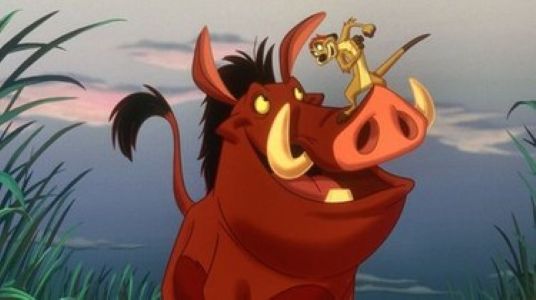
Timon and Pumba are the “collateral beauty” of The Lion King. This phrase was coined by grief expert David Kessler in the workbook accompanying his book Finding Meaning: The Sixth Stage of Grief. Kessler contrasts collateral beauty with collateral damage. As we find meaning in the midst of grief, we discover collateral beauty in new relationships that form after the loss of a loved one. I witnessed this in the Monday morning grief support group I led at hospice. People genuinely cared for one another and participants were purposeful in ensuring new attendees were welcomed. Friendships formed outside of the group; for example, two men began meeting weekly, one giving the other guitar lessons. The group attended events together and went out to eat together. While still grieving for their people, group members had their lives become richer because of the new relationships formed. The collateral beauty of new relationships is a light in the darkness that helps show the way forward: the new relationships demonstrate that we are not alone, that there are others with us in the darkness.
Another source of light in The Lion King comes when Timon, Pumba, and Simba are looking at the stars. They wonder if the stars are fireflies, balls of gas, or the great kings of the past watching over them. Simba wants to believe that his father is in the stars, somehow still with him. But when Timon and Pumba laugh at this thought, it feels ridiculous to Simba, too. His father had promised to always be with him, and Simba yells out, “You said you’d always be there for me!” This is when Simba encounters the wise mandrill Rafiki, who shows Simba his reflection in water and invites him to see how his father lives in him. Simba begins to realize that by running from the death of his father, he also ran away from memories of his father, and, in a sense, from himself, too. Burying his past meant burying himself. Mufasa speaks from the grave, “You’ve forgotten me because you forgot who you are.”
The lie Simba believed kept him chained in darkness. When Simba first meets Timon and Pumba, they ask where he is from, and Simba answers, “Nowhere.” He is unable to grasp the good things his father gave him. This makes me think of parallels in my life. For example, my father possessed a deep faithfulness to live according to God’s Word. My mother made others feel welcome with her smile, graciousness, and willingness to listen. These are traits that I seek to exemplify in my life. As I live them out, my parents live on in me. They are with me as I seek to be faithful to God’s Word and as I work to make others feel welcome. Sometimes we wonder what a lost loved one might say if they spoke from the grave. I know what my parents would say because of what they said and how they lived when they were with me.
When it first came out, I simply felt The Lion King was too dark. I didn’t want to experience that darkness. I resisted entering in.
But now, watching this movie that my young grandson loves so much, The Lion King has been redeemed. I have discovered the light within it, and also realized that this mini-journey I’ve been on parallels the journey of many who grieve, or more accurately, who resist their grief. When we reject our own stories, stories that always include loss and grief, we don’t get to the light.
John 1:5 reminds us, “The light shines in the darkness, and the darkness has not overcome it.” Light wins over darkness. Is it possible that we are so afraid of the dark, that we lose sight of the light? Maybe our eyes are tightly closed in fear and sorrow.
But light is there. Just as the watchmen know the sunrise is coming (Psalm 130:6) and are craning their necks looking for the first rays of light with anticipation, rays of light are coming.
In the case of The Lion King, there was light in the form of unexpected but faithful new friends. Timon and Pumba held Simba’s hand when he was in the dark. There was light in the form of memories. We remember those who have died. We keep their memory alive in the ways we honor them. There was light in the voices Simba finally decided to listen to. He rejected his uncle’s lies and chose to live into what his father had taught him as a cub.
In the climax of the movie, Mufasa challenges Simba, “Remember who you are.” We need this challenge as well.
In his book Life of the Beloved: Spiritual Living in a Secular World, Henri Nouwen has a word for us, “There is that voice, the voice that speaks from above and from within and that whispers softly or declares loudly: ‘You are my Beloved, on you my favor rests.’ It certainly is not easy to hear that voice in a world filled with voices that shout: ‘You are no good; you are ugly; you are worthless; you are despicable; you are nobody-unless you demonstrate the opposite.’ These negative voices are so loud and persistent that it is easy to believe them. That’s the great trap, it is the trap of self-rejection.”
All this from a Disney movie? Parables come in many forms. It’s why story, narrative, is such a precious gift.
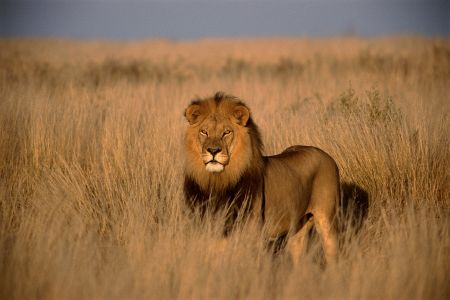
Simba ran away. Christians run away, too. We are afraid of those dark times in our lives; we want to move away from them. In fact, we, like Simba, run from the tragedies in our lives that don’t really make sense. But when we run, fear wins.
Now I’m not suggesting to stop being afraid. We cannot just wish fear away. But instead of running, stay. Turn around and face the fear. If Simba had stayed in the Pride lands and confessed to his mother what had happened, his mother would have been devastated. And she would have explained to her son what really happened, how stampedes happen. They would have mourned together. She would have learned that Scar was much more dangerous than they had imagined and protected themselves from him.
Simba would still have grieved for his father. He still would have missed out on being raised by him. But he would always have known he was loved.
What have we run from in fear? We run from lies, lies that others have told us and lies that we tell ourselves. In our desperation to flee from the darkness of lies, we miss out on so much truth. Truth that, although we are broken, we are still loved, always loved. There’s not a thing we can do or fail to do that will separate us from God’s love. May this be the truth that rings in our ears and our hearts, “You are my Beloved.”

4 Responses
Thank you for exposing the profound truth in the story of ‘The Lion King’. Our darkest times, facing unimaginable grief, bring us to hear the words you point to, “you are my beloved”, and the fact that not running consists of sitting with the pain, accepting the love given by hands and hearts around you, and knowing you are supported by a multitude of witnesses as you move forward, just as Simba did. To push the point further, this is exactly why we, as children of God, read books and watch movies; there is almost always a sign of redemptive power to be found somewhere in the story told.
Jan,
Thank you for your thoughtful reply. Yes, when we sit with pain there is space to receive comfort. I, too, love how God redeems even a Disney movie!
Thank you! You made me watch “The Lion King Again.”
And I love the point to let the best of your parents live on in you and pass it on to your children.
Henry,
How often when we write, we discover how we really feel. As I wrote about how my parents live on in me, it was a new insight I had never thought of before! Enjoy the movie.