
In 2023, Jason Arday became the youngest Black professor in the history of the University of Cambridge. He was thirty-seven. Born in South London to Ghanaian parents, he had, by his own account, been unable to read or write until his late teens and was diagnosed with autism as a child. His rise from public housing to a professorial fellowship at Cambridge was told and retold as an inspiring story—proof, many said, that hard work and talent could overcome almost any barrier.
By the summer of 2026, that story had collapsed into scandal. A researcher named Nathan Cofnas published allegations that Arday had plagiarized across his scholarship and exaggerated parts of his biography. What followed in the media was nearly 250 articles in three weeks, that mixed legitimate questions about academic integrity with racist and public ridicule. Arday resigned on August 5, 2026. Nine days later, he was found dead at his home in London. He was forty-one.
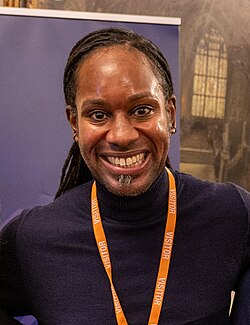
The intensity of media response to Cofnas’s allegations against Arday is difficult to explain. Other Cambridge academics have been found to have plagiarized without becoming international spectacles. Some of the questions raised about Arday may be legitimate, but the scrutiny became entangled with racist abuse, threats, and the public humiliation of a Black scholar whose rise had itself been celebrated as a symbol of racial progress.
The context of that scrutiny also matters. Cofnas, who describes himself as a “race realist,” has defended hereditarian explanations of racial differences in intelligence (not unlike the views of Abraham Kuyper) and argued that genuine academic meritocracy would produce dramatically fewer Black professors. His involvement does not invalidate the allegations against Arday. Evidence must be judged on its merits and Christians committed to truth should resist dismissing an argument simply because its source is objectionable. But neither can the source be treated as irrelevant.
Arday’s story had brought an almost forgotten booklet by the Dutch Reformed missiologist J. H. Bavinck (1895–1964), nephew of the better-known theologian Herman Bavinck, to my mind. The younger Bavinck spent years as a missionary in colonial Indonesia before teaching missiology in the Netherlands. He wrote about race with a firsthand sense of how it organized the modern world:
“Every form of class division carries its own particular bitterness, which is true even in Europe. Yet in Europe there always remains the possibility that a child of humble parents, however difficult the ascent may be, can rise to the highest places of social life. There are numerous examples of men and women who have climbed what we commonly call ‘the social ladder.’ This is possible here, and it is also just. But once class divisions intersect with racial divisions, such advancement becomes impossible. If someone reproaches an [African] for being lazy, he may strive to become diligent; if someone says he lies, he may attempt to become truthful; if someone calls him unintelligent, he can study. But if someone says he is Black, he stands powerless. He can never break through that barrier. This means that the most gifted among them, those who feel the potential for advancement, are most deeply wounded under such circumstances.” —J. H. Bavinck, Het Rassenvraagstuk: Probleem van Wereldformaat (1956), translation mine.
Bavinck’s observation is striking because he highlights something Western Christians sometimes struggle to articulate: racial injustice cannot simply be reduced to class injustice or individual prejudice. Class barriers can indeed be formidable and poverty can constrain a person’s possibilities from birth, but the dimension of race complicates the system of meritocracy. In other words, you cannot climb your way out of your skin.
This makes Arday’s story particularly poignant. Arday’s academic work concentrated on race, inequality, education, mental health, and neurodiversity. Whatever conclusions ultimately emerge concerning contested aspects of his biography or academic work, his professional trajectory is exactly where Bavinck’s observation becomes uncomfortable. According to Bavinck, racial injustice is not demonstrated merely by preventing someone from climbing but by the cruelty that becomes most visible after someone has climbed. It is demonstrated when a person reaches a place where people like them have historically been absent, only to discover that social advancement has not erased the racial category through which others see them. In fact, Bavinck suggests the most gifted person may experience the wound most acutely. The closer one comes to belonging, the more painful exclusion can become.

There is a tendency among some Reformed Christians to become nervous whenever discussions turn toward structural racism. We are rightly concerned about anthropologies that reduce human beings to racial categories, theories that flatten every social relationship into oppressor and oppressed, or accounts of sin that locate evil almost exclusively in structures rather than human hearts. Those are legitimate theological concerns. But rejecting reductionistic accounts of racism does not require rejecting the reality of racial structures. In fact, neo-Calvinism ironically gives us unusually rich theological resources for understanding them.
Abraham Kuyper (see also here) and Herman Bavinck understood human beings as irreducibly social creatures. We never exist as isolated individuals. We live within families, churches, nations, schools, and cultures. God’s creational order possesses an organic character: unity does not erase diversity, and diversity does not destroy unity. Sin therefore does not remain confined to the private life of the individual but becomes embodied in customs, expectations, laws, institutions, economies, etc.
And if sin can become socially embodied, grace must address more than isolated individuals. The gospel certainly reconciles sinners to God, but the lordship of Christ cannot be confined to the private heart. Thus, Christ’s claim upon creation includes all social structures. It also includes the racial imagination of a society.
But there is another neo-Calvinist insight that matters even more: human dignity comes before human achievement. Much of Arday’s public identity was built around exceptional achievement, and there is something genuinely inspiring about a story of someone overcoming extraordinary barriers. But there is also a danger. If the dignity of marginalized people gets tied to their exceptional achievement, we have quietly accepted a capitalist anthropology where a person’s worth is determined by their output. The Christian doctrine of creation begins somewhere else. Before anyone publishes an article, receives a professorship, earns a doctorate, writes a book, or walks through the gates of Cambridge, that person bears the image of God.
And that image is not an abstraction. Scripture gives it a face: Christ, who is himself “the image of the invisible God” (Col. 1:15), the one in whom and for whom human beings were made, and into whose likeness they are being remade. Dignity of this kind does not rest on a bare fact of creation we can hold at arm’s length; it rests on Christ’s prior claim—we belong to him before we have done anything at all. The Black child who never reaches Cambridge therefore possesses the same fundamental human dignity as the Black professor who does. Neither earned it. Both were given it in Christ.
This is where neo-Calvinism can offer something better than both meritocratic individualism, which says work hard and you will move up, and identity reductionism, which says your identity fixes your place in society. Christianity says something more fundamental: “You are a creature made by God, bearing God’s image, embedded within social relationships distorted by sin, and called into a kingdom in which Christ is making all things new.” That way of seeing a person gives us room to speak simultaneously about agency and structure, responsibility and injustice, and personal sin and institutional sin.
This also exposes the inadequacy of representation by itself. Representation matters, but representation does not necessarily mean reconciliation or justice. Putting a Black person inside an elite institution does not automatically transform the institution, nor does the success of an exceptional minority individual prove that racial barriers have disappeared. The fact that someone climbed the ladder may tell us something important about that person’s achievement, but it does not necessarily tell us whether the ladder itself is just.
Additionally, a Reformed doctrine of providence should make us particularly suspicious of meritocracy. Christianity never allows us to say, “I did this entirely by myself.” Rather, our intelligence is a gift. And so are our opportunities, our teachers, and our communities. Even our capacity for disciplined labor is a gift. This does not eliminate responsibility or achievement. It relativizes them under grace. Whatever we possess has been given freely.
This is also why a Christian response to Arday should not require us to adjudicate every allegation surrounding him in his favor. If academic misconduct occurred, it matters. Christian compassion does not require historical revisionism, but neither does concern for truth give us permission to participate in humiliation. The ninth commandment still applies when a person under scrutiny has done something wrong. And the image of God does not disappear when allegations are substantiated.
This may be one of the most important Christian distinctions in our present media environment: dehumanization undermines accountability. We can investigate wrongdoing without turning a person’s downfall into entertainment. At the same time, we can acknowledge racial dynamics without making race explain everything. That kind of moral complexity is increasingly difficult in our polarized culture, but it should not be difficult for Christians.

In the end, the Christian answer cannot simply be to construct a better ladder. We need a vision of society in which human worth is not distributed according to proximity to power, wealth, whiteness, educational prestige, or institutional approval. Neo-Calvinism calls us back to creation. Human diversity is not an unfortunate problem that redemption eventually homogenizes. The peoples and cultures of the world belong to the richness of God’s creation and find their fulfillment, not their erasure, before the throne of the Lamb.
Perhaps that is what Jason Arday’s story should leave Christians thinking about: a society can become more diverse while remaining profoundly dehumanizing; an institution can celebrate representation while still measuring human worth according to prestige; Christians can condemn racism while absorbing the same meritocratic imagination that makes dignity dependent upon achievement. Bavinck points us toward something better.
The gospel does not merely help marginalized people climb the existing ladder, but it questions the gods standing at the top of it—prestige, race, class, power, achievement, and so on. Christ dethrones them all. And it unseats them in the strangest way imaginable: not by sending someone to climb higher than the rest, but by descending beneath them. Christ took the lowest place. He was “despised and rejected,” a man with “no beauty that we should desire him,” denied any seat at the top and finally handed over to die. The ladder rendered its verdict on him, and God overturned it. The one the world threw away, God raised and enthroned. That is why the redeemed gather at the end, not before a meritocracy but “before the throne of the Lamb,” a throne held by the one who was slain.
Jason Arday’s life raises difficult questions, some of which may never receive satisfactory answers. But no allegation, achievement, failure, professorship, or racial category can determine the ultimate value of a human life. That value does not depend on climbing, because it was secured by the One who came down. It was established long before Cambridge ever entered the picture, when God said, “Let us make human beings in our image.” And it is held fast in Christ, who is himself that image, and in whom even the discarded are raised.

12 Responses
Really good. Thanks. And in termsof critique, especially the third to last paragraph.
Thank you for this thoughtful analysis. Please continue with your research and writing!
One cannot help but think of Jesus (the Galilean), whose merit included integrity, healing power, intelligence, and diplomacy, all of which triggered such profound jealousy that he had to be eliminated. He threatened the prevailing power structure and narrative.
Perhaps this itself reflects bias, but I am especially cautious about the objectivity and scholastic integrity of those holding the systemic power, regardless of ideology. A robust view of universal sin should give us pause.
This is outstanding, Moses. It was a welcome read on this Monday morning to fire up the thinking in my head. Thank you.
Thank you for this article. I can’t help but think of the US military in this context. There is a real attempt to promote according to meritocracy. Boards meet, annual reviews are scrutinized in an attempt to promote “the brightest and the best.” Recently Secretary Hegseth refused to confirm a number of people selected to the rank of Admiral in the Navy. The vast majority, if not all, of those whose promotions he blocked were black or female. You are absolutely right, “you cannot climb your way out of your skin.”
Thank you for this. It explains so much about our world.
Excellent! I appreciate your God-centered scholarship and wisdom here.
Moses, thank you for this important attention to J.H. Bavinck’s work on race. It helps me further interpret his comments near the end of his 1960 published book, An Introduction to The Science of Missions. There he notes that “we have approached other peoples . . . without taking into account the immeasurable damage we were doing to their hearts. . . . Missions is thus the penance of the church, which is ashamed before God and man.” (303)
Blessings on your doctoral project, which holds a great deal of pomise!
Thank you, George! It means a lot to hear from you. I’m also inclined to make that connection in his corpus between 1956 and 1960. I think my soon-to-be-submitted English translation of “The Race Question” will shed further light on the quote you describe. I hope we can connect one of these days. Blessings!
WOW! This is an amazing essay. I have read all of it twice and I’m keeping it a while on my computer so that I may read it again. “Dignity does not depend on achievement.” So profound to read and think about and aspire to. But, honestly so difficult to put into practice especially in these days in the area of politicians. As I have been pondering, I’m saying to myself you need to apply this to numerous names of individuals (perhaps some may readily come to mind) who are daily in the national news. I think I am very clever when I think up a disparaging phrase to describe some of these individuals. What I should be doing as I hear and read the news is committing them to prayer rather than a clever put down.
The Jason Arday story is a cautionary tale of what happens when a zealous and blind commitment to DEI collides with a crafty bamboozler.
This is excellent. But I struggled with God’s preference for the widow, orphan, alien, and all others who like them are the anonymous powerless nothings of society, those stuck at the very bottom of a ladder, or can reasonably not expect to have a ladder at all. Jesus consistently preferred to help the lowest. Does this mean that when we rise up the ladder, we are actually removing ourselves from the category of “God’s favorites?” At the very least, does this mean that in order to follow Jesus, we should also give our preferences to those whom the world does not value, and not to help them climb any ladder but just to mirror the love of God?
The H. J. Bavinck article you quoted and expanded upon about racial societal structure was written in 1957, which is 65 years ago. Things have changed dramatically since then. So to quote Bavinck’s observations and commentary about structural racism as if this scenario is still happening to this degree today doesn’t seem right. What younger people see today when they apply for jobs or promotions feels different than what is discribe in this article. This may explain (see paragraph 9) why there is a tendancy for some Reformed Christians to become nervous about discussion of structural racism.