
Now, nearly 30 years ago, when I first arrived in my Iowa pastorate, there was a group of older people in the church, most of whom had come to that congregation in the 1950s and ‘60s. They were people who liked to dance, drink martinis, go to Las Vegas, but probably not go to evening church. Perhaps they were divorced or had close friends who were. Don’t misjudge them. They were good people, good Christians.
They’re all gone now. Maybe we could say they were deconstructers, 70 years ahead of the curve. They had been raised in what they would describe as a rigid and joyless faith. So, for example, it was difficult to talk with them about the gift of sabbath. For them, sabbath meant strict and silly rules imposed upon them as children. The Heidelberg Catechism was no comfort, but merely mind-numbing memorization.
I used to say to them, only partially in jest, “When Jesus says ‘Beware of practicing your piety in public’” — something they could get on board with — ”Jesus doesn’t say ‘Beware of practicing your piety — in general.’”
Perhaps my fondness for those early deconstructers stems from my own affinity for not practicing piety in public. Or, to be more honest, my distaste for others seeming to practice their piety very publicly.
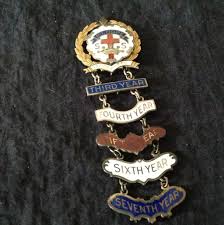
Of course it is easy to spot and poke at much of it, although some of the cliches are probably aging. The zippered Bible, complete with a multi-color highlighter pen system for underlining. Trite bumper stickers — some cutesy, some judgy. Conversations sprinkled with God-talk. Handing out tracts rather than candy on Halloween. Does anyone remember those perfect attendance medals from Sunday school?
With election season upon us, I see a new flavor of public piety, and not from the usual suspects. It’s not signs or endorsements. For me it is declarations about “holding my nose” or “the lesser of two evils” that especially push my buttons.
I say that as someone who was a “principled” non-voter for most of my early adult life. To explain what changed is too long and complicated a tale for today. But how about a funny story from those early days and my reluctance to practice my piety in public?
Shortly after arriving at our first call, an earnest woman from our congregation, a member of the League of Women Voters, knocked on the parsonage door to register us to vote. Having been her pastor for all of three weeks, it didn’t seem like the time to try to explain my voting aversion. I obligingly signed her little registration card and come election day, a few months later, I felt compelled to go to the fire station, stand in the voting booth, slowly count to 60 and then pull the lever, casting my blank ballot.
I know, I know. It sounds ridiculous. Later, I became more creative and cast my vote for obscure candidates from fringe parties.
So now as a thoroughly pragmatic voter, why do the nose-holders and lesser-of-two-evils and moral abstainers irritate me? Because these declarations are often an expression, a very public expression, of purity, of non-compromise, of claiming the moral high ground. And it is almost never done quietly. Instead it usually comes wrapped in some rather shrill preachifying, practicing their peculiar piety in a way that will be seen by others. What ever happened to “Do not let your left hand know what your right hand is doing.”
When I wake up and turn on the light, I am morally compromised. When I start my car or step into a store I am entangled in a web of all sorts of injustices. I don’t say that to depress you, guilt you, inspire you or make you apathetic. It is simply the reality of living in our contemporary world. If we can put up with all the compromises of every aspect of daily life, why do we become moral prigs when it comes to voting?
Certainly, there is better and worse, but there is no pure. We are always compromised and compromising. I’m a pescatarian who wears leather shoes. Can I explain or justify that? No, not really. And I’ve stopped thinking that I have to.
Some of you boycott Coors or Hobby Lobby or Target or Chick-fil-A or Amazon. I do too. As my Aussie in-laws would say, “Good on ya!” That’s your call and your calling. But please don’t press it on others, that they must do the same. Don’t wear it as a sign of superiority. “Work out your own salvation with fear and trembling.”
A quote, almost certainly wrongly attributed to St. Francis of Assisi, says “Preach the Gospel at all times. Use words only if necessary.” Often it is tossed smugly at those who have a need to witness in pushy, awkward ways. But pseudo-Francis might also be sound advice for those my sagacious wife calls, “liberal legalists.”
I recall the person at my study door at 8 AM Monday morning. (Pro-Tip: never-ever go see your pastor at 8 AM Monday morning, unless it is a dire emergency.) They needed to talk with me about a hymn from yesterday’s worship that contained the word “Zion.” For the next five or ten minutes, they lectured me on all they had learned from Google about Zionism and Dispensationalism, as if it was all new to me.
What were we going to do? Certainly an immediate and absolute ban on the word Zion was in order. There doesn’t seem to be a 300 word Wikipedia article on taking seriously today’s regrettable connotations of the word Zion, while simultaneously realizing it is a word with millenia of meaning woven deeply into our vocabulary. A complete ban, a Monday morning snap decision, just didn’t seem the way to go.
Integrity and urgency, zeal and commitment, even piety, are good words, good traits — most of the time. But they so quickly curdle into holier-than-thou, brittle, and boastful
Maybe you’re a little uncomfortable with what I’ve said, or maybe you’re feeling seen, called out. Maybe you’re wondering if my distaste for public piety is more a personality trait than a Jesus directive. Well, you might have a point.
You might note that just a few paragraphs before Jesus’s words about not practicing your piety to be seen by others, he also tells us “You are the light of the world. . .let your light shine before others, so that they may see your good works.”
I’ll let you wrestle that out.
Header photo by John McQuaid on Unsplash

10 Responses
Your thoughts, put into written words are always good to read, Steve. This is very good and so on target. I remember my first go at classical exams lo these many years ago. It could have been ‘88 or ‘89.
And there was an examination called Personal Piety, at least in the Classis of Holland. I thought about it a good deal beforehand and wondered, “What the heck am I going to say?” And “What are they going to ask me?” I really don’t know if Holland Classis/Middle Assembly still requires that exam. I hope not. Piety: always good to be very quiet about it.
Thanks Steve, this resonated with me on many levels.
Piety and light?
What if they’re different things altogether? Something to ponder.
What if they’re the same? If so, I hope that lights meant to be soft and not a high beam LED flashlight shined right into everyone’s eyes. I’m afraid I also struggle with public displays of piety.
Thanks Steve. Your thoughts on public and private piety led me to thinking about public displays of political piety. I’m thinking MAGA rallies and No Kings marches. Lawn signs and posters, message apparel, and bumper stickers make public statements of political piety. To some extent this was true in the Civil Rights movement and Vietnam War protests, but I’ve come to believe that the best public policy initiatives and legislation are often the result of hard work done in the shadows in partnership with the street corners.
Thanks Steve. As someone who doesn’t evangelize, I always hope my actions tell the story. I am hopelessly progressive but I try and listen to others and try hard not to lecture.
Thank you for your thought-provoking essay. I, too, bristle with the flippant use of God-talk; and, I feel guilty when I have not let “His Light shine” in some circumstances where I should have let it shine. Being an intentional disciple of Jesus is difficult and challenging.
Steve, Steve, Steve! I appreciated all of this, written in the S M-VW style I’ve come to love. EXCEPT when you seemed to mock my “perfect attendance medals from Sunday School!” That seemed a reach too far! To be honest, I did not receive that many of them, but everyone I received, handed out before the whole church, made my parents so proud. It was like they had earned the award, and, of course, they had earned it—if you get my drift.
So, thanks, except for that small slight. You can make up for it by buying me a cup of coffee, either on you or the new Middle Assembly, whichever you consider “the lessor of two evils.” 😇
As one who is delighted to serve as a pastor of the dancing, martini-drinking, Vegas-visiting folks from the church you once served, I found myself struggling with hymn selection for this coming Sunday. We’re singing “Jesus, What a Friend of Sinners,” and I know some who will find the “sinners” language triggering. I’m sympathetic to their pain–truly–but we’re still singing it. I’m readying myself for an 8 AM visit next Monday. Thank you for writing.
Know that I will be at your office door at 8:00 Monday morning. Fortunately for you it will be in spirit only.
I have become so skeptical of all of the cross jewelry. From press secretaries to those on political adds from opposing parties spewing lies to sports personalities. I have a lovely gold cross in my jewelry box given to me by my favorite aunt so many years ago. I never wear it.
Preach. The principle still applies: “Poke anyone hard enough and you’ll eventually find a fundamentalist.”