
Jeff
Once, as I was walking off the pitch after a rugby match, a teammate named Jeff, who’d just discovered that I was a Christian and a pastor, announced to me: “Hey! Jared! I started reading the Bible for the first time this week.” He went on to tell me that the girl he was currently dating, being from a Roman Catholic family, had recently drug him to a Mass service on Ash Wednesday, and they decided that the “good deed” they were going to commit to together would be to start reading the Bible. He told me that he had made it through a little more than half the book of Genesis thus far.
“Well, what do you think?” I asked.
“I’m gonna be honest,” Jeff said, as he wiped the sleeve of his jersey across his forehead to remove a clump of dirt. “There’s some crazy stuff in the Bible. All those Abraham stories—that guy seems like a debacle. Pretends his wife is his sister. Gets his servant or slave or whatever pregnant, and then sends her away. Almost kills his own son.”
Jeff went on to ask me if Abraham was supposed to be some example of an especially devout person, and why his story was in a book that claimed to be in some way from God.
Father Abraham
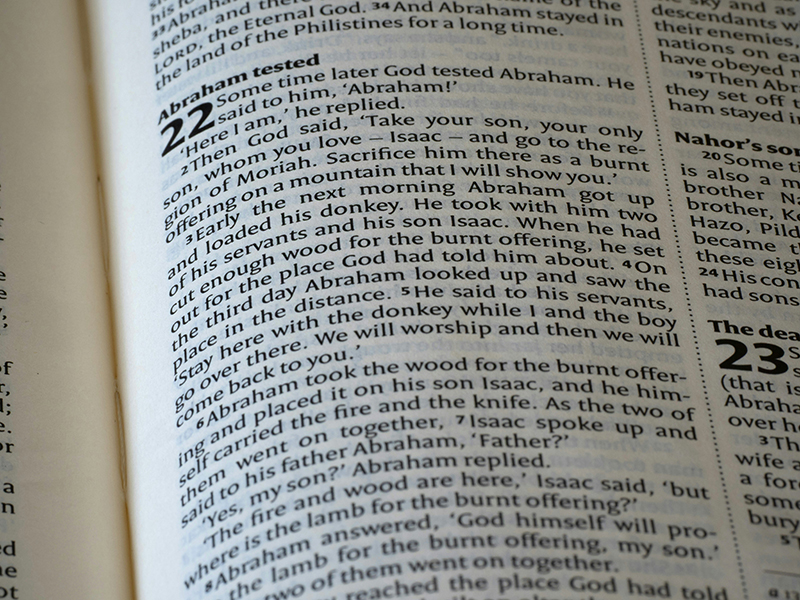 I’ve thought about that conversation often over the last couple of months. Our church has been traversing the story of Abraham through this fall, and it’s been fascinating to watch both newcomers to faith and longtime churchgoers wrestle with this deeply complicated figure. The entire Abraham narrative is only eleven chapters long—ten to twelve pages in most physical Bibles. And yet, he’s referenced over one hundred times in the rest of the Scriptures. When Mary erupts in praise at the news that she would bear Jesus, she sings that her Spirit-conceived Child is the culmination of the Abraham-story. And both St. Paul and the book of Hebrews point to him as a picture of the life of faith. Millenia later, more than three billion people—more than half of humanity—look to Abraham as a spiritual ancestor.
Abraham does indeed embark into the unknown in a daring journey of faith. As Hebrews 11 puts it, he “obeyed when he was called to set out for place he was to receive as an inheritance; and he set out, not knowing where he was going.” He trusts YHWH’s outlandish promise over long years. He surrenders even what God has given in absolute fidelity.
And, “Father Abraham” falters and wanders. He risks his wife to save his own neck, and shows a pagan Egyptian Pharaoh to be a more honest man than himself in the process. Gets cold feet with his Creator. His trust wavers. He owns slaves. Impregnates one of them, and then drives her and the son he fathered away from the family in passive acquiescence to his wife. Fleming Rutledge puts it starkly: “[The life of Abraham] is not a story about human potential. This is a story about what God did in the life of a man and woman who had no human potential – that’s the whole point.”
Abraham, paragon of biblical faith, is complicated, contradictory, both faithful and deeply flawed. And in this sense, he is a picture of our life with the living God.
Over our post-match stretch, I told Jeff that he’d actually gotten the point, even if he didn’t realize it: that these stories show us God doggedly faithful to fickle, dysfunctional, and compromised people: in other words, people like us.
All of us children of Abraham, it turns out, are pretty much a debacle.
Complicated, contradictory people like Abraham and Sarah, and all his world of children, who his promised Son comes to redeem.
