
Well, that was an interesting political season.
My husband kept a stack of the mailers that flooded our mailbox over the last weeks. It’s enormous. And, although I was gifted the grace not to receive them myself, I know so many have endured phone calls and text messages bombarding their phones the last weeks.
Our household had an interesting adventure during this season, my husband Phil exploring ways to challenge Republicans in West Michigan to remember their values and return to a more dignified way of being public servants. Our sixteen-year-old daughter asked the best question Tuesday morning, “Does this mean the political ads will be done now?” Even the non-voting age young adults were tired of the ads.
Why? Because a majority of them were inflammatory. It didn’t matter what political race or political party they were for; they tended to demonize and vilify their opponent. We have seen this messaging and language use rampant through our media for years now.
In the midst of this, and in a balance of framing our community mindset and language for years to come, our congregation has been calling ourselves to consider what our Distinctive Christian Witness might be in this season of life here in the United States.
How did this become the question we are asking ourselves here in West Michigan? In part because of religious nationalism. In part because one of the values that formed me as a pastor in the Reformed Church was the understanding our witness will be distinctive no matter where we are in the United States or world. God will call us to live out the good news of Christ’s indwelling in very unique ways based on location and people group.
This became a point of discussion at Consistory meeting last autumn, held the day after a video of a wife and kids witnessing to the deportation of their husband and father at the hands of ICE went public. He had come to West Michigan as a three-year-old Cambodian refugee in the 1970s. All legal, grown up in West Michigan with a thriving, beautiful family, just to be snatched up and sent back to Cambodia where he has no remaining ties or family. Our conclusion, as a faith community, was to acknowledge and witness to the fact of this encounter.
That has led to us returning to this question time and again over the last year, “What is our distinctive Christian witness?”
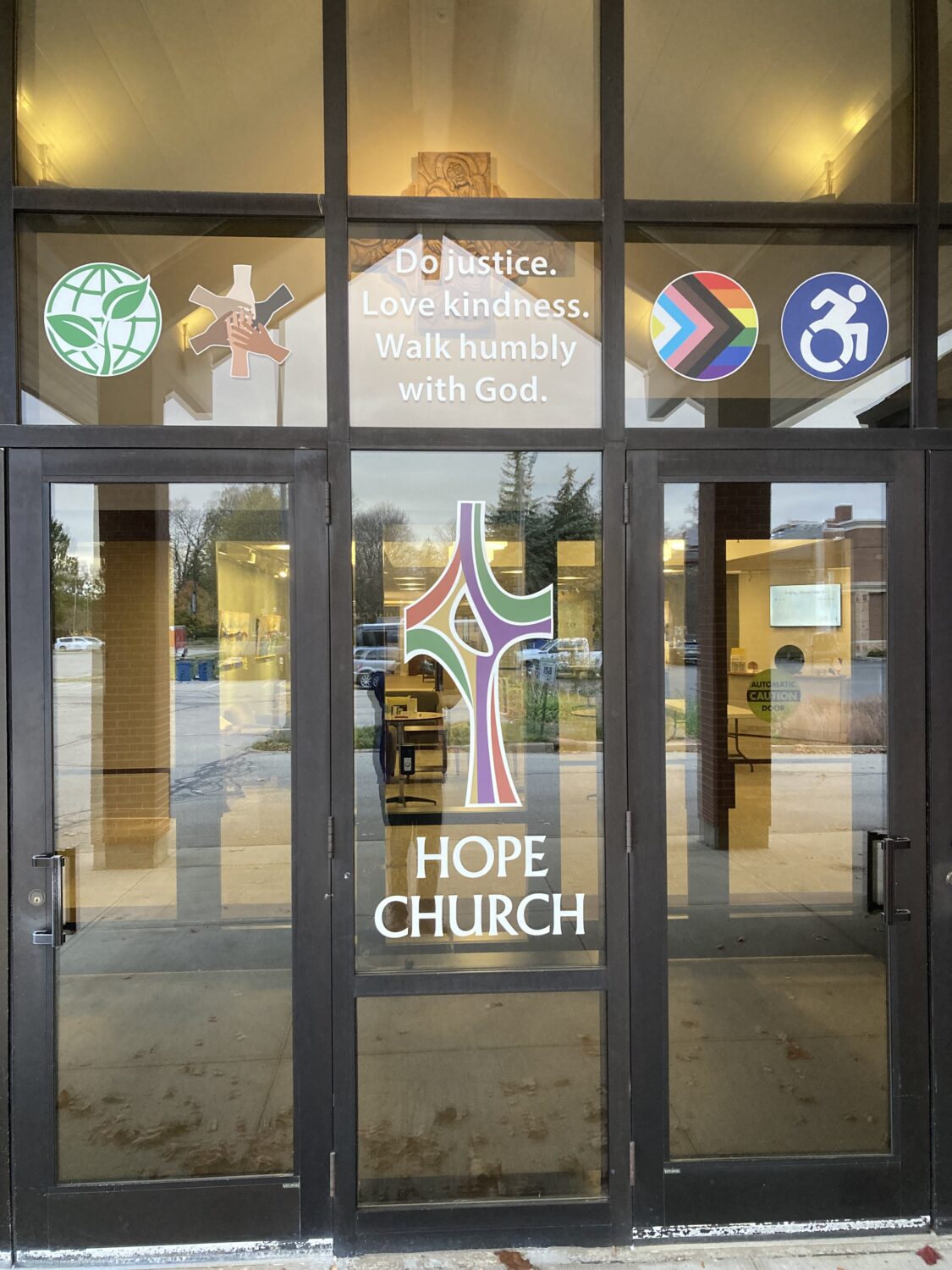
The beauty in being part of a Christian community that takes their pioneering spirit seriously is they are adept at asking themselves this question on a regular basis. As it is stated in our mission statement, “Founded as a pioneering congregation, Hope Church is willing to experiment courageously and to press ahead in new directions. We continue to seek creativity and excellence in worship, nurture, governance, and outreach.”
That’s all well and good, but how do we live this out?
Over the years, this community of faith has developed touchstones of justice: caring for creation, accessibility, racial justice, and Room for All. These touchstones act as conduits for articulating our Christian witness outside of election seasons. It challenges our witness in areas that transcend the United States alone. It invites us to articulate our theology and live into our belief systems in a way that encourages all of us to lead with what we are for and not simply what we are against.
I would like all of us to consider what our personal and communal Distinctive Christian Witness is. Try asking the question through a breath prayer. “What’s my Distinctive Christian Witness here?” And then follow the spirit of justice.

One Response
I am sure we’ve all heard waves of congratulatory celebrations in the blue wave/tsunami. One insight, and I cannot recall who said it, that I’ve appreciated is this. With their new found power, Democrats can and should embrace accountability, but bleeding into revenge likely serves no one, including Democrats. I’m not sure if that’s a Christian witness or not, but it does strike me as sound advice going forward.