
She ushered in year 101 without her dentures.
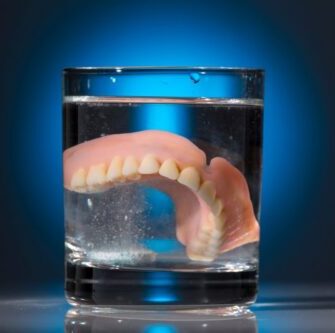
Mary had been in the home for aging seniors for less than a year when she noticed one morning that her dentures, always carefully placed in the plastic box on her bedside stand, had disappeared overnight. “Who would do such a thing?” the nurse on morning rounds wondered. They assured Mary that a search of all the rooms would be conducted, although only a cursory and superficial effort was made. After all, who needs a spare set of dentures? They checked at breakfast for someone mumbling or finding it difficult to swallow the scrambled eggs. Nothing. It was clear that none of the other residents were wearing them, and the staff was much too young to need them. It would remain one of the enduring mysteries in the history of the home.
Mary took it in stride, thanked the staff for the search, and said she would learn to live without them, which she did. It changed the shape of her mouth, but she didn’t see clearly enough to even notice it in a mirror. Her speech was a bit muffled, but listeners learned to lean into the sound of her voice. And she wasn’t about to go through what it would take to have a new set designed for her. Saying “no” was one of the perks of aging, not unlike being able to have ice cream as the main item on her breakfast menu.
Mary was spunky and engaging for most of her life. She was an excellent pianist and learned to play the organ in her teens, which led to a long tenure as the church organist for the local Reformed Church. This meant, of course, that she would play twice each Sunday, enduring the running commentary about her playing too slowly for some, or too quickly for others. In the end she learned to play for an audience of one, her Savior.
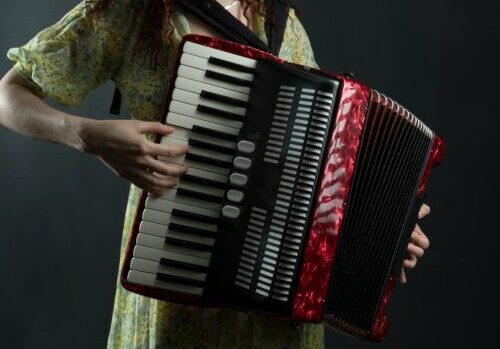
While playing for her church gave her great satisfaction, she found her Sunday afternoons to be more to her liking. In between piano and organ lessons she also learned to play the accordion, a portable keyboard that almost outweighed her. Learning the instrument came naturally, but there was little opportunity to play it for others, and her practice space was the basement, sparing the family from the unusual sound. The church might accept a harp or lyre, for example, because both were clearly used in Scripture. That’s the instrumental music David danced to, after all. But there were no prooftexts for an accordion and her offer to accompany hymns and psalms in her church was met with a “thanks, but no thanks” response from the church council.

During high school, and before marrying and raising a family, Mary would sneak out on Sunday afternoons and play an accordion at the local Polish Community Center. She’d made friends with some Poles at the textile mill where she worked and found out about this joyous gathering featuring dancing and drinking, both frowned upon by her parents and church. Well, drinking had its place in secret, but not dancing. It was said in her church community that premarital sex was frowned upon because it might lead to dancing.
Mary found the atmosphere at the Polish Community Center invigorating. Bodies in motion, laughter in the air, and tangible energy filled the room as guests made new friends or renewed acquaintances. Solemnity has its place, and Mary experienced it each Sunday morning and evening. But playing the accordion in the polka band was refreshing. It transported her to another culture, another world, and she didn’t mind the check that came with the gig. She didn’t consider it working on the Sabbath.
When her secret was uncovered and her church elders intervened with a verbal cease and desist order, Mary stopped playing, and even in her old age struggled to forgive those who “delivered her from evil.” She got around to it, but the hurt lingered. She forgave, but forgetting never reached the stage of remembering in a new way.
Mary would credit the polka band experience as contributing to her longevity. It taught her to be open to others and other ways of thinking and living.
Another longevity factor, Mary would say, was marijuana.
A nephew and his wife visited when she was a spring chicken at 98 years old. On a counter in her kitchenette stood a humidifier pumping moist air into her dry room from a foot-long tower attached to the base. The nephew examined it and said in jest, “Aunt Mary, you could put a little marijuana in this thing and really have a good time!” To which she replied, “I’m on it!”
At this, Mary’s roommate shouted, “Right on, Mary!” as if this was some Woodstock-era hippie gathering. Mary was, of course, using medically prescribed marijuana in the form of gummies, which the staff conveniently divided into small enough chunks to blend into her breakfast ice cream. It seemed to help with her aches and pains.
The greatest factor for longevity, Mary was fond of saying, was plain old simple love. She knew how to love others, and she was always overwhelmed by the love of others toward her. And there was, of course, the love of her Heavenly Father to whom she prayed each day in thanksgiving for loving her through his Son, Jesus Christ.
She didn’t long for heaven but she was ready to go. She wondered why God kept her here on earth since her husband was gone for over two dozen years by now. Family and friends would tell her God keeps her here because she always blesses their life with her joy and welcome. Not unlike the warmth and charm of the Polish dance hall. She hoped that there would be dancing in heaven but had her doubts about an accordion.
When the nephew and niece were ready to say goodbye and promised to see her again, she thanked them for the visit and said she might not be there at the home next time, so they should check first. The next time she’d see them, she said, could be in heaven. “But not too soon for you two, I hope!” Mary thought they had a lot to live for this side of the sod, remembering what life was like for her when she was their age. And as they bent over to kiss her goodbye she said, “Have a seat,” and offered this prayer, mustering a strong voice while drawing from her treasured history of prayers.
Heavenly Father, we come to you because we know you love us. And because you love us we return our great and special love to you. Thank you for all these dear ones around me, holding me, holding me in their care. And now I know that means that you’re holding me. Uphold them in your care. Be with us through the rest of this day. We come early in the day knowing that you can hear us whether it’s morning, evening or night. And so, we bring our love, our care and our gratefulness to you for your great goodness to us. Amen!
Mary spends her days now sleeping until mid-morning. She is dressed and wheeled down the hallway to the dining room so she can watch the morning aerobics class, moving and jumping and shaking to what she takes to be rock and roll music. The class pauses to greet her with a strong “Good morning, Mary!” She has elevated celebrity status as the oldest resident and for her constant good cheer, and she waves back with her toothless smile as if she were the queen of England on parade. Born a depression-era child, she lived through unimagined change after change. She is thankful for all those years and most of the changes.
And, deep down, she wishes she could play the accordion for the aerobics class.
One Response
What a fitting story about someone who, although living within a theology of do’s and don’ts, manages to be herself: a person who personifies the faith of a saint and the welcome of Jesus. Her smile just lit up this gloomy Saturday morning. Thank you.