
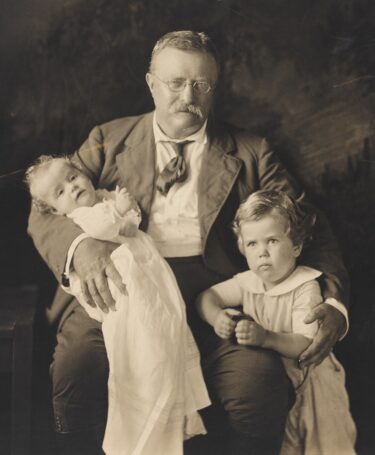
Photo Credit: United States Library of Congress
It’s a sad fact of life that people addicted to drugs will sometimes go to extremes—lie, cheat, and steal—to feed their habit.
On July 19, 1953, Kermit Roosevelt Jr. arrived in Tehran with $1 million in his pocket. At the time, he was chief of the CIA office for the Near East and Asia. His assignment was to take down the government of the democratically elected Prime Minister of Iran, Mohammad Mossadegh. The money was to support his efforts in whatever way he thought appropriate.
Mohammad Mossadegh had committed the unforgivable sin of nationalizing the oil industry of Iran.
In 1901, William Knox D’Arcy, a London financier, purchased exclusive gas and petroleum rights in Iran from the Qajar Shah, Muzzafar al-Din. The Shah pocketed the money. And British investors soon made good on their bet. They discovered oil beneath Persian soil in 1908 and five years later built up the oil industry under the auspices of the Anglo-Persian Oil Company (later known as BP, British Petroleum). The British government was the majority stockholder of the company. Under the arrangement, Britian received 80% of the oil revenues.
In the Constitutional Revolution of 1906, Iran formed a Parliament to counter-balance the corrupt rule of the Qajar Shahs. As a member of the new Parliament, Mossadegh spoke out against what he perceived as the foreign exploitation of Iran’s natural resources, arguing for a more equitable share of the revenue. Negotiations with Britian, however, soon broke down. In response, Britain imposed an embargo on Iranian oil. Mossadegh then convinced the Iranian Parliament to take control of the oil industry. He saw it as a victory over imperialism. The British saw it as theft. Riding a wave of nationalist popularity, Mossadegh was elected Prime Minister in 1951. The British government decided he had to go. But the British needed some help.
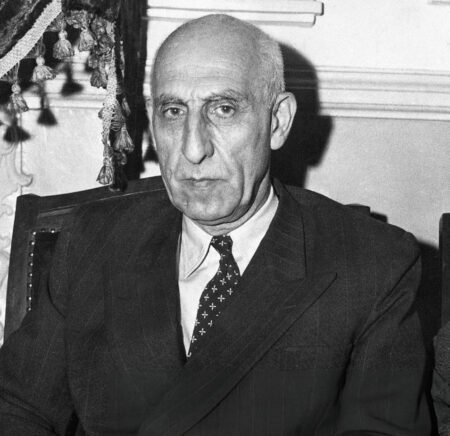
Photo Credit: International News Service
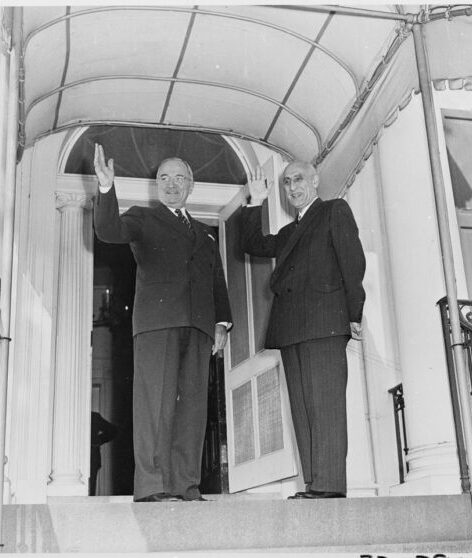
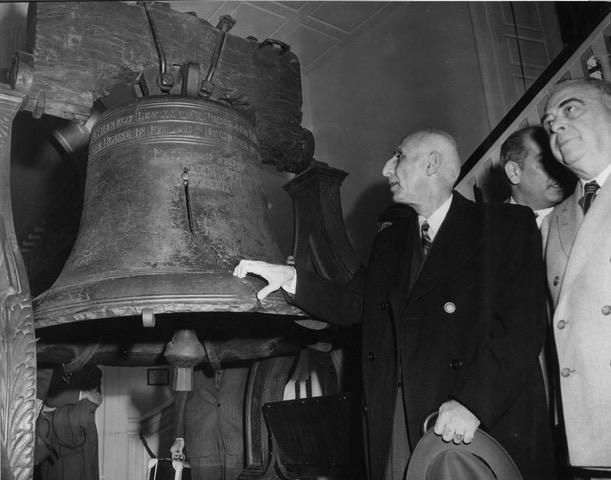
Photo Credit: Harry S. Truman Presidential Library and Museum
MI6, the British foreign intelligence agency, approached the United States for assistance in the regime change it envisioned. Harry Truman, president at the time, refused. But Dwight Eisenhower, who assumed office in 1953, saw it as a strategic move in the Cold War. The nationalization of the oil industry was, after all, a form of socialism, “threatening” the world economy. Although Mossadegh was not himself a communist, he was supported by the Iranian Communist Party. And Russia was next door. Eisenhower’s Secretary of State, John Foster Dulles, and his brother, Allen Dulles, the new head of the CIA, saw post-war nationalist struggles for independence as proxy conflicts between the East and the West.
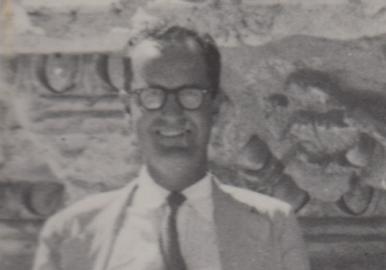
Photo declassified by the CIA in 2014.
Photo Credit: United States Government, Central Intelligence Agency.
In a clandestine effort code-named “Operation Ajax,” Kermit Roosevelt used his CIA funds to finance an anti-Mossadegh propaganda campaign in the Iranian press, claiming that the Prime Minister was, variously, a communist sympathizer, a British agent, a Jew, an atheist, a homosexual. He then enlisted Colonel Nematollah Nasiri of the 700-member Imperial Guard to arrest Mossadegh on the night of August 15, 1953.
The plan was to replace Mossadegh with retired general Fazlollah Zahedi, who was up for the job after receiving $100,000 from the CIA. But when Nasiri and his soldiers showed up at the front gate of Mossadegh’s house, a contingent of troops from the regular army, who had been tipped off, suddenly appeared on the scene and arrested them. The coup failed. Feeling threatened, the west-friendly Shah jumped into a twin-engine Beechcraft and fled the country for Baghdad. A trained pilot, he flew the plane himself. General Zahedi went into hiding.
The CIA urged Roosevelt to come home after what looked like the total failure of Operation Ajax. But Roosevelt had another plan up his sleeve, realized four days later. He paid local gangs in Tehran to riot in the streets—breaking windows, beating bystanders, shooting at mosques, and toppling a statue of Reza Shah in Parliament Square while shouting, “We love Mossadegh,” “We love communism.”
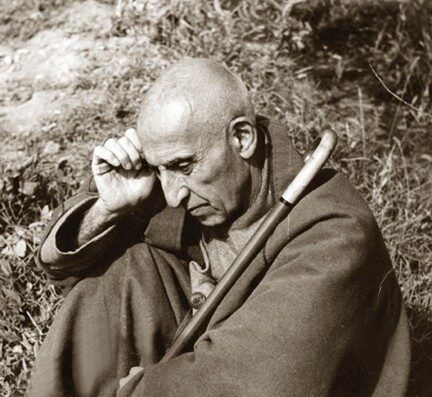
Photo Credit: Dr. Nosratollah Amini
At the same time, he paid a second group of street gangs, grotesquely over-developed Zurkaneh weightlifters, and athletes known for their acrobatic skills, all led by the aptly named “Shaban the Brainless,” to attack the first group, creating a major civil disturbance. Over 300 people died. Then a royalist wing of the army, also bribed, showed up with tanks and fired on the Prime Minister’s house. Mossadegh attempted to flee. But he was captured, taken into custody, and put on trial. The Shah returned on the wings of his Beechcraft and appointed General Zahedi as the Prime Minister, who renegotiated the terms of Iranian oil business much to the liking of western oil companies.
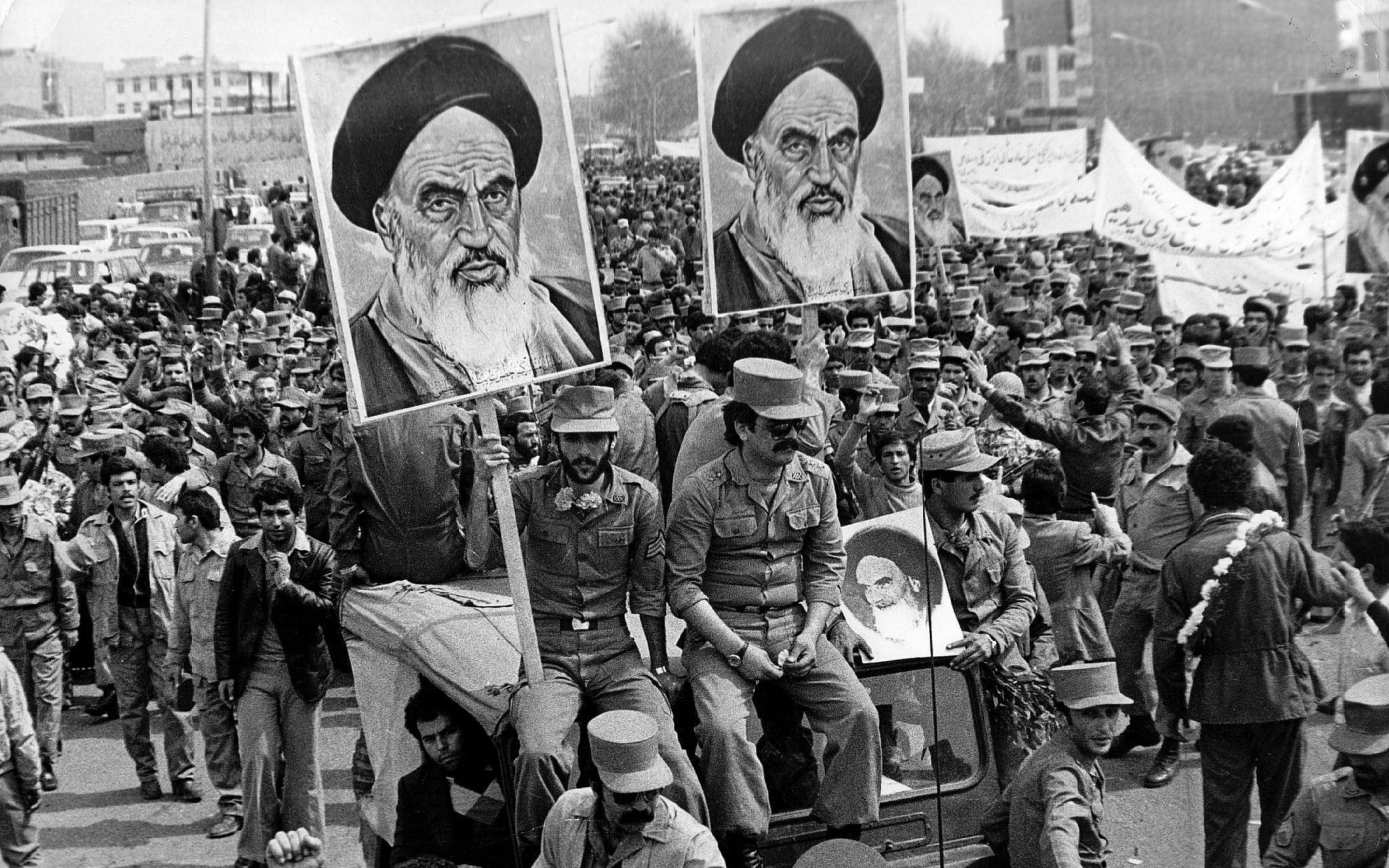
By 1979, resentment against the dictatorial rule of the Shah built up and boiled over in another revolution. In the resulting power vacuum, the Mullahs stepped in, ousted Mohammad Reza Pahlavi—the last Shah of Iran—and created an Islamic State headed by Ayatollah Khomeini. Haunted by the memory of an American-engineered coup and the return of an exiled Shah in 1953, they immediately took the diplomatic personnel of the United States Embassy hostage. Since that time, Iran has been openly hostile to the west and to the United States in particular.
That brings us to today.
The Trump administration, now in the middle of a chaotic near-eastern military campaign unrelieved to date by diplomacy, has once again called for regime change in Iran. According to the Axios news agency, White House envoy Steve Witkoff has held secret talks earlier this year with Reza Pahlavi, son of the last Shah of Iran. Meanwhile, the conflict has sent oil prices over $100 a barrel, triggering inflation, setting off stock market volatility, and motivating the executive branch betrayal of Ukraine for the sake of an oil deal with Russia.
Perhaps we should take these developments as a sign that it’s time to kick the oil habit and turn to renewable and readily available energy resources—wind, geo-thermal, and solar—instead. Grand Rapids, city of origin for the Reformed Journal, is already moving in that direction with the construction of a two-megawatt solar array over the old 190-acre Butterworth Landfill site. And many city residents are installing solar panels on their roofs, heat pumps beside their homes, induction stoves in their kitchens, and electric vehicles in their garages. Just as importantly, if not more, they are becoming climate voters.
Kicking the oil habit will help reduce international conflict over finite resources, enhance national security, ease the pressure on climate change, lower our energy bills, and make for a healthier environment—a good part of what it might mean to be peacemakers in our time.
In the absence of federal support, the job is up us and our local and state representatives.
Material for this essay drawn from Stephen Kinzer, All the Shah’s Men; Bahman Nirumand, Iran: The New Imperialism in Action; and Sepehr Zabih, The Mossadegh Era.
