
I became a global Thanksgiving evangelist.
Thanksgiving has encircled my life in importance, layer upon layer, like the rings that mark the seasons and years of a tree. Biologists can look at those rings and determine when a tree has gone through environmental stressors or strains, or when there was an abundance of water.

Thanksgiving became that way for me, encircling me, when I was a young middle-school teenager. My brother, seven years my senior, suffered a brain injury while playing American football in college. That year, at Thanksgiving, many tears were shed in gratitude for his life spared. The following year, it was my uncle’s turn to survive a brain tumor. After that, we started placing tissue boxes near the Thanksgiving table, just in case.
Plus, as a pastor’s kid, Thanksgiving always felt a bit more spacious – time when family came to visit us and we could still play outside because the bitter cold of winter hadn’t yet set in.
And so, when we moved to Germany, I was insistent we figure out a way to celebrate the day, even though it was a normal day for everyone else. Kids went to school, adults went to work, but I wanted to celebrate on the fourth Thursday of November, regardless.
We undertook the work of explaining Thanksgiving and why it mattered to us. Thus began my evangelical work.
That first Thanksgiving in Hannover, we invited some of my husbands’s office colleagues – from Canada to Cuba to Germany. Over the years we gathered others, from our RELISH congregation to friends from the international school. Off the top of my head, I can recall gathering people from Indonesia, India, South Korea, a Korean who grew up in Brazil, Greeks, Italians, Australians, Germans, and Americans who were transplants to Hannover.
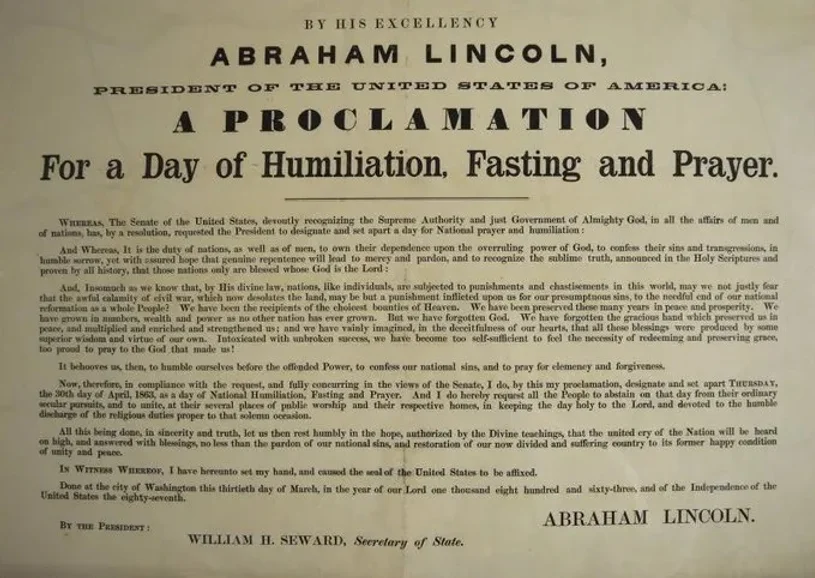
We, of course, acknowledged the historic difficulty of Thanksgiving itself. Has history written it as a generous, three-day encounter of gratitude in which Native Americans, in fact, saved the lives of the first pilgrims? Or have we inherited a glossed-over account of much more complicated story? We gave the background of Abraham Lincoln declaring the first national Thanksgiving Day in the aftermath of the Civil War, and of course, my personal story for the importance of the day.
Our educational endeavors continued when one guest asked, “But wait – what is the deal with this thing called Black Friday?” Unfortunately, the global reputation of the United States is still heavily burdened by the sin of racism. We had to explaind the economic purpose of that day, not the perceived racism they thought was there.
We had a good chuckle knowing that, in true American fashion, Thanksgiving has now expanded into a full seven-day event: Wednesday, the biggest bar night of the year, as friends returning home for the weekend reconnect; Thanksgiving Day, Black Friday, Small Business Saturday, this year, the first Sunday of Advent; Cyber Monday; Giving Tuesday; and foosh!
But the beauty? The beautiful and tender thing about being a Thanksgiving global evangelist (tongue in cheek) is that we got to shape them in our image.
The habit of our family, in that first year after my brother’s brain injury, was to go around the table to share what we were thankful for. I know this is a tradition for many people on Thanksgiving. But before that year, I don’t have memories of that being part of our annual routine.
What was so powerful was realizing that many of our international friends came from countries and people groups that didn’t have a day or a ritual that encouraged people to pause and simply give thanks. Even if the year was tough, even if the season of life had been difficult, Thanksgiving offered them the opportunity to do just that.
In the purity of the day, it is a beautiful and spiritual discipline to pause and say thanks to God for those small pockets of grace throughout the year. It invites us to acknowledge the rings of the tree, whether in a season of stress and strain or in a season with plenty of water.
And, the truest testament to our work as Thanksgiving evangelists was the witness our German friend gave us the year after we moved. He and his wife had grown to love our Thanksgiving dinners so much they decided to carry on the tradition themselves. They invited folks over on the evening of the fourth Thursday of November. Our friend even taught herself how to bake a pie for the occasion. And we all rejoiced for a gift that keeps on giving.
Gratitude, it seems, travels rather well.

One Response
Thanks, Gretchen, for being an evangelist for gratitude. As the apostle Paul noted, it’s a way of being (“be thankful” Colossians 3:15) and a way of doing (“giving thanks” Colossians 3:17). a distinction that holds up in the Greek as well. When sharing what we’re thankful for around the table, I find it helpful to ask people to get specific and tell the reason why: a particular vegetable we’re grateful for, a certain Bible promise or sport, an item of furniture, a certain deceased relative, a season, someone at church, a room in the house, a book from your childhood, etc.