
In 2016, I preached a spring convocation sermon at Whitworth University entitled “Emergency Preparedness,” based on the fourth chapter of Hosea and Habakkuk 3:17-19. My opening included the sentences, “A cursory glance at the news reinforces the idea that the world is a mess. In fact, the news often conveys a vivid impression that the world is a mess that is rapidly getting worse.” Today, worse has arrived, yet there is no sign that we have arrived at the nadir.
I spent the first of this year furious. In June, I stood on a curb holding a sign and feeling a mix of embarrassment and solidarity as I participated in my first public political protest. In July, I skipped our neighborhood’s Fourth of July parade because it was too hot to wear sackcloth and ashes. Now that fall has come, I find myself numb. Since I suspect that certain forces in the world want me that way, I feel duty-bound to resist. If, like me, you need a remedy for numbness, many of Denise Levertov’s writings have a potency rivaled only by the Bible’s prophetic passages.
My first memory of reading Levertov was encountering her poem O Taste and See in a little book that paired poems in dialogue with one another. The first two lines of Levertov’s poem “The world is/ not with us enough” are an explicit rebuttal to William Wordsworth’s “The World Is Too Much With Us.” On first reading the poem, I wasn’t sure what the poet’s attitude was toward Psalm 34, the source of its title. The persona in the poem reacts to “O taste and see that the Lord is good” printed on a subway poster by listing an array of this-worldly things, among them tangerines, plums, quinces, and crossing the street.
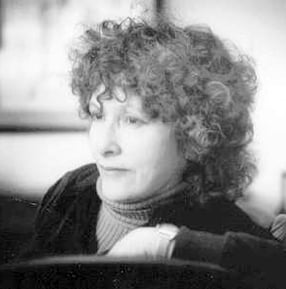
“O Taste and See” was written two decades before Levertov would explicitly identify as a Christian, yet she already intuited that focusing on this world is not in tension with focusing on the Lord. How else can we taste the Lord’s goodness if we refuse to eat when hungry, savoring as we chew? How will we see that the Lord is good if we do not attend to all that creation provides us? Yet Levertov’s poem is celebratory without being pollyannaish. It notes that the world contains not just fruit, but grief and death, which cannot be ignored. For Levertov, our problem is not that we are too worldly, but we live disconnected lives, hardly noticing the world’s glory and travail. This is why the arts are of supreme importance, for as Levertov asserts, “All authentic art shows up the vagueness and slackness of ninety percent of our lives.”[1]
Denise Levertov credits her artistic life with leading her to God, noting that living as a poet meant living “with the door of one’s life open to the transcendent.”[2] Believing in inspiration presupposes a power that enters from outside of oneself. Levertov gradually moved from regretful skepticism to pantheism to, by the mid-1980s, identifying the power that confers inspiration as the God who is revealed in the Incarnation. This was a halting journey in which she stepped to the threshold of faith many times before crossing over.
Levertov was a reluctant skeptic because she intuitively connected with the transcendent. She was equally reluctant to become a Christian both because she found many aspects of Christianity embarrassing and because she was unable to reconcile the horrendous suffering that pervades the world with the goodness of God. What tilted her in the direction of faith is best described in her own words:
“Why when the very fact of life itself, of the existence of anything at all, is so astonishing, why—I asked myself—should I withhold my belief in God or the claims of Christianity until I am able to explain to myself the discrepancy between the suffering of the innocent, on the one hand, and the assertions that God is just and merciful on the other? Why should I for one moment suppose that I or any other human mind can comprehend paradoxes too vast to fit our mental capacities and, thus, never perceived in their entirety? Wasn’t it as if I was scolding the Almighty, refusing my acknowledgement until provided with guarantees?”[3]
She began to pray, worship, and participate in the rituals of the Church. A persistent sense of awe and gratitude accompanied these practices. Her experience led her to attest that “imagination, which synthesizes intellect, emotion and instinct, is the perceptive organ through which it is possible, though not inevitable, to experience God.”[4]
To keep the organ of imagination healthy, we need to act on what it reveals. Part of what it reveals is a world full of grief in which we are called to be agents of mercy. So it is not surprising that Levertov’s commitment to social action was as instrumental in her conversion as was her art. As Lynn Domina observes in “A Poet Converted by her Own Writing,” “Levertov invested her energy in political movements because she was concerned about people, especially when governmental action revealed a belief that certain people were expendable, perhaps not even really people at all.” In 1964, she cofounded Writers and Artists Against the Vietnam War. As a peace and environmental activist, she was arrested multiple times for acts of civil disobedience. Seeing leaders from varied branches of Christianity joining the struggle for peace and justice showed her that Christianity offered more than the stuffy respectability that she had earlier found so embarrassing.[5]
During a time in my life when I struggled with arrogance, I meditated on Psalm 131 every morning until I could mean what I said when I prayed “My eyes are not haughty.” These days I feel like urging all Christians to join me in meditating on Levertov’s poem “Making Peace” until we have restructured our lives in ways that make all of our actions contributed to God’s ultimate Shalom. I am nowhere near there yet.
Denise Levertov had little truck with party lines, either political or denominational. She never joined a political party. When she became a serious Christian, she attended a Presbyterian church in Palo Alto during the decade she taught Stanford University, but she attended a Catholic church in Paris, and Anglican churches in London and Boston.[6] She finally became an official member of the Roman Catholic Church at the age of 66. Her friend, poet Robert Creeley, found this puzzling, especially since Levertov’s spirited independence seemed at odds with the Catholic refusal of ordination to women. He speculates that it may have been an act of humility on her part to set aside “distinction and isolating privilege” to finally come into a fold—however flawed.[7]
Why do I commend a sometimes agnostic, sometimes pantheist, late-joining Catholic to the attention of Reformed Journal readers? Firstly, I think what I have said already makes it apparent that Levertov, whether she was familiar with Abraham Kuyper or not, shared his conviction that there is not a square inch of creation that does not belong to Christ. Similarly, the conception of artmaking that she lived her way into is not dissimilar to, though not indebted to, that of Reformed philosopher Nicholas Wolterstorff.
Second, many of her poems are “written on the road to an imagined destination of faith.”[8] This questing aspect of her art gives it potential resonance with people who are still on their way toward or even temporarily alienated from Christian faith. Poems like “St. Thomas Didymus” and “The Task” show honest grappling with central questions of faith without offering artificially tidy resolutions. Levertov’s father was a Jewish convert to Christianity, who became an Anglican priest. Her mother had an intense but inarticulate faith. Their daughter’s early and persistent doubts likely troubled them. Christian parents and grandparents of young adults with similar struggles may see in Levertov’s story reason to hope that their loved ones will come to a fuller knowledge of God in God’s good time.
Third, Levertov is first and foremost a truth-teller. Creeley describes her integrity as “dogged, determined, flooded with purpose.”[9] Her purpose was to be true to her art by fully bringing forth whatever inspiration catalyzed in the crucible of her experience. She wrote as frankly about the challenges of marriage as about the challenges of living alone, as compellingly about the glorying in the ineluctable shimmer of wind through blue leaves as about grief over lost rivers and poisoned lakes.
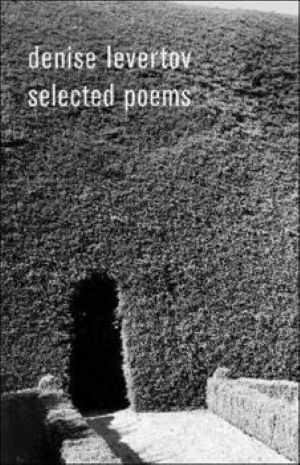
Lastly, Levertov can help us retain a healthy hunger for awe. Poems like “Primary Wonder,” “The Avowal,” and “…That Passes All Understanding” can remind us that openness to awe is itself a gift of grace. Though I have been reading Levertov’s poems for many years, I only recently read her essays. My goal was self-serving and utilitarian. As a philosopher, I am in mourning over the tendency of contemporary philosophers to write in ugly, opaque prose that function as “Keep Out” signs at the boundaries of our discipline. Though I’ve considered myself a decent writer all along, my current vocation is to improve my style with an eye to communicating with a broader, more diverse public. What better way to improve one’s prose style than to read prose written by poets I admire? So along with Elizabeth Bishop, Seamus Heaney, Christian Wiman, and Garret Keizer, I sought out Levertov’s essays.
I learned a lot from those essays about Levertov’s life and faith journey, some of which I have shared here. I also benefited from her commentaries on other poets such as Rainer Maria Rilke, Robert Duncan, Anne Sexton, T. S. Eliot, and William Carlos Williams. The most important unexpected gift I gained was finding that Levertov’s essays about the art of poem-making, including such technical subjects as the function of linebreaks in organic verse, invariably exhorted me to pay attention to the precious, swiftly passing details of my life. Consider this lovely passage from an essay with the unpromising title “Technique and Tune-Up”:
“The mind as it feels its way through a thought or an impression often stops with one foot in the air, its antennae waving, and its nose waffling. Linebreaks (though of course they may also happen to coincide with syntactic punctuation marks—commas or semi-colons or whatever) notate these infinitesimal hesitations. Watch cats, dogs, insects as they walk around: they behave a lot like the human mind.”[10]
Another of her essays, “Some Notes on Organic Form,” discusses how a poem comes into being. This happens, says Levertov, when a sequence or constellation of perceptions demands to be brought into speech. This cannot occur without contemplation or meditation, about which Levertov offers these thoughts:
“To contemplate comes from ‘templum, temple, a place, a space for observation, marked out by the augur.’ It means, not simply to observe, to regard, but to do this in the presence of a god. And to meditate is ‘to keep in a state of contemplation’; its synonym is ‘to muse,’ and to muse comes from a word meaning to ‘stand with open mouth’—not so comical if we think of ‘inspiration’—to breath in.”[11]
Who among us does not aspire to live more moments of our lives with our hearts inspired by God and our mouths open in awe? What better antidote could there be to the numbing effect of the relentless, churning, disastrous news that hammers us day after day?
Denise Levertov saw herself as often having to create her art while “in despair over the current manifestation of malevolent imbecility and the seemingly invincible power of rapacity,”[12] yet she persevered. The products of her faithful persistence may provide us succor and sustenance as we face daily manifestations of rapacity and imbecility.
[1] Denise Levertov. “Great Possessions,” New and Selected Essays. (New Directions Books, 1992), 127.
[2] Denise Levertov, “A Poet’s View,” New and Selected Essays, 241.
[3] Denise Levertov, “A Poet’s View,” 242.
[4] Denise Levertov, “A Poet’s View,” 246.
[5] Denise Levertov, “A Poet’s View,” 243.
[6] Denise Levertov, “A Poet’s View,” 244.
[7] Robert Creeley, “Preface,” to Denise Levertov, Selected Poems. (New Directions Books, 2002), xv.
[8] Denise Levertov, “Work that Enfaiths,” New and Selected Essays, 257.
[9] Robert Creeley, “Preface,” to Denise Levertov, Selected Poems, xvi.
[10] Denise Levertov, “Technique and Tune-Up” New and Selected Essays, 95.
[11] Denise Levertov, “Some Notes on Organic Form” New and Selected Essays, 68.
[12]Denise Levertov, “Autobiographical Sketch” New and Selected Essays, 264.

6 Responses
For Levertov, our problem is not that we are too worldly, but we live disconnected lives, hardly noticing the world’s glory and travail.
Carol, thank you so much for this invitation to engage Leverton. She has been on the periphery of my awareness; now is the time to draw her closer to the center.
Carol, thank you for including Levertov’s poetry in your engaging post. I am very new at reading poetry so I loved her:”The mind as it feels its way through a thought or an impression often stops with one foot in the air, its antennae waving, and its nose waffling.” That’s it! It’s how I read your post and look forward to reading more of Levertov.
I really appreciate your timely reminder that makes me want to get back to Levertov!
Thank you for this dive into the poems and essays of Denise Levertov. I found the poems you referenced very meaningful to me — no easy answers but an authentic grappling with difficult questions that arise for people of faith.
Caroline Simon, thank you for offering this wonderful exploration of Denise Levertov whose poetry has served as liturgy for me for years. Back in 1988, I got to hear her give a lecture in New Jersey and we went out for dinner afterwards. Your writing sent me in search of the poem I wrote for her back then. Will have to send it across to Rose Postma. Perhaps she will deem it RJ worthy. For now, sharing – with thanks – this Levertov poem, so liturgical for me. https://allpoetry.com/poem/8503363-Stepping-Westward-by-Denise-Levertov
Emily Jane,
Thank you directing readers to “Stepping Westward.” That’s a Levertov poem that is new to me and I am grateful to know about it. It’s a wonderful, rich poem.