
I inherited a birdfeeder from my grandma after she died. I love feeding the birds—but it seems that if I want the birds to eat, I also have to let the squirrels have their share.
I know some people genuinely like squirrels. I am not one of those people. I could choose to see them as fluffy and endearing, as innocent little creatures just trying to survive the winter’s cold. I could tell myself they are hungry, vulnerable, and deserving. But most days, I see them as freeloaders with an uncanny ability to empty a feeder in minutes. To me, they are less woodland charm and more persistent nuisance.
My kids pass by the front window and laugh, “Mom, a big ol’ squirrel is hanging on your feeder again!”
And when I turn to look out that window, the squirrel and I seem to have a staring contest. “What’cha going to do about it?” he seems to taunt.
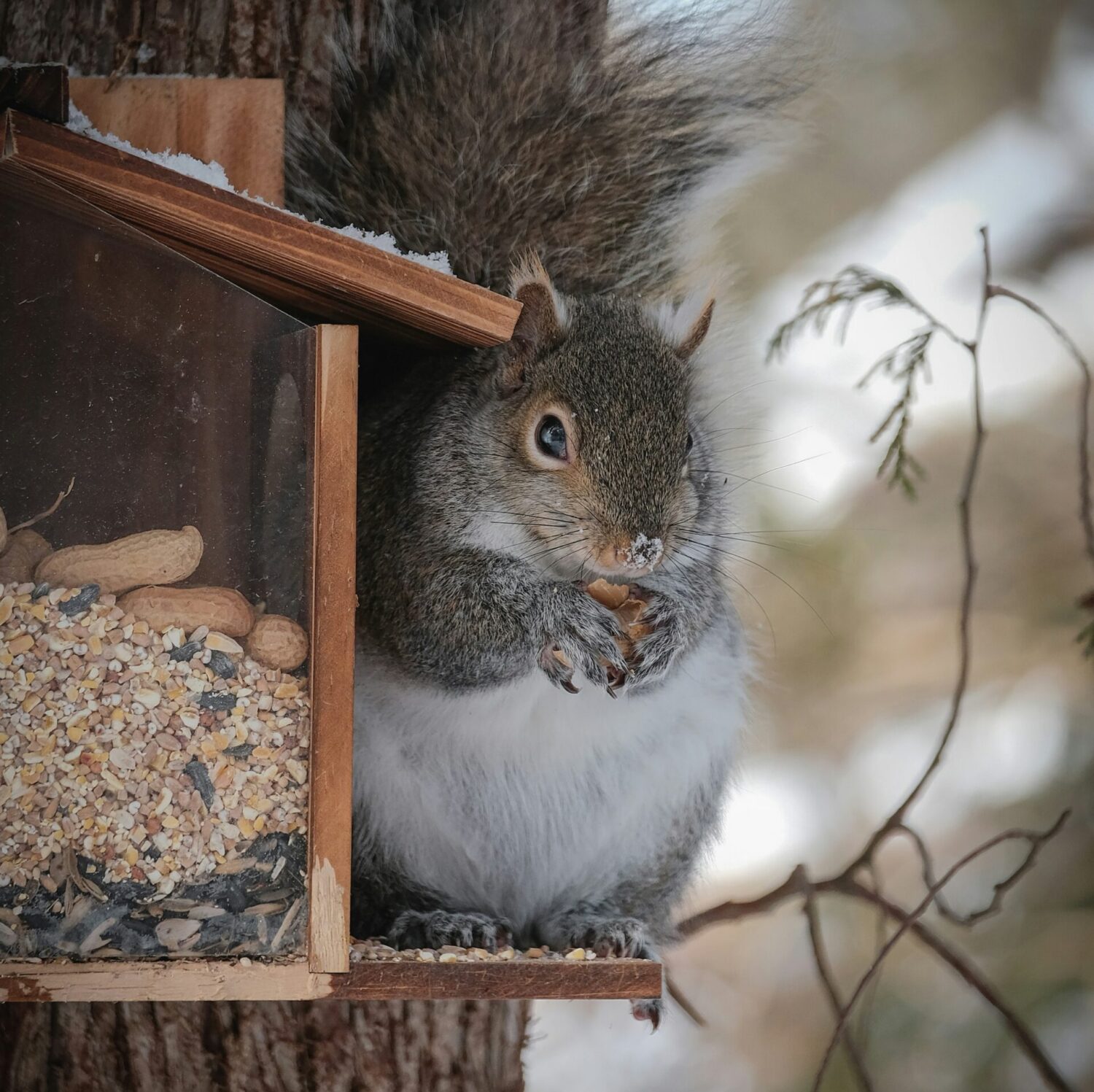
Squirrels are the bullies at my feeder, the bane of my bird watching, the enemies in my front yard. Birds are mentioned in the Bible (along with lambs, lions, and bears, oh my!), but there are no mentions of squirrels.
– – – –
This past weekend, we had a few days of glorious winter sun after a long stretch of snow, blowing winds, and dark skies. The temperature rose above 20 degrees for the first time in days, and so I laced up my boots to go for a walk.
As I walked, I contemplated my pastor’s Sunday sermon and what I might write for my blog post due this week.
Pastor Stephanie preached on Matthew 6:25:
Therefore I tell you, do not worry about your life, what you will eat or drink; or about your body, what you will wear. Is not life more than food, and the body more than clothes? Look at the birds of the air; they do not sow or reap or store away in barns, and yet your heavenly Father feeds them. Are you not much more valuable than they? Can any one of you by worrying add a single hour to your life?
She challenged us to embrace a life not rooted in control or self-sufficiency, but rather trust, and pointed out that while this oft-quoted verse in Matthew tells us not to worry about what we’ll eat or drink, it does not tell us not to worry about others. In fact, the anecdote for our own worry can often be opening up our eyes to the plight of others.
Pastor Stephanie shared these words from theologian Frederick Dale Bruner:
The West is a consumption-centered world, much too concerned with food; it is a superficial world, too occupied with clothes. Only when liberated from anxiety about our own food and clothes—a liberation devoutly to be desired in Western Christendom—only then will we give deserved attention to the food and clothing of the Poor. Thus, Jesus’s text is not anti-social; it’s anti-selfish.
I finished my walk and returned to my yard, only to find a squirrel suspended on my feeder.
And an idea took shape in my mind: the squirrels and birds became an allegory. We can’t save the birdseed for ourselves unless we are willing to share it with others who gather at the feeder.
My first instinct though, was to see myself as the bird. I immediately cast the outsider as the squirrel, the inconvenient “other” who also needs food to survive the long winter.
But as I sat down to write, I heard a familiar voice—echoing the tone of Jesus in the Good Samaritan story, asking, “And who is your neighbor?” But this time, the question became: “And who is the squirrel?”
And that’s when I realized, the squirrel is not the other, the stranger, the newcomer.
The squirrel is me.
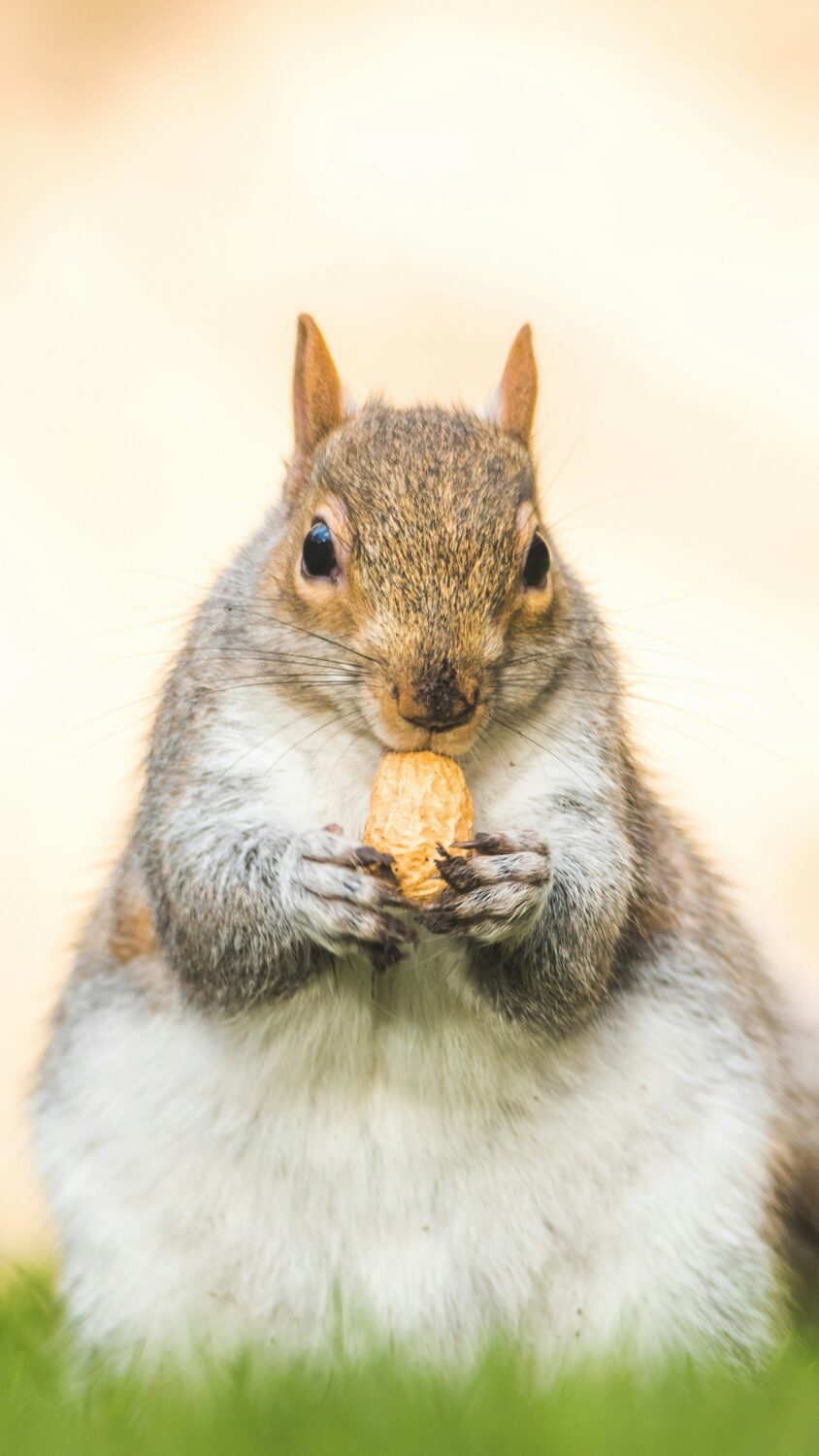
How typical of a well-fed Westerner to cast myself as the bird in this story, when, like the chubby-cheeked squirrel, I have plenty. How easy for me—a white, upper-middle-class American—to imagine myself as the rightful insider, the quiet hero of the feeder: entitled to the seed by default, then congratulating myself for my generosity when I make room for those pesky squirrels.
You can hear the Gospel so often that you assume you get it—until it returns as a question you thought you’d already answered. You think you recognize God’s voice, and then it presses where you’re tender, undoing your certainty and breaking your heart open a little more.
One of my favorite qualities in a person is intellectual humility, and with it, spiritual humility: a resistance to the illusion that we’ve figured everything out, that we’ve become too clever, too smug to be surprised.
Humility is an easy quality to admire in someone else, and a much harder one to cultivate in ourselves—to admit we still have room to grow, to recognize that we might be taking the long way around the street to avoid our unlovable neighbor, to see ourselves not as the elegant bird but as the snickering squirrel.
Cultivating humility means leaning more often into discomfort, letting God’s voice disrupt our neat plans, and noticing the ways we’ve mistaken entitlement for virtue. It means pausing before we congratulate ourselves for generosity and asking whether our “graciousness” is simply a byproduct of abundance.
It’s remembering that we are not first the givers of grace, but its recipients. We are not the hosts, but among the uninvited, the messy, the inconvenient—and it is in that space that we begin to see what it truly means to be loved and to love our neighbors in return.
Squirrel at the feeder photo by Allen Y on Unsplash
Squirrel photo by Valentin Petkov on Unsplash

8 Responses
Great writing!
All that I’ve squirreled away – how much is out of greed and lack of trust?
I love this: “…noticing the ways we’ve mistaken entitlement for virtue.” And I am convicted by it, too.
Thank you, Dana!
This is so good!! So many one liners I’m adding to my Quotes to Remember file. Like:
“You think you recognize God’s voice, and then it presses where you’re tender, undoing your certainty and breaking your heart open a little more.”
And
“Cultivating humility …It means pausing before we congratulate ourselves for generosity and asking whether our “graciousness” is simply a byproduct of abundance. “
I have so many fat squirrels. Thanks for helping me see my “fat” self and need for humility.
Must the challenge be so direct? We have relocated the squirrels to a lovely sanctuary for several years and I own far too many clothes, if I’m perfectly honest. You have upended the neat packaging of the “why” of our sharing of the abundance we possess. Even at an advanced age, our God keeps chipping away at the edges of our illusions; still pushes us to be fully his. Thank you for your reflections this pristinely white morning.
Dana, I am so glad you took that reflective walk and personalized the pesky squirrel. My now deceased youngest daughter was a passionate critter Lover. iF my impatience leakED out when she took a bus across town to bring a wounded critter to a shelter, or perhaps even to her veteranarian, she would say, with equal passion, “Dad, animals are God’s creatures too!:”
In our Chicago suburb we are close enough to the Cook Co. Forest/Prairie Preserve lands that not only do we have squirrels in our oaks & maples, but at least one pair of coyotes who travel the easement scrub and old creek beds into the neighborhood, and boldly across our back yard and patio. They are welcome to all the burrowing chipmunks and tulip-eating rabbits they can catch . . . We used to have foxes and raccoons, but they seem to have moved on. Our variety of birdfeeder stations provide a variety of choice to our woodpeckers, finches, nuthatches, juncos, and chickadees; flocks of mourning doves show up, along with starlings; cardinals and bluejays take their turn/make their claim—-and then even a cooper’s hawk or young redtail shows up, expanding the definition of “birdfeeder.” 🙂 Our challenge then is to provide, including a variety of seed and suet, even for squirrels. How much do we then “referee,” in hopes of allowing all in but none to dominate.
Thank you. I will think of this blog every time I think about shooing a squirrel away from my bird feeders!
Dana,
Love this. The last paragraph is pure gold.