
“Jesus wept.”
Yes, but how often, and why?
I was reminded of this sentence of Scripture recently as the answer to a Bible trivia question, offered by the emcee at a dinner observing the closing of a Chicago area Christian Reformed Church after nearly 90 years of ministry. While it was one of several questions asked, mostly about the history of the church, it seemed unusually appropriate at its closing.

Scripture offers the context for the tears of Jesus. But I’ve always wondered why there is no record of Jesus laughing. Some have speculated that he did, for example, when the wine steward at the wedding discovered that the water had turned to wine. If not a belly laugh, maybe a smirk of knowing the inside joke.
Tears or laughter. Universal human traits. So, just how human was the divine Jesus?
We’ve grown up with centuries of speculation, now encoded in creeds and confessions, layers of doctrine which attempt to understand or explain. At a recent Advent worship service our congregation was reminded of the amazing implications of God becoming human, one with us and like us, choosing to identify with us.
But how far? Did he cry when injured in his father’s carpentry shop, stubbed his toe as a child, been beat up by a playground bully on a Nazareth street? Could he be fully human without experiencing sickness or disease?
I learned to cry by watching my father, a man of many emotions. His anger at brokenness in the world often prompted letters to the editors of Chicago newspapers. When watching television, whether a drama or comedy, it was not unusual to see tears running down his cheeks with accompanying sniffles.
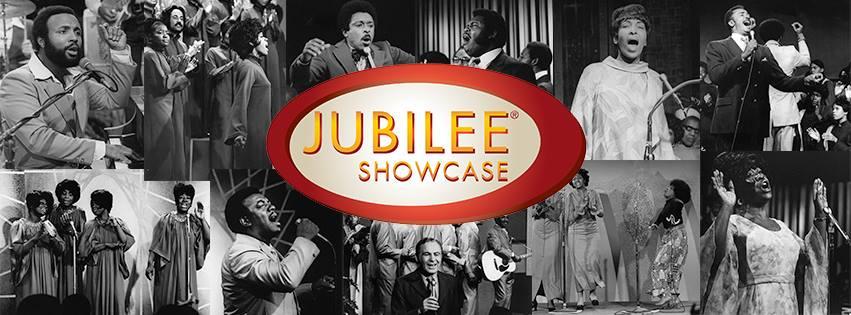
Before Sunday morning worship, he would watch “Jubilee Showcase” on local TV, a program sponsored by a Jewish auto dealer featuring a different gospel choir from Chicago-area Black churches. When the choirs sang, Dad wept. At times I wondered if he might cry watching a commercial for Tide detergent, and where this tendency fits on the scale of masculinity.
Today, as I cry watching an infant baptism or moved by a centuries old hymn, I’m grateful for his example of what being fully human meant.
The human Jesus. One memorable classroom session in seminary helped focus the issue. We were in the course “The Doctrine of Jesus.” Our professor was a dignified and distinguished scholar. While an inspiring lecturer, he also invited questions and discussions. One of the brightest and most eloquent of my classmates raised his hand during a lively conversation. “Let me ask something that might center the conversation. In his humanity, did Jesus ever have an erection?”
As you might imagine, mouths dropped. Out of some, pipes fell onto seminar desks. We fixed our eyes on the professor, fully expecting our classmate to be dismissed, if not physically, then with a sharp rebuke. We waited for the axe to fall, still admiring the questioner’s courage.
Instead, the professor smiled, raised his right hand to his chin, looked to the ceiling for help and said, “Well, I suppose to some, that would be the measure of a man. But that would be a mistake. Certainly not the most important measure.”
I took good notes on the conversation in case it might be on the test.
The most important. Isn’t that what we all wrestle with? How is God with us? In deadly dangerous political climates? Alongside us, as a loved one lies dying of cancer? Near us when denominations fracture? Close by when the Christian faith is co-opted and corrupted by human causes for human ends that ignore all that Jesus taught.

We’ll never know if Jesus laughed, at least from Scripture. It’s hard to imagine someone fully human who couldn’t or didn’t. It’s hard to imagine his fishermen disciples laughing without Jesus joining in.
Perhaps his humanity is best revealed, not because of having survived disease or injury, which we also don’t read about, but from something we do. He agonized in the garden and on the cross, wondering if his Father had abandoned him. From those depths—and with ours—he knows and feels.
In these days when a person can be tossed to the sidewalk, beaten by thugs, and executed for all the world to see, we need a person of sorrow, someone deeply acquainted with grief, who not only understands, but shows us a better way to live together.
Jesus weeps.

10 Responses
The thoughts you have sent scurrying around the brain, of what emotions Jesus might have displayed, with the reminder that we have to see the full measure of the God/man. It made me pause to consider the deep laughter, the exasperation, the anger that must have come at times not recorded, yet the simple statement of tears there for us to see. It attests to those times of doubt, fear, and anger that come with grief, assuring us that Jesus knew our hearts and eyes would cry out for comfort and that his tears always join ours. Thank you.
“Lamb: The Gospel According to Biff, Christ’s Childhood Pal” (2002), by Christopher Moore, provides an alternative view of the humanity of Jesus, in comparison to the “King of Kings” / “Ten Commandments” stiff-walking, always dramatic talking style we associate with biblical characters.
I recall discussing with students if Jesus played baseball, would he always hit a home run, (thus Peter’s invention of the intentional walk), or would he occasionally hit a deep fly ball, and rejoice at John”s diving over-the-shoulder catch to end that afternoon ‘s game?
Is it harder to think of Jesus being fully human—something we all know quite a bit about ourselves — or to think of his being fully divine, which we have barely a clue about?
Thanks for this piece, Dave; you truly had me at shedding tears at baptisms or struggling to sing at certain hymns—that’s in my ballpark too.
Speaking of Jesus playing baseball, there’s a delightful scene in the Chosen in which Jesus returns to his hometown for some festival and plays some 1st century game with old schoolmates, and he’s really bad at it, and has always been bad at it, and gets teased for that. He takes it all in stride. The episode, however, ends on a negative light, as Jesus reads the Scripture in the synagogue, the crowd gets upset and attempts to throw him off a cliff. Powerful stuff.
A poignant piece, Dave. I have found myself unable to control my tears, particularly at the time of confession in the church liturgy. It is awkward, unsettling and perhaps cleansing. I have yet to understand the tears. They are real, spontaneous, and uncontrollable. Perhaps a visceral response to the movement of the Spirit. Thanks for the article.
I remember Scott Hoezee had a post about a year ago re his surprised reaction to the joy Jesus expressed in The Chosen.
Thank you for these thoughts, Dave. I find the “erection question” – or rather, the class response – quite fascinating. The professor, I believe, gave a wise response. As I read it today, the question I think I would ask is, “How is an erection different from any other bodily function?” It’s sad to me that (still) our concept of bodily functions, sexuality, and aspects of human nature (crying) can be interpreted as contrary to the way of Jesus.
I realize “The Chosen” is a created-by-humans production, but in watching the episodes l am struck by how much it helps me understand Christ’s humanity. The scenes of the last supper, especially, show how Jesus agonized over what he knew was about to happen.
My questions about “being like us in all things” have been about how does that apply to a woman? Does Jesus know the messiness of menstruation, the pain of childbirth, the pain of losing a child who has lived inside you for 9 months? I don’t doubt that he weeps with women in pain, but does he know what it means to be feminine as well as he knows what it is to be masculine, erections and all?
Thanks for raising the question, Dave.
As you may have guessed, Mary, the seminary class was all male. We needed your perspective then. Still do. Thanks for the insight.
Of course Jesus could have an erection. His body could respond to the appearance of a beautiful woman without thinking he wants to get her in bed. As for other human elements, I also think it highly likely that Jesus also made math errors when measuring boards. Mistakes are not sins. And he probably could get could discouraged by a lingering headache, a bad case of diarrhea, or an infection from a sliver. He was not in the habit of using miracle power to avoid the aches and pains inherent to having a human body in a fallen world.