
I can’t write objectively about the Boundary Waters, but that’s the point I suppose. RJ editor Jeff Munroe e-mailed me a couple weeks ago with a suggestion from a “faithful reader” that the “’writer you have from Wisconsin,’ write about the administration’s efforts to mine at the Boundary Waters.”
So be it.
The issue motivating our reader is likely House Joint Resolution 140, which passed through both houses of Congress on nearly party line votes and was signed into law on April 27. The entirety of the text reads:
That Congress disapproves the rule submitted by the Bureau of Land Management of the Department of the Interior relating to Public Land Order No. 7917 for Withdrawal of Federal Lands; Cook, Lake, and Saint Louis Counties, MN (88 Fed. Reg. 6308 (January 31, 2023)), and such rule shall have no force or effect.

The effect of the law from Congress.gov is:
This joint resolution nullifies Public Land Order 7917, which withdrew approximately 225,504 acres of National Forest System lands in Cook, Lake, and Saint Louis Counties, Minnesota, from mineral and geothermal leasing for 20 years. In 2023, the Bureau of Land Management issued the order to protect and preserve the Rainy River Watershed, the Boundary Waters Canoe Area Wilderness, the Boundary Waters Canoe Area Wilderness Mining Protection Area, and the 1854 Ceded Territory of the Lake Superior Chippewa from the potential adverse effects of mineral and geothermal exploration and development. The joint resolution removes such protections and allows such land to be leased for the exploration and development of minerals and geothermal energy.
In my circles, “Boundary Waters” normally means the Boundary Waters Canoe Area Wilderness (BWCAW), a federal designation to a large part of the Superior National Forest (USDA, U.S. Forest Service) in northeastern Minnesota. The BWCAW is embedded in a much larger landscape of woods, waters, and wetlands perched on the thin-soiled Canadian Sheild and laced with canoe-travel routes that can take you deep into Manitoba, or out into points north and northeast including Hudson Bay.
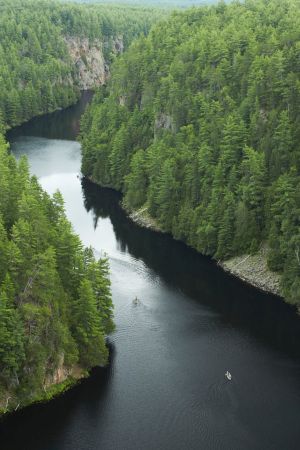
I know bits of the area from yearly walleye fishing trips to the area. I know of the region as the last stronghold of wolves in the lower 48 during the ‘60s and ‘70s and of a related body of research on the ecology of northern deer (professional interests of mine). I know of it from reading and re-reading Sigurd Olson’s essays and re-living in my imagination Olson’s formal prose and romantic retelling of his atavistic sense for the golden age of canoe travel when coureur des bois, mixed-ancestry metis people, and first nations peoples heroically moved staggering amounts of furs from the interior to the coasts to satisfy the fashion senses of European dandies.
But most intimately, I know the BWCAW from a brief time in my life when the four of us could sleep together in a three-person tent, wrapped and curled around each other in our sleeping bags like nesting squirrels while I, ever the light sleeper, listened as night sounds and the breathing of my wife and twins melded in drowsy soft rhythms. The wind in the white pines, the ripples breaking themselves on the rocks. Pine needles dropping on the tent. This was our go-to family vacation spot when our children were young.
I have Boundary Waters wolf stories and moose stories and stories of wild blueberries. Because of my trips there, I can filet a northern in the dark on a canoe paddle with my pocket knife (and get the Y-bones out) in a cloud of mosquitos.
Even casual visitors sense that history has its own gravity and it pulls on you here. Olson and his Voyageur romance, petroglyphs left by the Cree or Ojibwe peoples or their ancestors, indeed even the canoe routes themselves were pioneered by native people centuries ago. Land your canoe on any gray granite promontory and look down. You will see gouges abraded by the last retreating glacier (20,000 years ago) – and you can marvel at the distance of a thousand human generations in evidence at your feet. But then you note that the rock itself is among the oldest on earth at more than two billion years and that glaciers have been advancing and retreating over it for millions of years. You become unmoored in the vastness. And you should embrace it.
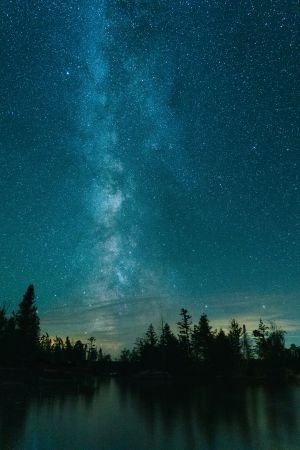
One of my favorite trips was a father-daughter visit, planned for an easy tour of some interior lakes. But when we reached the first portage, my high-school aged daughter picked up the heavy portage pack (with all the gear) and headed off up the trail leaving me the canoe and smaller food pack. This meant we could now single-portage (one trip) rather than needing to double portage (two trips), which was my pattern when they were little.
Suddenly, I realized that we were much faster and we rerouted ourselves into a sweeping loop up to the Canadian border. I like to paddle and I like always changing scenery. And I loved the company of my daughter, but I also realized her emergent strength was a sign of her rapidly approaching adulthood and a leaving behind of other precious things. Shortly thereafter, we left her at her dorm room in Boston and I tried to hold it together until the car was pulling away.
The BWCAW is the most visited wilderness area in the system and most visitors are canoe trippers. The popular routes, ironically, can be busy places during summer. You need to plan and apply for an entry permit, an inconvenience rooted in the great love that people have for the place. For every thousand visitors, there are a thousand experiences. For some it’s simply novelty, or time away, or adventure. But I suspect there are commonalities. The sunsets, the clear water, the boreal dark forests, the fire-scarred and scratchy black spruce barrens. The adventure in seeing a moose or a bear. The call of the loons. The smell of woodsmoke. We say we “find” ourselves or we “lose” ourselves or whatever those silly terms mean when in reality, we change ourselves and we recognize it. We wonder about the source of that recognition.
The Wilderness Act of 1964 defines thusly:
A wilderness, in contrast with those areas where man and his own works dominate the landscape, is hereby recognized as an area where the earth and its community of life are untrammeled by man, where man himself is a visitor who does not remain.
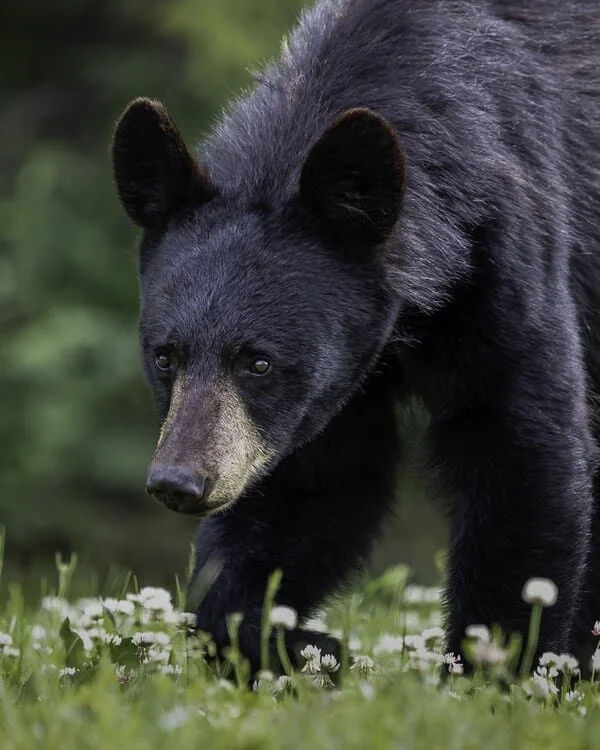
Leaving aside the problematic “untrammeled” element given the ancient presence of indigenous peoples, the value of wilderness is the otherness that we moderns experience. Here, bears are free, and indeed expected to do bear-like things and if they thwart your attempt to keep them out of your food stash, the faux pas is yours for failing to outsmart the bear and you will endure the consequences (and have a story to tell). A good visitor minds their manners.
Sulfide mining (the near-term mining threat that good people worry about) generates water pollution. There’s no way around it. I could research and write about the ecological disfunction that would cause, but this post is already getting too long. As awful as that mining would be, it’s an instrumental argument countered by other instrumental arguments about needing jobs in the region and needing copper for our vital devices. The thing that’s tougher is that its not these jobs we need and not this copper mined this way. There are spiritual values in the balance and we should be bold about those too.
Somewhere I have the photo. My friend Joe snapped it with a film-camera and its squirreled away in an album somewhere. I am standing on a rock with a coffee in one hand, looking into the thick morning mist on a rock on a remote lake. At my side is my young son, maybe six years old. He’s up early too. Dawn. He leans into my hip and my other hand falls naturally to his head and I draw him gently close. He is a drowsy-little-boy, quiet and still. I am contemplating the day, wondering what he’s thinking.
That day, we’d make breakfast, pack up the camp, load the canoes, paddle/portage to the landing, load the gear and canoes, and drive the mini-van as fast as I dared to the airport in Duluth so I could fly to a conference. When the plane landed at O’Hare, I stepped into the bustle, having traversed in a day the physical distance from a remote wilderness lake to one of the busiest airport terminals in the world. I stood there empty. Like time had slowed only for me while the world whirled on in frenetic detachment. Like I’d been drained of a life-affirming boreal peace for the surreal experience of dragging my soul along before it could adjust. I called to verify that they’d made it home – that he’d had a bath and was sleeping in his own bed.
As I approached this essay, I was dismayed at my own apathy – that I am not angry enough. That I had not planned this essay before being asked for it. It’s a numbness, perhaps an internal defense mechanism on the face of daily absurd cruelties, grift, and corruptions. A punch-drunk sense that, all my life, I am watching the slow peeling away of nature’s richness, bit by bit sacrificed for consumption and convenience. There’s another mine developing outside the Porkies, and that damned pipeline in the Straits…
By itself, HJR 140 doesn’t doom the Boundary Waters to a future of sulfide mining pollution (there are lots of legal and regulatory fights in the offing) but it’s a step in that direction and the rumors of war that Boundary Waters’ friends are telling themselves include big-money political malfeasance and a regime that is singularly hostile to environmental regulation (read: Creation Care) and the agencies designed to enforce those regulations for the public good. I think about that little boy, and my students, and the glassy wilderness lake steaming at dawn, and what I want for them. And metaphorically, I pick myself up again.
Each of us will emerge full throated from the dark shelter of our private despair. We will find our cause. We will find our courage. We will find our chorus. Our work is now in the streets, in the state houses, on the river-banks, in the college-quad, in the churches. What we cannot do alone, we will do together.
– Kathleen Dean Moore
Moore, K. D., 2021. Earth’s Wild Music, Celebrating and Defending the Songs of the Natural World. Counterpoint Press, Berkely, CA.

16 Responses
Thank you Tim.
Thank you for this beautiful essay about the magnificent Boundary Waters. The great tragedy is that there seems to be nothing in America so precious that it is spared from voracious greed and the constant pressures of our economic system.
I will share this article widely.
I don’t know if it’s ever possible to be “angry enough” about rapacious policies that you eloquently and angrily express. But I’m getting there. Quetico was for our Thunder Bay years our go-to for far more than paddling, fishing, portaging (pronouned “por-TAGZHE” in Canadian and praying. Thank you, Tim–once again.
Once again, the US government breaks it’s promises – as made in the 1854 treaty with the Ojibwe people.
It’s scary, it’s sad, it’s maddening. It’s exhausting.
Thank you for this exquisitely beautiful, pain-filled cry for the continuing assaults on our earth and its people. May God have mercy on his creation and forgive the wanton commodification of every square inch.
Thank you Tim. This is beautiful, needs to be shared widely, and I hope one day you’ll include it in a collection of essays and post. Peace to you.
Tim,
Thank you very much for your post–an articulate and honest text with such lovely photos (portage trail, canoes on lake, star-lit sky, tree-hugging bear).
My first trip to the BWCA was in 1978, leading a group of high school kids on a canoe trip organized by Camp Manitoqua, a Reformed Church in America camp south of Chicago. I caught the magic spell of this special place and have been back many times: a family trip with my wife and our 3 daughters when they were 8, 5, and 2; father-daughter trips with each of my daughters when they were 13-14 years old; many trips with an old friend from college in which we covered many miles with many portages and have many stories (most of them true) to tell. What you write brought smiles to my face: sleeping crammed in a small tent, the wind blowing in the white pines, waves rippling on the rocks, wolf stories, moose tales, wild blueberries, an evocative place of God’s grace.
Thanks again. Your reflections and photos brought back fond memories and reminded me (and I would guess many other readers) of how important it is that we let our members of Congress know that we should prevent any mineral and geothermal exploration and development in the Boundary Waters. We must preserve this place for future generations of humans and for our non-human neighbors who live there. So preach it, brother.
Thanks Steve. I am sheepish about the photos. I procrastinated and could find my photos so Jeff Munroe found the photos used here from a public domain source. And forgive the pedantic biologist in me but I am a little chagrined by the bear photo. There are no grizzly bears in the BWCAW. Again – my fault for not being timely with my own photos.
Thanks Jeff! Fixed the bear pic.
Eloquent and provocative; thank you Tim.
I have been traveling to the BWCAW/Quetico wilderness canoeing region for 25 years…. sufficient time to log well over 1000 paddle miles and a half year sleeping outside. That region has shaped me like few others. In the Celtic tradition, it is the very thinnest of places.
Tim,
I was wondering about the first bear pic.
It looked like a grizzly bear not a black bear,
but as you say, there are no grizzlies in the BWCA.
Glad you to see that you changed it.
Keep being the curious and insightful biologist that you have been for many years.
Beautiful essay, Tim. The BWCA is one of our most precious places. Thank you for so wonderfully articulating its ecological, historical, and spiritual value.
Beautifully written; it brought to mind my own wilderness camping experiences and hearing that lonely cry of the loon as it echos across the silent water.
Thanks Tim for responding so quickly to Jeff’s request to write an article on the Boundary Waters. This is an important issue to get in front of the public, not only to those of us who have been to this special place. I loved reading it, as well as the memories, smells, sounds and sights your writing evoked. I have been to the Boundary Waters 17 times over the last 25 years.
My first move from numbness to action occurred when I read the Executive Order that our current President signed, along with our current Secretary of Defense (I refuse to name it the Department of War), to call forth action to overturn the 20-year mining ban that was in place. A formal resolution was then drafted, (HJR 140) which you so accurately referenced) and introduced in the U.S. House of Representatives. I followed the process through the House as it moved from sub-committees to the floor of the House for a vote. The vote was along partisan lines, and my even my representative from Holland, Michigan (District 4) voted in favor of the resolution, Rep. Bill Huizenga, who has not returned any of my phone calls or a note. From there HJR 140 moved to the U.S. Senate. Just last month this resolution passed by 2 votes to overturn this 20 year mining ban. Numbness to Action to Anger! I called eight Senators’ offices, some of those Senators whom had been identified as “most likely to change their positions”, by Friends of the Boundary Waters Facebook group. My phone calls resulted in seven recorded messages and one live (real person) Senatorial aide. This in-person interaction gave these three reasons for the Senator’s vote in support of the resolution: 1. We need the minerals, 2. We can guarantee there will be no pollution because we have new technologies to prevent water contamination, and 3. It’s better to have mining in the U.S. than other countries because we have stricter environmental laws. (“Thanks for the feedback on why your Senator voted the way he did.”)
I still am numb, angry, and moving into action in ways I still haven’t figured out yet. So much to process. Please become informed. Please talk to other friends who have experienced the Boundary Waters. Please watch closely what happens now in the State of Minnesota. Our voices and values matter.
Our family has enjoyed numerous trips to the Boundary Waters and the Quetico. I’m angry but exhaustion prevents me from being, along with you, angry enough.
My son was in high school when I gave him a nifty Christmas ornament–a canoe made of birch bark–with a homemade “gift certificate” for a trip to the Boundary Waters. Neither of us had ever been on such an adventure. We had often “car camped” in state parks with a small Eureka tent and decent quality sleeping bags, and we had survived a sub-zero weekend camping with his scout troop, but our canoeing experience was limited to the Des Moines Rives–mostly floating downstream and no portages. But, this was wilderness–as in wild! We spent all of six months devoted to planning and preparation and extensive reading but that didn’t prepare us for the challenge of the wind on a bigger lake, a mistake in map-reading which led to a long portage “leading us nowhere,” and rain during five out of our seven days.
No cell phones. Somewhat light out even after 10:00. Sipping a bit of whiskey around the campfire with Wisconsin fishermen who had packed way heavier than we had. Laying on a rock watching stars and passing satellites. Hearing the crazy call of the loon as hints of dawn started to appear shortly after 3:00. Canoeing past a moose on the last day. Wondering what might have happened had I broken an ankle when I slipped on a shaky log during a portage. Yes, in retrospect, it was wild. And it was perfect.
Thanks for your essay, Tim. And thanks for bringing back memories of my first BWCA Wilderness adventure.