
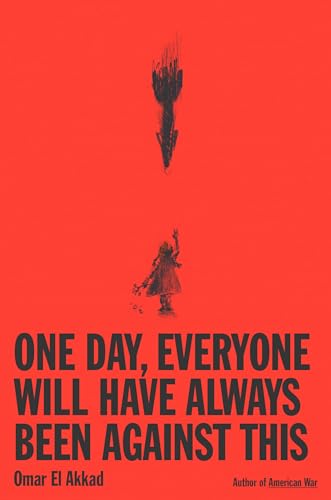
Over the course of Israel’s war in Gaza, I have been trying to find that writer who can articulate how I’ve been feeling: the frustration, the despair, the hopelessness, the feeling like I am going crazy having our politicians and the media deny what we are all plainly seeing.
Enter Omar El Akkad’s One Day, Everyone Will Have Always Been Against This.

I would sum up his message and argument as follows: The genocide in Gaza, perpetrated by Israel and funded/supported by the United States and many of its Western allies, is real. Not only is that genocide really happening, but it also matters and means something that our politicians and our media are asking us to pretend otherwise.
El Akkad is perfectly positioned to convey this message. Part memoir, part critique of Israel’s ongoing war in Gaza, he writes poignantly about his experience as an Egyptian man living and working in Canada and the United States and indicts Israel and the West for the atrocities perpetrated in Gaza. He launches the book with a powerful chapter called Departure, arguing that in many ways what’s happened in Gaza since 2024 represents a huge break in our trust and respect for the West, its leaders, institutions, and professed values.
In the more memoir-focused portions of the book, he reflects on growing up in Egypt and moving to Canada and then the United States, what it is like to live and work in the West as a Middle Eastern man, what it’s like to parent as a Middle Eastern person now living in the United States. He offers observations about living in Canada and the United States during 9/11 and its aftermath, during the wars in Afghanistan and Iraq, and of course on what it’s like living here while bearing witness to the war in Gaza.
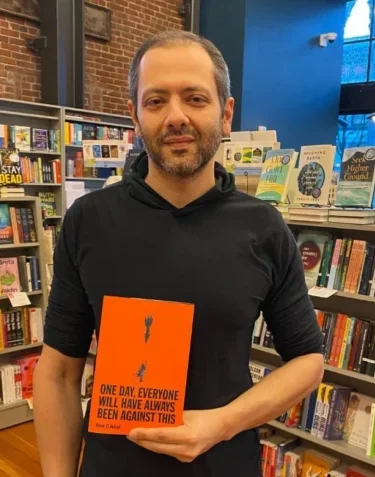
El Akkad doesn’t shy away from naming those groups and people he sees as complicit in the violence in Gaza. In separate chapters, he calls out his fellow journalists, fellow writers and artists, Republicans, Democrats, liberals in the United States and across the globe, and more. He also criticizes the way our media and politicians tend to speak about what’s happening in Gaza, always in the passive voice, and as with many acts of colonialism and state violence, like we can’t bring ourselves to speak plainly about who is perpetrating these acts of violence.
He also delves into some hard-hitting questions. What do our professed values matter if we allow genocide to happen? Does any of our lofty rhetoric about freedom, democracy, and the value of life mean anything if the West allows genocide to happen? These questions matter, and we must answer them. El Akkad sums it up with a question of his own, “The moral component of history, the most necessary component, is simply a single question, asked over and over again: When it mattered, who sided with justice and who sided with power?”
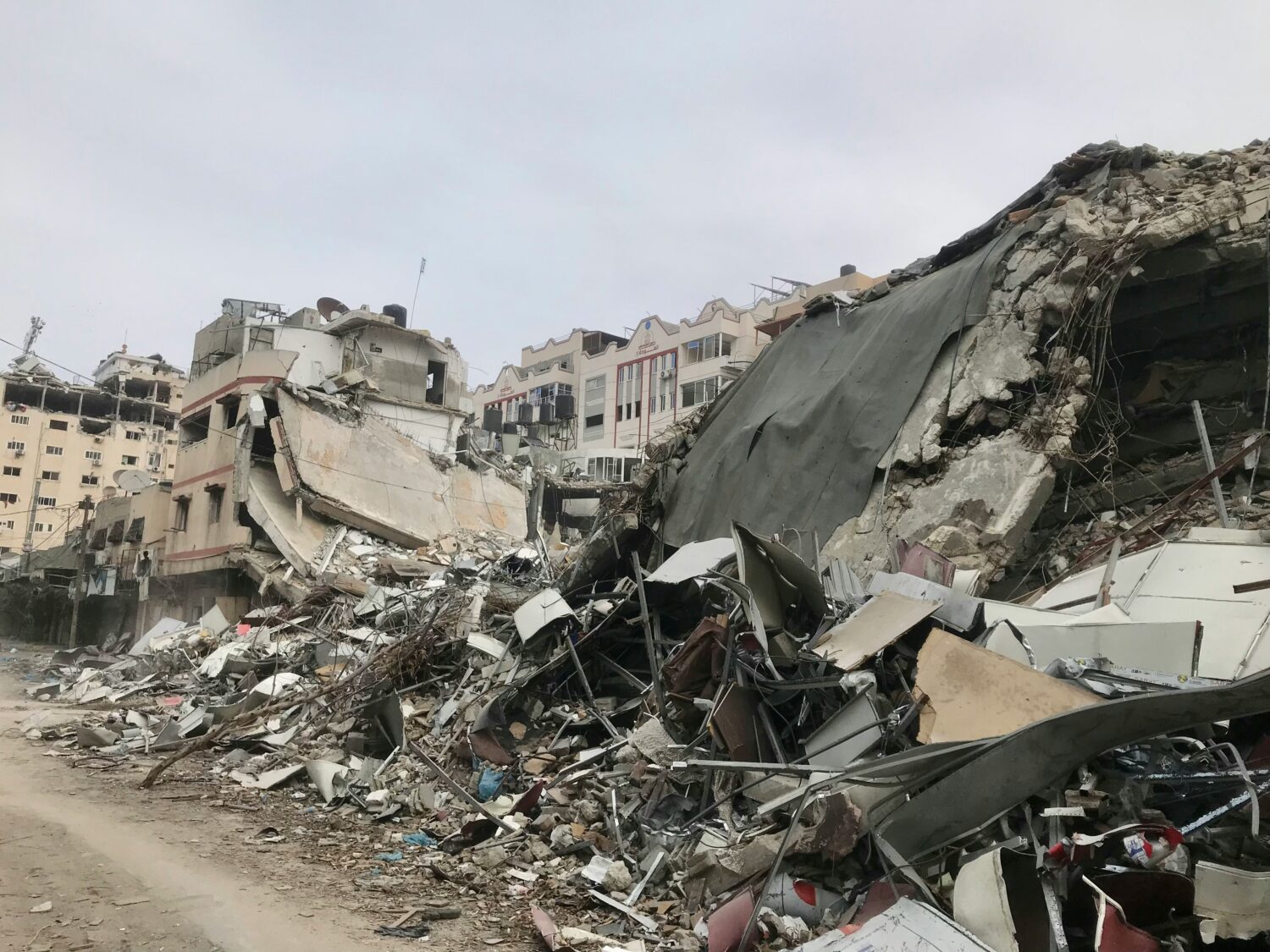
El Akkad articulates what I think many people have been feeling: I know what I am seeing with my own eyes when I watch footage from Gaza and yet I’m being told something completely different by our leaders and media. Am I crazy? Is my emotional response to the violence in Gaza overblown?
As the title suggests, his answer to these questions is a resounding no. What’s happening right now in Gaza is wrong; no qualifiers needed. One day, everyone will pretend they have always opposed the violence in Gaza, even if now they are, at best, silent about what’s happening, and at worst, offering full support to Israel.
Gaza road sign photo by Photo by Emad El Byed on Unsplash
Gaza destruction photo by Emad El Byed on Unsplash

6 Responses
Good for you Allison, in discovering El Akkad’s book!
Thankfully, more Americans are becoming aware of the state of Israel’s efforts to erase Palestinians from their land.
What is happening in Gaza and the West Bank is a microcosm of that effort throughout Israel/Palestine.
Thank you for drawing attention to it.
More and more Jews, there and here in the US are increasing their opposition to the Netanyahu administration, seeking a change in mindset and actions toward the indigenous population.
We at Kairos West Michigan have long been seeking to draw attention to the horrifying injustice the Arabs there are experiencing. We are advocating for full citizenship and human rights for all ethnicities in a One, Democratic, (Pluralistic) State.
Thank you Allison and Karios, a post like this should not require courage but unfortunately it does. Dispensationalism is a powerful force in America, and sadly very prevalent in our Reformed churches, we cannot pretend it is not. Netanyahu continues to commit crimes against Palestinians and the leaders in the USA refuse to say anything against it, they often support it.
Thank you for sharing what you saw as the essence of Omar El Akkad’s book entitled: “One Day, Everyone Will Have Always Been Against This.” I agree with the position you have stated as being the essence of the book. I am presently reading a book by Omer Bartov entitled: “Israel: What Went Wrong?” He too believes that what Israel is now doing is in violation of the 1948 UN Genocide Convention.
As a person of Jewish ancestry who lost many distant relatives in the Holocaust, I can no longer support Israel’s actions against Gaza and its people. Bartov raises an important question in the introduction to his book which is worth repeating: “How is it that the appeal to humanitarianism, tolerance, the rule of law, and protection of minorities that characterized the beginning of Jewish self-emancipation gradually acquired all the traits of relentless, remorseless, and increasingly racist ethno-nationalisms from which Zionism sought to liberate European Jewry?”
“When it mattered, who sided with justice and who sided with power?”
Power is – and always has been – very popular, justice not so much.
Unfortunately many excuse themselves and say “what can I do here in ________ to side with justice?”
This post reminds us we can’t make excuses. Thank you
Thanks, Allison. I remind my Christian friends who have a “we must always support Israeli policy in the end-times” theology that such an attitude goes directly against the Israelite prophets, who loved their people, but often decried the violence and oppression of their government.
“What do our professed values matter if we allow genocide to happen? Does any of our lofty rhetoric about freedom, democracy, and the value of life mean anything?” I’m reminded of the movie “Hotel Rwanda” with the touching scene of the US Marines being flown to safety allowing a genocide to take place. The movie forces the question: should we have stayed, or in the author’s words, “What do our professed values matter if we allow genocide to happen?” The problem is that no country can right every wrong. The issue with Gaza is that we are not passive, letting it take place, but actively supporting it to the point where we have even started a war with a third county in support of Israel, the country conducting the genocide. This is pretty close to our own (US) history of genocide in the case of Native Americans. Allowing genocide to happen is one thing. Actively engaging in it is something entirely different.