
I was once with a man and his family as he consciously let go of his life. Days before, he’d had an accident at his construction site. Now he was now paralyzed completely, lungs too, and had been told he would be dependent on a ventilator for the rest of his life. Kept alive on machines. He chose death.
Somebody paged me; I was chaplain-on-call. I found his wife, his young adult children, and several medical staff around his bed. His wife had asked for prayers. I came close to the head of the bed; we were eye to eye as I put my hand on his forehead, spoke Psalm 23, and prayed. Five minutes.

I moved away, the family moved close. Then they sang hymns as the respiratory therapist slowly, slowly dialed down the air flow to his lungs. There were tears in his eyes and his family wept as they sang. We all cried, quietly, the respiratory therapist, too, until the man’s eyes closed, and then he was gone. They fell on their beloved one with loud anguished goodbyes. I cannot but think of this as a beautiful death.
A few years earlier Christopher Reeve — remember Superman? — had suffered the horseback-riding accident that paralyzed him in the same way as the man whose death I witnessed. Reeve chose to live. I might have said he chose poorly, but I know better.
Already an activist for environmental and human rights, Reeve (with his wife, Dana) chose to advocate and provide resources for research related to spinal cord and other neurological injuries. They established the Christopher and Dana Reeve Foundation. They used his fame and wealth to give life and hope to others. Reeve died in 2004 and Dana died, just 17 months later, of cancer. You could say Reeve offered himself as a living sacrifice. (A 2024 documentary celebrates their lives.)
Extreme examples, I know. Like all technological advances, the medical miracles on offer are nearly impossible to resist. When you’re short of breath and your son calls 911 and the EMT’s rush toward you with the breath of life in their hands, who can say no? New hips, knees, hearts! Yes, please. And new moral dilemmas. Who has access to the latest miracles? What cost longevity?
Mary Oliver writes with dark, almost slapstick humor about death. Here are the first ten lines of “When Death Comes” (in Devotions):
When death comes
like the hungry bear in autumn
when death comes and takes all the bright coins from his purseto buy me, and snaps the purse shut;
when death comes
like the measle pox;when death comes
like an iceberg between the shoulder blades,I want to step through the door full of curiosity, wondering:
What is it going to look like, that cottage of darkness?
In her late 70s, Oliver underwent chemotherapy for lung cancer and, some years later, treatment for lymphoma — the disease that killed her. She was not so eager after all to step into that cottage of darkness. Yet who can resist her exuberance, as in these later lines:
When it’s over, I want to say: all my life
I was a bride married to amazement.
I was the bridegroom, taking the world into my arms.
The Nicene Creed names the Holy Spirit Lord of Life. When my father was sick, some twenty years ago, with multiple myeloma, his oncologist wanted to sign him up for a clinical trial with an experimental drug. At this point, he was already in renal failure, and knew he would be in dialysis for the rest of his life. At best, his oncologist said, the regimen would give him a few extra months. Furthermore, the treatment would cost, she estimated, $50K. A few weeks later he decided to stop dialysis, and he died a week after that, at home.
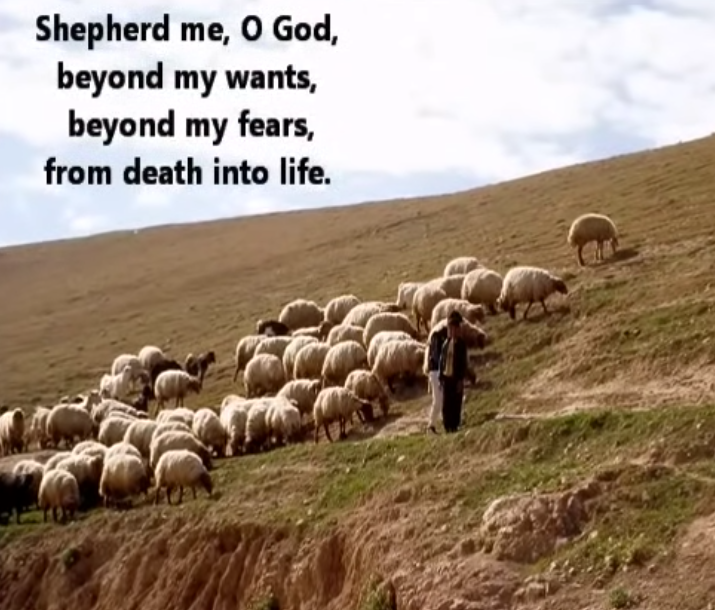
We sang. My sister taught him Marty Haugen’s chant in those last weeks: Shepherd me O God, beyond my wants, beyond my fears, from death into life. He would startle awake in his easy chair, sometimes confused and often in pain, and call out, “Sing that song with me again.” And we did. We sang him all the way home.
There is so much courage in us, and fear, and love. Think of the courage of soldiers, of those who live with chronic pain, of those who live year after year with unrelenting suicidal longings, of those who are caregivers and those who receive that care, learning dependence.
I am grateful for death stories and preparing for death stories. I am grateful for the writers on this blog who have contributed to those stories ( Heidi S. De Jonge, Nancy Knol) Thank you, Nancy for telling us your son Adam’s last words: I see everything! I see everything! I’ll remember that.
When I worked as a palliative care chaplain I would sometimes have the opportunity to help a patient say goodbye to families and friends. I used a template I first learned from Ira Byock, a palliative care physician, in Dying Well. In general, he said, there are five things people need to say to loved ones before they die:
- I love you.
- I thank you.
- I forgive you.
- Please forgive me.
- Goodbye.
I have to tell you that these conversations were not all doom and gloom. There were tears, yes, but plenty of laughter, too. Bad jokes. Pauses. Touch. Treading the verge of Jordan with our eyes wide open.
medical technology photo by Joshua Chehov on Unsplash
14 Responses
Thank you for this, Melody. Having lost a dear sister-in-law to cancer just a few days ago, I am grateful for hospice and the beautiful services they provide.
This is so lovely, Melody. Thank you. I’ve always loved Shepherd Me O God. What a perfect way to enter that cottage of darkness.
So beautiful, Melody. It honors your son and all those who pass on to the next life! Thank you.
So moving. And so true. Thank you. “Shepherd me, O God, beyond my wants, beyond my fears, from death into life” so beautifully captures it. And thank you for the link to Nancy Knol’s article. A double dose of beauty and truth this morning. Sometimes I’m in a mood. I throw on headphones and listen to some great choir sing “Abide With Me” and “Guide Me, O My Great Redeemer” and “Worthy Is the Lamb.” My tears flow. Indeed, there is beauty in the mystery of life and death. Thanks for tapping into the mystery.
If memory serves, a beautiful/powerful poem was written about N Knol’s son. Fairly sure it had “Adam” in the title and was written by C Bajema.
Thanks, Melody. I particularly appreciated the Mary Oliver poem. In the days ahead, I’ll be reminding myself often of these words:
“I want to step through the door full of curiosity, wondering:
What is it going to look like, that cottage of darkness?”
The thought of approaching death “full of curiosity,” perhaps even as an adventure, intrigues and comforts me.
Thanks all for your kind words. If someone could send me the poem or link to poem about Adam I would appreciate it.
Melody: My copy of the poem disappeared in one of our moves. I suggest you contact Nancy K. Appreciated your article.
I had tears in my eyes reading the poem you included. I lost my husband after taking care of him for nine years. His injury happened in a car accident. We were going to Sioux Falls from Sioux Center to see Eva when she was a baby and had just arrived home to my son and his wife. Eva has just graduated from high school and is seeking to be a lawyer. Eva is a special girl, originally from Ethiopia, and God’s grace is on her. My husband, Charlie, and I were terminated in our teaching at Dordt University. Charlie started the Engineering program and loved all things related to literature, music and God’s physical Creation. He is a great loss to me and I feel it very much. Thank you and thank you to Heidi De Jonge for her kind words.
As you can imagine, I loved all of this. I just had a long conversation about death with some of the university students I support. We recognized how metaphors help us name the hopes and fears we have about our deaths and the deaths of those we love… We talked about how we hope it will be one way (like a cottage!) but think we might have very different postures toward it when the time actually comes. Will it be (for me) a Bright Abyss (C. Wiman), a Luminous Dark (J. Smith), a Severe Mercy (S. Van Auken)? Or just a dark and severe abyss.
I love sharing vocation-space with you, Melody. Thank you for your words today.
At the gates to the promised land, Moses admonished Israel to “Choose Life.” We have barely begun to understand the nuances, much less the lack of limits, of those two words. Thanks Melody for your contribution to pastoral caring.
Beautiful, Melody, and very much needed. I didn’t know about that template, those five things. That is really helpful. Thanks for sharing your gifts with RJ and its readers.
Beautiful article, Melody. Thank you for sharing it.
Thank you for sharing. Death and dying – topic many wish to avoid. My father shared his experiences over the years and what stuck with me is similar to what you have highlighted. Telling the dying that they are loved. And, most importantly, to ask their forgiveness. I had this opportunity in the final earthly days of my father in law. In a quiet moment I asked his forgiveness for the times when I was less than gracious in the months he lived in our home. Those moments that had been weighing heavily on me were suddenly released with his genuine and heartfelt forgiveness. I live celebrating our relationship instead of dwelling on feelings of shame for the times when I was snippy and short with him. Relationship matters. Being real and humbling ourselves matter but never more so than when the opportunity to say that final goodbye is presented as a gift to us. Don’t wait – share those words today.