
I’ve long been intrigued by coincidences between personal and public history. Take my birthday—please! 9/11, a date on which nothing good has ever happened in American history.
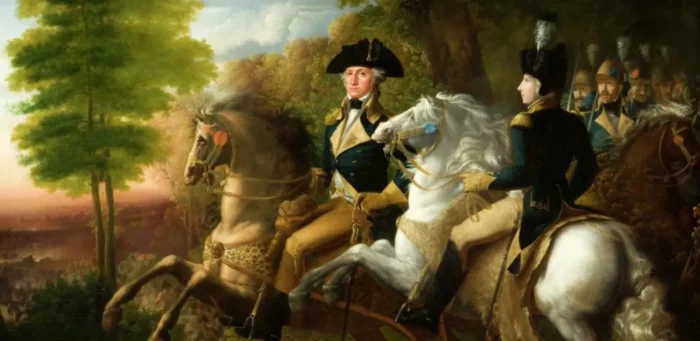
- On 9/11/1777, at the Battle of Brandywine, George Washington once again jeopardized the War for Independence by failing, for the second time, to scout out possible British fords.
- 9/11/1973, my first birthday as a married man? The duly elected Chilean government is overthrown in a coup aided by the CIA.
- As for the 9/11, an old friend texted me at day’s end with the cold comfort that my birth was no longer the greatest calamity the country had ever suffered on that date.
Maybe it was fated. I was born in 1949 under a rising Red star, midway between the Soviet Union’s first test of a nuclear weapon (August 29) and Mao Zedong’s declaration of the People’s Republic of China (October 1).
1937: Dad Goes to College
More seriously, I’ve been musing about such conjunctions regarding my father and thought that, tomorrow being D-Day, it might be appropriate to do so out loud. For he marched off the Calvin College graduation stage in June 1941 into the waiting arms of Uncle Sam’s army, and was not released therefrom until late 1945. His send-off wasn’t auspicious either: Calvin’s 1941 commencement speaker was William H. Houghton, president of Moody Bible Institute. Perhaps the Fundamentalist choice was predictable; the college had just undergone one of its periodic bouts of intense suspicion and Board investigation of faculty orthodoxy.
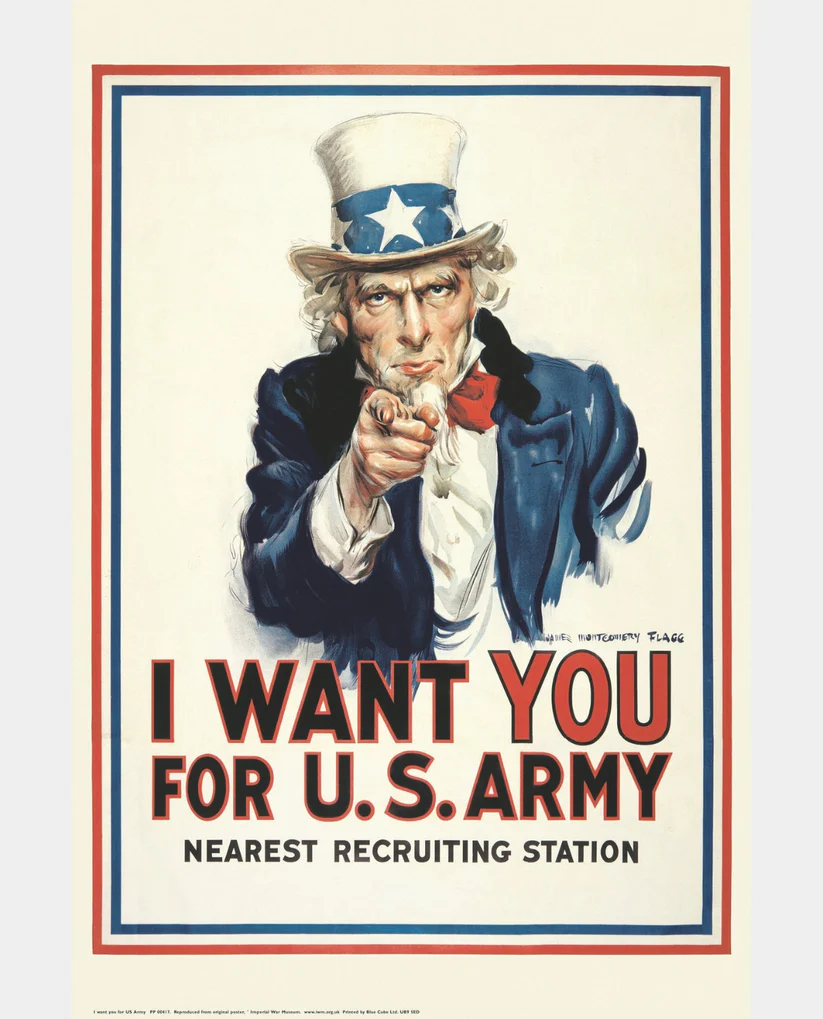
So, what would an earnest 18-year-old see in the summer of 1937 as he approached his first year of college? Japan’s full-scale invasion of China, beginning World War II in Asia. The authoritarian Nationalists on the ascent in Spain. In response, a month into fall semester, President Roosevelt gave a speech in Chicago calling for civilized nations to “quarantine” the rising fascist tide. It bombed.
Likewise, Roosevelt’s attempted expansion of the Supreme Court was swirling down the drain that fall, while his ill-advised move to balance the federal budget threw the economy back into recession. My grandfather had already lost his life savings in a bank failure earlier in the decade, so he was immune from Wall Street’s mini-crash in August 1937. That came amidst what Secretary of Labor Frances Perkins called the “most savage twelve months in 20th-century labor history,” with rolling sit-down strikes and a police riot at the Republic Steel works in South Chicago on Memorial Day that left ten people killed and ninety injured.
1938
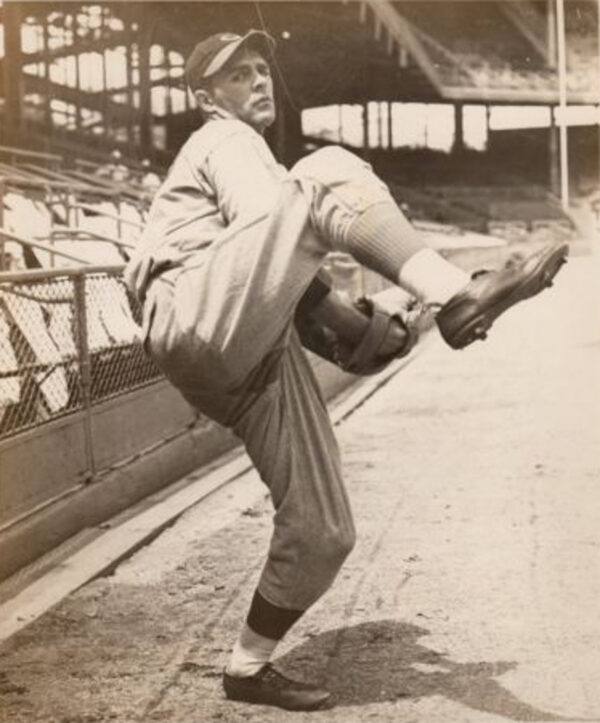
Spring term freshman year brought the ominous portent of Nazi Germany’s annexation of Austria (March 12), but America struck back that summer with Joe Louis’s demolition of the German (albeit anti-Nazi) Max Schmeling, while Dutch-America rejoiced when Johnny Vander Meer, the pride of Midland Park, New Jersey, threw consecutive no-hitters on June 11 and 15. An unprecedented and unrepeatable feat.
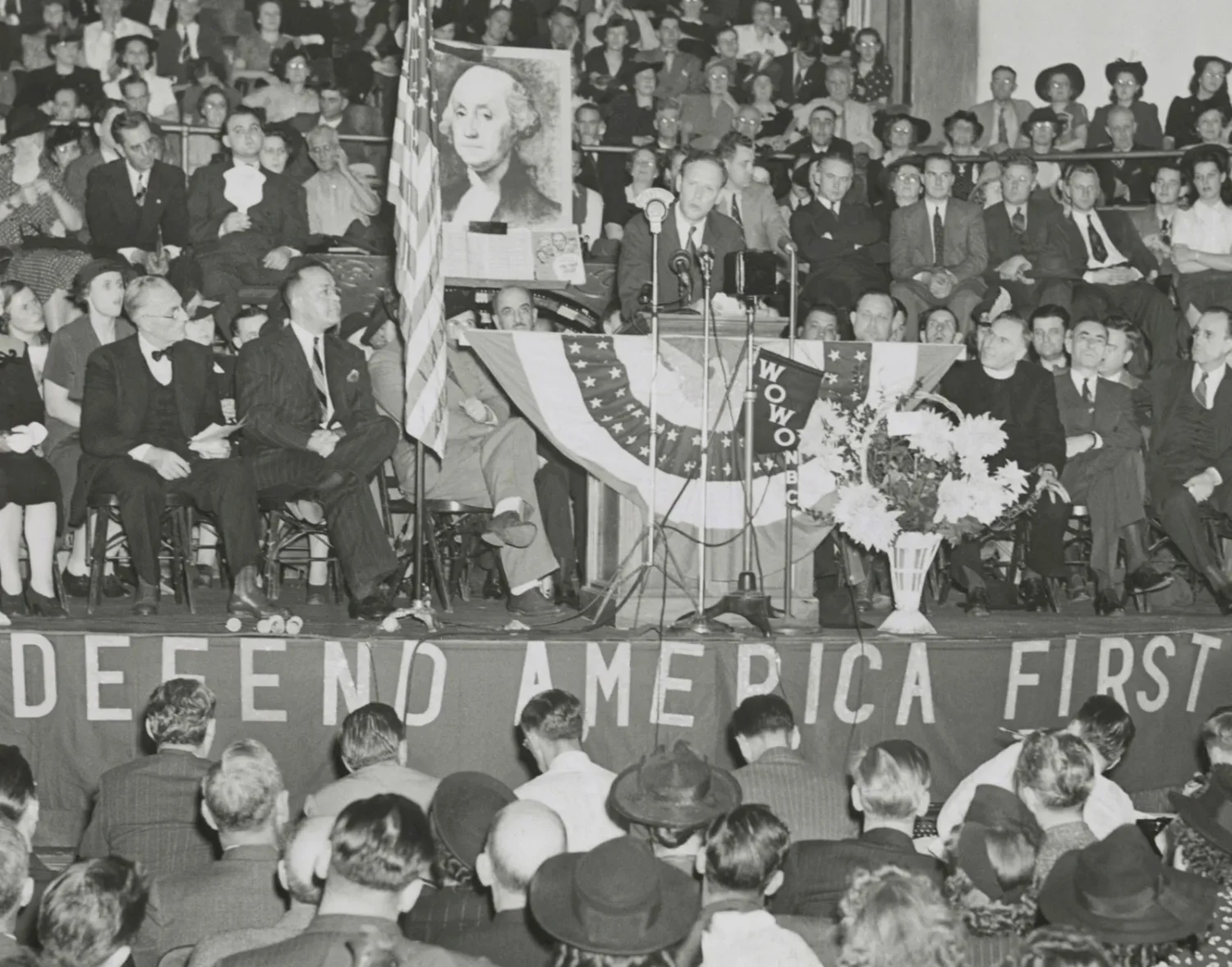
The start of Dad’s sophomore year was grim. On September 12 Hitler delivered an incendiary speech at one of his trademark Nuremburg rallies to set off a diplomatic dance that culminated in the fateful Munich conference later that month. British Prime Minister Neville Chamberlain returned home hoping for “peace for our time.” The rejoicing of tens of millions in Britain, France, and the USA indicates how deeply the massacres of World War I had registered in the popular mind and how resolutely they opposed the rearmament for which Chamberlain was trying to buy time. And why Charles Lindbergh, who started a European tour just as Munich adjourned, would win so many followers over the next two years in his “America First” campaign.
The depth of the popular mood was laid bare on October 30, a Sunday evening (was sabbatarian Dad listening?), when Orson Welles’s radio drama, “War of the Worlds,” set off a frenzy of fear over Martians landing in New Jersey. The very choice of site should have exposed the hoax—intelligent beings with a world at their disposal picked New Jersey?!? But a devastation that was no joke went into motion that same day when Germany starting deporting Polish Jews, leading to the horror of Kristallnacht two weeks later.
1939
Spring term saw Hitler on the move again, annexing the parts of Czechoslovakia that he had not gobbled up after Munich, and seizing Memel, Lithuania as well. Simultaneously, Francisco Franco took Madrid, inaugurating Spain’s 35-year run with fascism-light. On Good Friday Italy invaded Albania. No doubt Dad was preoccupied with religious themes that day, but still….
Summer break featured some happier news out of New York City with the World’s Fair and the visit of the British royals, but it ended on the stunning news of the Nazi-Soviet Pact (August 21). Imagine, gentle reader, beginning your junior year of college as Dad and his cohort did with the German invasion of Poland setting off full-scale war in Europe (September 1). On every college campus, America’s proper role in the conflict—joining in, lending material aid to the Allies, or staying out—was the topic of the day.
Unfortunately, Christian Reformed strictures against moviegoing meant that Calvin’s good doobies (Dad among them) missed out on the greatest year in Hollywood history: The Wizard of Oz, Stagecoach, Mr. Smith Goes to Washington, Dark Victory, Goodbye Mr. Chips, Of Mice and Men, Ninotchka, Wuthering Heights, and the Oscar-winning Gone with the Wind.
1940
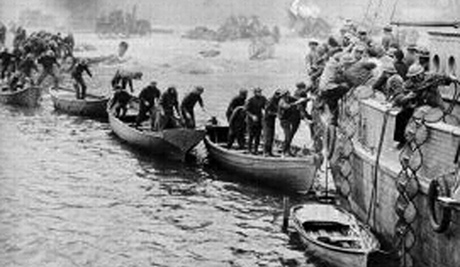
The war really came home toward the end of spring term in Dad’s junior year. In short order the Nazi war machine invaded (May 10) and subdued the Netherlands (May 15), Belgium (May 28), and France (June 17)—this after having taken Denmark and Norway in April. The most remembered bits in the drama are the rescue of the British army from the beaches of Dunkirk (May 26-June 4) and the “Battle of Britain” launched immediately thereafter and continuing for the rest of the year. But for Dad and other Dutch-Americans, the stunning Nazi capture of the old country bit deepest. How do you take final exams under such sadness?
For Dad the should-be grand senior year started with Congress passing the Selective Service Act (September 16), and on the eve of Halloween (errr, Reformation Day), the aged, diminutive Secretary of War Henry Stimson conducted the draft lottery with the same accoutrements used during World War I. The Republicans had fair hopes for that fall’s presidential campaign in the dynamo of Wendell Wilkie, but alas for Dad and most other Calvin students, FDR won an unprecedented third term. The year ended with another presidential fireside chat, this one calling for America to become the “arsenal for democracy.”
1941
That spelled good news for the American economy, as every graph took a sharp leap upward. It also spelled salvation for Britain, which was beleaguered from the air and at sea, and by an empty treasury. The controversial Lend-Lease Act was passed in March; Britain didn’t have to pay but could simply return the armaments at war’s end, Roosevelt purred, which is, the opposition fumed, like getting back used chewing gum.
But the goods were no good if sunk by German U-boats in transit, so the U.S. Navy, sometimes in disguise, began escorting them in convoys as far as Iceland, where the British navy took over. These were “neutrality patrols,” the administration explained; “active neutrality,” that is. In fact, by the time Dad graduated in June, the United States was functionally at war with Germany. It was Hitler who showed restraint, forbidding armed retaliation because of the invasion of the USSR he had planned for later in the month.
What’s it like to pass your “bright college years” under relentlessly thickening shadows? With your hopes of the future in the hands of powers high up and far away? Surely, week in and week out, Dad and his buddies (and, midway through his course, the girlfriend who would become my mother) heard the sovereign rule of God proclaimed and proclaimed again at chapel and church. That’s your comfort, it would be repeated—your assurance, your steadfast rock. Assurance for eternity, to be sure, but no guarantee for life this side of paradise, and what were—are—college years gearing up for?
Legacy
Though he saw no combat, Dad was as reluctant to talk about the war as were those who did. He was likewise reluctant to talk when my turn for war came, in the form of Vietnam. I was determined not to go and was spared a chilling legal battle when my draft lottery number—156—turned out to lie beyond the #125 limit reached the year I graduated.
Dad and the other veterans I had as teachers never glorified war, never saw it as anything but a grim last resort, a necessary evil bespeaking failed diplomacy. But to have a son who disobeyed the rules? Tough for a good Christian Reformed boy who came of age in the darkening world of the late 1930s.
Our church bells rang on D-Day, Dad. Maybe we can talk about it when we meet again.
Sources
Richard M. Ketchum, The Borrowed Years: America on the Way to War, 1938-1941. Random House, 1989.
Susan Dunn, 1940: FDR, Willkie, Lindbergh, Hitler—the Election Amid the Storm. Yale, 2013.
Lynne Olson, Those Angry Days: Roosevelt, Lindbergh, and America’s Fight Over World War II, 1939-1941. Random House, 2013.

14 Responses
Thank you for this wonderful and thoughtful recollection.
Loved this. Of course I know that you have to cover your secret Jersey-envy.
Ha, you caught me out!
I take it that 1939 was the visit of the Royals that included hot dogs at Hyde Park?
So, how did the Republican Dutch of Michigan (not to mention Paterson and Midland Park) manage their ethnic attachments to a threatened and then conquered Netherlands with their Republican isolationism? I can imagine that, like for my grandfather, a slumbering dislike for the British from the Boer War plus ambiguous feelings about assisting the UK in WW1 may have further complicated things.
Among the W Mich Dutch Repubs, there was real ambivalence, exactly for the reasons you list. An isolationism very gradually shifting, step by step, toward resigned participation. Arthur Vandenberg to a T. (He comes off as truly honorable opposition in the Ketchum book, contrary to the contemptible Lindbergh.) Among the W Mich Dem minority May 1940 was a call to arms, with enthusiastic support for FDR. Yes, Franklin and Eleanor did serve Their Britannic Majesties hot dogs at Hyde Park–George had 2!
I opened my computer to put some final touches on a messages that must be delivered this Sunday, I noticed an article by James Bratt, I had to read it. I am glad I did. My father was just behind your father in leaving Calvin and going to Germany, I was just behind you in having a draft number and incurring my father’s ire with my negative attitude toward my government. I always heard we need to read history so that we do not repeat its mistakes. This article shows we have many current leaders, church and state, that either do not know history or have chosen to repeat its mistakes. A graduation speaker from Moody?? I know I am jumping to guilt by association, dangerous, but that hit a current nerve, given recent action by some local boards.
Thanks, Daniel. Ours was a generation painfully caught between the heroic models of WWII and the realities of wars for imperial maintenance, like Vietnam. Didn’t it take a lot of mental and emotional energy to work through all that? As for learning the lessons of history — historians observe that the only lesson we learn from history is that people don’t learn the lessons of history. And, yes, that brings up worrisome echoes, if not exact repetitions, in the present.
“Dad and the other veterans I had as teachers never glorified war, never saw it as anything but a grim last resort, a necessary evil bespeaking failed diplomacy.” As a US Navy veteran who has sailed through the Straits of Hormuz and deployed to Iraq, these words find an echo in my own soul– and would have received a nod of approval from St. Augustine who among others developed the Just War Theory. Sadly, our current war in Iran is a war of choice, not the result of failed diplomacy.
Oh, yes. Graduated from Wheaton College in 1972, having been commissioned as a fresh Second Lieutenant the same weekend. Vietnam was still going hot and heavy. This after coming of age in June 1968 and driving downtown to register for the draft. Yeah.
I enjoyed the Johnny VanderMeer footnote. As one who began my life in the Midland Park CRC parsonage, VanderMeer was the first autograph I ever procured – at the annual Founders Day parade sometime before I was 5 years old. My Grandpa and his 3 brothers all served in WW2, and were featured in a local North Jersey newspaper article at the time. Gramps was a character who was rarely lacking for words, but The War was a topic that he didn’t seem interested in talking about…..
Those of us who lived in great fear of the future in Nazi-occupied NL were heartened when the U.S. joined the WWII battle against Hitler. Even then there were anxious times when a successful outcome was in question. But that was a war that had to be fought to end Hitler’s maniacal dream of total domination.
We go through our daily lives vaguely aware of the past, but to have them all summed up in a college lifetime hits closer to home. It is a helpful, even though a grim reminder, that as bad as the present may seem, we in some similar way, have been here before. We, as a counrtry, have weathered these kinds of crises before and will come out of our current turmoil somewhat changed but maybe more cautious and wiser for it.
Thank you for such a “homey” and lighthearted look back.
Are you sure your father didn’t see those movies in 1939? My dad was at Calvin a couple of years earlier and he reported that, although a Calvin professor was assigned to patrol the sidewalk in front of the Wealthy theater, a phone call to the theater would get someone to open the back door in the alley.
That patrolling indeed happened—one of those Board assignments that faculty hated. But Dad being Dad colored inside the lines. As for your wild and crazy father……