
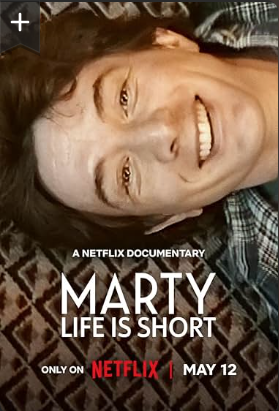
Coming of age in the 1980s, I was a massive Steve Martin fan. Although I knew of Martin Short from his one-year stint on Saturday Night Live, I failed to properly appreciate the diminutive Canadian until he entered Steve Martin’s orbit when they appeared together in 1986’s The Three Amigos. A box-office disappointment that turned into a beloved cult classic, The Three Amigos became a touchstone text from adolescence onward. Indeed, decades later, I gleefully screened the western parody for my children. The Three Amigos also inspired me to seek out and study more of Short’s work, from bootlegged copies of SCTV to his lightning-fast appearances on TV talk shows, to his edgy lampooning of celebrity culture through his Jiminy Glick character, to his recent flamboyant turn as Oliver on Only Murders in the Building. Together, these performances cemented Short in my personal pantheon of multi-generational comic greats (For previous reflections on this topic, see my reviews of Steve and Only Murders in the Building.)
No doubt, Gen Xers like me represent a target audience for Lawrence Kasdan’s documentary, Marty, Life Is Short, now streaming on Netflix. While I certainly enjoyed reliving clips from Short’s decades as the funniest player in the skit, the nostalgic pop-culture parade is not what stands out most to me in the documentary. Rather, the wallop of Kasdan’s loving tribute to his friend rides on previously private home movies, mostly filmed and narrated by Short. Like an invited guest, we enter Marty’s personal life through dozens of handheld clips, frequently from vacation footage. An inspiring portrait emerges of a relentlessly dedicated father, an adoring husband, a lifelong friend, and a joyful artist shaped—yet somehow not destroyed—by a crucible of unimaginable suffering.
Testaments of Short’s love and devotion to his family pervade the film. Among the dozens of affectionate vignettes, we witness his plastic face playfully mugging for his giggling boys; we see him exuberantly leap into a lake with a child in tow; we watch him lovingly bestow kisses on his toddler daughter as she beams from her high chair. My word, what a fun dad.
Most poignant are the dozens of intimate close-ups of his effervescent late wife, Nancy Dolman. The way Short’s camera lingers on Nancy’s gorgeous face reveals more than the tender and loving narration that accompanies each celluloid representation. The footage offers no reason to doubt Short’s description of his marriage: “Some relationships just keep getting better.” His enduring infatuation with his wife and the reciprocity of her smitten facial expressions show a marriage that the rest of the world should admire and envy. These video love letters span decades, from their early married days, through middle age, and sadly into Nancy’s final months as cancer ravages her body but not her relentlessly positive spirit. Nancy passed away in 2010, at the age of 58, a transcendent love deprived of its deserved time.
We also witness delightful gatherings at Short’s Ontario lake house with longtime friends spanning his early showbiz days in Canada through his Hollywood career. This list includes Eugene Levy, Catherine O’Hara, Tom Hanks, Steve Martin, Goldie Hawn, Kurt Russell, Larry Kasdan, and Steven Spielberg, along with their spouses and dozens of exultant children. Instead of relying on proximity to fame, these deep connections thrive on family ties and a thirst to mutually delight. As Spielberg notes, “the real tell of Marty’s heart is how much my kids love him.” In one clip, ironically filmed by Spielberg, Hanks and Short reenact the iconic scene from Butch Cassidy and the Sundance Kid in which the two heroes perilously leap off a cliff into water. Only in this version, Hanks replaces Sundance with Forrest Gump and Short plays Butch as his iconic SCTV character, Ed Grimley. After Short exclaims, “The fall will probably kill you, I must stay,” these lovable morons leap hand-in-hand off the side of a boat into the lake. The only goal: to entertain their friends and families, to help create and savor a zestful moment of life.
Amid all the joy present throughout the film lurks the dark subtext of grief. First, we learn that, over the course of eight years starting at age 12, Short lost his oldest brother (car accident), his mother (cancer), and his father (stroke). Reminiscing with his siblings, the actor shows his Irish gallows wit, stating, “The family had the funeral home on speed dial.” In a more serious moment, he recounts a comforting dream in which his recently deceased brother visited 12-year-old Marty. In the dream, his brother assures him, “I’m fine. Everything is wonderful. I’ll see you in a minute.” In a similarly positive tone, Short somehow expresses only gratitude when reflecting on the early losses of loved ones. “There was so much love in that house,” he revels.
Understandably, much of the home movie footage ends after Nancy’s death. But, in the sixteen years since losing his wife, Short has kept going, maintaining what his friends call Marty’s “merry theme of life.” Hanks observes that his friend’s career has never been hotter than in the past decade. The prolific success over this time includes a touring stage show and unprecedented streaming success on television. His son, Oliver, explains that working helped his father maintain a sense of normalcy because Nancy rarely accompanied him on the road. Likewise, Hanks marvels at Marty’s remarkable resilience to keep going after hardship: “Marty operates at the speed of joy.”
We all grieve differently, of course. Most of us fail to match Short’s positive zeal for life when faced with comparable tragedy. And the terrible specter of loss, an irrevocable byproduct of our fallen world, only marches on. In the time between finishing the documentary and its release, Short not only lost one of his oldest and dearest friends, Catherine O’Hara, but he also experienced the unthinkable death of his eldest child, Katherine, to suicide at age 42. After an understandable period of silence, Short has since publicly spoken about this recent loss. In the wake of this trauma, he also seems determined to continue his pursuit of joy. He’s currently filming season seven of his hit Hulu show, Only Murders in the Building, and his two-hander stage show, which he tours with Steve Martin, has added several new dates.
Throughout Marty, Life Is Short, Short acknowledges that 80 to 90% of what he does on stage, television, and film fails miserably. But somehow, the ebullient actor refuses to lament. Perhaps the lesson here is not to expect lasting success from our short time on this mortal coil, whether commercial, critical, or personal. Instead, Short’s Sisyphean example compels us to intentionally create and savor the fleeting moments in life that yield the most joy. Indeed, Short seems to live with the assurance that his many defeats really don’t matter all that much. For Marty, the joy rendered from creative exploration far outshines the importance of professional success. Likewise, his remarkable resilience in the face of his personal loss echoes Hebrews 11:1: “Faith is the assurance of things hoped for, the conviction of things not seen.”
In other words, “I’ll see you in a minute.”

4 Responses
Thank you for the great review. I had thought about watching this documentary on Netflix and now I definitely will.
Thank you for this thoughtful review! I needed it after watching “Marty.” The film impressed and moved me by its many scenes of warm and loving relationships with family and special friends. Short becomes memorable as a rare human being and entertainer who inspires and models resilience and joy, even in the face of heartbreaking losses.
“Marty operates at the speed of joy.” #goals There is also a possibility that Martin Short has found romance again, and I think that would be wonderful.
Robert, we just watched this film, thanks to your review, and find your commentary spot on. Thank you for helping us recognize what makes this extraordinary man’s life so inspiring. We sorely need more joy in our days.