
In a scene in the movie Jurassic Park, Dr. Ian Malcolm (played by Jeff Goldblum) enters a laboratory and observes the cloning/hatching process behind the dinosaur “de-extinction” project. Lead geneticist, Henry Wu, is explaining to Dr. Malcolm that the dinosaurs will be unable to breed in the wild because scientists are only producing female dinosaurs.

Dr. Ian Malcolm appears skeptical as he listens to Henry Wu, and he says these poignant words: “The kind of control you’re attempting simply is…it’s not possible. If there is one thing the history of evolution has taught us it’s that life will not be contained. Life breaks free, it expands to new territories and crashes through barriers, painfully, maybe even dangerously…” Bewildered, Henry Wu questions, “You’re implying that a group composed of entirely female animals will…breed?”
Dr. Malcolm responds, “No. I’m simply saying that life, uh…finds a way.”
In the context of Jurassic Park, “Life finds a way” feels more like a threat than a promise. Yet, as I reflect upon it today, I find this statement profoundly hopeful. When the world seems to be racing towards destruction, when the news is devastating, when we are struggling silently with pains we can’t even name out loud, life finds a way. In this series of Sunday posts in June, I want to reflect on the ways the natural world embodies hope as life finds a way.
Shortly after we moved into our first home, we made the decision to get rid of the woodbine (also known as Virginia creeper) that covered part of our back fence. The woodbine was beautiful as the leaves changed color in the fall, and the foliage insulated the fence. The woodbine also provided a place for snakes to hide. While most of the snakes in my area are nonvenomous, we do have rattlesnakes, and I did not want to encourage snakes to hang out close to my house.
My husband Jeff took a shovel and began digging out the woodbine by the roots. As he made his way down the fence line, a person walked by and said, “Good luck with that. We’ve been trying to get rid of ours for twenty years.”
Encouraging.
Jeff continued removing the woodbine, and as he did so, he uncovered some unexpected plants. About every twelve inches along the fence, he found mounds of catnip growing. At the very end of the fence, he found a solitary milkweed plant. The plant was a pale yellow color, rather than a vibrant green. Its stalk was thin and leggy because it had struggled to reach through the woodbine to find sunlight.
I didn’t immediately recognize that this tender plant was milkweed. But, once I realized what we had, I decided to nurture it. I carried water to it on hot days. I pulled weeds around it and provided mulch. Eventually, it bloomed. The pink, starshaped flower smelled like a lilac. Eventually, a spiky pod formed on the milkweed stalk, and as the weather turned to fall, the pod burst open to reveal seeds attached to puffs of cotton-like fibers.
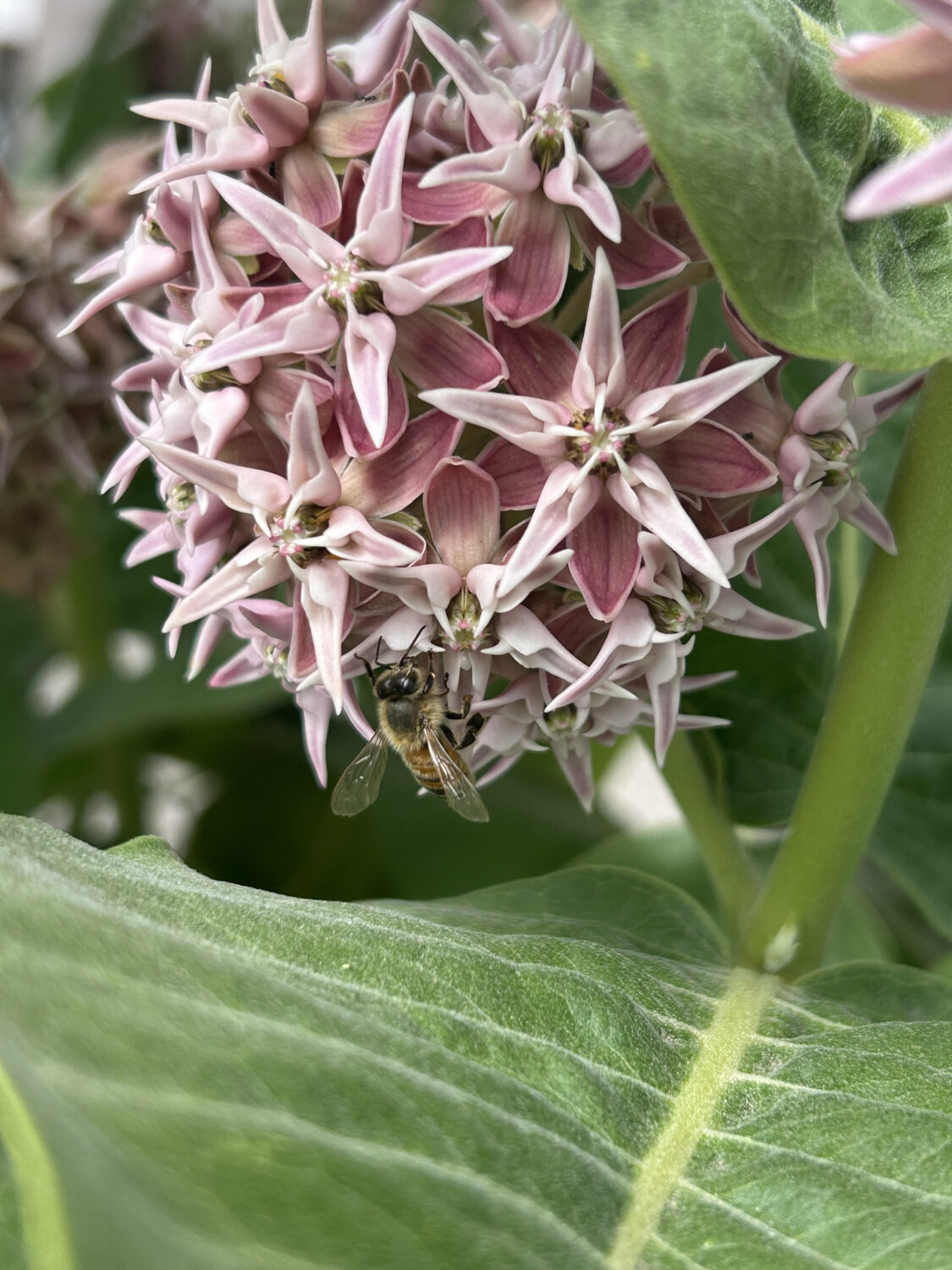
The next summer, we didn’t have one milkweed plant along the fence; we had several. The year after that, we had more than a dozen. Several years later, I have a large milkweed patch that teems with honeybees, butterflies, and giant milkweed beetles. The woodbine on our back fence had done an impressive job of choking out nearly every other plant that tried to grow. It could not stop the milkweed.
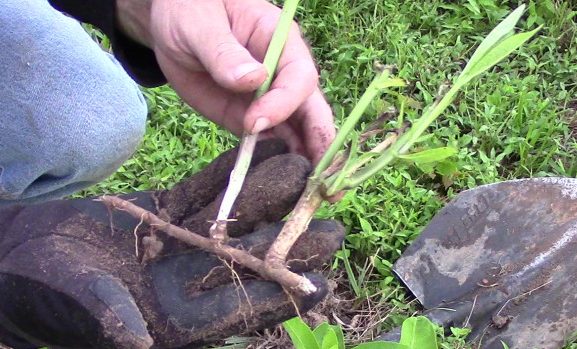
Milkweed produces an impressive taproot system. This root system allows milkweed to find water and nutrients deeper in the soil and to produce new milkweed plants throughout an area. The milkweed was able to survive being smothered by the woodbine because it sent out roots that could draw in what the plant needed to grow.
In Jeremiah 17, the prophet says that people who trust in humans rather than God are like shrubs in desolate and infertile areas. Those who trust in the Lord, rather, are like trees that send out their roots toward streams of water. Jeremiah writes, “[The tree] shall not fear when heat comes, and its leaves shall stay green; in the year of drought it is not anxious, and it does not cease to bear fruit” (Jeremiah 17:8b).
The milkweed plant underneath the woodbine reminds us of the importance of sending our roots out deep and wide. We anchor ourselves deeply by rooting ourselves in God, and we receive support by connecting ourselves to others who are there for us when times are hard. As we navigate what life throws our way, may we find the strength of milkweed to reach out beyond ourselves and connect ourselves to God who loves us, and to others who care for us.

8 Responses
Not only does milkweed remind us to be deeply rooted in our faith in God, it gives us the opportunity to be earth keepers. Milkweed plants are the nursery and food source for the diminishing monarch butterfly population By cultivating milkweed, we help the beautiful monarch butterfly to flourish.
Yes! Milkweed is such an important plant. As mine has grown, I have watched the ecosystem develop around it.
April in June. What a treat! I loved this post, April. “Life finds a way.” I’ll look forward to the Sundays in June yet to come.
Thank you!
Very nice! Great parable of what God might be teaching us through his creative power.
Thank you!
Thank you for this word of hope! We all need hope at such a time as this, in order that our faith may grow strong and be express through love of God and neighbor.
Thank you!