
I believe age—and the awareness of age—is one of the few concrete ways we can measure our progress through this world, and that each stage of life has its season and something to teach us, and that either to look or think oneself twenty-seven for ever is to abandon the idea of really living altogether.
—Zadie Smith, “Agelessness”
THE MOVE, perhaps the last voluntary one in our lives. The downtown loft condo we left after twenty-two years had been for us, on our modest residential scale, the acme of romanticizing glamour and independence, its fourth-floor prominence offering, if not quite the lit skyline of Manhattan, still, a view entrancing enough to keep us contentedly homebound for yet another evening glass of wine, rather than venturing out. No mighty Hudson below our window either, but a river grand enough in history and prospect to float our imagination.
That history flowed on as well in our condo itself, built in what was once a furniture factory dating from 1857, its original brick and mortar and exposed beams and joists still doing their uplifting thing under a sloped ceiling beginning twenty-three feet above. And in the outside prospect below, an expansive new riverfront development already underway, promising new parks, a restoration of the city-naming rapids by removing several dams, a new sports stadium, and, withal, a heady revitalization meant to quicken the hearts of kayakers and bikers by day and bar-hopping revelers by night. As to our condo interior, well, how much more exhilaratingly independent can you get than to design and oversee the construction of your own space, as we were able to do?
So why give up all this urban glow? A question we had asked ourselves many times over the past few years, often with co-waffling friends in the same chronological boat. Perhaps we could just “age in place,” a vintage wine mellowing nicely on the shelf. Or, viewing the issue from the other direction, how much might that youthful vibe coming up from those weekend river runs right below our window actually, in some subliminal psychic way, be keeping our own octogenarian bones ever so slightly astir? The mind-body connection, after all, not to be underestimated!
Then, again, on the flip side, what of the children and grandchildren who might, in fewer years than we liked to imagine, be burdened by our leaky faucets and slips in the dead of the night? And, speaking of bones, with at least one knee-replacement already in view and the ascent to the place in which we were so pleasantly aging involving no fewer than sixty-four steps and five landings, what if the elevator went out? And then there was this: if a move was to be made at all, might it not be best to make it sooner rather than later, while the needed creative zip might still be summoned for a new adventure?
In the end, we didn’t so much step into the new adventure as we were propelled into it by a sudden, unexpected, and not altogether hoped-for opening. So here we now are. How are we liking it, our friends ask, pondering their own future, and what are we learning?

Well, one thing we learned quickly is not to accidentally summon an ambulance by bumping one of the four alarm buttons distributed among the rooms, which we managed to do already on our second day, all efforts to call off the emergency unavailing. What has been summoned has been summoned, we learned, the rescue even directed at the end by a special porch light identifying the residence in need. Mostly, though, it’s fire trucks that come roaring needlessly into the complex, summoned perhaps by a gently neglected pot roast but more likely by a hypersensitive smoke alarm. All the stuff of ongoing good humor among the residents. “Have you called your fire truck yet?”
Humor, but, quickly enough, sadness, too. Already in our first year and a half within our small section of the neighborhood alone, deep losses to memory care, hospice, and death.
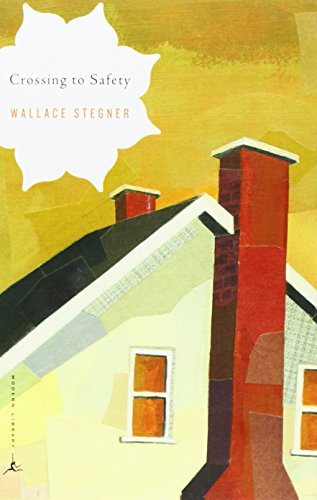
Crossing to Safety, Wallace Stegner titled his gorgeously elegiac, retrospective novel about loss, memory, consolation, and the passage of time. Many of us, not least ministers’ children, grow up accustomed to moves, but this latest crossing, not surprisingly, seems a broader stride than any in an earlier time.
To begin with, of course, one moves not simply into a new neighborhood, but into an intentional community—planned, constructed, purposeful, and managed. Landscaping and architecture are pleasant but uniform, though room is allowed for individual home touches. Major maintenance is blessedly assured, though room is left for the devoted do-it-yourself-er to make more modest pilgrimages to the hardware store.
And each day brings a front-office “What’s Happening” email, announcing (along with the latest moves of our resident duck family), the next meeting to discuss campus developments, the latest change in dining-room protocol or group exercise hours, the latest birthday to be celebrated, or the latest loss to be acknowledged and memorialized. Not to mention the many overtly social activities on offer, from special dinners and movie nights in the “Big House” (not to be confused, the insider Wolverine joke goes, with Michigan Stadium) to unofficial, bimonthly “Sips and Nibbles” organized by nearby townhome neighbors.
One must sort out by individual circumstances and psychic needs just how much to embed oneself in the new social ecosystem and how much to sustain one’s life through all the old, familiar places and connections, church being a strong ongoing pull for many here. Not surprisingly, given the institutional pedigree of this place, a lot of committed and engaged Methodists are on the premises, resolutely “loving God and doing good,” as Methodist principle would have it, but being joined increasingly, it seems, by ecumenically-minded Calvinists and others who are no slouches either at the spiritual disciplines.
Then, too, one is daily aware of crossing over into a community that is not only intentional, but also circumscribed by age. No more energizing twenty-somethings partying down the hallway after midnight, no subwoofers sending up teenage thrum from the cars stopped at the traffic light below. And did I mention the phalanxes of Wednesday-night Harleys roaring up from the summertime downtown rock concerts to the biker bars nearby?
And do I sound altogether regretful about leaving all this pizazz behind? Motorized chairs and push walkers now outnumber bikes in our environs, not a single abandoned, out-of-juice Lime scooter in sight! One constant, though, from life downtown is the number of resident dogs, not hyper-energetic Labs or greyhounds yanking at Yuppie arms, but amiable little pooches roused from a snooze and accompanying their masters on a daily round, companionship nicely scaled to remaining energy and strength.
Diminishing strength. The widest crossing, of course, is to that brave new world of dependence. Buying into an arrangement like this, as I always emphasize to inquiring friends, shouldn’t be seen as a real-estate transaction, but rather as an investment in total long-term care that includes housing, though without ownership. Those entering who need less care are not paying simply for themselves, but also, communally, for those already needing more care—against that day when they, too, join the ranks of the more needy. And this communal outlook has been gratifying to observe and experience. Beyond the classes in bell-ringing and—for the less pacific!—in drum-beating, and beyond the van-ferried trips to local concerts and gardens, there have been impressively informative and sensitive communal sessions on everything from financial planning to late-life medical decisions, including hospice.
The community regard at the heart of the institution is matched by the community spirit of the residents, with “Grubby Gardeners” seeking the welfare of the landscape in spring, summer, and fall, and neighbors lending a winter hand with snow shovels, picking up each other’s packages from the porch, and, through it all, exchanging joys and sorrows and sharing the generational memories they “have crossed to Safety with” (Robert Frost, “I Could Give All to Time”).

Dependence, then, at bottom the hardest lesson—step by step and at each stage—to learn in life. Also, ironically, “Our Greatest Gift,” as Henri Nouwen calls it in his moving meditation on dying and caring for the dying, on which I’ve been reflecting of late. Our gift to others by inviting them into a community of caring—community creates care, but care also creates community. And the greatest gift to ourselves in teaching us, by “the grace hidden in powerlessness,” to embrace the very deepest and most liberating reassurance we can have. “Our only comfort,” as the catechism says.
Fire truck photo by Daniel Holland on Unsplash

9 Responses
Keep living your best life, Jon, as the younger folk like to say. We’re now in a downtown perch, as you once were. Savoring the moments while we are able. Thanks for this reflection, old friend.
Wonderful to read; thank you for writing. Yes to how community creates care & care creates community. What comfort to be human. Alongside each other, still reading & writing, ways of being that can hold such blessing.
But what of those aural pursuits you so cherish? Can they be replicated in your new abode? 😏
Elegantly stated, Jon, with your usual touches of humor. With you on the journey.
Engaging and elegantly written, Jon – thanks for this! It reminds me of our own Big Move almost four years ago and the assuring meaning of community.
Jon, my wife Mary is a regular reader of this blog and forwarded your piece to me. Thank you for this elegantly written description of the situation in which we find ourselves, although we have not yet moved into a senior residence (we are on the list). I hope that these days you are reading only texts you want to read!
Jon, you shared many of these reflections with us, when we first visited you in your final move of choice . It made it easier for us to make a similar move.
Moving on and moving out is the pilgrimage we are on these days of life’s autumn. Thanks for showing us how to navigate it with grace and hope.
Jon,I really enjoyed reading this. You captured so well the mix of looking back with gratitude and wondering what the next chapter will bring. I hope this new chapter brings you both many good years, new pleasures, and plenty of reasons to be glad you made the move.