
Retirement caused me to wonder what on earth I have been doing for the last forty years. Ministry is so complex it is worth the effort to study it.
Looking back, I had many fulfilling joys. There are a few regrets, too — like watching my life-long denomination, the Reformed Church in America, disappear from my view. But mostly, I know what I did is a calling and that it is good.

1932-2023
As I sat with my reflections, I thought of Ron Moen. He was an experienced Lutheran pastor at a neighboring church during my first years of ministry in Yakima, Washington. Curious, I googled him, only to find his obituary.
Ron’s ministry had focused on struggling churches and marginalized people. What I remember most was his ability to be a good steward of pain. He insisted on talking about the places you were hurting, your grief, and the lingering effects of your sorrow.
In my first weeks in ministry, Ron told me that ministry was filled with pain. I was already hurting. In the months before moving to Yakima, my wife and I had suffered the stillbirth of our first daughter. Then we moved to a far-off place to begin a work that was not only challenging, but mysterious. I had already been surprised that the congregation that called me didn’t even have enough money to pay our moving expenses.
Ron explained that the life of a minister is filled with unknowns. Only God knows the future challenges, their duration, and the gifts needed to survive them.
He echoed something I had first heard from my mentor in my seminary teaching church. People share their physical, mental, and spiritual pain with the pastor. It’s the pastor’s job to empathize with them and maintain strict confidentiality. Absorbing that much pain can, at times, be overwhelming.
Ron warned that many people in the congregation would say hurtful things. When my mind begged to find an exception in my new church, I remembered that I had already been told “not to stay too long.” Decades before, a pastor had overstayed his welcome, and “we don’t want that to happen again.” This, before our boxes were even unpacked.
The work of ministers, Ron said, is done in front of God and everyone. While we expect to be held accountable by God, we are also evaluated by the people in the pew. And every one of them has a different job description for the pastor. And when their expectations are unreasonable, the evaluation will be critical.
He asked, “So, do you have a group to deal with all that pain?”
When I didn’t speak, he said, “Well you do now, because you are now in my group.”
There were four pastors in the group – two Lutherans, one ELCA and one Missouri Synod, a Unitarian, and me. We met once a week for an hour. Each week, one person was “up.” That person could share absolutely anything she/he wanted with the group. We were committed never to share it with anyone, not even our spouses. The rest of the group would actively listen without giving any advice, simply allowing the sharer to process their pain.

The hour together became sacred. We trusted each other, relied on each other, unloaded our pain on each other, and left refreshed for another season. Once, when my wife asked me when it would be my turn to share again, I realized the group wasn’t only necessary and beneficial for the four of us. It was a gift to our families and congregations.
I have made sure to have a group like this since — filled ministers of all ages, denominations, and perspectives.
Through the years I have learned a counter-cultural, maybe counter-intuitive, truth. The role of the pastor is more about processing pain than it is about leadership. Scripture hardly mentions how to lead, but there are pages and pages about suffering.
- The prophet Jeremiah connected to his grief and found hope. “They will fight against you, but they shall not prevail against you, for I am with you, says the Lord, to deliver you.” (1:19)
- The Psalmists lament and rediscover praise. “How long must I bear pain in my soul and have sorrow in my heart all day long? But I trusted in your steadfast love; my heart shall rejoice in your salvation. (Psalm 13)

Frederick Buechner calls this the stewardship of pain. He based it on the Parable of the Talents in Matthew 25. Buechner suggests that the talents are not money or abilities, but pain. If we invest our suffering, staying in touch with it and stewarding it well, we will receive blessings in abundance. But if we deny our pain, bury it, or let it turn into bitterness, we will enter what feels like utter darkness.

Jeff Munroe wrote about this stewardship of pain in Telling Stories in the Dark. Bob Cutillo, an inner city physician, expands on the process in Holding On in the Storm, an account of caring for his wife through terminal cancer.
Today’s church has been deceived into thinking that the grace of God appears only if there is consensus on social or political issues, only if there is a big crowd, or only if our theology is absolutely correct. In reality, Christians are united in Christ, not in agreement of interpretation, morality, or law. The misperceived need for agreement has now caused argument, discord, secession, broken relationships, and refusal to work together. While ministers may feel this division most of all, the people in the pews feel it as well.
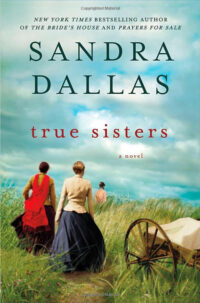
Recently, I had the opportunity to preach in a church searching for a pastor. In the congregation was Sandra Dallas, the 86-year old author of best-sellers like Prayers for Sale and True Sisters. She is delightful, humble, and brilliant and I have been soaking up her novels ever since.
She too writes about the stewardship of pain.
Using historical fiction, her characters invest their suffering without bitterness and come out ahead. I learned that Dallas’s sister died suddenly at a young age from polio. She is a woman well-acquainted with sorrow. Like the suffering servant in Isaiah, and like Jesus, she stewards the pain for gain. One quick warning about Dallas’s books. They don’t highlight ministers. Obviously the ministers in her life have not been like Ron Moen — wise, tender, and understanding grief.
Ministry is complex. And the more I look back, the more I am certain that the stewardship of pain is a major part of it. Leadership, not so much.

8 Responses
I believe you are right, Harlan. And I’ll bet you can also write with eloquence on the mysterious relationship between joy and suffering. Please keep writing. Thank you.
Thank you for sharing this, Harlan, and congratulations on your retirement! I especially appreciated what you said about when the grace of God appears and what unites us as Christians.
thank you, Harlan! I also just retired from 41 years in ministry so this came at a providential time for me. I agree very much with what she wrote. I also had a group of four ministers who met weekly when I began the ministry and I found it so helpful to share with them. Ministry is very much about the stewardship of pain. As is life itself. The Lord be with you in retirement and with all of us as we continue to steward pain-our own and others-before the God who suffered and continues to suffer with us.
Thank you very much.
Thanks Harlan. Wise words. Like you, I never did like the emphasis on leadership in the church and was mostly successful in avoiding books about it. It’s obvious that leadership has a role to play, but it seems like it’s one of those things that the more you focus on it, the more it disappears. Leadership is more likely to happen when you focus on other matters, like the stewardship of pain and the gospel.
Thank you Harlan. Thank you for sharing your story and reminding me of how the whole seminary was united around your pain. Thank you also for the book referral. I will definitely put it on my list of books to listen to.
I’m grateful for this, Harlan. Thank you.
So very thoughtful & insightful. Thank you for being so vulnerable.
I continue to wonder, however, if being a full-time paid pastor is healthy for anyone over a lifetime? I served for seven years. While it was good, both the compassion required & the constant judging seem counter to a healthy life.
Even as I lean into the current reality of the kingdom of God & the missio Dei, I wonder of “pastorate” as a biblical calling? While I live my life embracing the ways of Jesus, the church judges the pastor on grounds that are most often only tangentially related to the ministry of the church. Speaking truth to world powers has almost no space, whatsoever.