
If your algorithm fairies are the same as mine, your feed has also likely been filled this past week with news coming out of the Southern Baptist Convention’s annual gathering.
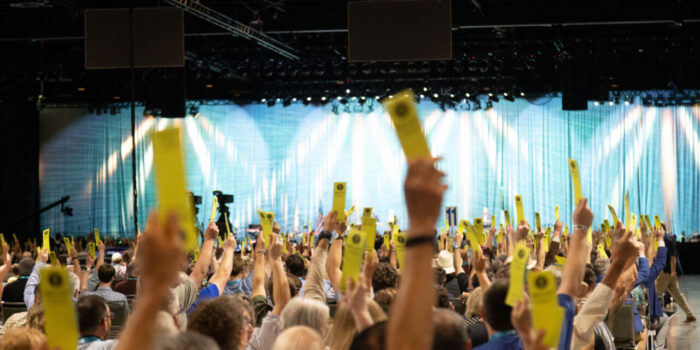
“The Truth and Unity Amendment” – a statement not to affirm women in pastoral leadership (in any capacity) passed by an overwhelming 75% margin. The reaction has been swift and strong. Opinions, stories, and responses have come pouring out from those who celebrate and also those who oppose.
As one who has studied, worked in, and existed in spaces that joyfully affirm and also theologically question my own pastoral calling as a woman (and person of color), I’ve watched with curiosity. I have friends and colleagues I love and deeply respect on both sides of this issue and have made peace with our disagreements.
Personally, I have questioned but never doubted my calling to ministry – it has been affirmed time and time again and I rest in its certainty. I was quite content to stay out of the conversation more broadly, letting the volume die down and the noise begin to quiet. People with far more expertise and passion than me have already spoken up, and it felt like there wasn’t much left to say.
Then I read (on multiple occasions) this past week, some version of the following: Women don’t belong in ordained ministry. But they are still needed in the church for things like worship.
Friends, if this is truly the opinion of the largest evangelical denomination in the US, and likely others as well, our problem is much more complex than who stands behind the pulpit. Here sits a theological chasm that suggests women are entirely capable of forming faith of all ages and genders, teaching the Word of God through song and spoken words, leading people into a robust and honest dialogue with God, and shaping how they live out their discipleship and mission in the world.
Yet somehow, they are unfit to do the same through a sermon.
On the other side of the chasm sits an equally troubling conclusion: corporate worship is not pastoral or faith formative; it is reduced to a mere prelude to the sermon or an hour of entertainment on Sundays.
Worship is a pastoral calling. To view it as anything other than that, or less than that speaks volumes; not just about the church, but about how we view the formation of God’s people when we gather together on Sunday mornings.
I teach a worship course and in the first week, students are prompted to think about their job titles and descriptions. What do they communicate about the church’s (and leader’s) theology of worship?
- The “worship coordinator” is there to make sure all the moving pieces are in sync — the coordinator of all the details.
- The “music director” is the one who is responsible for ensuring a high level of musicality.
- The “worship and technology leader” knows how to run a good show.
Many of our job titles and the tasks assigned to them are becoming increasingly “functional.” We need someone who is good at recruiting volunteers. We want the best musician who can come the closest to radio quality with our motley crew of amateurs. We need a worship service that draws in the youth, the community, the diverse, the unchurched. . . our viability depends on it. When it comes to worship, churches are prioritizing “functional” over “formative.”
To be clear, I am not making a case for every worship leader to be ordained. Certainly not. I take very seriously God’s call from above and below for those called to ordained ministry. Not every worship leader should be ordained — but every worship leader should undertake their weekly work with the weighty recognition of what they have been tasked with. The church, likewise, should take seriously who they put in this role with the recognition that worship is not performative, it is spiritually formative.
Feeding hungry souls is not the pulpit’s work alone. Theology is not learned simply by listening to it — but by singing it, speaking it, and embodying it in worship. From our very youngest members to our oldest, each Sunday the faith of God’s people is nurtured and cultivated by our practices of worship. The one in charge should engage this task with as much prayerful preparation, reliance on the Spirit’s promptings, and attentiveness to the soul care of the congregation as the one who preaches.
Pastoral care is not isolated to pastor’s offices or hospital waiting rooms. Corporate worship is a weekly infusion of both preventative and acute care for God’s people. In worship, the words that are spoken and sung become an acquired language that we reach for in our moments of joy, but also in our moments of deepest sorrow. These are words that are graciously embedded deep within our souls when all others fail or have been forgotten. Worship can be immensely healing. It can also be devastatingly traumatizing and abusive. The one in charge should be spiritually trustworthy to shepherd God’s people.
Long before any member sits down with the pastor, they will have been shaped by the prayers they pray, the songs they sing, the sacraments they participate in and observe.
What do we as a body of believers stand to lose from a ban on women’s voices in the pulpit and governance decisions in the church? Much. So much.
What do we as a body of believers stand to lose from a theology of worship that doesn’t recognize worship as pastoral work?
The painful truth is that we cannot have it both ways. If we truly believe worship is a place of faith formation, spiritual nourishment and growth, and the training grounds for discipleship, we must recognize the pastoral responsibility of those who plan and lead it. The question before the church today is not simply who may lead. It is whether we will honor God’s gifts when they are placed in our midst.
For every little girl who sits down at the piano to practice, finds herself drawn to the chord chart over Chopin, and senses a prompting within her soul, I pray there is a church that is ready to receive her and the gifts she will soon offer.
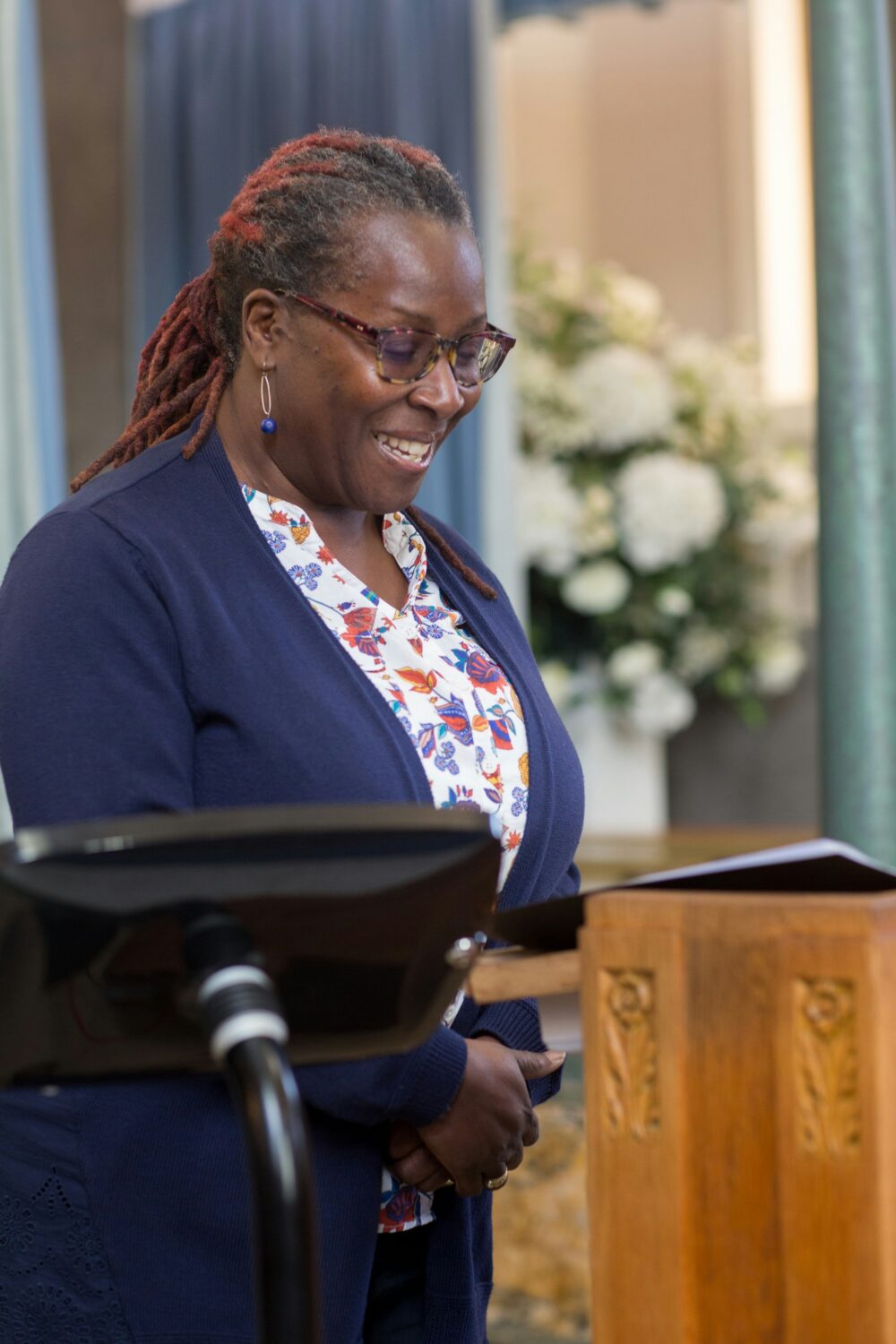
woman in pulpit photo by The Good Funeral Guide on Unsplash
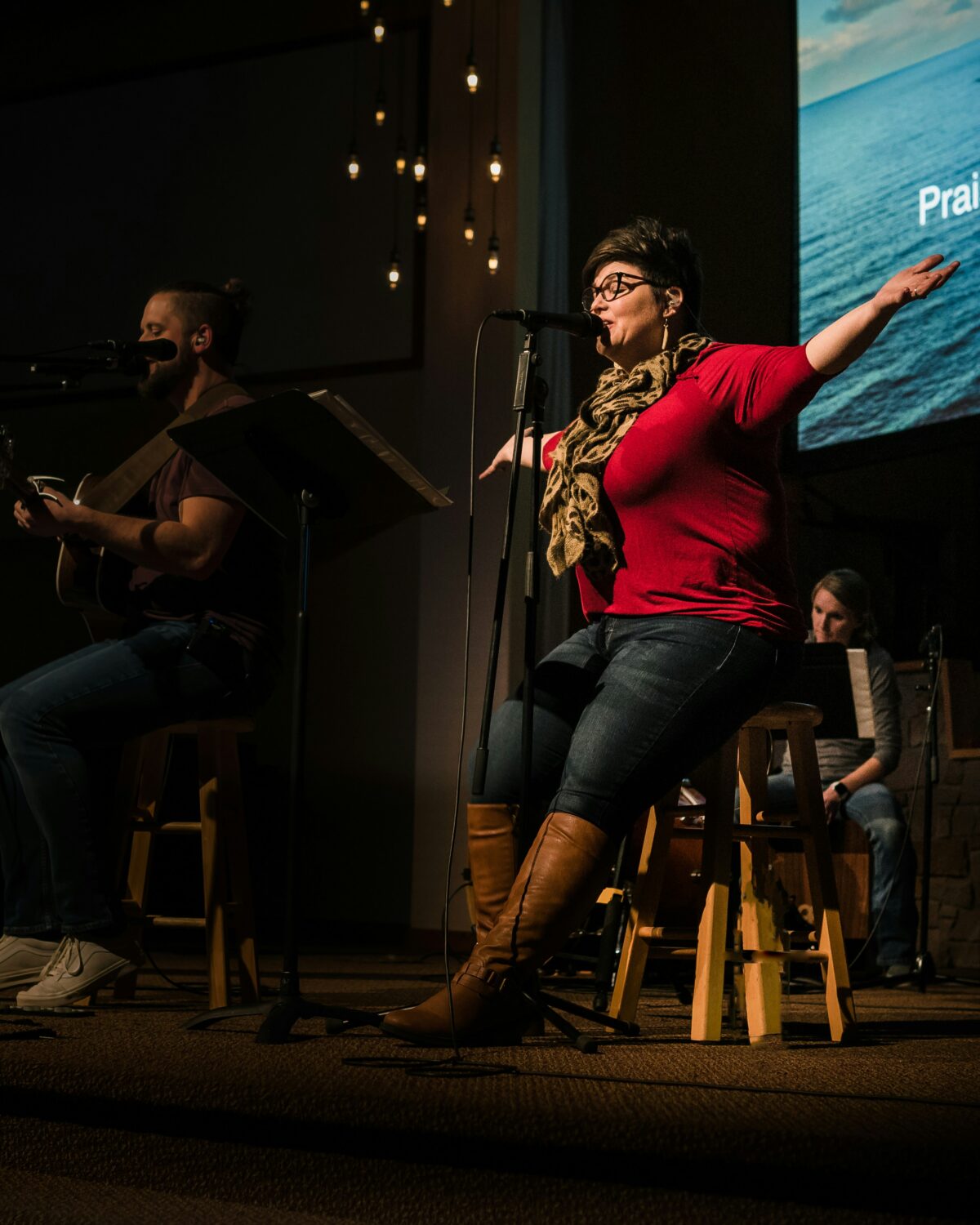
woman singing in worship photo by Joshua Heath on Unsplash

15 Responses
Yes! Preach it, Katie! (In every sense of that word.)
Yes and Amen!
Thank you, Katie. I especially appreciate your emphasis on pastoral care in worship and this: “ Corporate worship is a weekly infusion of both preventative and acute care for God’s people.” So true! And I, too, lament the losses that a statement like the one the SBC made imposes on the church—really more like spiritual abuse and quenching the Spirit, but yes, huge losses for everyone.
So grateful to learn from you – in a blog post, a sermon and from a piano bench – always.
So beautiful and fitting, Katie! I completely agree and lament and grieve what the SBC has done, along with recent decisions made by the CRC. “The one in charge should be spiritually trustworthy to shepherd God’s people.” Amen to that!
You are so right, especially with “worship is not performative, it is spiritually formative”. Leadership must be spiritually formed to recognize how important everything is that happens when we gather to praise, lament, listen, and learn. Example: when someone requests to add a song they’re singing along with every day, it will take a pastoral reply to teach how each song speaks to our relationship to God or faith but also has the ability to trivialize or subtly change that belief. That exchange can be as formative as a sermon. Thank you for highlighting how important our language, job titles, and expectations are as the world shifts around us.
Amen!
Katie, you are such a treasure! I have loved watching you grow in ministry from choir director/ worship leader to pastor and teacher. God has indeed blessed you with many gifts. Thanking God for all you do!
Amen, pastor Katie! I’m blessed to be part of the congregation you now shepherd.
AMEN! AMEN! AMEN!
Thank you, Katie!
I grew up with the RCA’s 1907 “Liturgy for the Lord’s Day.” By the way, if anybody’s listening, it would be huge fun and a bit daunting to teach a course in the history of RCA Liturgy, maybe more fun to take that course from Daniel Meeter. The number of us who lived in that liturgy consistently is diminishing. I mention it because it is a liturgy that has 40 minutes of entertainment or preliminaries followed by the main event of the sermon. Very often the sermon seemed detached from all that went on before it. The congregation was only allowed to sing hymns and say the Apostle’s Creed and the Lord’s Prayer . . . and give money. Going to college and being an Episcopalian for a lot of weeks, as well as having a truly Reformed college chapel liturgy, was eye-opening, and that was when the liturgy became formative for me. I only preached the 1907 liturgy once, and I felt just as boxed in and trapped on the preacher’s side as I had as a congregant.
You write as well as you preach and lead worship. Your gifts are so appreciated and definitely help to form our faith. We are blessed by you.
I wanted to add another male voice to these responses. Thank you, Katie. Amen!!
Katie – As you well know, this subject is a personal hot button with me! One aspect to all of this that I cannot wrap my arms around is why educated professional women who have significant vocations in secular society (doctors, lawyers, teachers, company executives, etc) willingly attend complementarian churches where they are second-class citizens. I personally witnessed this at our own church in about 2015-2016. At the very least, it must be confusing for any daughters they are raising.
Thank you for this, Katie! My ordained RCA minister daughter often tells me that I preach as much as she does, but my preaching comes in the form of liturgy and song. I’m not ordained, but I hold my calling to this position highly!